Home
» Horoscope
»
2004 Chinese Zodiac: Wood Monkey Traits, Compatibility, and a Grounded 2027 Horoscope
2004 Chinese Zodiac: Wood Monkey Traits, Compatibility, and a Grounded 2027 Horoscope
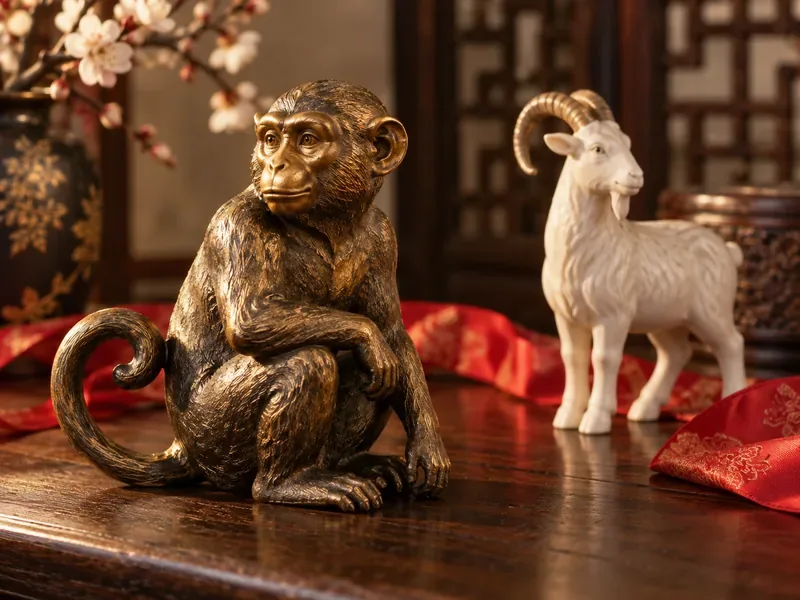
Someone born in 2004 may find two different Chinese zodiac signs online. That is usually a calendar-boundary issue, not a contradiction. People born January 22, 2004, through December 31, 2004, are Wood Monkeys in the commonly used Lunar New Year system. People born January 1–21, 2004, belong to the previous lunar year, the Water Goat (also called Sheep or Ram).
The key is to use the date of Lunar New Year rather than January 1. The Hong Kong Observatory's 2004 Gregorian–lunar calendar places the first day of the lunar year on January 22 and identifies 2004 as the Jia-shen year of the Monkey. That is the factual foundation of this guide. Traits, compatibility, lucky associations, and forecasts are traditional interpretations rather than scientifically demonstrated outcomes.
Check your 2004 Chinese zodiac sign first
Gregorian birth date
Chinese zodiac year
Animal and element
January 1–21, 2004
Previous lunar year
Water Goat
January 22–December 31, 2004
Jia-shen
Wood Monkey
For example, siblings born January 18 and February 18 of the same Gregorian year have different year signs. If a calculator calls someone born January 18 a Monkey solely because the form says “2004,” it has ignored the cutoff. Some specialized Four Pillars schools use the solar term Li Chun for the year pillar instead of Lunar New Year; that is a different calculation convention. This article consistently uses the Lunar New Year birthday convention.
What makes the 2004 Monkey a Wood Monkey?
The Monkey is ninth in the twelve-animal zodiac. Alongside the animal cycle, the Chinese stem-and-branch calendar combines ten heavenly stems and twelve earthly branches into a sixty-year sequence. The heavenly stem Jia represents yang Wood, and shen corresponds to Monkey. A Wood Monkey combination therefore recurs every sixty years. Relevant Wood Monkey birth years are 1944, 2004, and 2064, with their exact membership determined by each year's calendar boundary rather than by the year number alone.
In common cultural readings, the Monkey represents wit, curiosity, adaptability, experimentation, and clever problem-solving. Wood is associated with growth, renewal, cooperation, and forward development. Together, they suggest a person who enjoys learning something new and finding an inventive route through uncertainty. These are symbolic themes, not a test that can identify someone's character from a birthday.
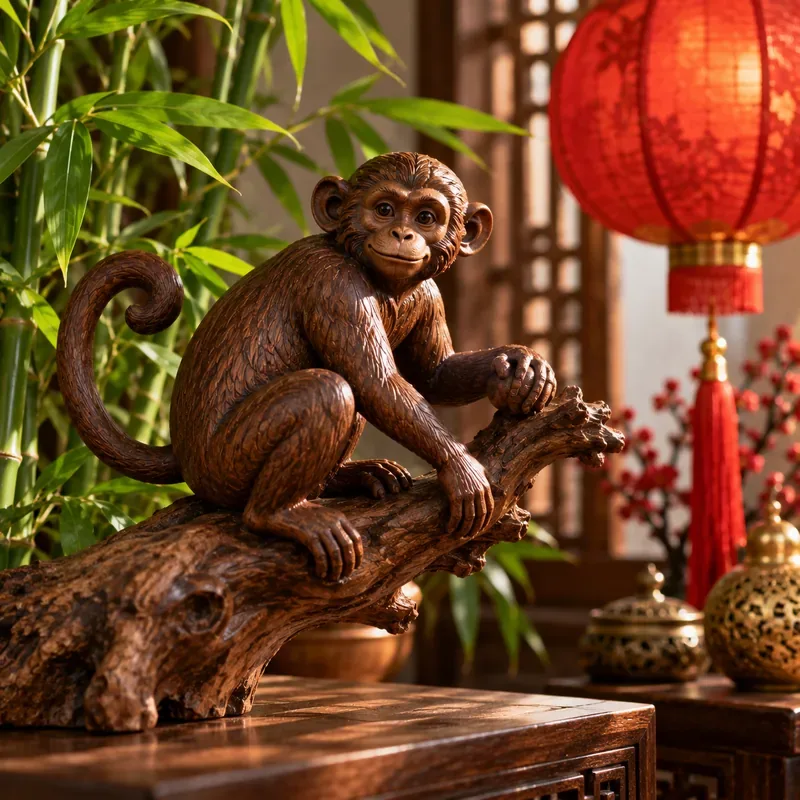
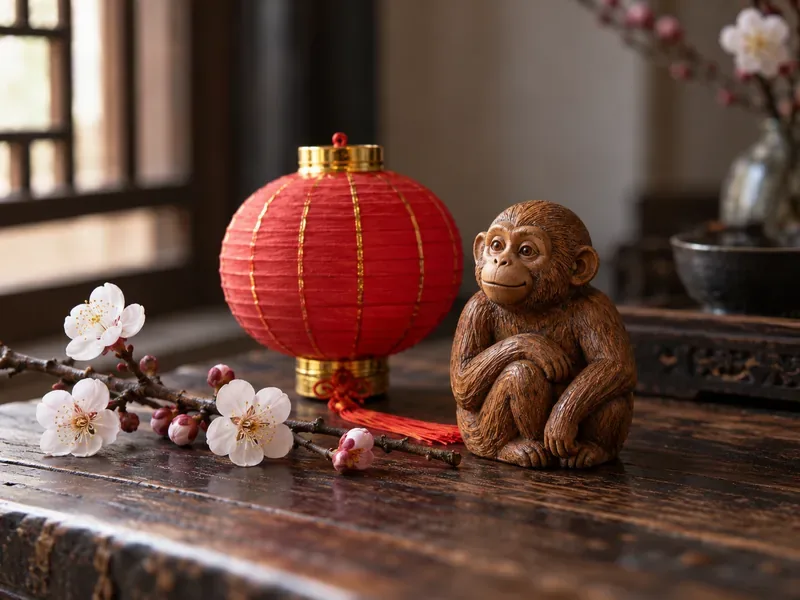
A carved wooden monkey perched on a branch beside green bamboo and a red lantern reflects the playful Monkey motif and the growth symbolism of Wood.
Traditional strengths, and how they can become weaknesses
Wood Monkey theme
Potential strength
Practical watch-out
Quick thinking
Finding alternatives when a plan stalls
Changing direction before testing an idea
Curiosity
Learning across subjects and meeting new people
Starting too many projects
Social wit
Making conversation and easing tension
Using humor to avoid a difficult discussion
Wood's growth focus
Seeking progress and collaborative opportunities
Overcommitting in pursuit of the next opportunity
For a practical example, a college graduate considering three different careers might identify with the “curious Monkey” description. The productive response is not to assume a career destiny: try short projects in each field, compare actual enjoyment and skills, then choose one path to develop for a meaningful period.
Which zodiac signs traditionally match the Monkey?
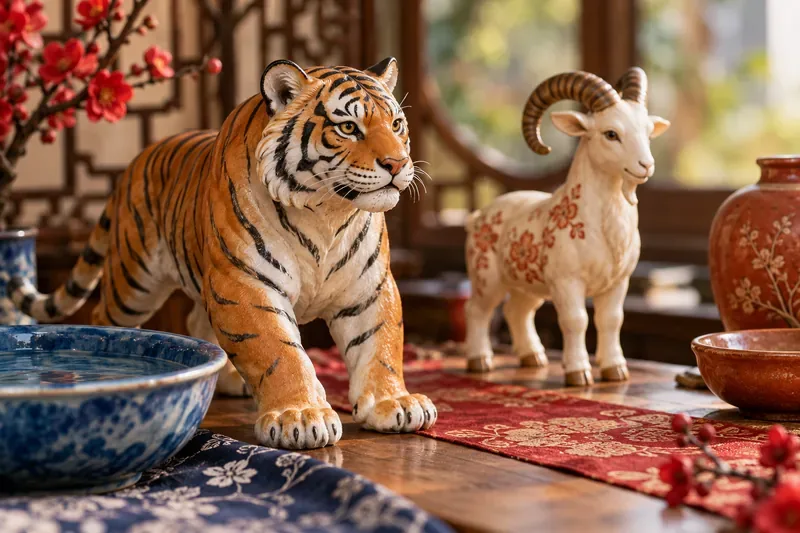
In the conventional three-harmony grouping of the earthly branches, Monkey, Rat, and Dragon form a group. Monkey and Snake are also paired in a six-harmony scheme, while Monkey and Tiger are placed in a direct-clash relationship. These labels describe traditional zodiac relationships, not whether individuals will love, respect, or work well with one another.
The simple takeaway is to treat year-animal compatibility as a cultural conversation starter. Someone with a Rat, Dragon, or Snake birth sign might be called a favorable match within these frameworks, but real success depends more on clear expectations, mutual respect, safety, and behavior. Conversely, a Tiger pairing is not a reason to reject an otherwise healthy relationship or business collaboration.
How to evaluate compatibility beyond the birth year
Ask three questions before acting on any zodiac label: Can you discuss disagreements without contempt? Do your goals and financial expectations fit? Are commitments followed through in practice? Traditional Four Pillars readings also use birth month, day, and hour, so a single year-sign rule is incomplete even within astrology. A partner's actual actions should carry more weight than any astrological shorthand.
Love and friendships: what does Wood Monkey symbolize?
Monkey readings often emphasize playfulness, humor, mental engagement, and independence. Wood adds a theme of cooperation and personal growth. People who enjoy these descriptions may prefer a relationship that keeps conversations lively while allowing both partners to build separate interests.
The challenge is making affection reliable rather than merely exciting. If you tend to joke when a serious topic comes up, try naming the issue plainly and asking what the other person needs. If you become restless during routine periods, plan a shared project or new experience without assuming restlessness means the relationship is wrong. These are communication practices, not predictions about all people born in 2004.
Career: turn adaptability into evidence of skill
Career-themed Monkey readings commonly connect cleverness and flexibility with technology, communications, design, research, business, problem-solving, and entrepreneurial work. The symbolism may resonate, but none of these industries is objectively assigned to a zodiac sign. At age 22 or 23 in 2027, many people born in 2004 may be balancing education, early-career decisions, or a first major job change.
Start with the easiest useful step: choose one demonstrable skill and complete a small project. Next, collect feedback from someone who knows the work. Only then compare larger commitments such as a degree, a job offer, relocation, or launching a business. This sequence addresses a possible weakness in the Wood Monkey archetype—scattered attention—without presuming your actual personality.
For instance, an aspiring product designer could complete a portfolio case study before applying for new roles. A prospective software engineer could publish a tested project and describe what it solves. Evidence is more useful than expecting a lucky career year to open doors on its own.
Money: use the cleverness theme without gambling on luck
In popular readings, a resourceful Monkey is quick to notice opportunities, but may also be tempted by novelty. Interpreted carefully, this is a reminder to check financial assumptions before taking action. A flashy investment, training course, or business idea can be interesting and still be unsuitable for your budget.
Use a straightforward order: cover essential expenses, build a buffer for unexpected costs, compare the total cost of major decisions, and set limits on speculative spending. For a first job, compare take-home pay, living costs, benefits, growth opportunities, and contractual obligations—not a zodiac money forecast. No traditional lucky number or animal pairing can establish an investment return.
What are Wood Monkey lucky colors and symbols?
Traditional lucky lists differ among regions, practitioners, and modern publications. Green naturally represents Wood in the Five Elements vocabulary; bamboo and new leaves offer recognizable growth imagery. Monkeys appear in Chinese visual culture as symbols of wit and playful agility. Red and gold are broadly festive in Chinese New Year decoration, but should not be presented as an individually proven formula for Wood Monkey fortune.
This guide intentionally avoids declaring fixed lucky digits, gemstones, directions, or dates without specifying and verifying a particular tradition. If you want a symbolic accessory or holiday gift, select a color or monkey motif because it is meaningful or appealing, not because it promises a financial or romantic outcome.
2027 Wood Monkey horoscope: a cultural outlook for the Fire Goat year
Verified calendar milestone: Lunar New Year falls on February 6, 2027, starting the Ding-wei year of the Goat, traditionally identified with Fire. The Hong Kong Observatory's 2027 Gregorian–lunar table establishes that date and year name. Goat may also be translated as Sheep or Ram. The 2004 Wood Monkey birth sign remains unchanged when the calendar moves into 2027.
Interpretive limits: There is no scientific basis for predicting love, income, illness, or career events from a Chinese birth-year animal. Different astrology schools may also differ about which dates and element relationships are favorable. The themes below are practical reflection prompts informed by traditional imagery rather than a personalized or guaranteed forecast.
Love and social life in 2027
The Goat's common cultural associations with gentleness and connection suggest a useful counterbalance to the Monkey's quick, playful energy. Make time for consistent contact, not just spontaneous excitement. If dating, ask whether shared values and conflict habits match. If partnered, choose one recurring time to discuss plans and expectations.
Career and study in 2027
Make the year about completing something substantial. The Wood Monkey's symbolic curiosity can inspire exploration, while the Goat-year theme of patience can encourage finishing and documenting work. A reasonable target could be one completed portfolio piece, a professional qualification, or a clearly measured improvement at work. Avoid assuming a promotion will arrive in a particular lunar month.
Money in 2027
Use the beginning of the lunar year as a reminder to review expenses, savings, and financial commitments. If considering a move, new degree, or startup, compare best-case and worst-case costs. Treat claims of “lucky investments” or certain windfalls as entertainment; verify contracts and risks through appropriate professional sources.
Health and everyday well-being in 2027
Horoscopes do not diagnose medical problems or determine a person's health outlook. The practical focus is on sustainable sleep, regular activity, balanced routines, and appropriate professional care for symptoms. If studies or work become hectic, build breaks into the schedule rather than interpreting exhaustion as zodiac misfortune.
Favorable periods and timing
The date February 6, 2027 is a verifiable cultural calendar transition, not a promise that everything begun that day will succeed. Specific auspicious months or days cannot be reliably assigned to every 2004 Wood Monkey from the birth year alone. For personal planning, use February to review priorities, the middle of 2027 for a progress check, and the final months to evaluate results and adjust the next plan. These periods are practical checkpoints, not asserted astrological predictions.
Practical cautions for 2027
Beware of making a large commitment simply because a horoscope calls the year favorable.
Give an exciting opportunity enough scrutiny to uncover its costs and requirements.
Use humor to strengthen connections, not to avoid accountability.
Finish one meaningful goal before adding several new ones.
Never replace financial, medical, or relationship judgment with zodiac compatibility.
How can you check whether this guide is useful for you?
First, verify your birth date against January 22, 2004. Second, separate calendar facts from symbolic descriptions. Third, choose one behavior you would actually like to change—such as completing a project, discussing money clearly, or setting a study routine—and test it using real results. If the advice improves a decision, keep it. If the animal description does not resemble you, there is no need to force a match.
For a fuller reading journey, useful internal links would point to the 2004 Chinese zodiac birth-year guide, the general Chinese Monkey guide, a dedicated Wood Monkey profile, a Monkey compatibility guide, a Five Elements explainer, and the 2027 Fire Goat horoscope. Those links should be connected to real published pages rather than invented destinations.
Original calendar sources and limitations
The calendar details are supported by the Hong Kong Observatory 2004 conversion table, its Gregorian–lunar calendar index, and the 2027 conversion table. The 60-year cycle follows the traditional stem-branch system. Animal personality descriptions, harmony groupings, Wood symbolism, and 2027 lifestyle themes are cultural traditions and editorial interpretations, not scientific proof about individuals or future events.