Home
» Horoscope
»
Chinese Metal Pig Zodiac: Birth Years, Traits, Compatibility, Career, and Luck
Chinese Metal Pig Zodiac: Birth Years, Traits, Compatibility, Career, and Luck
The Chinese Metal Pig is the Xin-Hai combination in the traditional 60-year Gan-Zhi cycle: Pig is the zodiac animal, while Xin is associated with the Metal phase. For modern readers, the key Metal Pig birth years are 1911, 1971, and 2031—but the sign does not begin on January 1. It begins on Lunar New Year, so people born in January or early February must check the exact calendar boundary.
This is a cultural and astrological tradition rather than a scientific personality system. The birth-year dates can be verified from the Chinese calendar; personality, compatibility, lucky symbols, and fortune interpretations should be treated as traditional beliefs or entertainment, not guarantees about a person’s character or future.
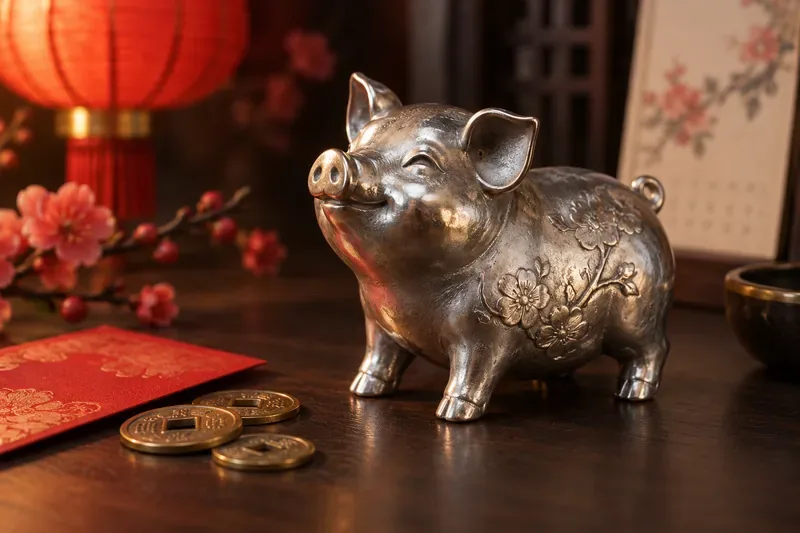
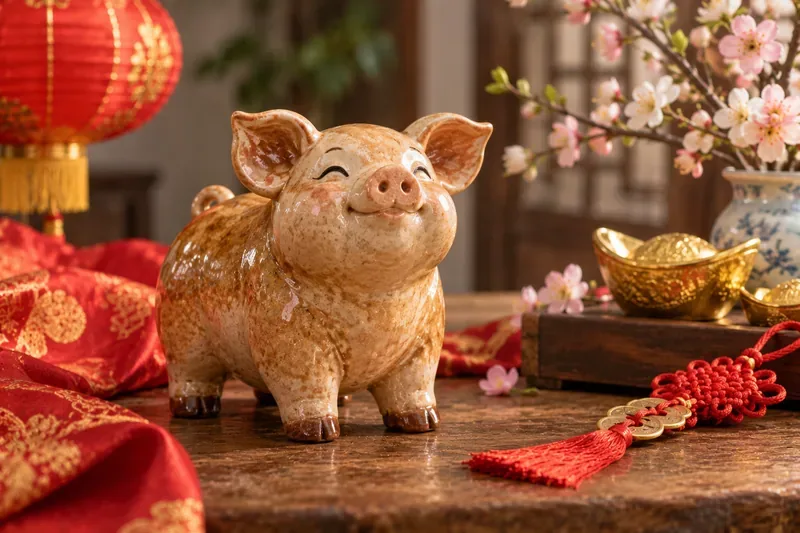
A silver pig figurine with red Lunar New Year decorations visually represents the Metal Pig combination in the Chinese zodiac.
Which Years Are Metal Pig Years?
The Chinese zodiac combines a 12-animal cycle with the ten Heavenly Stems, creating a repeating 60-year cycle. The Hong Kong Observatory identifies 1911, 1971, and 2031 as Xin-Hai years of the Pig. Its official calendar resources also explain that Gan-Zhi years repeat every 60 years and that the first day of the first Chinese calendar month is used for the year change in its official calendar practice.
Gregorian year
Metal Pig begins
Important cutoff
1911
January 30, 1911
Births before January 30 still belong to the preceding Chinese zodiac year.
1971
January 27, 1971
Births before January 27 are not Metal Pig births under this Lunar New Year boundary.
2031
January 23, 2031
Births before January 23 remain in the preceding Chinese zodiac year.
One nuance matters for readers who have seen different zodiac calculators: some fortune-telling systems switch Gan-Zhi years at the solar term commonly translated as “Spring Commences” or Li Chun. The Hong Kong Observatory explains that its official calendar convention changes the year on Lunar New Year instead. For a general Chinese zodiac birth-year guide, this article follows that Lunar New Year boundary. See the Observatory’s explanation of when the Gan-Zhi year changes.
Why Is It Called a Metal Pig?
The Pig comes from the 12-year animal cycle. The Metal designation comes from the Heavenly Stem Xin. In the traditional Five Phases framework, the ten Heavenly Stems are paired with Wood, Fire, Earth, Metal, and Water; Xin is the yin Metal stem. A scholarly reference published through the Harvard University Asia Center lists Geng and Xin under Metal, while the Hong Kong Observatory’s Heavenly Stems and Earthly Branches table places Xin-Hai as the 48th combination in the 60-part cycle.
The Pig itself is the twelfth animal in the standard sequence. The Hong Kong Observatory notes that China’s 12-year animal cycle has been used for many centuries and pairs Pig with the Hai earthly branch. Its 12-Year Animal Cycle reference is useful if you want to separate the animal cycle from later fortune-telling interpretations.
Metal Pig Personality: How Metal Is Said to Modify the Pig
Traditional zodiac descriptions often associate the Pig with warmth, generosity, sincerity, comfort, and a preference for straightforward relationships. Adding Metal is commonly interpreted as making the sign more determined, self-protective, organized, and willing to defend its values.
That creates a useful way to think about the Metal Pig archetype: soft social style, firmer internal standards. A Metal Pig may be described as someone who prefers cooperation but is not necessarily passive. They may give people the benefit of the doubt, yet become surprisingly immovable once they believe a line has been crossed.
Common strengths in traditional readings
Generous but practical: inclined to help, while still caring about concrete results.
Persistent: Metal symbolism adds firmness to the Pig’s usually easygoing image.
Relationship-oriented: trust, loyalty, and a stable social circle often matter more than status games.
Direct: Metal Pig descriptions tend to favor clear promises and visible follow-through.
Resilient: setbacks may be handled quietly rather than dramatically.
Possible blind spots
Over-trusting: generosity can become costly when boundaries are vague.
Stubbornness: persistence can turn into refusal to revise a position.
Comfort spending: enjoying quality, food, travel, or gifts can compete with savings goals.
Delayed conflict: an easygoing exterior may hide frustration until it has accumulated.
These are cultural archetypes, not personality test results. Two Metal Pigs can differ enormously because of upbringing, culture, education, life experience, and individual temperament.
Metal Pig Compatibility
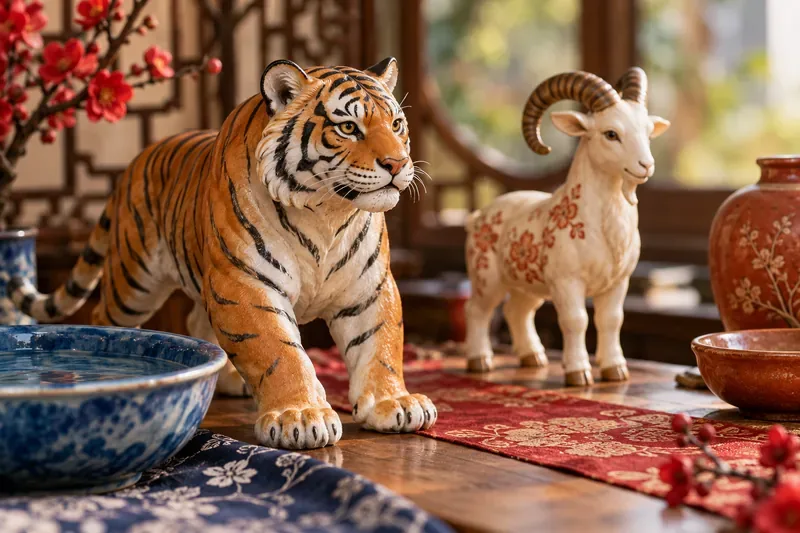
Chinese zodiac compatibility is a traditional matching practice, not evidence that two people will or will not succeed together. In common zodiac compatibility schemes, Pig is usually grouped favorably with Rabbit and Goat, and Pig is also often paired positively with Tiger. Pig and Snake are commonly treated as a more challenging opposite pairing.
For real relationships, it is more useful to translate those symbolic pairings into practical questions:
Traditional pairing
What to look at in real life
Pig + Rabbit
Do both people value calm communication, trust, and emotional safety?
Pig + Goat
Can warmth and creativity coexist with practical planning and clear responsibilities?
Pig + Tiger
Can one person’s intensity or independence coexist with the other’s need for stability?
Pig + Snake
Are privacy, trust, money, and control discussed openly instead of becoming silent pressure points?
The sign pairing can be a conversation starter, but it should never override behavior. Reliability, respect, shared goals, financial expectations, and conflict skills matter far more than zodiac labels.
Love and Relationships
In traditional readings, Metal Pigs often want relationships that feel dependable rather than performative. They may be drawn to partners who are considerate, emotionally consistent, and comfortable with shared routines. Grand gestures can be appreciated, but day-to-day reliability may matter more.
A useful caution is that generosity should not substitute for communication. Buying gifts, solving practical problems, or quietly accommodating a partner can feel loving, but these habits do not automatically communicate needs. Metal Pig symbolism works best as a reminder to pair loyalty with boundaries: say what you expect, ask what the other person expects, and deal with resentment before it hardens.
Career Strengths and Work Style
The Metal Pig archetype is often a better fit for roles that reward trust, persistence, service, negotiation, or steady execution than for environments built entirely around internal rivalry. That does not mean Metal Pigs cannot lead. The traditional profile suggests they may lead more effectively through credibility and follow-through than through constant self-promotion.
Career areas that may suit those preferences include operations, account management, finance administration, hospitality, healthcare support, education, project coordination, customer success, procurement, quality management, and relationship-driven business roles. The point is not that a zodiac sign determines occupation. These examples simply match the traditional combination of social warmth and Metal-style structure.
Work conditions that may feel easier
Clear responsibilities and measurable commitments.
Teams where long-term trust is rewarded.
Enough autonomy to solve problems without constant political maneuvering.
Managers who value consistency, not only visibility.
Work conditions that may require more effort
High-conflict cultures where aggressive self-promotion is expected.
Roles with vague ownership and shifting promises.
Situations where saying “no” is necessary but uncomfortable.
A practical career lesson from the Metal Pig archetype is to make invisible reliability visible. Document results, quantify contributions where possible, and state boundaries early rather than assuming good work will always speak for itself.
Money Habits and Financial Luck
Traditional Pig symbolism is often connected with comfort, abundance, and generosity, which is why many horoscope-style descriptions attach prosperity themes to the sign. That should not be read as a financial prediction. No zodiac sign guarantees wealth, investment performance, or protection from loss.
For a Metal Pig, the more useful interpretation is behavioral: combine generosity with rules. A simple system can help:
Set a fixed monthly amount for gifts, dining, and discretionary comfort.
Automate savings before discretionary spending begins.
Do not lend money solely because saying no feels impolite.
Use written terms for large loans, family contributions, or shared purchases.
Delay major purchases for a cooling-off period if they are emotionally driven.
This turns “money luck” from a vague promise into something actionable: fewer avoidable leaks, better planning, and more resilience when expenses appear.
What Counts as Lucky for a Metal Pig?
Lucky colors, numbers, directions, and dates vary among schools of Chinese astrology, folk almanacs, and commercial horoscope traditions. There is no single official list that applies universally to every Metal Pig. For that reason, this guide does not present a made-up set of “guaranteed” lucky numbers or colors.
If you use lucky symbols for cultural enjoyment, treat them as personal rituals rather than decision rules. A color you associate with Metal, a family tradition, or a meaningful festival custom can still be enjoyable without being presented as a proven influence on outcomes.
Does 2027 Change Anything for Metal Pigs?
The underlying Metal Pig classification does not change from year to year. A person born in a Metal Pig year remains a Metal Pig in the traditional birth-year system. The year 2027 has its own Gan-Zhi designation and zodiac animal, but that does not rewrite a birth sign.
Annual fortune forecasts are a separate layer of astrology and differ by school, so it would be misleading to invent a precise 2027 prediction without a clearly identified tradition or source. Readers who want time-specific forecasts should distinguish them from the stable calendar facts covered here.
How to Check Whether You Are Really a Metal Pig
Confirm your Gregorian birth date.
Find the Lunar New Year date for your birth year.
If you were born before that date, check the preceding Chinese calendar year.
Confirm that the Gan-Zhi year is Xin-Hai, not merely that the Gregorian year is commonly listed as a Pig year.
For 1971, for example, Lunar New Year began on January 27. Someone born January 20, 1971 would therefore not be classified as a Metal Pig under the Lunar New Year boundary used in this guide, while someone born February 1, 1971 would.
Related Chinese Zodiac Guides to Explore
If you are building a fuller picture, useful next topics include a general Chinese Pig zodiac guide, a 1971 Chinese zodiac guide, a Chinese zodiac compatibility guide, a guide to the Five Elements in the Chinese zodiac, and a separate 2027 Chinese zodiac outlook. Keeping birth-sign facts separate from annual horoscope content makes it easier to tell what is calendar-based and what is interpretive tradition.
Bottom Line
The Metal Pig is the Xin-Hai combination in the Chinese sexagenary calendar, with modern reference years 1911, 1971, and 2031. The exact Lunar New Year cutoff matters, especially for January and early-February birthdays. Traditional interpretations describe Metal Pigs as generous, loyal, persistent, and more firm-minded than the easygoing Pig stereotype, with potential challenges around boundaries, stubbornness, and comfort spending.
Use the birth-year classification as a cultural reference and the personality or compatibility material as entertainment or reflection—not as a substitute for evidence, financial planning, career judgment, or relationship decisions.