Home
» Horoscope
»
Chinese Monkey Personality: Clever, Playful, Adaptable—and Sometimes Restless
Chinese Monkey Personality: Clever, Playful, Adaptable—and Sometimes Restless
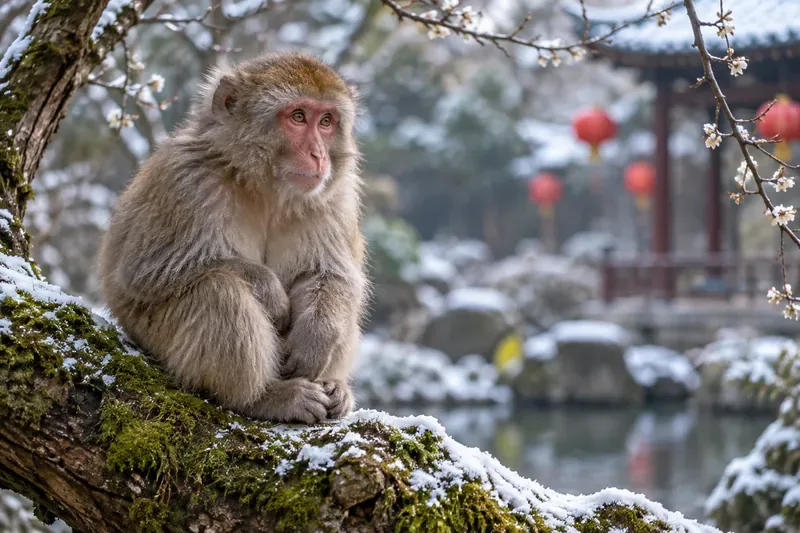
In the Chinese zodiac, the Monkey is traditionally portrayed as clever, energetic, curious, sociable, and playful. Its signature strength is finding an unexpected way around a problem; its most familiar weakness is losing patience when life becomes repetitive. In relationships, that can look like lively conversation and affectionate teasing. At work, it can mean quick ideas and flexible thinking—provided there is enough follow-through.
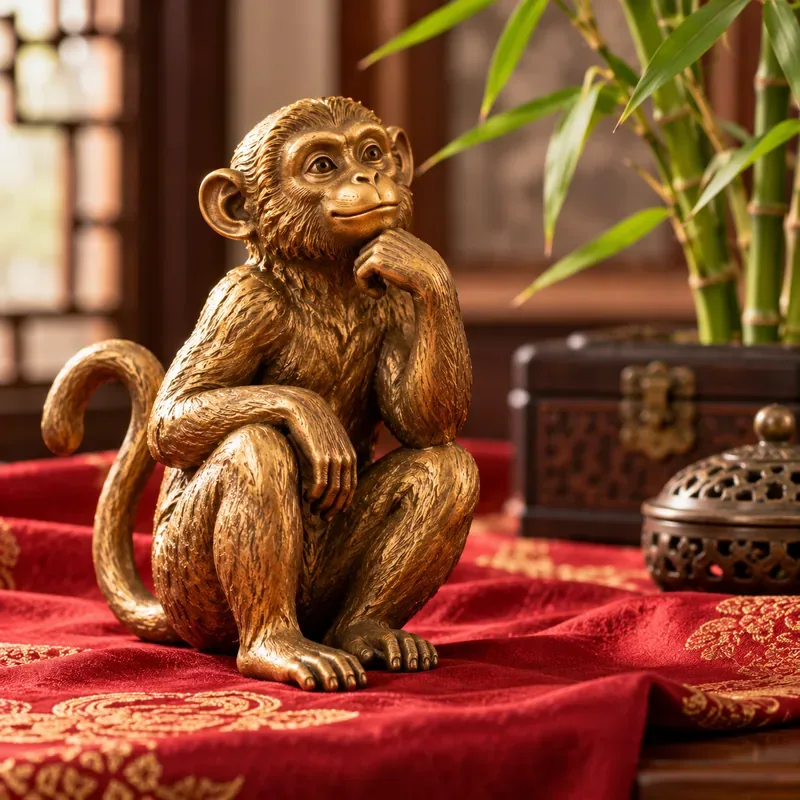
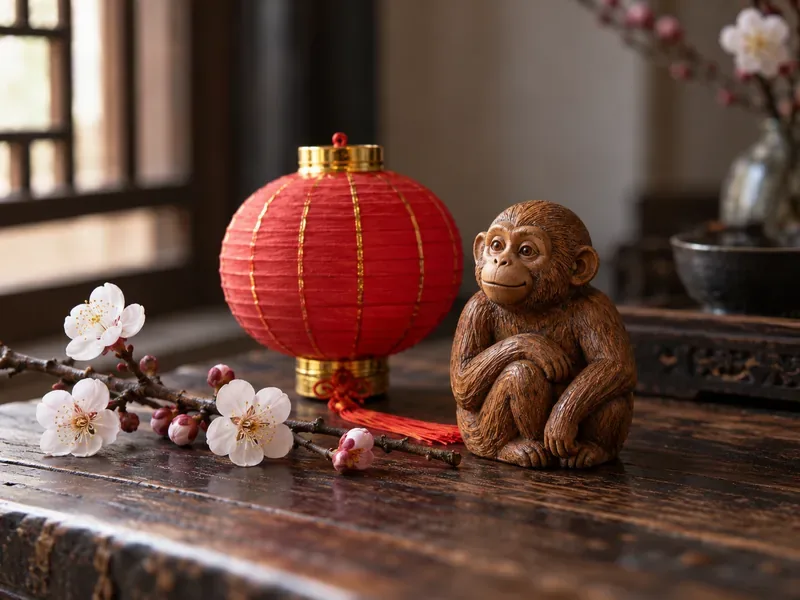
A bronze monkey figurine sits on red patterned silk, capturing the thoughtful yet playful imagery associated with the Chinese Monkey zodiac.
These are traditional character associations, not measurable traits assigned to everyone born in a particular year. The Chinese zodiac is a cultural system for storytelling and reflection, not a scientifically validated personality test. That distinction matters when you use it to think about a partner, colleague, child, or yourself.
The Chinese Monkey personality at a glance
Core qualities: quick-witted, inventive, observant, playful, and adaptable.
Social style: likes humor, interesting people, and conversations with momentum.
Typical strengths in the tradition: practical problem-solving, improvisation, persuasion, and curiosity.
Potential blind spots: restlessness, impatience, overconfidence, distraction, or humor used at the wrong moment.
Best practical approach: keep the creativity, but pair it with reliability, tact, and clear commitments.
The Monkey is the ninth animal in the traditional 12-animal cycle, associated with the earthly branch Shen. The Hong Kong Observatory documents that classification in its official explanation of the animal cycle. Meanwhile, the Metropolitan Museum of Art describes people born in Monkey years as traditionally considered intelligent, energetic, and playful. Those are descriptions of a cultural belief, not research findings about individuals.
Why is the Monkey associated with intelligence and mischief?
The animal's symbolism did not begin as a modern online personality quiz. Monkey imagery has appeared in East Asian decorative art for centuries. The Metropolitan Museum of Art notes that monkeys could function as visual wordplay expressing hopes for academic success or high rank. That history helps explain why cleverness and achievement appear alongside humor in the Monkey's symbolic personality.
Another familiar reference is Sun Wukong, the Monkey King from the novel Journey to the West. Stories about his daring, ingenuity, and defiance reinforce the image of a figure who does not simply accept obstacles. That literary connection is useful context, but a fictional character should not be treated as evidence about people born in Monkey years.
There has been no significant new event that changes these traditional meanings. For present-day readers, the more useful question is how to turn a familiar symbolic profile into constructive self-reflection without stereotyping others.
Core strengths: where the Monkey archetype shines
1. Seeing possibilities before other people do
A classic Monkey quality is spotting alternative routes. In an everyday situation, imagine a team whose plan has failed because a supplier missed a deadline. The Monkey-style response would be to identify substitute materials, change the sequence of tasks, and keep the project moving. The productive part is resourcefulness; the risk is changing plans before understanding the consequences.
Useful habit: list two or three workable alternatives, then compare their cost, time, and risks before choosing one.
2. Learning quickly through curiosity
Traditional descriptions emphasize curiosity and mental agility. Someone who recognizes themselves in this pattern may prefer learning by experimentation, asking unusual questions, or connecting ideas from unrelated fields. That can be an asset when a task is unfamiliar. However, being curious is not the same as mastering a subject.
Useful habit: choose one topic to study deeply while keeping a separate list for intriguing ideas that can wait.
3. Breaking tension with humor
The Monkey's playful side can make introductions easier and help groups recover from awkward moments. Good humor is especially effective when it includes others rather than making someone the target. A joke that energizes close friends might be unwelcome in a serious meeting or during a difficult conversation.
Useful habit: read the situation before teasing; when in doubt, choose warmth over sarcasm.
Weaknesses and the small changes that help
Restlessness when novelty disappears
In the traditional profile, a Monkey enjoys a fresh challenge more than a long routine. The danger is starting five projects and finishing none. A workable solution is not eliminating variety, but setting a finish line. For instance, complete the first usable version of a project before researching three exciting replacements.
Overconfidence in a clever solution
Thinking fast may lead to skipping checks. If a proposed shortcut affects other people, ask what could go wrong, who needs to approve it, and how the result will be measured. Confidence is more useful when it survives careful review.
Turning discomfort into jokes or arguments
Humor and debate can be entertaining, but they may also deflect a vulnerable conversation. A partner or coworker who says, "I need you to take this seriously," is signaling that reassurance and attention matter more than wit at that moment. A practical response is to summarize what you heard before offering a solution.
None of these weaknesses is inevitable. They are reminders to notice behavior, not labels to apply to a whole birth-year group.
What is the Chinese Monkey's love style?
In traditional zodiac interpretations, the Monkey's romantic style is often described as flirtatious, curious, playful, and mentally engaged. Shared laughter, spontaneous outings, interesting discussion, and room to explore new activities fit this image. The same desire for excitement can create friction when a partner values predictable plans or quiet reassurance.
What helps a Monkey-style relationship last?
Make affection visible: clever conversation is enjoyable, but regular acts of care create trust.
Give each other space: a need for independence does not automatically signal a lack of commitment.
Follow through: keeping small promises is more persuasive than a grand romantic idea that never happens.
Handle conflict directly: ask whether the other person wants empathy, a solution, or both.
For example, a person who loves surprises might plan an impromptu weekend trip. If their partner dislikes last-minute changes, a better version is to agree on a free weekend together and keep the destination a surprise. Both people get something important.
Astrological compatibility lists sometimes assign the Monkey favorable or difficult animal pairings, but different traditions and websites may disagree on details. There is no established evidence that Chinese zodiac animals predict relationship success. Shared values, communication, boundaries, and conduct are more useful criteria than matching birth years.
Friendship and family life: lively, but not always loud
The Monkey archetype values amusement and movement, which can translate into organizing games, suggesting group adventures, or finding an ingenious way to help a friend. Still, a playful personality does not require constant extroversion. Quiet people can be observant, inventive, and funny, too.
Parents may enjoy using the Monkey story to discuss a child's curiosity, but should avoid deciding that the child is naturally mischievous or untrustworthy because of a zodiac sign. Ask what the child actually enjoys and notice whether an activity helps them develop patience, empathy, and problem-solving skills.
Chinese Monkey work habits and career preferences
As a work archetype, the Monkey likes novelty, information, conversation, and the chance to improve an inefficient process. It may resonate with people who enjoy product development, design, research, teaching, marketing, troubleshooting, entrepreneurship, or other jobs requiring adaptation. This is a description of work preferences—not a recommendation to choose a profession by birth year.
Work situation
Monkey-style advantage
Practical safeguard
A new or ambiguous problem
Generates several possible approaches
Confirm requirements before changing direction
Brainstorming with a team
Connects ideas and energizes discussion
Invite quieter colleagues to contribute
A long, repetitive assignment
Finds shortcuts and improvements
Use a checklist so details are not missed
A tight deadline
Improvises under pressure
Set decision limits and a review point
Client or stakeholder communication
Builds rapport through wit and flexibility
Keep promises precise and documented
How can a Monkey-style worker become more dependable?
Use a simple three-part routine: define what "done" means, limit the number of active projects, and schedule a final quality check. Creative people often resist structure because they imagine it will reduce freedom. In practice, a small amount of structure can protect the time and trust needed for experimentation.
Managers should evaluate actual skills and results. A candidate's Chinese zodiac sign should never be used to screen applicants, assign responsibilities, or explain poor performance.
Money and everyday decisions
Money is not written into a Chinese zodiac personality. But if you identify with the Monkey's appetite for experimentation, you may appreciate a financial boundary that allows curiosity without putting essentials at risk. For example, keep regular savings and necessary expenses separate from a modest discretionary budget for new hobbies or side projects. Check the total cost before committing to an exciting purchase.
This is ordinary budgeting advice, not a forecast of Monkey wealth or luck. No birth animal can guarantee a return on an investment.
How the five elements add nuance
The Chinese zodiac also uses a repeating combination of heavenly stems and earthly branches to produce a 60-year cycle. In popular interpretations, the five elements—Wood, Fire, Earth, Metal, and Water—add shades to the Monkey profile. These are symbolic lenses, not five scientifically established personality types.
Monkey element
Example birth years
Traditional interpretive emphasis
Wood Monkey
1944, 2004
Growth-minded, exploratory, collaborative
Fire Monkey
1956, 2016
Expressive, driven, energetic
Earth Monkey
1968, 2028
Pragmatic, steady, resourceful
Metal Monkey
1980
Focused, independent, determined
Water Monkey
1992
Flexible, observant, persuasive
These year labels apply to people born after the relevant Chinese Lunar New Year begins, not automatically to everyone born between January 1 and December 31. In a complete cycle, a given animal-element combination returns every 60 years. More detailed traditions may use additional birth information, so a year-only profile is deliberately simplified.
Which birth years count as Chinese Monkey years?
Common Monkey years include 1944, 1956, 1968, 1980, 1992, 2004, and 2016. The next Monkey year begins in 2028. Because the Chinese calendar is lunisolar, the animal-year boundary shifts on the Gregorian calendar. It is not January 1.
For a verified example, the Metropolitan Museum of Art records February 8, 2016 as the start of the Year of the Monkey. Someone born on February 7, 2016 belongs to the preceding Goat year in the usual Lunar New Year system; someone born on February 8, 2016 belongs to the Monkey year. The preceding animal is commonly called Goat, and may also be translated as Sheep or Ram.
To check another birthday, use the Hong Kong Observatory's official Gregorian-Lunar calendar conversion table instead of relying on the Gregorian year alone. Some schools of Chinese astrology use the solar term Beginning of Spring for certain calculations, while the Observatory uses Lunar New Year's Day for the official year change. Be consistent about which convention you are using.
Three misconceptions worth leaving behind
"Every Monkey is outgoing and mischievous"
No. The tradition offers a recognizable story about playful intelligence, not a test result. Someone born in a Monkey year may be reserved, cautious, serious, or entirely unlike the archetype. Better action: use the description to start a conversation, then believe the person's actual behavior.
"A Monkey sign means someone will be unreliable in love"
No birth-year symbol establishes honesty, loyalty, or faithfulness. A love relationship should be judged by communication, respect, and consistent actions. Better action: ask for the commitments you need, and apply the same standard regardless of zodiac sign.
"The personality descriptions have been scientifically proved"
They have not. Research on birth dates and astrological personality claims has not established the predictive power asserted by popular horoscopes. A 1996 study analyzing standardized personality test scores also grouped participants by the Eastern yearly zodiac cycle and did not find a meaningful effect large enough to support using that cycle as a personality classifier. Better action: enjoy the symbolism as a cultural tradition and use observed traits, not birth signs, for real-world judgments.
How to use the Monkey profile without taking it too literally
Think of the Monkey as a prompt for a three-question self-check rather than a fixed identity:
Where does curiosity help me? Identify one real situation in which asking questions or trying an original approach led to progress.
Where does novelty distract me? Choose one unfinished commitment and a specific date to complete it.
How do people experience my humor and confidence? Ask a trusted friend or coworker for one example of when those qualities were helpful—and one time they were not.
If the answers fit, use them. If they do not, set the archetype aside. For related reading, explore Chinese Monkey compatibility, the five element-specific Monkey profiles, individual Monkey birth-year guides, and the 2027 Chinese Monkey horoscope as separate cultural interpretations rather than personal predictions.
Sources and verification notes
Calendar boundaries and historical zodiac structure can be checked independently; personality associations are documented as beliefs and artistic traditions. The references below are museum publications, official calendar resources, and original scientific research:
Editorial scope: This article describes longstanding Chinese zodiac symbolism and practical ways to reflect on it. It does not claim that the zodiac predicts personality, relationship outcomes, health, career success, or financial luck.