Home
» Horoscope
»
Chinese Snake Zodiac: Birth Years, Five Elements, Personality, Compatibility, Career, and Luck
Chinese Snake Zodiac: Birth Years, Five Elements, Personality, Compatibility, Career, and Luck
What is the Chinese Snake zodiac? The Snake is the sixth of the 12 animals in the traditional Chinese zodiac. Its years recur every 12 years, but the associated element changes, producing a 60-year animal-and-element cycle. Common recent Snake years include 1965, 1977, 1989, 2001, 2013, and 2025. If you were born in January or February, your Gregorian birth year alone may be misleading: the popular lunar zodiac changes at Lunar New Year, not January 1.
This guide separates verifiable calendar information from traditional personality, compatibility, and luck interpretations. Its practical comparisons can help you reflect on choices without treating an animal sign as a personality test or a forecast.
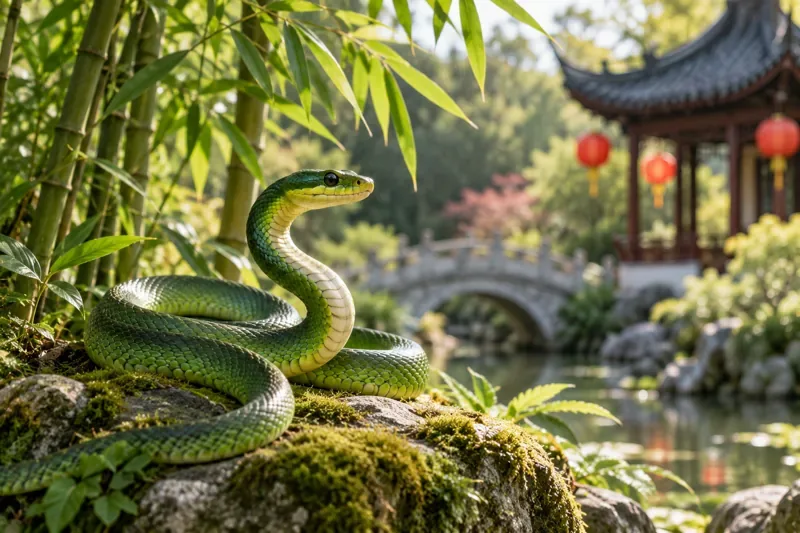
A green snake rests beside bamboo and a garden pond, evoking the Snake's traditional association with patience and careful observation.
Which birth years belong to the Chinese Snake zodiac?
The following dates follow the familiar Lunar New Year convention. The first date belongs to the Snake, while someone born earlier in that Gregorian year generally belongs to the preceding Dragon year. Dates can be checked against the official Gregorian–lunar conversion tables from the Hong Kong Observatory.
Snake year
Element
Snake-year date range
1965
Wood
February 2, 1965 – January 20, 1966
1977
Fire
February 18, 1977 – February 6, 1978
1989
Earth
February 6, 1989 – January 26, 1990
2001
Metal
January 24, 2001 – February 11, 2002
2013
Water
February 10, 2013 – January 30, 2014
2025
Wood
January 29, 2025 – February 16, 2026
For an exact birthday near the boundary, use the Hong Kong Observatory Gregorian–lunar calendar tables. Some Four Pillars (BaZi) schools instead use the solar term Li Chun (the Beginning of Spring), which may give a different annual pillar for early-February birthdays. This article uses Lunar New Year consistently.
How do the five elements change the Snake interpretation?
Wood, Fire, Earth, Metal, and Water—often called the five elements or wu xing—are traditional categories describing patterns of interaction and change. They are not scientific personality types. Each element adds a different emphasis to the Snake archetype.
Snake type
Traditional emphasis
Potential advantage
Trade-off to watch
Wood Snake (1965, 2025)
Growth, curiosity, cooperation
Listening and developing ideas
Overplanning instead of acting
Fire Snake (1977)
Intensity, confidence, ambition
Taking initiative
Hurrying a difficult decision
Earth Snake (1989)
Practicality, patience, consistency
Building stable routines
Resisting useful change
Metal Snake (2001)
Focus, independence, resolve
Following through
Being overly rigid
Water Snake (2013)
Adaptability, reflection, sensitivity
Reading context and adjusting
Second-guessing choices
These are contrasting symbolic descriptions, not traits established by birth-year research. Use them as prompts for reflection: Which strengths are supported by your real behavior, and what feedback suggests a blind spot?
Snake personality: strengths and weaknesses
What strengths are traditionally associated with Snakes?
Snake-born people are commonly portrayed in zodiac folklore as perceptive, composed, private, strategic, and persuasive. In a workplace situation, that could look like listening before speaking, checking the details of a proposal, and identifying risks before the group commits. The possible benefit is a more deliberate choice, especially where errors are expensive.
The same restraint has a cost if it turns into secrecy or indecision. A person who analyzes every option might miss a reasonable deadline. Someone who values independence might fail to share crucial information. The useful distinction is between careful thinking and unnecessary delay, not whether someone was born in a Snake year.
How can you use these traits constructively?
If you identify with the thoughtful Snake description, define when enough evidence is enough and share your reasoning with teammates or loved ones. If you identify with its competitive side, ask for input before defending a position. If none of this fits, there is no need to force a traditional label onto your personality.
Chinese Snake compatibility: which matches are favored?
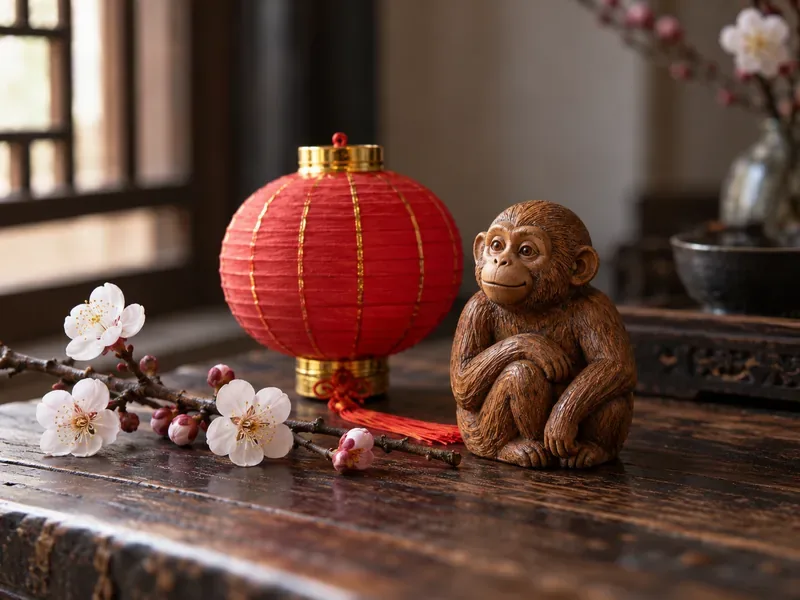
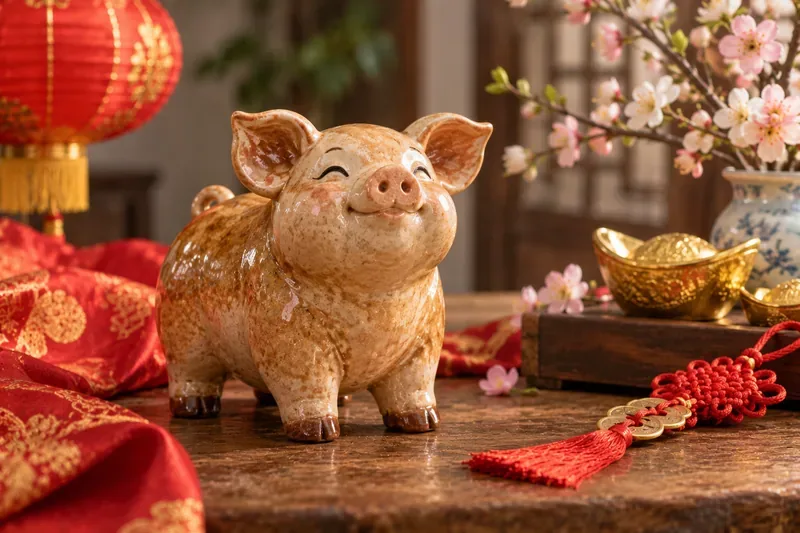
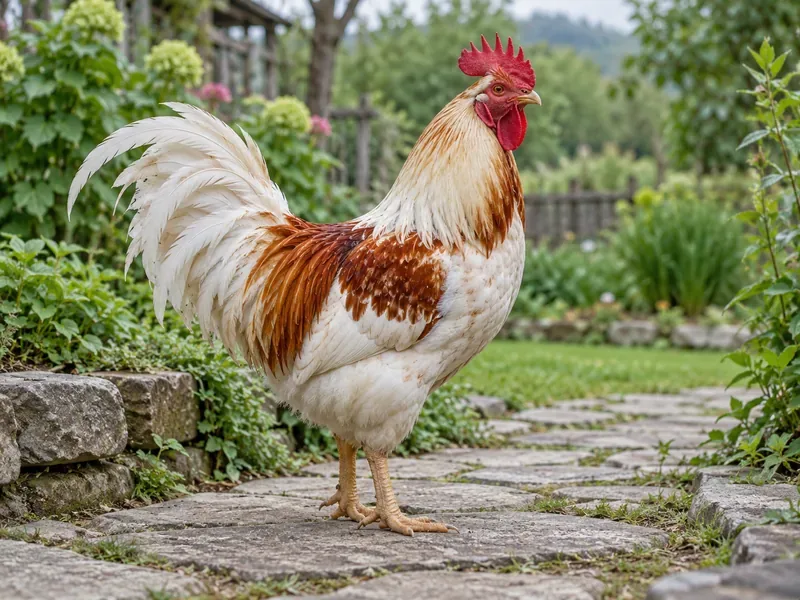
Traditional Chinese zodiac compatibility often names the Ox and Rooster as harmonious partners for the Snake, following the symbolic three-harmony grouping. The Monkey is also linked with the Snake through a traditional six-harmony pairing, although some systems describe that relationship as complex. Pig is commonly treated as an opposing or clashing sign. Interpretations vary across schools, and none reliably predicts whether two people will form a healthy relationship.
Traditional pairing
Symbolic reading
Better real-world question
Snake + Ox
Often described as stable
Do both partners share expectations about responsibility?
Snake + Rooster
Often described as complementary
Can they cooperate without competing for control?
Snake + Monkey
Linked but potentially dynamic
How are disagreements repaired?
Snake + Pig
Traditionally labeled a clash
Do they communicate openly and honor boundaries?
Do not reject a relationship because of a symbolic clash or assume compatibility guarantees trust. Shared values, emotional safety, conflict resolution, and conduct over time give more actionable evidence than animal signs. Readers exploring another animal can consult related animal-sign and compatibility guides for cultural context.
What is the Snake's traditional love style?
In traditional readings, the Snake is selective in love, loyal once committed, and protective of privacy. An attentive but reserved partner may prefer deep conversations and steady trust rather than dramatic displays. The drawback is that privacy can be misunderstood as emotional distance, while protectiveness can become jealousy.
Someone who wants steadiness should ask about commitment, communication, and everyday reliability. Someone who wants spontaneity should discuss how much independence each person needs. A useful compromise is to combine private time with regular, explicit check-ins; no horoscope can substitute for consent, respect, and listening.
Which careers suit a Snake—and what are the trade-offs?
Zodiac tradition often associates Snakes with analysis, research, finance, design, counseling, and strategy because those roles can reward observation and discretion. That does not mean Snake-born people are naturally qualified for them. Skills, training, temperament, working conditions, and opportunities matter much more.
Compare roles by your actual needs
Research or data analysis: fits people who enjoy careful investigation; the trade-off may be long feedback cycles and uncertainty.
Finance or operations: values accuracy and planning; the trade-off includes deadlines, regulation, and decisions under pressure.
Design or product strategy: combines insight with creative judgment; the trade-off is frequent iteration and critique.
People-focused work: rewards observation and listening; the trade-off is the need for clear, emotionally open communication rather than silent inference.
To choose between two paths, compare the daily tasks, required qualifications, salary ranges in your location, training cost, and whether the work energizes you. Test your preference through a short project, informational interview, or supervised experience, rather than selecting a profession based on a birth sign.
Money habits and traditional Snake luck
Snake readings frequently describe a preference for planning, saving, and selective risk-taking. The practical upside of a measured approach is fewer impulsive purchases; the downside may be excessive caution or overconfidence in private research. Neither financial outcomes nor investment performance can be deduced from an animal sign.
For significant money choices, compare the cost, liquidity, potential loss, and your emergency savings. Keep a budget, check fees, and seek qualified advice when appropriate. Favor documented terms over a supposedly auspicious date.
Are there lucky numbers, colors, or directions?
Popular Snake traditions sometimes associate 2, 8, and 9 with luck, and colors such as red, yellow, and black appear in various modern zodiac lists. Such sets vary among traditions; there is no universal official allocation or evidence that they change outcomes. Use a color or number for decoration, celebration, or personal meaning—not as a betting strategy, health recommendation, or investment signal.
Snake horoscope for 2027: a practical cultural outlook
The popular lunar zodiac changes to the Fire Goat year on February 6, 2027, according to the Hong Kong Observatory's calendar. Goat is also translated as Sheep or Ram. The following points are reflective interpretations, not predictions of individual events.
Love and relationships
The Goat's traditional emphasis on harmony offers Snakes a symbolic reminder to prioritize warmth over winning an argument. If dating, look for consistency rather than instant chemistry. If partnered, set aside time to discuss the things you normally keep private.
Career and work
In this cultural reading, 2027 invites a balance between the Snake's independent strategy and collaborative execution. Choose one important professional skill to strengthen, seek feedback, and document results. Avoid committing to multiple demanding projects without checking capacity.
Money
Rather than interpreting the Fire Goat year as inherently profitable or risky, use it as an occasion to review savings targets and recurring spending. Separate necessary expenses, optional purchases, and speculative investments. Do not borrow or trade because a horoscope signals good luck.
Health and energy
Traditional reflections on balance can motivate consistent sleep, movement, and rest. They cannot diagnose conditions or forecast illness. If you have symptoms or personal health concerns, use evidence-based medical guidance.
Favorable periods and cautions
There is no independently verifiable set of universally favorable months for all Snakes in 2027. Instead, identify favorable practical periods: a month after building adequate savings, a week when you have time to prepare for a difficult conversation, or a quarter when project resources are available. Be especially cautious with rushed contracts, ambiguous commitments, and expenses driven by optimism rather than numbers.
How to make a useful choice with—or without—the zodiac
First verify your birth date against a lunar-calendar table, then identify the corresponding animal and element. Next, treat the symbolic description as a question rather than an answer: Does it match behavior that you and others can observe? Finally, compare competing real-world options using criteria that can be checked. In relationships, prioritize respect and communication; in work, skills and job conditions; in money, affordability and risk. That approach lets you appreciate the Chinese Snake zodiac as a cultural tradition while keeping consequential decisions grounded in evidence.