Home
» Horoscope
»
Chinese Wood Goat Zodiac: Birth Years, Traits, Compatibility, and Meaning
Chinese Wood Goat Zodiac: Birth Years, Traits, Compatibility, and Meaning
If you are trying to identify a Wood Goat birthday, the most common mistake is using January 1 as the zodiac cutoff. The Chinese zodiac year changes at Lunar New Year, so someone born early in 1955 or 2015 may belong to the previous sign. In the customary lunar-year system, the Wood Goat years ran from February 24, 1955, to February 11, 1956, and from February 19, 2015, to February 7, 2016. For a birth near one of those dates, check the exact calendar convention before reading a personality profile.
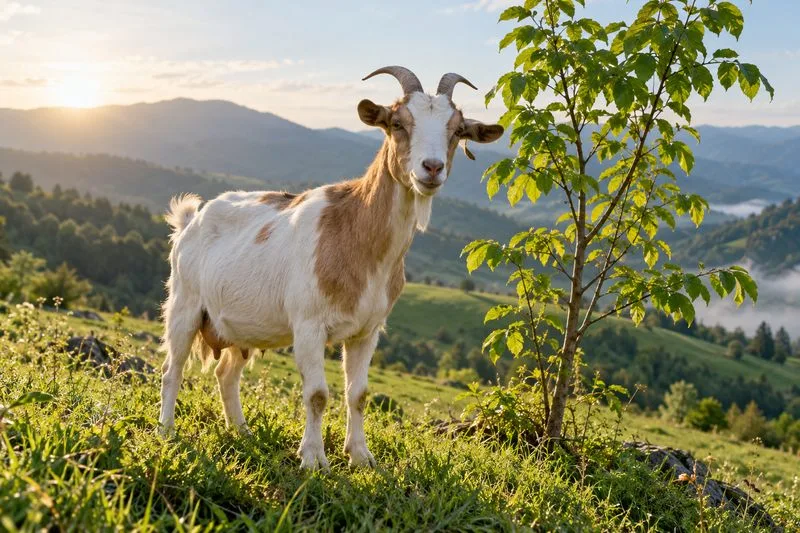
A goat beside a growing sapling gives a natural image for the traditional Wood Goat themes of care, creativity, and steady development.
In Chinese zodiac tradition, the Goat—also called Sheep or Ram in some English references—is linked with sensitivity, creativity, and a preference for harmony. Wood is symbolically associated with growth and flexibility. Together, these themes are often read as a considerate, imaginative, cooperative temperament. They are cultural interpretations, not scientific facts about everyone born in these years.
Which years are Chinese Wood Goat years?
The 12 zodiac animals repeat every 12 years, while the animal-element combination returns in a 60-year stem-branch cycle. The Hong Kong Observatory identifies 1955 as Yi-wei, the year of the Goat; 2015 is another Yi-wei year. The element is Wood in the traditional stem-and-branch correspondence.
February 24, 1955–February 11, 1956: the Wood Goat lunar year that began in 1955.
February 19, 2015–February 7, 2016: the next Wood Goat lunar year.
These date ranges use the first day of the first lunar month as the year boundary. Some Four Pillars or BaZi readings use the solar term Li Chun instead, which can change the result for someone born around the transition. If your birthday falls near the cutoff, note your date, time, location, and the system your source uses; do not rely on the Gregorian year alone.
What does Wood add to the Goat sign?
The five phases—Wood, Fire, Earth, Metal, and Water—are part of a traditional Chinese system for describing cycles of change. They are sometimes called the “five elements” in English, but they are not the same as chemical elements. The Wood Goat is associated with Yi-wei (乙未), the Wood stem paired with the Goat branch.
In symbolic readings, Goat qualities of gentleness and sensitivity are combined with Wood themes such as growth, creativity, and cooperation. A Wood Goat may therefore be described as warm, perceptive, imaginative, and willing to help a group develop. Traditional cautions include taking on too much, avoiding disagreement, or waiting for reassurance before making a decision. These are themes to consider, not a personality test result.
Wood Goat personality: strengths and pressure points
Strengths in traditional interpretations
Consideration: paying attention to how choices affect other people.
Creative thinking: seeing possibilities in design, communication, or problem-solving.
Cooperation: contributing to shared work and helping a team maintain trust.
Patience: preferring thoughtful progress over unnecessary confrontation.
Where those qualities can become difficult
Being considerate can turn into neglecting your own needs. A wish for harmony may make a person postpone a useful boundary or let an unresolved issue grow. Creativity can also be slowed by perfectionism or uncertainty about whether others will approve.
Start with a simple check: write down the decision you are avoiding, the information you still need, and a date by which you will decide. If a conversation is overdue, plan one clear sentence that states your concern without blame. This turns a symbolic reading into a practical prompt.
Wood Goat compatibility in love, friendship, and work
One traditional compatibility grouping places Rabbit, Sheep/Goat, and Pig together as signs considered harmonious. The British Library’s International Dunhuang Programme also describes Goat/Ox as an opposing pairing in one common zodiac-wheel interpretation. Such pairings are part of folklore and astrological tradition; they do not establish whether two people will get along.
Some Chinese astrology readings consider more than the year animal, including the birth month, day, and hour. This is why a simple online compatibility chart may not match another source. In real relationships, trust, shared values, communication, and how people handle conflict matter more than an animal-year match. Use traditional pairings as conversation starters, not as reasons to accept or reject a partner, friend, or colleague.
For a Wood Goat in love, the traditional strengths are tenderness and attentiveness. A practical growth area is saying what you need directly instead of expecting a partner to guess. In friendship, mutual care works best when support goes both ways. At work, empathy and creativity can help teams, while specific roles and deadlines keep cooperative plans from becoming vague.
Career and money themes
Traditional Goat descriptions often favor creative, service-oriented, or collaborative settings. That might resonate with work involving design, teaching, communication, research, care, or team coordination—but a zodiac sign cannot tell you which career will suit you. Compare a role’s everyday tasks, compensation, stability, learning opportunities, and work environment against your own skills and priorities.
Wood’s growth symbolism can be a useful metaphor for building skills over time. Set one development goal, such as finishing a course, assembling a portfolio, or asking for feedback on a project. For financial decisions, use a budget, timeline, and risk assessment. There is no verified “wealth luck” attached to a birth-year pairing, and a lucky color or date cannot replace careful planning.
Luck and traditional symbols
Different almanacs and practitioners may give different lucky colors, numbers, directions, or days. No single list is universal, and these symbols cannot guarantee a result. If a symbol matters to you or your family, it can be meaningful as a cultural practice. For a major purchase, contract, medical choice, or career move, check the practical conditions first.
2027 outlook for Wood Goat readers
The next lunar year, beginning February 6, 2027, is a Year of the Goat. It is a Goat year, but it is not a Wood Goat year: the 2027 calendar names it Ding-wei, a different element-animal combination. A horoscope interpretation for 2027 is cultural or entertainment content, not a verifiable forecast.
As a reflective theme, you might use the year to balance personal goals with community ties. In relationships, be kind while being clear. At work, let collaboration support a concrete plan. With money, distinguish hopeful ideas from researched opportunities. For well-being, rely on routine care and professional advice rather than predictions based on a zodiac sign.
Check your sign before using a zodiac profile
Find your full Gregorian birth date, especially if you were born in January or February.
Check the Lunar New Year date for your birth year in an official conversion calendar.
Confirm whether the source uses the lunar-year boundary or Li Chun for Four Pillars calculations.
Only then use a Wood Goat reading as cultural context or personal reflection.
The Hong Kong Observatory’s Gregorian-lunar conversion tables identify 1955 and 2015 as Yi-wei Goat years and show the lunar-month boundaries. Its 1956 and 2016 tables establish when the following lunar year began. The International Dunhuang Programme at the British Library explains the 60-year cycle and gives examples of traditional compatibility groupings. The Hong Kong Observatory’s 2027 conversion table identifies 2027 as Ding-wei, Year of the Goat, and shows Lunar New Year on February 6.