Home
» Horoscope
»
Chinese Wood Rooster Zodiac: Birth Years, Traits, Compatibility, and Luck
Chinese Wood Rooster Zodiac: Birth Years, Traits, Compatibility, and Luck
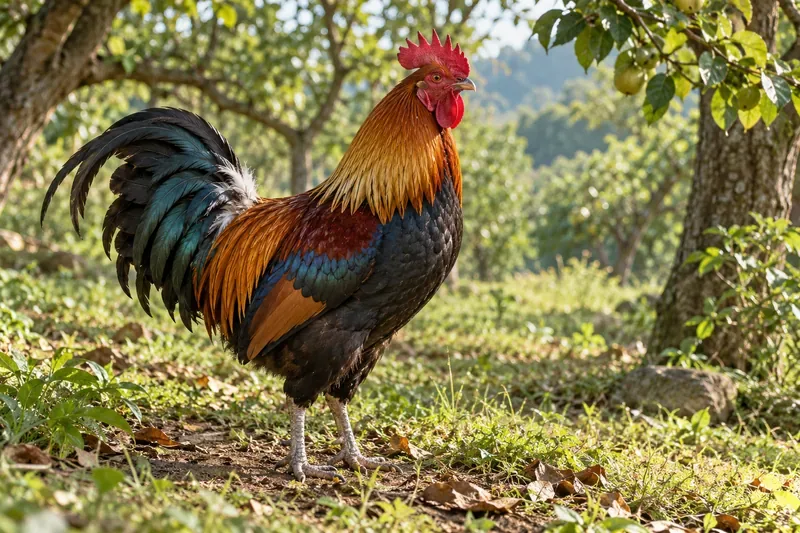
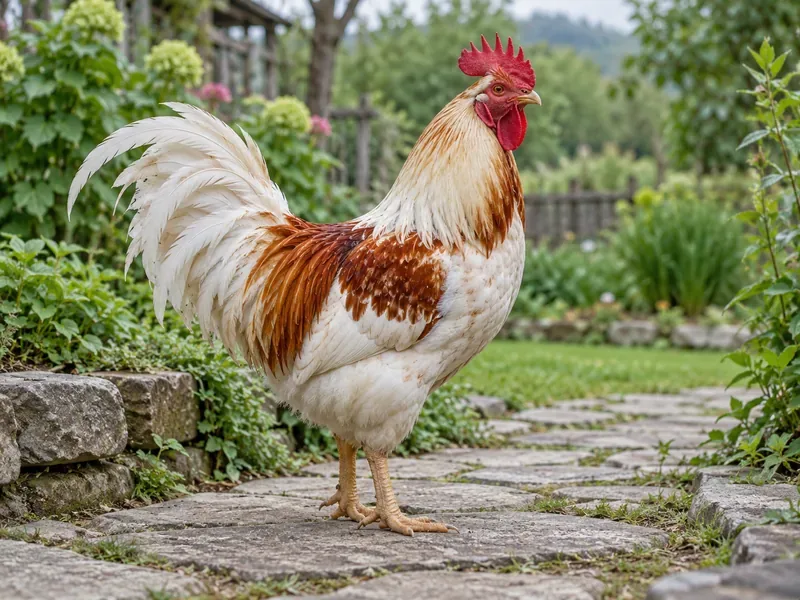
A rooster stands beneath leafy orchard branches, with copper and dark feathers catching the morning light.
If you were born in January or early February, a Chinese zodiac chart may give you a different sign from another chart—or the same animal with a different element. The Wood Rooster years under the Heavenly Stems method are 1945 and 2005, and the combination returns every 60 years. Using the Lunar New Year boundary, the 2005 Wood Rooster year began on February 9, 2005, and ended on January 28, 2006. The 1945 span ran from February 13, 1945, through February 1, 1946. This guide uses those calendar cutoffs and treats personality and luck descriptions as traditional interpretations, not proven facts or guarantees.
In common Chinese zodiac readings, the Rooster is associated with diligence, punctuality, confidence, and clear communication. Wood is often interpreted through themes of growth, flexibility, and cooperation. The Wood Rooster is therefore commonly portrayed as organized and outspoken while also more socially minded or adaptable than some other Rooster types. These descriptions can help explain the tradition; they cannot tell you exactly how a person will act.
Wood Rooster birth years and the Lunar New Year cutoff
The recent Wood Rooster years are 1945 and 2005; the same 60-year combination returns in 2065. Their Gregorian date ranges do not start on January 1:
1945 Wood Rooster: February 13, 1945–February 1, 1946.
2005 Wood Rooster: February 9, 2005–January 28, 2006.
For example, a person born on February 1, 2005, was born before the Lunar New Year that began the 2005 Rooster year. Under the lunar-year convention, that birthday falls in the preceding zodiac year. The Hong Kong Observatory’s conversion tables identify the 1945 Yi-You Rooster year and show its first lunar month beginning February 13. The 2005 calendar table gives February 9 as the start of the Wood Rooster range. Check the Hong Kong Observatory’s 1945 Gregorian–Lunar conversion table and the Chinese zodiac calendar table for 2005 if your birthday is near a boundary.
Element-method note: the Macao Post’s Rooster-year material explains that traditional sources can calculate the Five Elements through different systems. This article follows the Heavenly Stems convention: Yi-You (乙酉) is Wood Rooster, corresponding to 1945 and 2005. If another chart gives a different element, check which calculation method it uses before assuming the source is wrong. The Macao Post explanation of Rooster-year element systems lays out the distinction.
The Rooster is the animal sign; Wood is the element paired with it in a particular cycle year. In the common symbolic reading, Wood adds a growth-oriented, collaborative note to the Rooster’s reputation for discipline, attention to detail, and direct speech. It may be described as a sign that values progress and relationships, and prefers organizing people around a practical goal.
That description is a cultural lens, not a measured psychological effect. It does not mean every Wood Rooster is flexible, diplomatic, or ambitious. People born in the same year differ because of family, culture, experience, health, personality, and circumstances. Use the element as a prompt: ask whether you actually welcome feedback and adjust plans when new information appears.
Wood Rooster personality: strengths and challenges
Commonly described strengths
Conscientiousness: traditional Rooster profiles often emphasize discipline, punctuality, and keeping track of details.
Communication: the sign is commonly portrayed as direct and willing to make an idea or concern clear.
Reliability: attention to commitments can help a person earn trust over time.
Social awareness: Wood Rooster descriptions often add kindness, friendship, and an interest in harmony with coworkers or family.
Initiative: the Wood element is often interpreted as a desire to develop skills or improve a situation.
These are traditional qualities rather than verified attributes of everyone born in a Wood Rooster year. The Metropolitan Museum of Art notes that Rooster-born people are traditionally thought of as diligent and industrious, and that the Rooster has auspicious meanings in Chinese art. Macao Post’s cultural account associates Wood Rooster readings with kindness and a concern for family and social harmony. The Met’s Year of the Rooster overview and the Macao Post source offer context for those beliefs.
Possible pressure points
The same symbolic strengths can have a less helpful side. High standards may turn into perfectionism; direct feedback may sound harsh when timing or tone is off; confidence can become defensiveness; and an urge to keep things harmonious can make someone avoid a necessary disagreement. Traditional zodiac descriptions sometimes call Roosters critical or proud, but that is not a diagnosis and should not be used to label a person.
Practical check: look at a recent disagreement or project review. Did you explain the standard clearly? Did you leave space for a different approach? Did you revise your view when evidence changed? If one habit caused friction, try a specific adjustment—ask a question before giving feedback, define what “done” means, or invite a colleague to challenge your first draft.
Chinese Wood Rooster compatibility
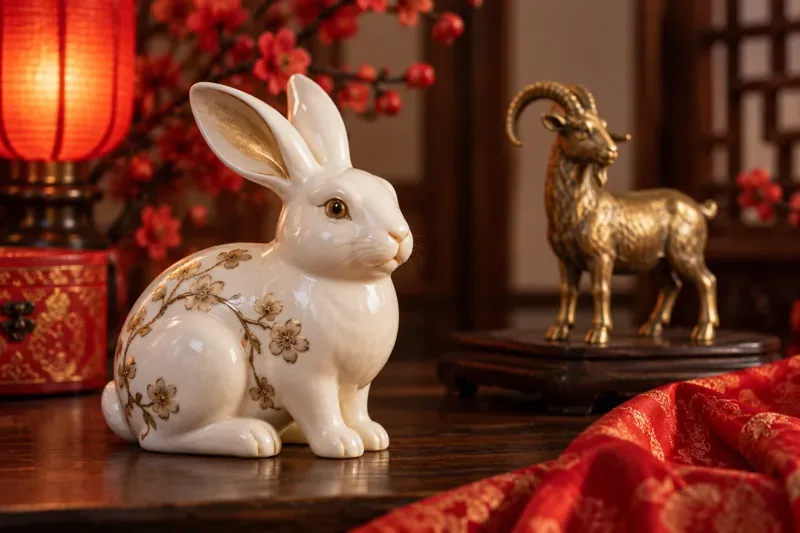
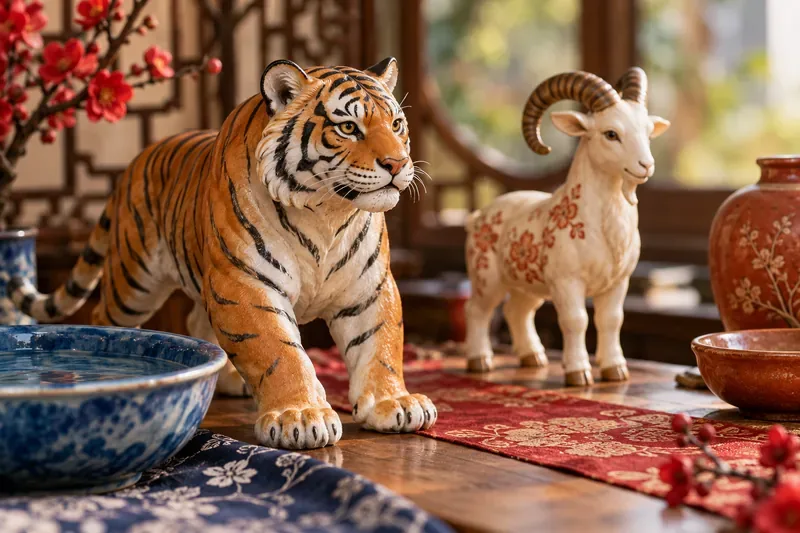
In one traditional compatibility chart, Rooster, Ox, and Snake form a harmonious triad, while Rabbit sits opposite Rooster on the zodiac wheel and is often described as a more challenging match. The British Library’s International Dunhuang Programme presents these pairings as beliefs within zodiac culture, not as evidence-based predictions. Other schools may consider additional chart details or use a different system.
Compatibility should not be treated as a rule for choosing friends, partners, or coworkers. Even a traditional reading that calls a pairing harmonious cannot establish whether two people communicate well, share values, or handle conflict respectfully. If you are exploring a relationship, use the chart only as a conversation starter. Ask how each person prefers to give feedback, make decisions, and divide responsibilities. The Chinese zodiac compatibility guide can provide the traditional framework; real behavior is the better test of a relationship.
What is known: these pairings exist in a documented traditional chart. What depends on context: how different schools interpret a full chart and how a real couple relates. What is not established: that a Rooster–Rabbit relationship is destined to fail. Use the pairing as folklore, not a verdict. Read the British Library’s zodiac compatibility explainer for how that chart describes the groups.
Love and relationship style
Traditional Wood Rooster readings often describe someone who values honesty, loyalty, effort, and a shared sense of direction. They may show affection by remembering details, helping solve a problem, or following through on a promise. A preference for order and clear expectations can support a relationship, but it can also create tension if one partner feels judged or managed.
In a relationship, replace assumptions about signs with questions about needs. Agree on how to raise a concern without turning it into a character judgment. Make room for different standards on tidiness, planning, or spending. If a partner’s behavior is hurting you, address that behavior directly instead of explaining it away as “just their zodiac sign.”
Career and work habits
The Wood Rooster archetype fits work that rewards accuracy, preparation, accountability, and communication. In a team, a person who enjoys organizing details may help a project stay on schedule; someone comfortable speaking up may notice a quality issue early. The Wood symbolism can add an interest in learning and building relationships, making mentoring or collaborative projects appealing in a traditional reading.
The trade-off is that perfectionism and blunt feedback can slow work or wear down trust. If you identify with the Rooster’s high standards, state the required outcome and deadline before refining minor details. If you are leading, ask whether a task needs “excellent” or simply “complete and correct.” If you work with a Rooster-born colleague, agree on a review process rather than assuming they will naturally want the same level of detail you do.
No birth-year animal can determine career fit or success. Evaluate actual skills, interests, work conditions, and opportunities. A useful next step is to compare the profile’s themes with recent evidence: Which responsibilities energize you? Where has your attention to detail helped? When has it caused unnecessary delay? Use those answers in career planning rather than relying on zodiac promises.
Money and luck: symbolism versus practical decisions
Rooster folklore may connect the sign with diligence, good timing, or favorable fortune. Some Wood Rooster descriptions also mention finding new sources of income. These are symbolic readings, not a dependable forecast of earnings or investment performance. No zodiac element guarantees wealth, and lucky dates or objects should not replace checking costs and risks.
For practical financial decisions, track recurring spending, compare fees and terms, and set a savings target that matches your income and obligations. If a lucky symbol is meaningful to you, use it as a personal reminder to follow your plan. Do not borrow, invest, or change jobs because a horoscope says the year will be fortunate.
2027 outlook for Wood Rooster readers
The Chinese zodiac calendar identifies 2027 as a Fire Goat year, with Lunar New Year beginning February 6. Goat is also translated as Sheep or Ram. In a simple traditional harmony-triad chart, Goat belongs with Rabbit and Pig, while Rooster belongs with Ox and Snake. That chart does not provide a reliable personal forecast for Wood Rooster readers, and it does not prove that 2027 will be bad or good for them.
A grounded way to use the 2027 outlook is to set goals that can be reviewed: clarify expectations in relationships, document important work agreements, and make financial choices from current information. Treat any prediction about love, career, health, or money as entertainment rather than certainty. For the calendar date and year sign, check the Chinese zodiac year table; for further context, see the site’s 2027 Chinese zodiac guide.
Self-check: is this reading useful?
Start by confirming that your birthday falls within the Wood Rooster date range and that the chart uses the Heavenly Stems method. Then separate the folklore from the evidence: do the descriptions of organization, directness, social concern, or high standards match choices you can point to? Keep the parts that help you act with more care, and set aside claims that predict a fixed outcome. A zodiac reading is most useful when it leads to a practical question—not when it makes the decision for you.