Home
» Horoscope
»
Chinese Zodiac Compatibility: Best Matches and Toughest Pairings for All 12 Signs
Chinese Zodiac Compatibility: Best Matches and Toughest Pairings for All 12 Signs
Which Chinese zodiac signs get along best? Traditional compatibility readings favor the six harmony pairs—Rat–Ox, Tiger–Pig, Rabbit–Dog, Dragon–Rooster, Snake–Monkey, and Horse–Goat—along with four groups of three allied animals. The most challenging pairings in the usual six clashes system are Rat–Horse, Ox–Goat, Tiger–Monkey, Rabbit–Rooster, Dragon–Dog, and Snake–Pig.
These are cultural interpretations of a calendar system, not scientifically established predictions of love, marriage, friendship, or professional success. Use the guide to identify the signs correctly, understand the traditional labels, and turn them into practical questions instead of judgments about people.
Step 1: Find each person's actual Chinese zodiac sign
The Chinese zodiac runs through twelve animals in this order: Rat, Ox, Tiger, Rabbit, Dragon, Snake, Horse, Goat, Monkey, Rooster, Dog, and Pig. The Goat is also translated as Sheep or Ram. The Metropolitan Museum of Art's account of twelve zodiac figures documents the established animal order and its historical calendar use.
For the everyday Chinese zodiac year, the animal changes at Lunar New Year, not January 1. You need both people's full birth dates, especially if either was born in January or February. A person born on February 16, 2026, is still in the Snake year; the Fire Horse year begins on February 17, 2026, as confirmed by the Smithsonian's 2026 Lunar New Year guide.
A quick orientation for recent Lunar New Year cycles is useful, but these Gregorian years alone are not enough for people born before the year's Lunar New Year date:
Gregorian year in which the zodiac year begins
Animal
Gregorian year in which the zodiac year begins
Animal
2020
Rat
2026
Horse
2021
Ox
2027
Goat
2022
Tiger
2028
Monkey
2023
Rabbit
2029
Rooster
2024
Dragon
2030
Dog
2025
Snake
2031
Pig
Beginner action: Record both complete birth dates and the corresponding Lunar New Year dates before using any compatibility table. If you're consulting a more specialized Four Pillars (BaZi) reading, ask which year boundary it uses; some methods calculate the year pillar from the solar term Li Chun (Beginning of Spring) instead.
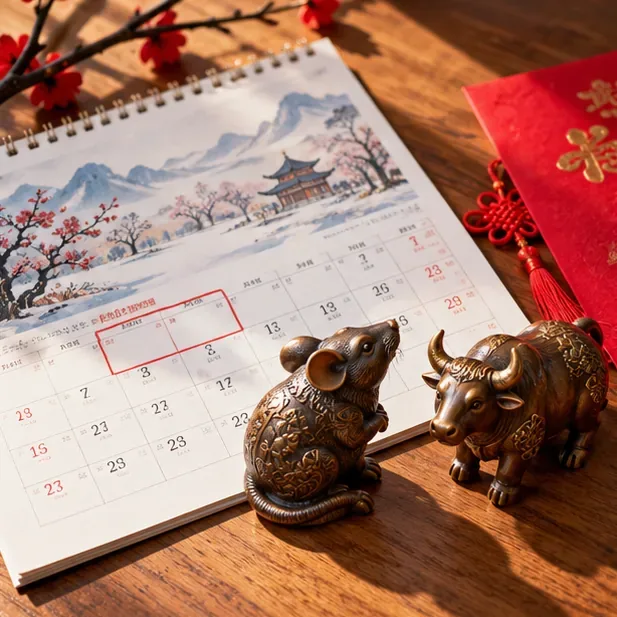
A desk calendar beside Rat and Ox figures highlights the need to confirm the Lunar New Year date before identifying a birth-year sign.
Step 2: Learn what harmony, trine, and clash actually mean
Traditional Chinese zodiac compatibility uses the twelve Earthly Branches, a sequence of twelve calendrical symbols associated with the zodiac animals. Three named patterns account for most beginner-level match charts.
Six Harmonies: one complementary partner for each sign
Liu He (六合), commonly called the Six Harmonies or Six Combinations, consists of six fixed pairs: Rat–Ox, Tiger–Pig, Rabbit–Dog, Dragon–Rooster, Snake–Monkey, and Horse–Goat. A traditional reading may describe these as complementary or cooperative. “Harmony” does not mean a guaranteed romantic outcome.
Three Harmonies: four allied groups
San He (三合), or Three Harmonies, groups animals into four trines—groups of three signs spaced four positions apart on the twelve-sign cycle:
Rat, Dragon, Monkey: traditionally connected with Water.
Ox, Snake, Rooster: traditionally connected with Metal.
Tiger, Horse, Dog: traditionally connected with Fire.
Rabbit, Goat, Pig: traditionally connected with Wood.
In a three-branch system, the full trio has a specific traditional meaning. Popular two-person compatibility charts borrow that group membership as a shorthand for affinity; they do not reproduce a complete classical reading. The historical Qinding Xieji Bianfang Shu, volume 6 (Chinese primary text) records these three-branch combinations.
Six Clashes: opposite signs, not impossible couples
Liu Chong (六冲), the Six Clashes, pairs animals across the twelve-position circle: Rat–Horse, Ox–Goat, Tiger–Monkey, Rabbit–Rooster, Dragon–Dog, and Snake–Pig. A clash symbolizes potential tension or competing approaches in traditional interpretation. The pairings are also recorded in the classical divination text Zengshan Buyi (Chinese primary text). Such classifications were developed in a symbolic system, not through controlled testing of modern relationships.
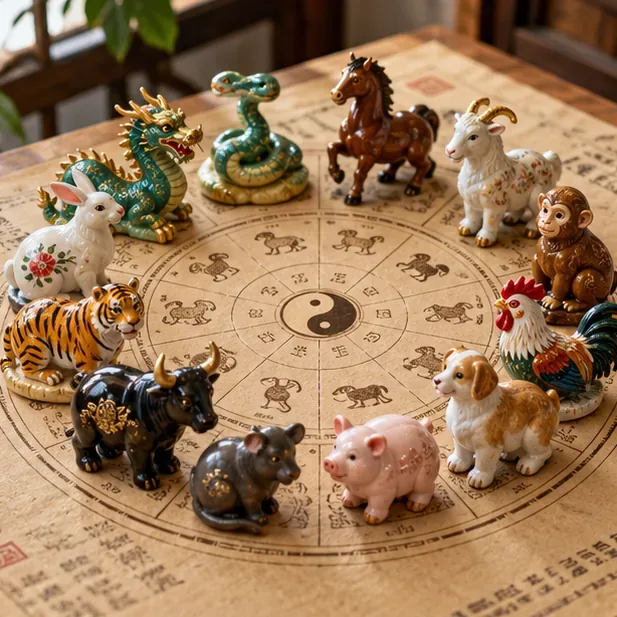
Twelve ceramic animal figures around a circular chart show the full zodiac sequence used in traditional compatibility groupings.
Step 3: Use the complete 12-sign Chinese zodiac compatibility chart
Find your sign in the first column. “Traditionally favorable” combines its two trine partners with its one Six Harmonies partner; “challenging” shows only the opposite-sign clash. A sign absent from both columns is not automatically incompatible.
Chinese zodiac sign
Traditionally favorable matches
Primary clash to approach thoughtfully
Rat
Ox, Dragon, Monkey
Horse
Ox
Rat, Snake, Rooster
Goat
Tiger
Pig, Horse, Dog
Monkey
Rabbit
Dog, Goat, Pig
Rooster
Dragon
Rooster, Rat, Monkey
Dog
Snake
Monkey, Ox, Rooster
Pig
Horse
Goat, Tiger, Dog
Rat
Goat (Sheep or Ram)
Horse, Rabbit, Pig
Ox
Monkey
Snake, Rat, Dragon
Tiger
Rooster
Dragon, Ox, Snake
Rabbit
Dog
Rabbit, Tiger, Horse
Dragon
Pig
Tiger, Rabbit, Goat
Snake
For a quick comparison, notice the reciprocal pattern: if the Ox appears as a favorable match for Rat, the Rat also appears for Ox. This is a feature of the listed branch relationships; it is not evidence that both people will behave the same way.
Step 4: Understand the strengths and friction points for all twelve signs
The descriptions below are traditional personality associations, followed by practical questions rather than predictions. People's actual temperaments depend on far more than the year they were born.
Rat: Ox, Dragon, and Monkey; watch for Horse friction
The Rat is commonly portrayed as adaptable and observant. An Ox pairing is interpreted as complementing quick ideas with steadiness; Dragon and Monkey belong to Rat's energetic trine. With Horse, discuss the difference between planning ahead and acting spontaneously. Ask: “How much notice do we each want before plans change?”
Ox: Rat, Snake, and Rooster; watch for Goat friction
The Ox symbolizes patience and reliability. Rat can represent flexibility, while Snake and Rooster share Ox's methodical trine. In an Ox–Goat pairing, a useful discussion is how structure and emotional reassurance can coexist. Agree on what must be scheduled and what can remain open-ended.
Tiger: Pig, Horse, and Dog; watch for Monkey friction
Tiger is associated with courage and independence. Pig is its harmony partner, while Horse and Dog share its traditional trine. Monkey's improvisational style may be interpreted as challenging Tiger's directness. Clarify who decides what—and how each person can question a decision without turning it into a contest.
Rabbit: Dog, Goat, and Pig; watch for Rooster friction
Rabbit carries associations of tact and consideration. Dog is the paired harmony sign; Goat and Pig sit in Rabbit's trine. Rooster represents a more openly exacting approach in folk descriptions. Agree on a kind way to give feedback, especially when small details matter to one person more than the other.
Dragon: Rooster, Rat, and Monkey; watch for Dog friction
Dragon symbolizes ambition and visibility. Rooster is its complementary harmony partner, and Rat and Monkey belong to its trine. Dog is traditionally a clash. Instead of assigning leadership traits to either person, compare real priorities: ambition, loyalty, risk tolerance, and what success would look like for both.
Snake: Monkey, Ox, and Rooster; watch for Pig friction
Snake often represents discretion and reflection. Monkey is its harmony partner; Ox and Rooster belong to its structured trine. With Pig, the symbolic contrast is between guardedness and openness. A practical starting point is whether both people feel comfortable sharing feelings and discussing uncertainty.
Horse: Goat, Tiger, and Dog; watch for Rat friction
Horse is linked to movement and personal freedom. Goat offers the traditional complementary pairing, while Tiger and Dog form the same trine. Rat is the opposite-sign clash. Partners can avoid assumptions by agreeing on the balance between independence, advance planning, shared time, and individual activities.
Goat: Horse, Rabbit, and Pig; watch for Ox friction
Goat—also called Sheep or Ram—is associated with gentleness and creativity. Horse is the harmony partner; Rabbit and Pig are the other trine members. Ox is the classic clash. For friendships or shared households, ask which routines provide security and which feel unnecessarily restrictive.
Monkey: Snake, Rat, and Dragon; watch for Tiger friction
Monkey is traditionally described as inventive and curious. Snake is the harmony partner; Rat and Dragon complete its trine. With Tiger, avoid treating confidence or humor as a character flaw. Instead, establish how to disagree, share credit, and keep promises after an exciting new idea takes shape.
Rooster: Dragon, Ox, and Snake; watch for Rabbit friction
Rooster is linked with organization and careful observation. Dragon is the harmony pairing, and Ox and Snake are its trine allies. Rabbit appears as the opposite-sign clash. In everyday life, check whether “being helpful” means offering detailed advice or simply listening before proposing a solution.
Dog: Rabbit, Tiger, and Horse; watch for Dragon friction
Dog symbolizes loyalty and a concern for fairness. Rabbit is its harmony partner; Tiger and Horse share its trine. Dragon can represent a competing emphasis on achievement or public recognition. Discuss boundaries, principles, and what each person needs to feel respected when making group decisions.
Pig: Tiger, Rabbit, and Goat; watch for Snake friction
Pig is often associated with generosity and straightforward warmth. Tiger is the harmony partner; Rabbit and Goat round out its trine. Snake is the traditional clash. Instead of assuming one person is secretive and the other trusting, ask what privacy, transparency, and reassurance mean to each person.
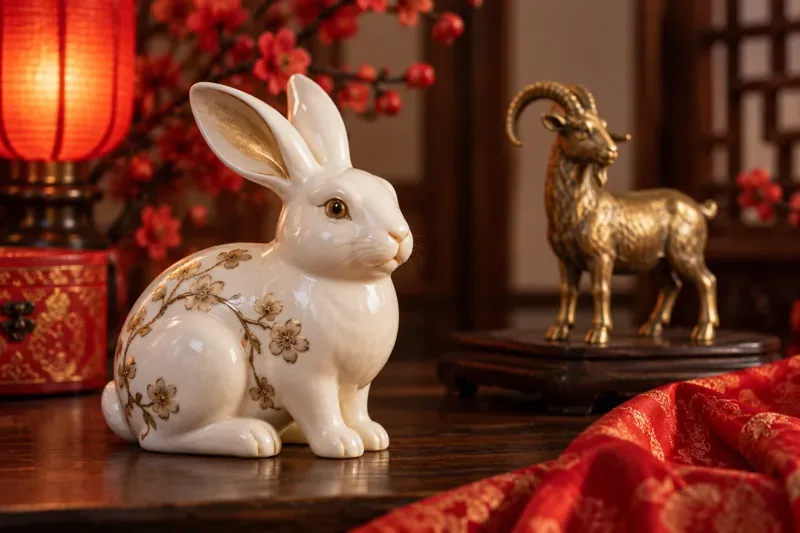
Horse and Rat tokens represent one traditional clash pair; the pairing is a cultural label, not a verdict on a relationship.
Step 5: Turn a compatibility label into something useful
Suppose one person is a Rat and the other is a Horse. The chart labels them a clash because their signs are opposite on the wheel. That identifies a traditional symbolic relationship, not a measured incompatibility between two individuals.
They could make the reading useful by comparing how they handle an unexpected weekend invitation. Perhaps one wants a confirmed schedule and budget while the other likes spontaneous travel. Those preferences have to be established by conversation; neither follows automatically from an animal sign.
For dating and long-term relationships: ask about commitment, communication during conflict, financial expectations, family involvement, and personal space.
For friendship: compare preferred social frequency, willingness to offer help, and how each person responds when plans change.
For working together: agree on decision ownership, deadlines, documentation, feedback style, and procedures for resolving disagreements.
For family relationships: check actual needs, ages, responsibilities, and patterns of respectful communication rather than labeling someone a “difficult sign.”
Try a simple exercise: each person names one shared goal, one important difference, and one small agreement to test this month. Revisit whether the agreement made life easier. That observable feedback is more informative than assigning a fixed compatibility percentage.
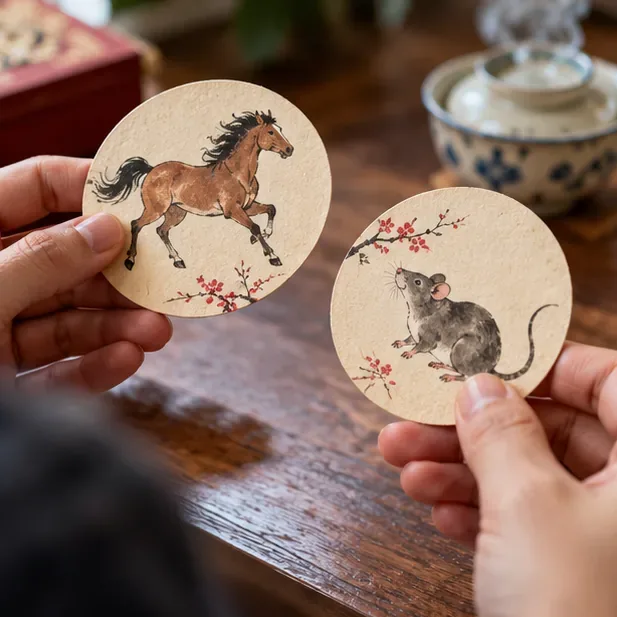
Two people discussing zodiac figures over tea illustrate the value of a conversation about habits, goals, and expectations beyond animal signs.
Step 6: Avoid the mistakes beginners make most often
Mistake: Using January 1 to identify the sign
This can give people born near Lunar New Year the wrong animal and element. Check the applicable conversion calendar before proceeding. The zodiac animal and its year element form a 60-year repeating cycle, not simply a twelve-year series with identical elements; the British Museum's discussion of an Earth Snake birth year provides an example of the element layer.
Mistake: Calling every unlisted combination a bad match
The chart deliberately highlights the standard harmonies, trines, and direct clashes. Other traditional schools add categories such as harms, punishments, or breaks, but their interpretations are more complex and do not establish that a relationship is destined to fail. Start with the specific system you are using, not an arbitrary numerical score.
Mistake: Treating year animals as a complete Four Pillars reading
BaZi, or the Four Pillars of Destiny, is a traditional framework that considers year, month, day, and hour pillars, each built from calendrical stems and branches. A basic birth-year compatibility chart leaves out those additional components. If you explore a specialist reading, provide accurate birth information and ask which calendar conventions and interpretive rules the practitioner uses.
Mistake: Mistaking cultural influence for predictive proof
A 2026 study in the Journal of Economic Behavior & Organization examined Chinese census data and an incentivized survey. Its reported findings suggest that unfavorable traditional zodiac labels may influence spouse selection. That is evidence about behavior and beliefs, not evidence that the labeled pairs are naturally less loving or more likely to separate.
More generally, an original 2020 Swedish longitudinal study found no consistent support for Western sun-sign compatibility predicting marriage or divorce outcomes. Because it studied a different zodiac system, it should not be passed off as a direct experimental test of Chinese animal pairings. The important distinction is between a verifiable historical convention and an unverified prediction about an individual couple.
How to choose your next Chinese zodiac guide
Once you have both signs, move from broad comparisons to the question that actually interests you. Related articles worth exploring include individual Rat, Dragon, Goat, or Dog animal profiles; element–animal combinations such as Wood Dragon or Fire Horse; birth-year guides that verify the Lunar New Year cutoff; individual Rat–Horse or Ox–Goat compatibility discussions; and the 2027 Fire Goat horoscope for readers interested in the next zodiac year. These are useful internal-link opportunities for a zodiac content collection, but a horoscope is cultural reading material rather than an evidence-based forecast.
Bottom line
For a first look at Chinese zodiac compatibility, identify both signs using their Lunar New Year boundaries, compare the six harmony pairs and four trines, and note any opposite-sign clash. Then set the symbolism aside long enough to understand the people themselves. The best practical outcome is not a perfect match score; it is a more specific conversation about the relationship.
Source and interpretation note: The animal sequence and calendar dates above are supported by museum collections, the Smithsonian, the Hong Kong Observatory, and government publications linked in context. The traditional harmony and clash classifications refer to historical Chinese calendrical and divination literature, not validated causal laws of personality or relationships. This article was checked against accessible source material in October 2026.