If you want the shortest answer first: there is no scientifically proven “lucky color” for any zodiac sign. In astrology, lucky colors are symbolic tools—ways to reinforce a mood, intention, or personal theme. For October 2026, the most useful approach is to choose one or two colors that fit your sign’s traditional symbolism, then use them where they can affect your attention and habits: clothing, a phone case, a notebook, a scarf, a desk accessory, or a small home accent.
The calendar itself does have verifiable astronomical landmarks. NASA’s 2026 calendar lists the New Moon on October 10 and the Full Moon on October 26, while its Moon-phase reference explains that the lunar cycle repeats about every 29.5 days. Those dates can be useful as neutral planning markers if you enjoy pairing personal rituals with the Moon, but they do not provide scientific evidence that a particular color changes luck or outcomes. See NASA’s Moon phases guide and the NASA 2026 Science Planning Guide.
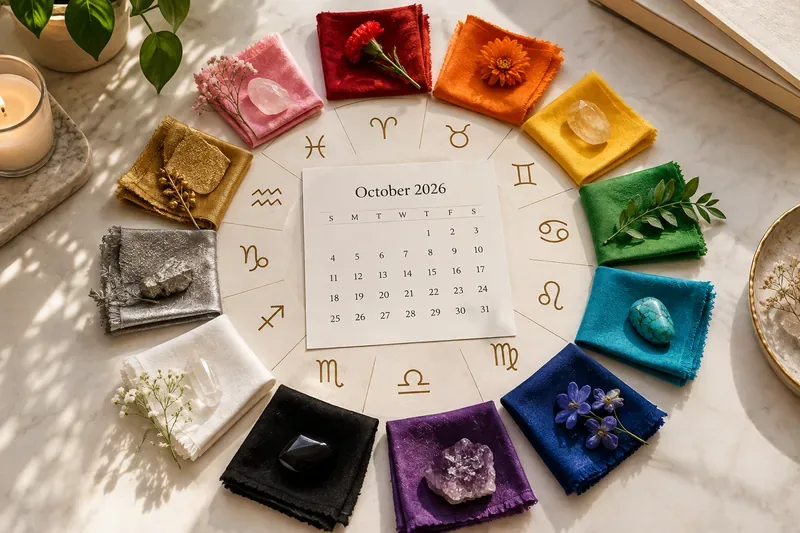
Caption: An October 2026 calendar is arranged inside a zodiac circle, with twelve color swatches and small natural accents showing how a “lucky color” can be treated as a practical visual cue rather than a guarantee of good fortune.
What are the October 2026 lucky colors for all 12 zodiac signs?
For a quick reference, use the list below. These are interpretive color pairings based on common zodiac symbolism rather than measurable predictions. The best choice is the one that fits both your sign and the situation you actually face.
- Aries: scarlet, brick red, warm coral
- Taurus: olive green, moss, soft rose
- Gemini: lemon yellow, sky blue, mint
- Cancer: pearl white, silver, seafoam
- Leo: gold, amber, sunflower yellow
- Virgo: sage green, oatmeal, muted brown
- Libra: blush pink, powder blue, soft lilac
- Scorpio: burgundy, black, deep plum
- Sagittarius: cobalt blue, violet, teal
- Capricorn: charcoal, espresso brown, forest green
- Aquarius: electric blue, turquoise, metallic silver
- Pisces: lavender, aqua, soft blue-green
How should you actually use a lucky color?
Use it as a cue, not a costume. If a bright color feels unnatural, reduce the amount instead of abandoning the idea. A coral tie, burgundy nail color, sage notebook, silver watchband, or cobalt phone case can carry the theme without dominating your appearance.
A simple rule works well: use the strongest version of a color when you want visibility or decisiveness, and a muted version when you want calm or consistency. For example, an Aries who wants confidence for a presentation might choose a red accessory; an Aries who dislikes bold clothing could use warm terracotta in a notebook cover or desk item instead.
Aries: Which shades fit October 2026 best?
Best shades: scarlet, brick red, and warm coral. Aries is traditionally associated with directness, momentum, and action, so warmer reds are a natural symbolic match.
How to use them: choose a red accent for days when you need to start something, speak up, or make a fast decision. A brick-red overshirt or coral accessory can be easier to wear than head-to-toe scarlet.
When to skip them: if you already feel overstimulated or impatient, use a softer rust tone instead. The goal is focus, not extra intensity.
Taurus: Which colors feel most supportive?
Best shades: olive green, moss, and soft rose. These colors fit Taurus’s traditional association with comfort, steadiness, nature, and sensory pleasure.
How to use them: bring green into fabrics, plants, notebooks, or home textiles. Soft rose works well when you want warmth without looking overly formal.
Example: if you have a demanding workweek, a moss-green cardigan or desk plant can serve as a small visual reminder to slow down and finish one task at a time.
Gemini: What colors work for communication and variety?
Best shades: lemon yellow, sky blue, and mint. Gemini themes often center on curiosity, movement, language, and switching between ideas.
How to use them: yellow is the most energetic option for brainstorming; sky blue is easier for meetings or everyday wear; mint is the quietest choice if you want mental freshness without a loud look.
Cancer: Which shades suit a calmer October?
Best shades: pearl white, silver, and seafoam. These colors connect symbolically with reflection, home, privacy, and the Moon.
How to use them: try silver jewelry, a white shirt, pale bedding, or a seafoam mug. If you like lunar rituals, October 10 and October 26 are clear calendar markers for a New Moon and Full Moon, respectively, according to NASA.
Leo: What if you want a color with presence?
Best shades: gold, amber, and sunflower yellow. Leo’s symbolism is strongly tied to visibility, warmth, creativity, and performance.
How to use them: gold accessories are the easiest route. Amber and sunflower yellow work well in scarves, shoes, bags, or a single statement layer.
Condition: if bright yellow washes you out, keep the symbolism but switch to warm gold or honey.
Virgo: Which colors help keep things practical?
Best shades: sage green, oatmeal, and muted brown. Virgo is often linked with method, useful detail, and organization, so grounded neutrals fit the theme.
How to use them: choose a sage planner, neutral workwear, or a brown leather accessory. These shades are especially suitable if you want a color that works every day rather than only for a special occasion.
Libra: What colors balance style and ease?
Best shades: blush pink, powder blue, and soft lilac. Libra symbolism emphasizes harmony, aesthetics, diplomacy, and proportion.
How to use them: pair one pastel with a neutral base. A powder-blue blouse with gray trousers or a blush scarf with navy is more versatile than a fully pastel outfit.
Scorpio: Which shades suit intensity without looking theatrical?
Best shades: burgundy, black, and deep plum. These colors match Scorpio’s traditional themes of depth, privacy, transformation, and concentration.
How to use them: burgundy is the most flexible. It reads as strong without being as stark as black, and it works in leather goods, knitwear, makeup, or formal clothing.
When to soften the palette: if an all-dark look feels heavy, pair plum with cream or burgundy with tan.
Sagittarius: Which colors fit movement and big-picture thinking?
Best shades: cobalt blue, violet, and teal. Sagittarius is often associated with travel, expansion, learning, and broad horizons.
How to use them: cobalt works for a strong visual signal, while teal is easier for daily wear. Violet can be reserved for creative projects or personal accessories.
Capricorn: What are the most useful shades for work?
Best shades: charcoal, espresso brown, and forest green. Capricorn symbolism favors structure, endurance, responsibility, and long-term goals.
How to use them: these are naturally professional colors, so they work well in jackets, bags, shoes, notebooks, and office accessories.
Example: if you are preparing for an interview, a charcoal base with a forest-green accent gives you the symbolic theme without looking unconventional.
Aquarius: Which colors look modern without becoming distracting?
Best shades: electric blue, turquoise, and metallic silver. Aquarius is commonly linked with originality, experimentation, networks, and future-oriented thinking.
How to use them: keep electric blue to one focal item, such as sneakers, a case, or a shirt. Turquoise is softer; silver works well in hardware, jewelry, or desk accessories.
Pisces: Which shades are best for reflection and creativity?
Best shades: lavender, aqua, and soft blue-green. Pisces symbolism tends to emphasize imagination, sensitivity, intuition, and fluidity.
How to use them: these shades are well suited to quiet spaces, creative work, or evening routines. A lavender notebook or aqua desk object can be more practical than changing your wardrobe.
Should you use your Sun sign, rising sign, or another sign?
If you only know one sign, use your Sun sign. It is the simplest and most familiar option. If you already follow astrology in more detail, you can treat your rising sign as the “public presentation” color and your Moon sign as the “private comfort” color. That is an interpretive convention, not a scientifically verified rule.
For example, someone with a Virgo Sun and Leo rising could wear a practical sage or neutral base, then add one gold accessory when they want more presence. This works because the colors have different jobs rather than competing for attention.
Do you need to wear the color on a specific date?
No. If your purpose is habit-building or confidence, consistency matters more than a single date. You can also use the Moon’s October milestones as optional planning points: October 10 for a reset or new intention, and October 26 for a review or completion ritual. NASA confirms those lunar dates, but any astrological meaning attached to them is a personal or cultural interpretation, not an astronomical conclusion.
What if the recommended color looks bad on you?
Change the shade, not the entire idea. Color recommendations are most useful when they adapt to real skin tone, wardrobe, workplace rules, and personal taste.
- If bright red is too strong, try brick or rust.
- If yellow is unflattering, choose honey or muted gold.
- If black feels severe, use deep plum or charcoal.
- If pastel pink feels too sweet, choose dusty rose.
- If electric blue is too bold, use denim blue or teal.
Can a lucky color improve an interview, relationship, or financial outcome?
There is no reliable evidence that a zodiac color can cause those outcomes. What color can do in a practical sense is give you a consistent cue: “speak clearly,” “stay calm,” “finish the task,” or “show up confidently.” That distinction matters.
For an interview, your preparation, experience, grooming, punctuality, and communication are far more important than whether you wear forest green or burgundy. For a relationship conversation, listening and clarity matter more than a symbolic shade. For money decisions, use budgets, verified information, and risk controls—not astrology.
What is the easiest October 2026 routine to try?
Pick one primary color and one backup shade for the month. Put the primary color somewhere you will see it most days, then use the backup when the main shade is impractical. At the end of October, ask whether the color actually helped you remember the behavior or intention you chose.
That is the most grounded way to use lucky colors: as a visible prompt with personal meaning. If it helps you feel organized, expressive, or intentional, keep it. If it becomes restrictive or starts to feel like a rule you must obey, drop it. The color is a tool; your decisions still do the real work.