Water Heater E02: Flame Failure and Sensor Checks
Troubleshoot hot water heater error code e02 with safe checks for ignition, gas supply, venting, and flame sensing, and learn when to call a technician.
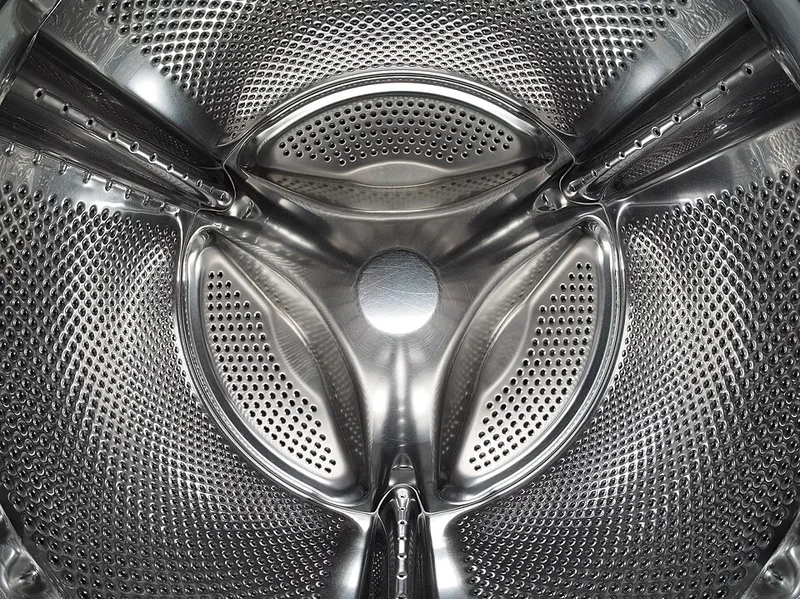
When a Whirlpool washer displays F3 and E1 together, it is reporting a water-level sensing problem: the control is not getting a plausible signal about the water in the tub. A restricted, kinked, or disconnected pressure-sensor hose is a common cause, though wiring, the sensor, a drain problem, or the control can also be responsible. The exact code behavior varies by model, so use the model’s tech sheet or manual if available.
The pressure sensor (also called a water-level pressure switch on some models) reads air pressure through a small hose connected to the tub or pressure chamber. If that path is blocked, leaking, or holding water, the reading can disagree with what the washer is doing. F3 and E1 together do not prove that the sensor itself has failed.
Find the model number on the lid or door area, cabinet, or the manual; locations vary by design. Unplug the washer for one minute, then reconnect it and start a small rinse or drain cycle. If the error returns immediately with an empty tub, note that result: it points toward sensing, wiring, or control rather than an active overfill. Use the model-specific manual for any diagnostic mode; button sequences are not universal.
If water remains in the tub, select Drain/Spin if your control offers it. Check that the household drain hose is not kinked, crushed, or pushed too far into the standpipe, and make sure the standpipe is not backing up. A successful drain followed by a normal cycle suggests a temporary drainage or suds issue. If the washer will not drain, stop here and address the drain or pump problem before investigating the pressure system.
Use only HE detergent in a washer labeled for it, and follow the detergent and load-size directions in the manual. Too much detergent or non-HE detergent can create excessive suds that interfere with draining and water-level behavior. If suds are visible, run a rinse or drain cycle as directed by the model manual; do not add more detergent. A clear tub and no recurring code on a small load support a suds-related cause.
Unplug the washer and shut off both water supply valves before removing any cabinet panel. Consult the service information for your exact model to locate the pressure hose; do not pull panels or reach near wiring if you are unsure. Look for a hose that is kinked, loose, cracked, pinched, or visibly blocked. Refit a loose hose securely, but do not blow into the sensor or hose, probe it with wire, or replace parts based only on the error. A visible defect corrected safely, followed by a successful test cycle, confirms the hose was likely involved.
With power disconnected, inspect only the accessible hose path and connections. Moisture, residue, or a damaged hose can affect pressure transmission; clean or replace components only as the model’s service instructions specify. Do not pour cleaners into the pressure port or use compressed air. If the hose looks sound but the error persists, the pressure chamber, sensor, wiring, or control needs proper testing.
If the washer continues filling when paused or switched off, close the water valves immediately, unplug it if safe, and do not run another cycle. A water inlet valve that does not close can cause an overfill independently of the sensor. If filling stops normally but the code returns, that does not rule out a sensor or circuit fault; record whether the tub was empty, filling, or draining when the code appeared.
| Possible cause | Typical clue | Quick test |
|---|---|---|
| Restricted drain | Water remains after the cycle | Run Drain/Spin and observe whether the tub empties |
| Excess suds | Foam in the tub or slow draining | Run a rinse without detergent and check the next small load |
| Pressure hose issue | Code returns with an empty tub | Inspect accessible hose for kink, looseness, or damage |
| Sensor, wiring, or control fault | Code persists despite clear tub and sound hose | Have the model-specific circuit checked by a technician |
Do not bypass the sensor, keep restarting a washer that is overfilling, or test live electrical connections. If the code returns after the tub drains and the accessible hose looks intact, service may need to test the sensor signal, harness, pressure chamber, and control using the model’s service procedure. Share the model number and what the washer was doing when the code appeared.
On applicable Whirlpool models, the pair indicates a water-level pressure sensing fault or an implausible level signal. The precise interpretation can vary by model, so confirm it in the owner’s manual or tech sheet. It does not automatically mean the sensor must be replaced.
Stop using it if it is overfilling, leaking, or leaving water in the tub. If the tub is empty and there is no leak, a single reset and a supervised short test may be reasonable. Stop if the code returns.
Only if testing confirms the sensor has failed. A kinked hose, drain restriction, excess suds, damaged wiring, or control fault can produce similar symptoms, so diagnose the signal path before buying a part.
Start with the drain, suds, and visible hose checks, and use the model-specific manual to interpret the code. If the fault persists or the washer overfills, stop operation and contact an appliance technician to test the pressure system safely.
Photo: Petar Milošević / CC BY-SA 4.0 (Wikimedia Commons)
Troubleshoot hot water heater error code e02 with safe checks for ignition, gas supply, venting, and flame sensing, and learn when to call a technician.
mini split error code e0 usually points to lost indoor/outdoor communication. Follow safe checks for power, wiring, and model-specific resets before calling for repair.
Frigidaire oven keeps beeping code f11? Learn how to stop the alarm, check for a stuck keypad, and decide when the electronic control board needs service.
Fix whirlpool washer error codes f3 and e1 with safe checks for the pressure hose, drain, and water level system, plus guidance on when to call for service.
LG dryer error code d80 flow sense signals restricted exhaust airflow. Clean the filter, inspect the duct and vent, and know when to call a vent professional.
Tankless water heater error code 11 usually means ignition failed. Learn safe checks for gas supply, shutoff valves, venting, and when to call a technician.
Pioneer mini split stuck on 69? Learn how to tell a temperature reading from a fault and safely check sensors, airflow, settings, and defrost operation.
Troubleshoot bosch dishwasher error code e61 02 with safe checks for the drain pump, cover, hose, and reset before arranging a Bosch service visit.
GE refrigerator error code sa 66 usually indicates Sabbath mode. Learn how to exit it, check your model’s controls, and decide when service is needed.
Frigidaire oven error code fo 47 often points to a keypad or control issue. Learn safe checks, how to reset the oven, and when to call for service.