Home
» Horoscope
»
Chinese Goat Personality: Creative, Caring, and Quietly Determined
Chinese Goat Personality: Creative, Caring, and Quietly Determined
In traditional Chinese zodiac readings, the Goat is associated with creativity, compassion, patience, and a preference for peace. Those qualities can be strengths in relationships and collaborative work; the same emphasis on harmony can also make it harder to state needs, handle criticism, or set limits. Goat (sometimes called Sheep or Ram) is a cultural zodiac sign, not a psychological assessment. Use the profile as a prompt for noticing behavior, not as a verdict about someone.
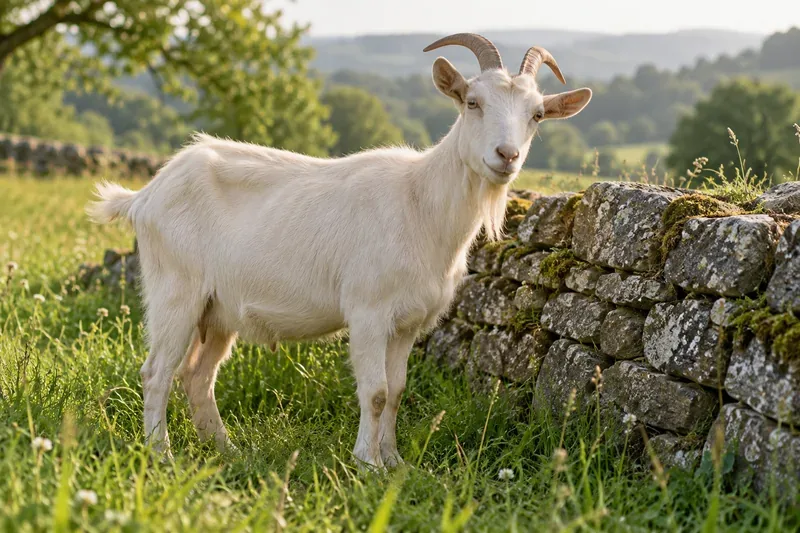
A cream-colored goat pauses beside a weathered stone wall in a quiet meadow.
To keep the ideas grounded, consider Rowan, a fictional Goat-sign designer deciding whether to take on a new client project. The assignment sounds interesting, but the deliverables and revision limits are vague. Rowan wants to contribute without crowding out existing work. This invented example is an illustration, not a real person’s experience or a tested result.
What does the Chinese Goat sign represent?
The Chinese zodiac repeats a 12-animal cycle. Goat is the main English name used here; English references may also use Sheep or Ram for the same zodiac animal, as in the Smithsonian’s zodiac entry titled “Ram.” Common Gregorian year labels include 1955, 1967, 1979, 1991, 2003, 2015, and 2027. The exact sign for someone born in January or February depends on when Lunar New Year fell in that birth year, not on January 1. For example, the Hong Kong Observatory lists February 6, 2027, as the first day of the 2027 lunar year, a Goat year. Check the Royal Botanic Gardens, Kew’s list of Goat-associated years and the Observatory’s 2027 calendar before assigning a sign near a year boundary.
Some traditional descriptions emphasize gentleness and a dislike of needless conflict; others foreground artistic sensibility or sensitivity. This article summarizes recurring themes, not every regional or astrological school. A full birth chart may use more than the year animal, so the Goat sign alone cannot explain a whole personality.
Core traits, strengths, and possible blind spots
Kew’s overview describes the Goat as creative and compassionate, while noting that traditional profiles can also include insecurity. In everyday terms, that symbolism often points to a person who notices atmosphere, cares about how decisions affect others, and prefers to make something thoughtful rather than force an outcome. It does not mean every person born in a Goat year has those qualities.
Traditional theme
Potential strength
What to notice in practice
Creativity
Generates fresh approaches and sees details others may miss
Do ideas reach a finished draft or decision?
Compassion
Listens carefully and considers other people’s needs
Can care coexist with clear boundaries?
Patience
Can refine work and support steady progress
Is patience helping, or postponing a necessary decision?
Preference for harmony
Reduces needless friction and helps a group cooperate
Are disagreements addressed directly or quietly avoided?
Sensitivity
Responds to feedback and social cues
Can feedback be separated from self-worth?
For Rowan, creativity is useful if it produces a proposal the client can evaluate. A practical test is to write down the project goal, prepare one concept, and ask the client to choose a direction before polishing every option. Rowan can track whether the agreed draft is delivered on time and whether revisions stay within scope. If the client keeps changing the brief, the next step is a scope conversation, not silently absorbing extra rounds.
Goat strengths and weaknesses in daily life
A Goat profile can suggest warmth, imagination, diplomacy, and careful attention to quality. People who identify with the sign may recognize themselves in roles that call for listening, design, teaching, caregiving, or bringing different views together. These are possibilities, not career rules.
Potential weaknesses in traditional descriptions include self-doubt, indecision, taking criticism personally, or saying yes to preserve goodwill. The useful question is whether these patterns appear repeatedly. Rowan might notice that the client’s request for “one more option” is consuming time reserved for another deadline. A clear response could be: “I can add that option by Friday if we move the current review to Monday; which matters more?” The response protects quality and gives the client a real choice.
One sign that a strategy needs to change is a repeated gap between commitments and capacity. If planned work is regularly displaced by unplanned favors, list priorities with the person making the request and agree on what will move. If a fear of conflict is keeping an important issue unresolved, prepare the facts and make a specific request instead of waiting for the other person to guess.
Love style and relationship needs
In a traditional reading, the Goat’s love style is caring, affectionate, and attentive to emotional tone. A Goat may express love through practical support, thoughtful gestures, or creating a comfortable shared space. The challenge is that keeping the peace can become indirect communication: hinting at a need, agreeing too quickly, or expecting a partner to notice disappointment.
In Rowan’s fictional example, the project could mean fewer free evenings. A useful conversation would name the likely schedule, ask what each partner needs, and agree on a time to review the arrangement. A strong relationship outcome is not that no one feels disappointed; it is that both can talk honestly, respect limits, and repair misunderstandings. Zodiac labels cannot substitute for trust, compatibility in real values, or safety.
One familiar Chinese zodiac compatibility framework groups Rabbit, Goat (Sheep), and Pig together as a favorable trio. It treats Goat and Ox as opposing signs. The British Library’s International Dunhuang Programme describes these traditional groupings and also cautions that year signs are only one part of compatibility; other birth-chart signs can change the reading. Different charts and customs may not give identical matches.
Use a match list as a conversation starter, not a pass-or-fail test. If Rowan and a collaborator have different working styles, check the actual questions: Do they agree on the goal? Can they discuss deadlines without contempt? Is responsibility shared fairly? Those observations are more useful than deciding that two animal signs must work well or badly together. Read more in our Chinese zodiac compatibility guide.
Goat work habits: where the profile can help
Goat symbolism tends to favor cooperative settings, meaningful work, and room to think creatively. A Goat-style work habit might include listening before proposing, refining a deliverable, and noticing when a team’s process is discouraging people from contributing. These habits can be valuable when paired with prioritization and a clear finish line.
Rowan can evaluate the new assignment using four visible indicators:
Clarity: Are deliverables, decision-makers, and revision limits written down?
Progress: Is the agreed work reaching review points on schedule?
Capacity: Do actual hours and workload remain close to the estimate?
Collaboration: Can Rowan and the client raise problems early and agree on a change?
If the answers stay positive, Rowan can continue with confidence based on evidence from the project. If quality slips because the scope keeps growing, renegotiate time, budget, or deliverables. If the client resists all three, declining the extra work may be the responsible choice. A zodiac description cannot tell Rowan what the client will do; the working agreement and observed behavior can.
Traditional lucky associations
Kew associates the Goat with the carnation and notes that flower and animal symbolism appears in zodiac traditions. It also records different meanings for carnation colors, including white for good luck in that specific symbolic account. These associations vary across sources and should be treated as cultural symbols, not as guarantees of love, money, or success. There is no need to buy a charm or make a decision based on a lucky object.