Home
» Horoscope
»
Chinese Rooster Personality: Strengths, Trade-Offs, Love, and Work
Chinese Rooster Personality: Strengths, Trade-Offs, Love, and Work
“Confident and hardworking” is a familiar description of the Chinese zodiac Rooster, but it does not tell you whether a Rooster personality is a good fit for a relationship, team, or leadership role. The useful question is how the traditional strengths—attention to detail, direct communication, and dependability—show up in observable behavior, and when the same habits create friction.
In Chinese zodiac tradition, Rooster is one of the twelve animal signs. The Metropolitan Museum of Art describes zodiac traits as beliefs attached to the animals, not as measured personality findings. Use the profile below as cultural context or a reflection prompt, not as a way to judge someone before getting to know them.
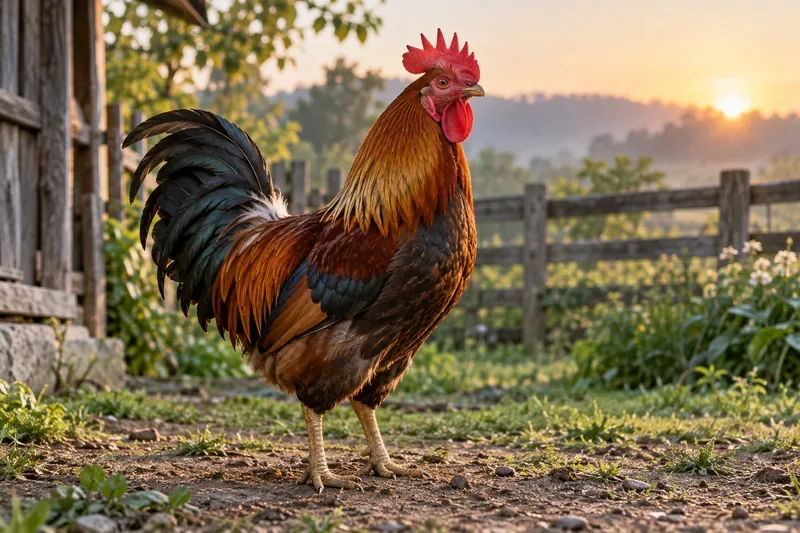
A rooster stands in a farmyard at sunrise, echoing the traditional association between the animal and alertness.
What is the Chinese Rooster personality?
Traditional descriptions often portray Roosters as observant, organized, outspoken, and proud of doing a job well. They may notice small inconsistencies, prefer clear plans, and speak up when something seems inefficient. In popular zodiac language, the Rooster’s confidence can look like leadership and self-respect; it can also be read as bluntness or a tendency to focus too much on how things appear.
These are symbolic themes rather than reliable conclusions about every person born in a Rooster year. Birth year alone does not show someone’s temperament, values, or choices. If you are comparing the zodiac description with yourself or someone else, look for repeated actions over time rather than treating a label as proof.
Strengths and weaknesses: where is the trade-off?
Traditional strength
Possible cost
Practical way to assess it
Attention to detail
Minor flaws can take attention away from the main goal.
Check whether reviews catch consequential errors and still finish on time.
Direct communication
Clear feedback can sound harsh if it skips context or empathy.
Notice whether the other person understands the message and can respond without guessing at the intent.
Reliability and preparation
High standards can turn into overcontrol or reluctance to delegate.
Compare the result with the agreed requirements; ask whether the extra checks changed the outcome.
Confidence and visibility
Self-assurance may be mistaken for certainty or a need for recognition.
Look at whether credit is shared and new evidence can change the person’s view.
Strong routines
Structure may make unexpected changes stressful.
Test how well plans adapt when a deadline, resource, or priority shifts.
For someone who values precision, structure, or clear accountability, the Rooster archetype may feel affirming. For someone who values spontaneity or gentle phrasing, its directness may feel tiring. The right interpretation depends on the actual situation. Recommendation: if you are deciding whether to work or live closely with someone, judge fit by their communication, flexibility, and follow-through—not by the zodiac sign.
Rooster love style and compatibility
In traditional readings, Roosters are often described as loyal, attentive, and serious about the quality of a relationship. They may show care by remembering details, offering practical help, or taking responsibility for plans. The trade-off is that unsolicited correction can feel like criticism, and high expectations may leave a partner feeling evaluated.
Popular compatibility lists commonly place Rooster with Ox and Snake in a harmonious group, and some traditions describe Dragon as a favorable pairing. Rabbit is often presented as a more challenging match. These pairings vary across schools and are not supported as a reliable way to predict relationship success. Shared values, safety, communication, and the ability to repair disagreements are more useful real-world measures.
If you value directness, reliability, and planning, you may appreciate the traditional Rooster love profile. If you need softer feedback or more spontaneity, talk about how you each prefer to make plans and handle disagreements. A specific conversation about criticism, household responsibilities, or time together gives you better evidence than a compatibility score. See the Chinese Rooster compatibility guide for the folklore view, then compare it with what you observe.
Work habits: when does a Rooster approach help?
At work, the zodiac archetype favors preparation, visible standards, and follow-up. These habits can help in roles where accuracy, coordination, deadlines, or quality checks matter. They can be less useful when a team needs rapid experimentation, informal collaboration, or a decision with incomplete information. That is a trade-off to assess by the role, not a prediction about a sign.
If accuracy is the priority: use a checklist and define which errors are important enough to stop delivery.
If speed is the priority: agree on a “good enough” threshold and a deadline for later revisions.
If teamwork is the priority: give feedback with a concrete example, its impact, and a proposed next step; invite the other person’s view.
If leadership is the priority: delegate outcomes, not just small tasks, and assess success against shared criteria.
For career choices, compare the job’s actual responsibilities, manager expectations, work pace, and feedback culture. A structured job may suit someone who enjoys planned work; it can frustrate someone who prefers open-ended exploration. One way to decide is to ask how priorities change, how performance is evaluated, and how much discretion the role gives you.
Traditional lucky associations and limits
Rooster imagery has a place in Chinese art and symbolism. The Met notes that the rooster was treated as an auspicious figure in Chinese art because its crowing was associated with the arrival of daylight. That is a cultural symbol, not evidence that a rooster charm or a lucky number changes someone’s fortune. Popular lucky-color and lucky-number lists differ, so this guide does not present any one list as authoritative.
If you enjoy zodiac symbolism, use a rooster motif as a personal reminder of alertness, preparation, or a fresh start. For decisions involving money, health, or a major commitment, rely on relevant evidence and qualified advice instead. Related reading: the Rooster animal guide, Rooster birth-year guide, and element profiles such as the Metal Rooster guide.
2027 outlook for the Rooster
The Hong Kong Observatory’s 2027 Gregorian-Lunar conversion table identifies 2027 as Ding-wei, the Year of the Goat; Lunar New Year begins February 6. Goat is also translated as Sheep or Ram. The calendar date is verifiable. Any Rooster horoscope for the year is a traditional, general interpretation, not a dependable forecast of events.
Love
A symbolic theme for 2027 is balancing high standards with patience and cooperation. If a disagreement repeats, try replacing a general judgment with one concrete request and a check-in about whether it helped. This can improve communication in any relationship; the zodiac cannot promise a new partner or a conflict-free year.
Career
Use the year as a prompt to make priorities visible and coordinate before taking on extra work. A written goal and a monthly review can show whether a plan is moving forward. Before changing roles or starting a business, evaluate the actual terms, demand, workload, and financial runway instead of relying on a lucky-year claim.
Money
No year sign can identify a winning investment or the right time to borrow. Track recurring expenses, debt, savings, and the purpose of each investment. Before a large purchase, check the total cost, cancellation terms, and the effect on your emergency savings.
Health, favorable periods, and cautions
A horoscope cannot assess your health or replace professional care. Keep preventive appointments appropriate to your needs and consult a qualified clinician about symptoms. Traditional auspicious dates can depend on the activity and calendar system; there is no universal “best period” in 2027 that this general Rooster reading can verify. If you choose a symbolic date, first make sure the practical conditions are sound. One useful caution is perfectionism: set a limit on how long to polish a plan, then check whether further revisions are likely to improve the result.
How to use this profile
Choose the part of the Rooster description that reflects a real, repeated behavior. Then ask what it helps you accomplish, what it costs in the current setting, and what evidence would show that a different approach is working. That gives you a practical comparison whether you are thinking about love, teamwork, or your own habits.