Imagine firing up your trusty old PC, only to hit a frustrating roadblock: the dreaded "GPT Partition Style Not Supported" error during Windows installation or boot. 😩 This common issue plagues users with legacy hardware, especially when trying to install modern operating systems on drives formatted in GPT (GUID Partition Table). But don't worry—it's fixable! In this guide, we'll walk you through understanding the problem and solving it step by step, keeping your data safe and your frustration low. Whether you're reviving an ancient desktop or laptop, these tips will get you back on track.
What Causes the "GPT Partition Style Not Supported" Error?
At its core, this error stems from a mismatch between your PC's firmware and the drive's partition style. GPT is the modern standard for partitioning disks, offering advantages like support for drives larger than 2TB and better data integrity. However, older PCs—typically those from before 2012—rely on BIOS (Basic Input/Output System) firmware, which only supports the legacy MBR (Master Boot Record) partition style.
When you attempt to install Windows (or boot from) a GPT-formatted drive on such hardware, the system throws the "GPT Partition Style Not Supported" message because BIOS can't read it. This is especially common during clean installs of Windows 10 or 11 on vintage machines. The good news? Recent updates from Microsoft emphasize compatibility tools, making fixes more straightforward than ever.
Step 1: Verify Your Hardware and BIOS Mode
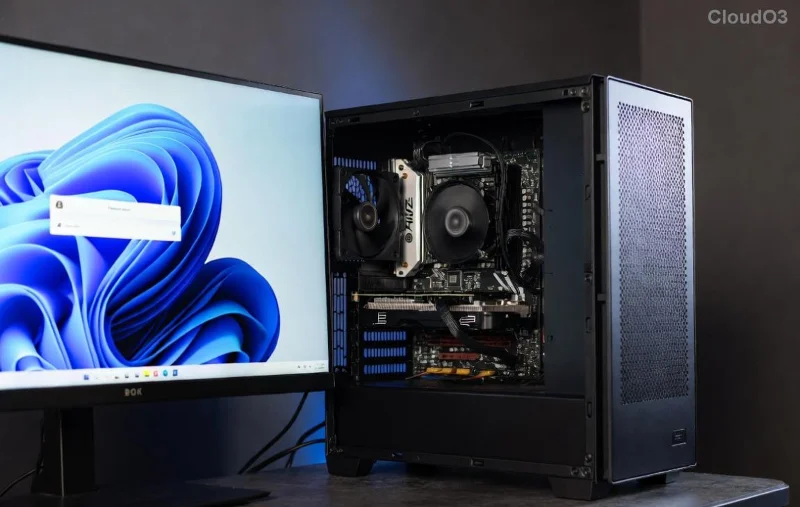
Before diving into fixes, confirm you're dealing with an old PC. Check if your motherboard uses BIOS (not UEFI). Restart your computer and enter the BIOS setup—usually by pressing Del, F2, or F10 during boot. Look for a "Boot Mode" or "CSM" (Compatibility Support Module) option. If it's set to UEFI, switch to Legacy or CSM mode to enable MBR compatibility.
- 👉 Pro Tip: Enabling CSM allows your BIOS PC to mimic UEFI behavior for GPT drives, but for full compatibility on very old hardware, MBR is often necessary.
- If your PC is truly ancient (pre-2005), it might not support GPT at all—proceed to conversion.
Saving these changes and rebooting can resolve the issue without touching your drive. Test by retrying the installation. If the error persists, it's time to address the partition style directly.
Step 2: Convert GPT to MBR Without Losing Data
The most reliable fix for "GPT Partition Style Not Supported" on old PCs is converting your drive from GPT to MBR. Microsoft recommends using built-in tools like Diskpart for this, ensuring minimal risk. Always back up your data first—use an external drive or cloud storage to avoid heartbreak. 💔
Here's how to do it safely using Windows installation media (create a bootable USB with the Media Creation Tool from Microsoft's official site):
- Boot from the installation media and proceed to the "Where do you want to install Windows?" screen.
- Press Shift + F10 to open Command Prompt.
- Type
diskpart and hit Enter.
- Enter
list disk to identify your drive (look for the correct size).
- Select the disk:
select disk 0 (replace 0 with your disk number—be careful!).
- Convert it:
convert mbr.
- Exit with
exit and continue installation.
This non-destructive method works for most cases, but if your drive has more than four primary partitions or exceeds 2TB, you might need third-party tools like EaseUS Partition Master (free version available). Remember, converting erases the boot sector, so reinstall Windows afterward if needed.
![Diskpart command interface showing GPT to MBR conversion steps]()
Step 3: Advanced Troubleshooting for Stubborn Errors
If conversion fails, deeper issues might be at play. Old PCs can have outdated BIOS versions lacking GPT support. Update your BIOS from the manufacturer's site— for example, Dell or HP provide firmware updates via their support pages. Proceed with caution: flashing BIOS incorrectly can brick your machine. 🛠️
Another culprit? Corrupted partition tables. Use the CHKDSK tool in Command Prompt: chkdsk C: /f /r (replace C: with your drive letter). For visual guidance, boot into a Linux live USB (like Ubuntu) and use GParted to inspect and repair partitions—it's free and user-friendly for legacy systems.
| Common Cause |
Symptom |
Quick Fix |
| BIOS in UEFI Mode |
Installation halts at partition selection |
Switch to Legacy/CSM in BIOS |
| GPT on MBR-Only Hardware |
"GPT Partition Style Not Supported" error |
Convert using Diskpart |
| Outdated BIOS |
Intermittent boot failures |
Update firmware from manufacturer |
| Drive Corruption |
Slow access or read errors |
Run CHKDSK or use GParted |
This table summarizes key scenarios, helping you pinpoint your issue fast. If you're dealing with a multi-boot setup, tools like MiniTool Partition Wizard can handle complex conversions without wiping everything.
![Before and after comparison of GPT vs MBR partition on an old hard drive]()
Preventing Future "GPT Partition Style Not Supported" Issues
Once fixed, keep your old PC humming smoothly. Stick to MBR for BIOS systems, but if you upgrade to UEFI hardware, GPT is ideal for larger drives. Regularly back up with tools like Windows Backup or Macrium Reflect to safeguard against partition woes.
For enthusiasts tinkering with dual-booting Linux on old hardware, GRUB bootloader supports both styles—configure it via update-grub after installation. And if your PC is showing its age, consider a cheap SSD upgrade; modern ones play nicer with legacy setups.
Final Thoughts: Breathe New Life into Your Old PC
Overcoming the "GPT Partition Style Not Supported" error doesn't have to be a nightmare. With these steps, you'll convert your drive, tweak your BIOS, and install Windows like a pro. Your old PC still has plenty of life left—perfect for lightweight tasks or nostalgia gaming. If issues persist, consult forums like Reddit's r/techsupport for community wisdom. You've got this! 🎉 Ready to try the Diskpart method? Start now and share your success in the comments below.