Home
» News
»
Anthropic IPO Explained: What Investors Need to Know Before Shares Go Public
Anthropic IPO Explained: What Investors Need to Know Before Shares Go Public
Anthropic is moving toward a possible initial public offering, but the most important fact for investors is also the easiest one to miss: the company has not yet published the final terms of an IPO. On June 1, 2026, Anthropic said it had confidentially submitted a draft registration statement on Form S-1 to the U.S. Securities and Exchange Commission (SEC). The company explicitly said the number of shares and the offering price had not been set, and that any offering would still depend on market conditions and other factors.
That means investors can reasonably say an Anthropic IPO process is underway, but they cannot yet know the final valuation, ticker symbol, exchange, underwriting group, deal size, or public trading date from the company’s currently available materials. The distinction matters because a confidential draft S-1 is an early regulatory step, not a completed IPO.
Investor action: Treat any social-media post or brokerage page that presents an exact Anthropic IPO price, ticker, or first trading date as provisional unless it links to an official Anthropic announcement or an effective SEC filing.
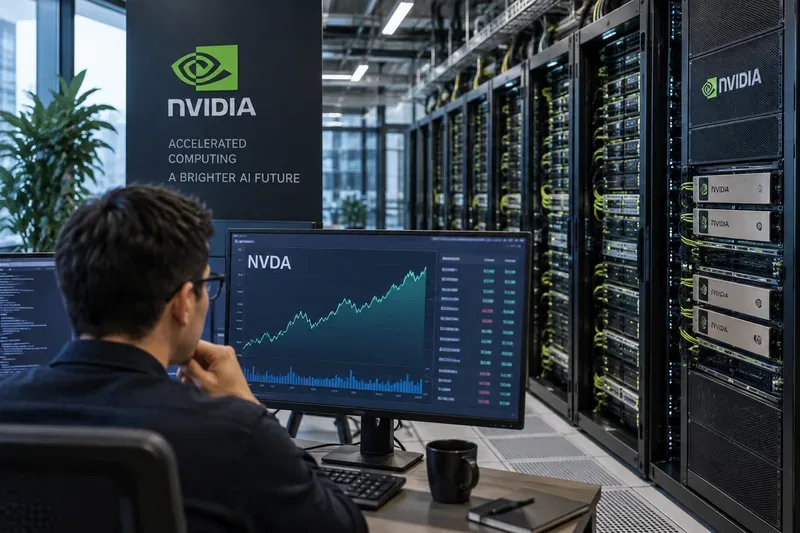
An investor reviews IPO research while market charts and AI imagery emphasize the mix of financial analysis and uncertainty surrounding a potential Anthropic listing.
What is actually confirmed about the Anthropic IPO?
Anthropic confirmed on June 1, 2026 that it had confidentially submitted a draft Form S-1 to the SEC for a proposed IPO of its common stock. A confidential submission allows a company to begin the SEC review process without immediately publishing the draft registration statement.
Anthropic also said the proposed offering gives it the option to go public after the SEC completes its review. That wording is important: submitting a draft does not obligate the company to complete the offering on a particular timetable, or at all.
Investor action: Watch for the first public registration statement and subsequent amendments on the SEC’s EDGAR system. That document, not rumors about the confidential draft, is where investors should expect to find the detailed financial and risk disclosures needed for serious analysis.
Common misconception: “Anthropic filed for an IPO, so the shares are about to start trading”
This is too strong. A confidential draft S-1 can precede a public filing by weeks or months, and market conditions can delay an offering. As of September 29, 2026, the sources reviewed do not show a company-issued public prospectus containing a final price range, ticker, exchange, or launch date.
There is another source of confusion: SEC filings from investment funds may discuss Anthropic, including funds designed to obtain exposure to private or future public Anthropic equity. Those are not the same thing as Anthropic’s own IPO prospectus. Investors should verify the legal name of the registrant at the top of any SEC filing before assuming they are reading Anthropic’s registration statement.
Investor action: On EDGAR, check the “Exact name of registrant” field. If it names a fund, ETF sponsor, special-purpose vehicle, or another company, it is not Anthropic’s own IPO filing.
What does Anthropic’s latest private valuation tell investors?
Anthropic announced on May 28, 2026 that it had raised $65 billion in Series H financing at a $965 billion post-money valuation. In the same announcement, the company said its run-rate revenue had crossed $47 billion earlier that month. Those figures show why the IPO attracts attention: Anthropic has reached a scale that would make any public-market valuation consequential.
However, a private funding-round valuation is not the same as an IPO valuation. Private preferred shares can carry rights, preferences, transfer restrictions, or negotiated terms that differ from the common shares sold to public investors. An IPO price also reflects the market environment, expected dilution, share count, underwriting decisions, and investor demand at the time of the offering.
Investor action: Use the Series H valuation as historical context, not as a forecast of the eventual IPO market capitalization.
What investors still do not know
Question
Status as of September 29, 2026
Why it matters
IPO price range
Not publicly set
Determines the valuation investors are being asked to pay
Number of shares offered
Not publicly set
Affects proceeds, float, dilution, and market capitalization
Ticker symbol
Not confirmed in company materials reviewed
Necessary for placing a public-market order
Exchange
Not confirmed in company materials reviewed
Identifies where the stock would list
First trading date
Unknown
Determines when ordinary investors can potentially buy shares
Underwriters
Not publicly confirmed in the company announcement
Important for deal structure, distribution, and book-building
Audited IPO financial statements
Not yet available in a public Anthropic prospectus
Needed to assess margins, cash flow, capital intensity, and balance-sheet risk
Investor action: Do not build a valuation model from headlines alone. Wait for the public S-1 to obtain the share count, financial statements, stock-based compensation, related-party transactions, preferred-stock conversion terms, and risk factors.
What should investors examine when the public S-1 appears?
1. Revenue quality, not just revenue growth
Anthropic’s reported run-rate revenue indicates rapid commercial expansion, but public investors will need to understand how much revenue is recurring, how concentrated customers are, how contracts are structured, and how much growth depends on a small group of cloud or enterprise partners.
Investor action: Compare reported annual revenue with run-rate figures and look for customer concentration disclosures. A run-rate metric annualizes a recent pace; it is not automatically the same as audited revenue for the latest fiscal year.
2. Compute and infrastructure costs
Frontier AI companies require substantial spending on chips, data centers, cloud capacity, networking, and model training. High revenue growth can coexist with heavy cash consumption if infrastructure needs rise just as quickly. That makes gross margin, operating losses, capital commitments, and long-term cloud agreements central to valuation.
Investor action: In the S-1, look closely at cost of revenue, research and development expense, purchase commitments, lease obligations, and any concentration among infrastructure suppliers.
3. Competitive risk
Anthropic competes in a market where model capabilities, pricing, developer adoption, enterprise contracts, and distribution can change rapidly. A company can have strong current growth and still face material risk if rivals lower prices, release stronger models, or bundle AI into existing software ecosystems.
Investor action: Read the “Risk Factors” and “Business” sections together. Identify which competitive advantages are measurable—such as customer retention, margins, contracted revenue, or developer usage—and which are primarily qualitative claims.
4. Governance is unusual and deserves extra attention
Anthropic is a public benefit corporation (PBC), meaning its chartered purpose includes responsible development and maintenance of advanced AI for long-term public benefit. Its governance also includes a Long-Term Benefit Trust (LTBT), which has authority to elect part of the board and is designed to provide mission-focused oversight. Anthropic explains this structure on its company page and in its Long-Term Benefit Trust overview.
For public investors, this is neither automatically positive nor negative. It does mean shareholder influence and board-control dynamics may differ from those of a conventional corporation that is structured primarily around shareholder value.
Investor action: When the prospectus becomes public, inspect the charter, voting rights, board-election provisions, conversion mechanics, and any classes of stock with unequal voting power.
Can retail investors buy Anthropic shares before the IPO?
Ordinary brokerage customers generally cannot buy Anthropic common stock on a public exchange today because the company has not completed a public listing. Private-market transactions may exist through specialized platforms, funds, employee liquidity programs, or special-purpose vehicles, but access can be restricted and the security being sold may not be direct Anthropic common stock.
The SEC warns that pre-IPO investing can involve illiquidity, limited information, unregistered securities, and fraud. The agency’s pre-IPO investing guidance specifically advises investors to verify the offering and the people promoting it.
Investor action: Before paying for “Anthropic pre-IPO shares,” verify exactly what legal security you would own, who the seller is, whether transfer restrictions apply, what fees are charged, and whether the transaction is available to you under applicable securities laws.
Another misconception: “Buying a fund with Anthropic exposure is the same as owning Anthropic stock”
It is not. A fund may hold private Anthropic shares, preferred shares from a particular financing round, derivatives, swaps, or a basket of private companies. Your return can differ significantly from the value of Anthropic itself because of management fees, leverage, derivative pricing, liquidity discounts, fund expenses, or exposure to other assets.
Investor action: Read the fund prospectus and holdings schedule. Confirm whether Anthropic exposure is direct equity, a preferred series, a derivative, or an indirect vehicle, and calculate how large that exposure is relative to the fund’s total assets.
How could the eventual IPO price differ from the $965 billion private valuation?
Substantially. An IPO could price above or below the last private valuation depending on the company’s growth, profitability, capital needs, share structure, investor demand, interest rates, comparable-company valuations, and the condition of the broader equity market. The final market capitalization also depends on the fully diluted share count, not just the per-share offer price.
A high-profile company may also experience a large first-day move, but that does not tell investors whether the long-term valuation is attractive. First-day trading can reflect limited float, strong demand, allocations, short-term momentum, and price discovery rather than a stable assessment of long-term cash flows.
Investor action: Once the price range appears, calculate enterprise value and price-to-sales ratios using the prospectus numbers. Compare more than one scenario instead of assuming the midpoint is fair value.
What happens next in a typical IPO process?
While every transaction can differ, the next important public milestones usually include publication of the registration statement, SEC amendments, disclosure of underwriters and proposed listing details, a preliminary prospectus with a price range, marketing to investors, final pricing, and then trading after the registration statement becomes effective. None of those later steps should be assumed completed merely because a confidential draft was submitted.
Lockup arrangements can also matter after an IPO. The SEC notes that lockups commonly restrict insiders from selling for a period after the offering, although the exact terms vary and must be checked in the registration documents.
Investor action: When a public prospectus is available, note the lockup expiration date and the amount of insider stock potentially becoming eligible for sale later. That can affect supply and volatility.
A practical Anthropic IPO checklist
Confirm that the public filing is Anthropic’s own S-1, not a fund or derivative product.
Read the audited financial statements and reconcile annual revenue with any run-rate claims.
Review cash burn, compute commitments, infrastructure costs, and supplier concentration.
Check the fully diluted share count and calculate valuation at the proposed price range.
Understand voting rights, the PBC structure, and the Long-Term Benefit Trust’s role.
Review customer concentration, related-party transactions, and major strategic partnerships.
Read the risk factors on AI regulation, model safety, cybersecurity, intellectual property, and competition.
Verify the ticker, exchange, IPO date, and final price only from official filings or company announcements.
If considering a pre-IPO product, confirm whether you are buying direct equity, preferred stock, a fund interest, or a derivative.
Bottom line
The verified story is straightforward: Anthropic has taken a meaningful step toward a U.S. IPO by confidentially submitting a draft S-1, and its most recent announced private financing valued the company at $965 billion. What remains unknown is just as important: the final offer price, share count, ticker, exchange, timing, public financial statements, and exact deal structure.
For investors, the best next move is not to guess those missing details. It is to wait for the public registration statement, then evaluate the business using audited numbers, governance terms, risk disclosures, and the actual valuation being offered. Until that document is public, an “Anthropic IPO price” is a forecast, not a verified fact.
This article is for informational purposes and is not investment advice.