Home
» News
»
Apple iPhone 18 Pro Max review: key features, performance, and buying advice
Apple iPhone 18 Pro Max review: key features, performance, and buying advice
Apple’s iPhone 18 Pro Max is now on sale in the U.S., but it is important to separate what is already verifiable from what still needs longer-term testing. Apple announced the phone on September 9, 2026, and retail availability began September 18. That means its specifications, pricing, storage options, dimensions, camera hardware, and Apple-rated battery figures are confirmed, while conclusions about sustained real-world battery life, thermal behavior, camera consistency, and long-term durability are still too early to treat as settled. This review therefore focuses on confirmed features and practical buying trade-offs rather than pretending to have months of hands-on data.
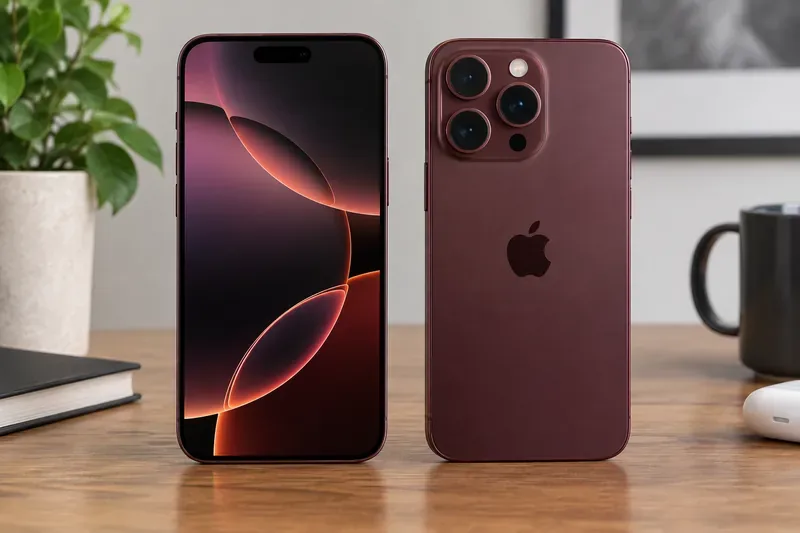
A burgundy phone shown from the front and rear highlights the large-display, triple-camera form factor associated with Apple’s iPhone 18 Pro Max lineup.
What are the headline upgrades on the iPhone 18 Pro Max?
The biggest changes are concentrated in four areas: the camera system, sustained performance, battery life, and Apple’s AI software. Apple equips the iPhone 18 Pro Max with the A20 Pro chip, a next-generation vapor chamber, a 48MP Pro Fusion camera system with a variable-aperture main camera, and a 6.9-inch ProMotion OLED display. Apple also says the Pro Max delivers the longest battery life of any Pro iPhone to date.
The other meaningful change is less about raw hardware and more about how the phone is intended to be used. iOS 27 brings Apple Intelligence and Siri AI, although Apple describes Siri AI as rolling out in beta and feature availability can vary by language and region. Buyers should therefore treat AI capability as an evolving software layer, not as a fixed hardware specification that is identical everywhere on day one.
Display and design: impressive screen, substantial size
The iPhone 18 Pro Max uses a 6.9-inch Super Retina XDR OLED display with a 2868-by-1320 resolution at 460 pixels per inch. It supports ProMotion with adaptive refresh rates up to 120Hz, an Always-On display, HDR, True Tone, and an outdoor peak brightness rating of 3,000 nits. Apple also lists an anti-reflective coating, which is relevant for people who frequently use the phone outdoors.
The trade-off is physical size. The Pro Max measures 163.4 mm tall, 78.0 mm wide, and 8.75 mm thick, and it weighs 249 grams. That is a heavy phone by any practical standard. If you read, edit video, play games, or use the phone as a primary media device, the large display may justify the bulk. If you often use your phone one-handed, carry it in small pockets, or simply dislike heavy devices, the smaller iPhone 18 Pro deserves serious consideration because it shares the same A20 Pro platform and Pro camera family while weighing 211 grams.
Apple lists an aluminum unibody construction, Ceramic Shield 2 on the front, Ceramic Shield on the back, and IP68 water and dust resistance. The available finishes are black, silver, glacier, and burgundy.
Performance: what is confirmed, and what still needs testing?
The A20 Pro combines a 6-core CPU, a 7-core GPU with Neural Accelerators, a dual 16-core Neural Engine, and hardware-accelerated ray tracing. Apple pairs it with a new vapor-chamber cooling system and says the combination delivers its highest sustained iPhone performance so far.
That is a meaningful claim for gaming, 4K video capture, editing, and other workloads that keep the chip busy for more than a few seconds. However, Apple has not provided the kind of independent cross-device benchmark evidence that would let a buyer conclude how much faster the iPhone 18 Pro Max is than every recent flagship in every workload. At this stage, the safe conclusion is that the hardware is designed for high sustained performance; exact gains should be judged from independent benchmarks once multiple reviewers have tested shipping devices under comparable conditions.
For most buyers, raw CPU speed is unlikely to be the deciding factor. The bigger reason to choose the Pro Max is that the A20 Pro is paired with the largest Pro display and Apple’s highest battery rating, giving demanding users more room and more endurance for the same class of chip and camera features.
Camera system: variable aperture is the feature to watch
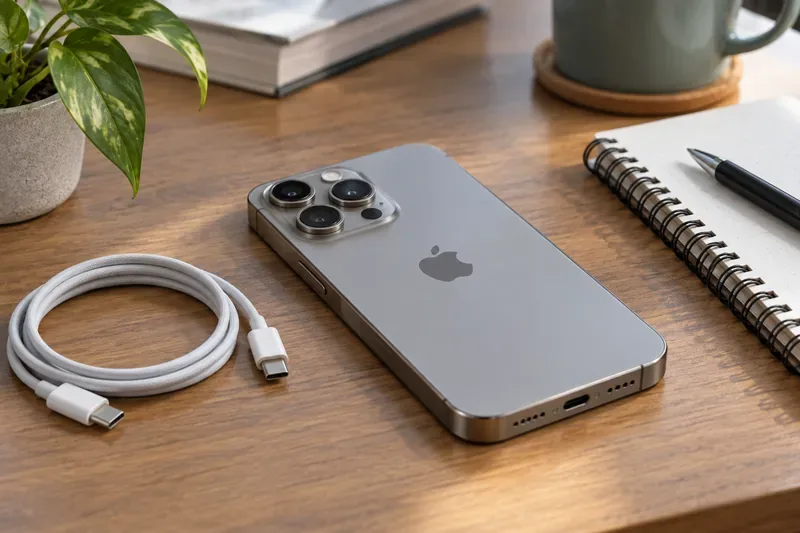
The rear camera system consists of a 48MP Fusion Main camera, 48MP Fusion Ultra Wide, and 48MP Fusion Telephoto. The Main camera adds variable aperture, with Apple listing selectable aperture options of f/1.48, f/1.8, f/2.8, and f/4.0. This matters because aperture changes can affect depth of field and how much light reaches the sensor, giving photographers more control than a fixed-aperture phone camera.
Apple also lists super-high-resolution 24MP and 48MP photos, macro photography, next-generation portraits with Focus and Depth Control, improved low-light video, and Dolby Vision recording up to 4K at 120 fps. The front camera is an 18MP Center Stage camera with features designed to keep people framed more flexibly in photos and video calls.
The buying question is not simply whether these specifications are “better.” It is whether you will use them. If you mostly take casual daylight photos for messaging and social media, a less expensive iPhone can cover that job well. If you shoot video frequently, work with Pro-oriented capture controls, care about depth-of-field options, or want the most flexible camera package Apple currently offers, the Pro Max is much easier to justify.
Battery life: the strongest reason to choose Max over Pro
Apple rates the iPhone 18 Pro Max for up to 45 hours of video playback on eSIM-only models. The smaller iPhone 18 Pro is rated for up to 36 hours under the same type of Apple test. Apple also says that five minutes of wired charging on the Pro Max can provide around seven hours of video playback, and a separate battery usage model estimates up to 30 hours of usage on a full charge.
Those figures are useful for comparing Apple models, but they are not promises of identical everyday runtime. Screen brightness, 5G use, camera activity, gaming, navigation, background apps, and signal quality can all change battery life substantially. The practical takeaway is simpler: if battery endurance is your priority and you already accept the larger chassis, the Pro Max has the clearest advantage over the standard Pro.
iPhone 18 Pro Max vs. iPhone 18 Pro
Criterion
iPhone 18 Pro Max
iPhone 18 Pro
Starting U.S. price
$1,299
$1,199
Display
6.9-inch OLED, ProMotion up to 120Hz
6.3-inch OLED, ProMotion up to 120Hz
Weight
249 g
211 g
Apple-rated video playback
Up to 45 hours
Up to 36 hours
Chip
A20 Pro
A20 Pro
Storage
256GB, 512GB, 1TB, 2TB
256GB, 512GB, 1TB, 2TB
Core Pro camera system
48MP Main, Ultra Wide, Telephoto
48MP Main, Ultra Wide, Telephoto
The Max therefore asks for an extra $100 at the 256GB starting point primarily for a larger display and higher battery rating, while adding 38 grams of weight. That is a relatively clear trade-off. Buyers who value screen area and endurance may find the $100 step reasonable; buyers who want the same core Pro platform in a more manageable body may prefer the smaller model.
Which storage capacity makes sense?
The iPhone 18 Pro Max starts at 256GB, with 512GB, 1TB, and 2TB options. The right capacity depends more on your workflow than on the prestige of the model.
256GB: sensible for most people who stream media, use cloud photo storage, and do not keep large video libraries locally.
512GB: a useful middle ground for frequent 4K video recording, large game libraries, offline media, and people who keep phones for several years.
1TB: aimed at heavy creators who routinely keep large photo and video projects on-device.
2TB: best treated as a specialist capacity for very large local media workflows; most buyers can save substantial money by using less internal storage plus cloud or external storage.
In the U.S., Apple lists the Pro Max at $1,299 for 256GB, $1,499 for 512GB, $1,899 for 1TB, and $2,499 for 2TB when buying unlocked to connect later. Carrier offers and trade-in credits can change the effective cost, so compare the total amount paid over the contract rather than only the advertised monthly price.
Connectivity and everyday features
The iPhone 18 Pro lineup supports 5G, Wi-Fi 7 with 2x2 MIMO, Bluetooth 6, Thread networking, NFC, and Apple’s second-generation Ultra Wideband technology. The phone also retains the Action button and Camera Control, giving users dedicated hardware shortcuts for commonly used actions and camera functions.
For buyers upgrading from a relatively recent Pro model, these features may feel evolutionary rather than transformative. The more important question is whether your current phone is limiting you in battery life, camera flexibility, storage, screen size, or sustained performance. If not, waiting can be financially sensible even if the 18 Pro Max is technically more capable.
Who should consider the iPhone 18 Pro Max?
Choose it if battery life and screen size come first
The Max makes the strongest case for travelers, heavy media users, mobile gamers, and anyone who spends long stretches away from a charger. The 6.9-inch panel also gives more working space for photo editing, video timelines, documents, maps, and split attention between content and controls.
Choose it if you will use the Pro camera controls
The variable-aperture 48MP Main camera is one of the few upgrades that changes how the camera can be controlled, not just how images are processed. Creators who understand aperture and regularly shoot photos or video are more likely to benefit than casual point-and-shoot users.
Consider the iPhone 18 Pro instead if weight matters
The smaller Pro is 38 grams lighter, costs $100 less at launch, and shares the A20 Pro chip and core 48MP Pro Fusion camera system. For many buyers, that is the more balanced trade-off if the 6.9-inch display is not essential.
Wait for more independent testing if you already own a recent Pro Max
If your current phone is still fast, its battery remains healthy, and its camera already meets your needs, there is no urgency to upgrade based on launch specifications alone. Independent testing will be especially useful for measuring thermal throttling, real-world battery gains, low-light camera differences, and whether variable aperture materially improves the kinds of images you take.
Early buying assessment
The iPhone 18 Pro Max is easy to understand as a product: it is Apple’s largest conventional Pro iPhone, with the strongest official battery rating in the Pro family, the A20 Pro chip, a large 120Hz OLED display, and a more controllable 48MP camera system. Its compromises are equally clear: it is expensive, heavy, and physically large, and many of its core performance and camera features are also available on the smaller iPhone 18 Pro.
For buyers who prioritize battery endurance, a 6.9-inch screen, and high-end photo and video tools, the Pro Max has a coherent value proposition. For buyers who prioritize portability, price, or simple everyday photography, the smaller Pro or a lower-priced iPhone may deliver a better balance. Because the phone only reached stores on September 18, 2026, the most responsible approach is to use Apple’s confirmed specifications for the purchasing shortlist now and revisit independent real-world testing before making a decision based on battery, heat, or camera-quality claims that require more than a launch-day specification sheet.