Home
» News
»
El Niño 2026: What It Is, What NOAA Says Now, and How It Could Affect Weather
El Niño 2026: What It Is, What NOAA Says Now, and How It Could Affect Weather
Updated September 23, 2026: El Niño is not just a future possibility this year. It is already established and strengthening. In its September 10 diagnostic discussion, NOAA’s Climate Prediction Center said there is a greater than 90% chance that the event will become very strong during Northern Hemisphere fall and winter 2026–27. NOAA’s September probability outlook also assigns a 100% El Niño probability through the December–January–February season, with the odds declining later in spring 2027.
That does not mean every place will get a textbook El Niño winter. El Niño changes the odds of certain seasonal weather patterns; it does not dictate the weather on a particular day or guarantee rain, drought, warmth, cold, floods, or snow in any one city. The practical question is therefore not “What will El Niño do?” but “Which risks become more or less likely where I live, and how should I use that information?”
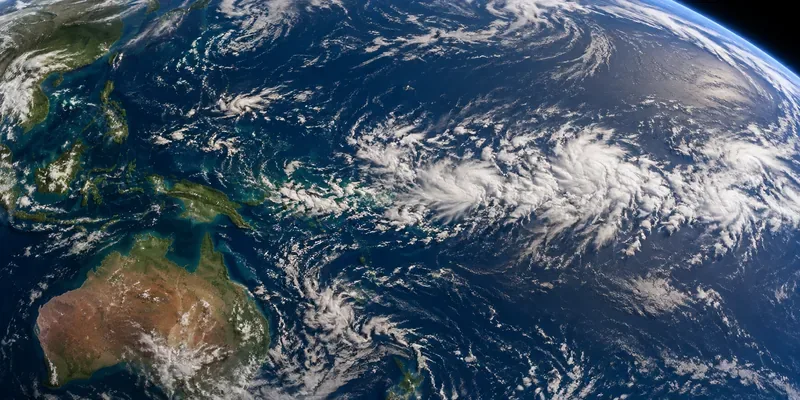
A wide view of the Pacific basin, where El Niño begins with unusually warm tropical Pacific waters and changes in atmospheric circulation that can influence weather far beyond the ocean itself.
What is El Niño?
El Niño is the warm phase of the El Niño–Southern Oscillation, or ENSO, a recurring climate pattern in the tropical Pacific Ocean. During El Niño, surface waters in the central and eastern equatorial Pacific become warmer than average, while the tropical atmosphere changes with them. Trade winds tend to weaken, rainfall shifts eastward, and large-scale circulation patterns are reorganized.
Those tropical changes can affect the position and strength of jet streams, storm tracks, and rainfall patterns in other parts of the world. In the United States, ENSO’s influence is generally strongest in winter. NOAA explains the basic mechanism and typical impacts in its El Niño and La Niña FAQ.
El Niño is not the same thing as climate change. ENSO is a natural, irregular climate cycle, while human-caused climate change is a long-term warming trend. The two can interact: an El Niño can temporarily add to global warmth, but it occurs on top of the background climate rather than replacing it.
What is the status of El Niño in 2026?
NOAA’s September 10, 2026 ENSO Diagnostic Discussion lists the alert status as an El Niño Advisory. NOAA reported a Niño-3.4 sea-surface temperature anomaly of +1.8°C for August and said the coupled ocean-atmosphere system was consistent with a strengthening El Niño.
The same discussion put the chance of a very strong event during fall and winter 2026–27 above 90%. NOAA’s official September 2026 ENSO probability table shows a 100% El Niño probability from August–September–October through January–February–March, then 97% for February–March–April, 82% for March–April–May, and 43% for April–May–June.
The World Meteorological Organization reached a similar broad conclusion in its September 3 El Niño/La Niña Update, saying El Niño was firmly established and likely to persist through winter 2026–27.
How could El Niño affect U.S. weather?
For U.S. readers, the strongest and most useful El Niño signals usually emerge during the cool season. The broad historical pattern is a more active southern storm track and milder conditions across parts of the North, but confidence varies sharply by region and by weather variable.
Region or issue
Typical El Niño tilt
How to use it
Gulf Coast and Southeast
Higher odds of a wetter-than-average cool season
Pay more attention to flood preparedness, drainage, and seasonal rainfall outlooks rather than assuming drought relief is guaranteed.
Southern U.S.
Often cooler and wetter than average in winter
Use this as a planning signal for agriculture, travel, and water management, but keep short-range forecasts in charge of day-to-day decisions.
Pacific Northwest and parts of the northern U.S.
Often milder, and in some areas drier, than average
Water managers and snow-dependent businesses should monitor mountain snowpack and basin forecasts instead of relying on the ENSO label alone.
California and the Southwest
Strong El Niño can raise the chance of wet conditions, but the relationship is inconsistent
Prepare for both heavy-rain risk and the possibility that seasonal totals do not match famous past El Niño winters.
Individual cities
No guaranteed outcome
Use NOAA seasonal outlooks for the background odds, then use local National Weather Service forecasts for actual storms, heat, cold, and precipitation.
NOAA’s historical summaries show why the tradeoff between “useful signal” and “false certainty” matters. The Gulf Coast has one of the more consistent El Niño precipitation relationships, while California’s rainfall response varies substantially from one event to another. A very strong El Niño can increase the chance that classic impacts appear, but strength alone does not determine the outcome.
What does NOAA’s current seasonal outlook say?
The Climate Prediction Center’s September 17, 2026 long-lead outlook discussion explicitly incorporates the strengthening El Niño. For October–November–December 2026, NOAA favors above-normal temperatures across much of Alaska, most areas west of the Rockies, nearly all areas east of the Mississippi River, and parts of the north-central United States.
This is an important distinction: an ENSO forecast describes the state of the tropical Pacific, while a seasonal outlook translates many climate signals into probabilities for temperature and precipitation over specific regions. If your goal is to make a weather-sensitive decision in the U.S., the seasonal outlook is usually more directly useful than the El Niño label by itself.
Which forecast should you rely on?
If you want the latest status of El Niño
Use NOAA’s ENSO Diagnostic Discussion and official ENSO probability tables. These answer whether El Niño is present, how strong it is, and how long forecasters expect it to last. They are the right tools for tracking the climate pattern itself.
If you are planning for winter weather
Use NOAA’s monthly and seasonal temperature and precipitation outlooks. They incorporate ENSO along with other climate information. The advantage is better regional relevance; the tradeoff is that these outlooks still give probabilities, not exact totals or storm dates.
If you need to decide what to do next week
Use local National Weather Service forecasts, watches, and warnings. ENSO is far too broad for decisions such as whether to cancel a trip, protect pipes, evacuate a flood-prone area, or expect snow on a specific day.
If you manage water, crops, energy, or inventory
Combine seasonal outlooks with local data. Reservoir levels, soil moisture, crop calendars, snowpack, heating demand, and regional storm patterns can matter as much as the large-scale ENSO signal. A seasonal tilt is most valuable when it changes how much safety margin you want, not when it becomes a single-point prediction.
Why a very strong El Niño still does not guarantee a repeat of 1982–83 or 1997–98
People often compare a developing strong El Niño with memorable historic events. That can be useful for understanding the range of possible impacts, but it becomes misleading if treated as a forecast. The atmosphere is influenced by many patterns at once, and the exact location of Pacific warming also matters. Arctic variability, subseasonal tropical patterns, North Pacific conditions, and ordinary weather randomness can all reshape the outcome.
There is also a difference between a climate average and an individual season. “Wetter than average” does not say whether precipitation arrives steadily, in a few intense storms, or mainly outside your watershed. “Warmer than average” does not rule out a damaging cold snap. Seasonal forecasts are about the distribution of outcomes across weeks and months.
Practical planning: match the response to the risk
There is no single best way to prepare for El Niño because the right response depends on what you could lose and how reversible the decision is. A homeowner in a flood-prone Gulf Coast neighborhood has a different risk profile from a ski operator in the Northwest or a farmer in the Southwest.
For low-cost, reversible actions: it can make sense to act early. Clear drains, review insurance coverage, service heating and cooling systems, and check emergency supplies before the peak winter season.
For expensive or irreversible decisions: require more evidence. Do not make a major purchase, crop change, travel cancellation, or business commitment solely because El Niño is strong.
For location-specific hazards: prioritize local forecasts and historical vulnerability. Flood maps, watershed conditions, snowpack, soil moisture, and local warning systems can be more actionable than a national El Niño summary.
For long-range planning: revisit the forecast monthly. ENSO confidence can be high while regional seasonal details continue to evolve.
What to watch through winter 2026–27
Three updates are especially useful. First, track NOAA’s monthly ENSO discussion for changes in peak strength and expected duration. Second, compare successive seasonal outlooks to see whether temperature or precipitation probabilities are becoming more concentrated in your region. Third, once a specific storm appears in the 7- to 10-day window, shift attention away from El Niño and toward local forecasts and warnings.
As of September 23, 2026, the main verified takeaway is clear: El Niño is already underway and strengthening, and NOAA sees a high likelihood of a very strong event during fall and winter. The weather implications are meaningful but probabilistic. Use El Niño to adjust your expectations and preparedness, not as a stand-alone prediction of what your city’s winter will look like.