Home
» News
»
Israeli Prime Minister in September 2026: Latest Verified Developments and Key Context
Israeli Prime Minister in September 2026: Latest Verified Developments and Key Context
When people search for the “Israeli prime minister” during a fast-moving news cycle, the hardest part is often not finding information but separating a current fact from an old headline, a political claim, or a page that looks official but is not yet a live record. As of September 26, 2026, the verified officeholder is Benjamin Netanyahu. The Knesset’s official member record lists him as prime minister from December 29, 2022, and the current parliamentary site still identifies the legislature as the Twenty-Fifth Knesset.
The most useful way to understand the latest developments is to separate four questions: who currently holds office, what is happening with Israel’s election timetable, what is changing in the international diplomatic environment, and which legal proceedings remain active. That approach avoids treating every trending search or breaking-news alert as confirmation.
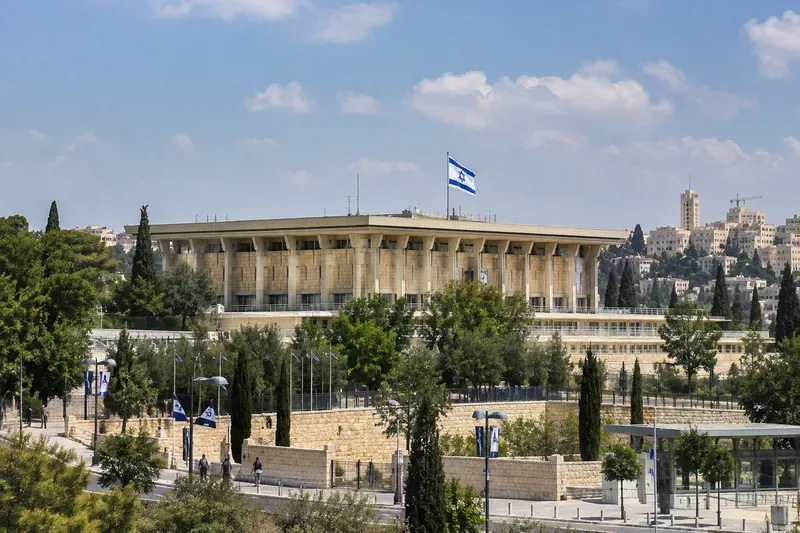
The Knesset complex in Jerusalem provides institutional context for Israel’s current parliamentary transition and the prime minister’s domestic political position.
Who is Israel’s prime minister right now?
Benjamin Netanyahu remains Israel’s prime minister according to the Knesset’s current government record. The official Knesset page for Netanyahu lists his role in the Thirty-Seventh Government beginning on December 29, 2022. The Knesset’s English-language biographical page also identifies him as prime minister beginning in 2022 after previously serving from 1996 to 1999 and from 2009 to 2021.
What is the latest verified domestic political context?
The Knesset website was labeling the Twenty-Fifth Knesset as being in an “Elections Recess” in late September 2026. That is a current institutional signal that the country is in an election-period transition, but it should not be confused with a completed election result.
Earlier, on June 2, 2026, the Knesset approved a bill to dissolve the Twenty-Fifth Knesset in its first reading by 106 votes, with no opposing votes or abstentions. The proposal contemplated an election date between September 8 and October 20, 2026. A first reading is an important legislative step, but that June record alone should not be read as proof that all later procedural steps were completed on that date. The official Knesset notice on the first reading is useful for the chronology.
Be careful with election “results” pages
One official-looking election page currently accessible online is explicitly marked in Hebrew as a testing environment. It displays only 1,564 final voters and should not be treated as a normal nationwide result. This is a good example of why readers should check labels and totals before sharing a screenshot or claiming an election outcome. The page can be reviewed at the Central Elections Committee test-results site.
The practical rule is simple: for an actual election outcome, look for a clearly identified final national result from the Central Elections Committee and confirm that the page is not marked as a test or simulation environment.
Why is the Israeli prime minister drawing renewed international attention this week?
The immediate international backdrop is the 81st session of the United Nations General Assembly in New York. The UN’s official schedule says the general debate runs from September 22 through September 26 and resumes on September 28. Heads of state, heads of government, and other senior representatives use the session to set out national positions on security, diplomacy, development, and other global issues.
That makes the Israeli prime minister a natural focus of search interest even before a specific new statement is confirmed. The authoritative schedule is available on the UN General Assembly 81st-session general-debate page.
In the official sources reviewed for this article, a newly posted Netanyahu address from the 2026 high-level week had not yet been confirmed at the time of verification. Readers should therefore be cautious with posts that attribute fresh remarks to him unless they link to a transcript, video, or statement from the Israeli government, the Knesset, or the United Nations.
What is the latest verified UN context on Israel and the Palestinians?
On September 17, 2026, the UN General Assembly adopted a resolution allowing the State of Palestine to participate virtually in the high-level debate. The recorded vote was 152 in favor, 3 against, and 4 abstentions. Israel voted against the resolution. The UN’s official meeting summary provides the vote and procedural details.
On September 22, UN Secretary-General António Guterres used his opening address to call for de-escalation and dialogue across the Middle East. His remarks described continuing regional conflict and civilian costs. Those statements represent the UN Secretary-General’s position; they should not be presented as an Israeli government assessment. The relevant excerpt is available through the UN’s official record.
Israel’s President Isaac Herzog, speaking on September 23, responded to international criticism and said Israel was still fighting what he described as a defensive war. His speech also referred to threats from Gaza, the West Bank, Lebanon, and Iran. Herzog is Israel’s president, not its prime minister, so his remarks provide national political context but should not be attributed to Netanyahu. The speech is published by the Office of the President of Israel.
What is the current Gaza-related policy context around Netanyahu?
The most clearly documented official Knesset statement from Netanyahu available in the sources reviewed for this explainer dates to January 26, 2026. In that speech, Netanyahu said that all Israeli hostages had been returned and described the next phase as disarming Hamas and demilitarizing Gaza. Those are the prime minister’s stated policy objectives, not an independent assessment that the goals had already been achieved.
The distinction matters. A leader’s statement tells readers what the government says it intends to do; it does not by itself establish the military, humanitarian, or diplomatic situation on the ground months later. The source is the Knesset transcript of Netanyahu’s January 26 remarks.
What is the status of the ICC case involving Netanyahu?
The International Criminal Court remains a separate and active part of the legal context. The ICC issued an arrest warrant for Benjamin Netanyahu on November 21, 2024, alleging war crimes and crimes against humanity connected to conduct from at least October 8, 2023 through at least May 20, 2024. The ICC’s current defendant page lists Netanyahu as “at large.” These are allegations in an international criminal proceeding; they are not a conviction.
Israel has challenged the ICC’s jurisdiction and pursued procedural appeals. The court’s public docket shows continuing litigation in 2026, including decisions and filings in the Situation in the State of Palestine. Readers can check the ICC defendant page for Netanyahu and the ICC’s State of Palestine situation page for the official status and procedural history.
How to verify a new claim about the Israeli prime minister
Because this topic changes quickly, a short verification sequence is more useful than relying on one feed:
Confirm the officeholder. Check the Knesset’s current government roles before assuming a leadership change.
Check the date. A statement from January, June, or an earlier war phase can resurface during a new news cycle.
Separate a speech from an event. A political leader may announce an objective before it is implemented.
Use the institution that owns the fact. Election outcomes belong with the Central Elections Committee; parliamentary status belongs with the Knesset; UN votes belong with the UN; court warrants and decisions belong with the ICC or the relevant court.
Look for explicit status labels. “First reading,” “provisional,” “test environment,” “alleged,” and “at large” each carry a specific meaning that can materially change the interpretation.
What is verified as of September 26, 2026?
Question
Verified status
Primary source
Who is prime minister?
Benjamin Netanyahu is listed by the Knesset as prime minister in the Thirty-Seventh Government.
The clearest current picture is institutional rather than dramatic: Benjamin Netanyahu remains Israel’s prime minister, the Knesset is in an elections recess, UN high-level diplomacy is intensifying scrutiny of Israel and the Palestinian issue, and the ICC case remains active. What has not been verified in the official sources reviewed should not be filled in with inference.
To self-check any new headline, ask three questions: Is there a primary-source document? Does its date match the claim? Does the wording describe a completed event, a proposal, or an allegation? If all three line up, the information is much more likely to be safe to treat as current.