Home
» Android
»
Galaxy AI 2.0: What to Expect From Samsungs Next Flagship — and What Is Actually Confirmed
Galaxy AI 2.0: What to Expect From Samsungs Next Flagship — and What Is Actually Confirmed
The most important answer first: Samsung has not announced a product called “Galaxy AI 2.0,” and as of September 14, 2026, it has not officially unveiled a Galaxy S27 series. The strongest evidence about Samsung’s next flagship therefore comes from what the company has already shipped on the Galaxy S26 family and from its public direction for agentic, personalized and privacy-aware AI.
That makes the next Galaxy flagship less about a dramatic jump from “AI off” to “AI on” and more about whether Samsung can make AI more useful without forcing you to think about which model, app or assistant is doing the work. Samsung already describes the Galaxy S26 generation as a move toward proactive and adaptive AI, with background multi-step tasks, contextual suggestions and a choice of agents. The next flagship is most reasonably expected to push that approach further, not to introduce an entirely separate category of phone.
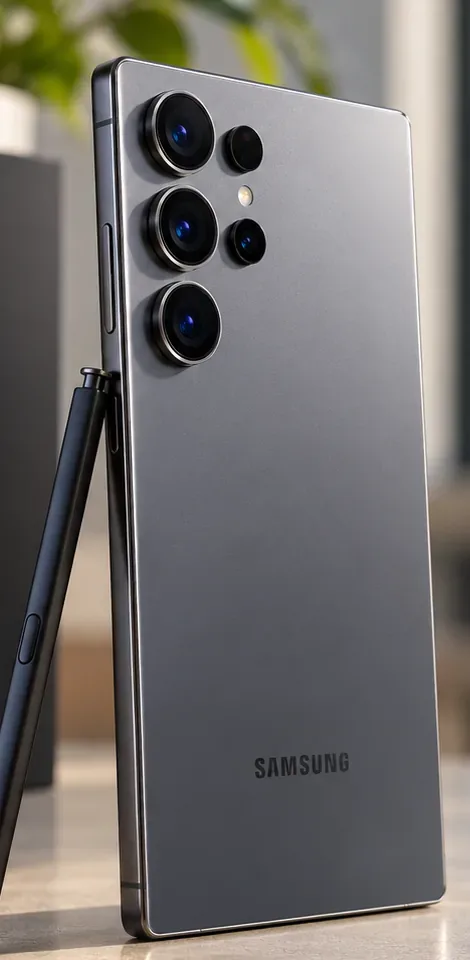
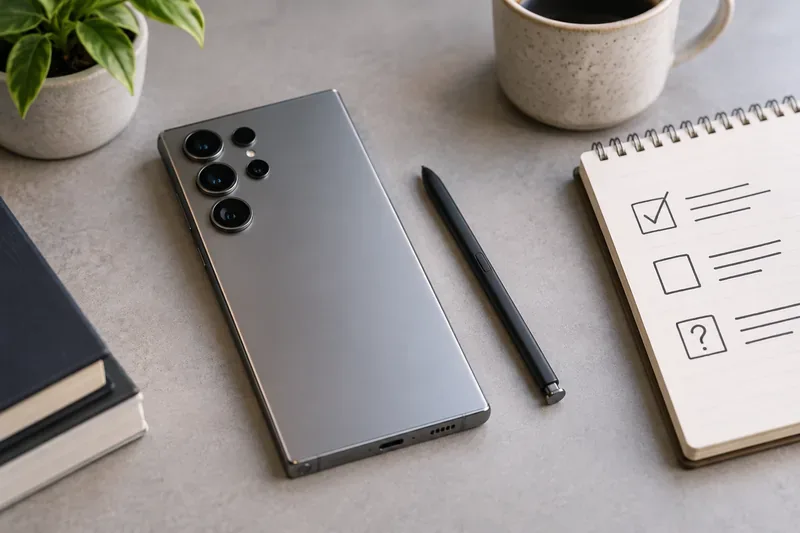
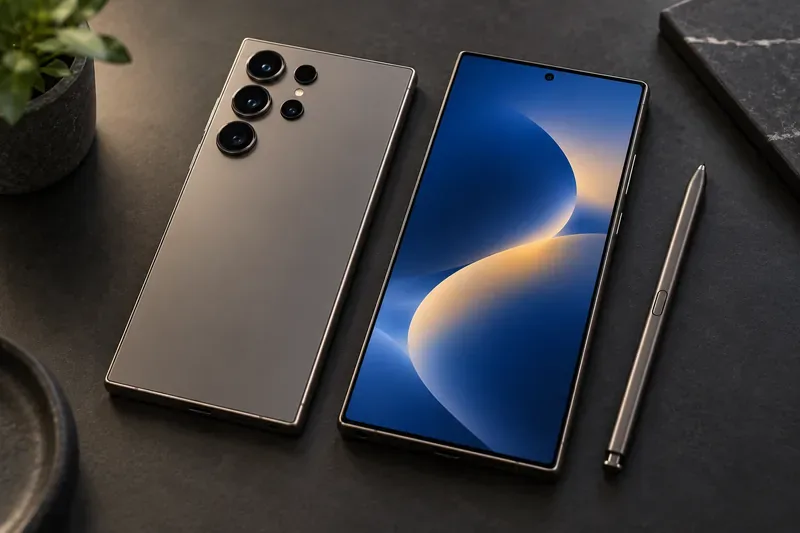
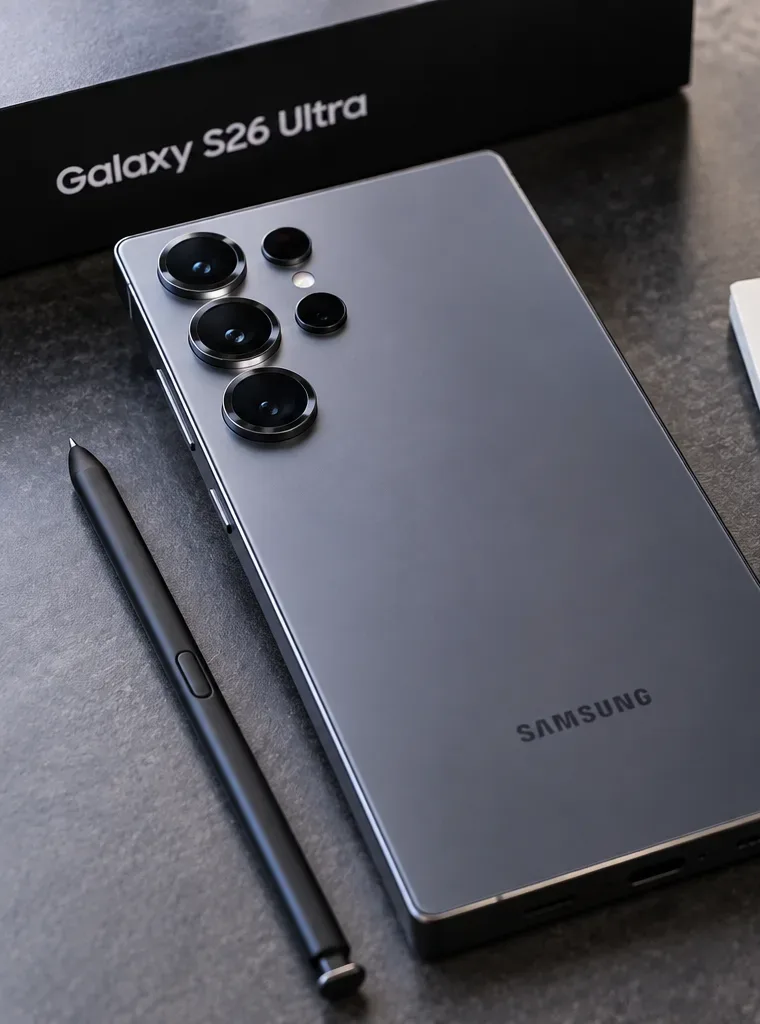
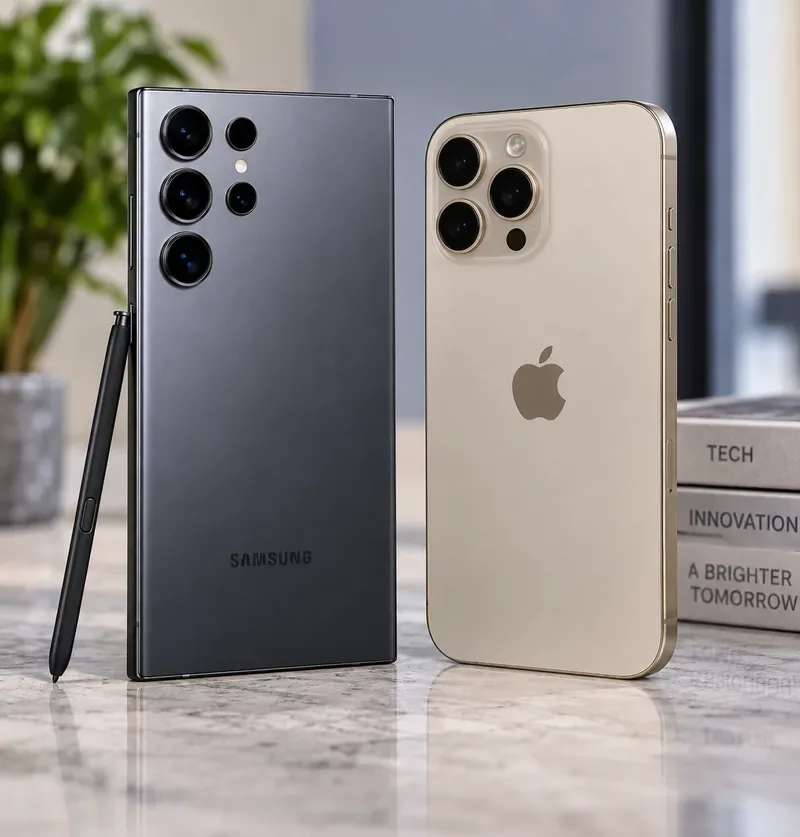
A current-generation Galaxy-style flagship and stylus provide a neutral reference for Samsung’s AI hardware-software direction. Samsung has not announced the design or specifications of its next Galaxy S-series flagship.
Quick answer: what is most likely to change next?
Area
What Samsung has confirmed today
Reasonable expectation for the next flagship
Agentic AI
Galaxy S26 can handle multi-step tasks, offer contextual suggestions and work with Bixby, Gemini and Perplexity.
Fewer manual steps, better cross-app task completion and more context-aware assistance.
Personalization
Now Brief, Now Nudge and the Personal Data Engine use on-device context to tailor suggestions.
More proactive recommendations that depend on your routines, screen context and device state.
Privacy
Samsung uses Personal Data Engine, KEEP and Knox Vault, and lets users restrict some AI processing to the device.
More tasks handled locally when hardware permits, with clearer controls over cloud processing.
Creation
Photo Assist accepts natural-language editing requests and Creative Studio expands image creation.
Broader natural-language editing and fewer taps between capture, edit and share workflows.
Hardware
Galaxy S26 uses improved AI processing hardware and a stronger NPU foundation.
More local AI capability and faster responses, but no next-generation chip specifications are official yet.
This expectation is based on Samsung’s current products and public roadmap, not on leaked specifications. Samsung’s official Galaxy S26 launch announcement describes the S26 series as proactive, adaptive and capable of carrying out complex tasks in the background. At MWC 2026, Samsung said Galaxy AI is evolving toward a more agentic companion across devices. See Samsung’s MWC 2026 Galaxy AI roadmap.
1. Expect “do this for me” AI to matter more than “answer this for me” AI
The clearest direction is agentic AI. In practical terms, that means the phone should increasingly understand an outcome, work through several steps and ask for confirmation only when needed. Samsung is already moving in this direction on the Galaxy S26.
For example, Samsung says the S26 can use contextual features such as Now Nudge to surface the right action when something on the screen suggests a next step. The company also describes upgraded Bixby as a conversational device agent that can understand natural-language requests for settings and device control. Alongside Bixby, Gemini and Perplexity can be available as additional agents depending on setup, region and service terms.
For the next flagship, the useful benchmark will not be the number of AI features on the product page. A better test is whether you can complete common tasks with fewer app switches. If asking the phone to find a trip photo, prepare it for sharing and open the relevant conversation still requires repeated manual intervention, the “agentic” layer has not meaningfully improved the workflow.
2. Personalization should become more contextual, but only if you allow it
Samsung’s Personal Data Engine is already designed to learn from preferences and routines on the device. Features such as Now Brief can use that context to surface reminders and relevant information. The next flagship is likely to deepen this idea because Samsung repeatedly frames personalization as a core part of its AI strategy.
This will not suit everyone in the same way. If you want a phone that anticipates calendar needs, travel details, frequently used apps or recurring tasks, deeper personalization could be valuable. If you prefer minimal behavioral learning, the better outcome is not “more AI” but stronger controls that let you disable or limit the relevant data processing.
Samsung’s current privacy architecture matters here. KEEP creates encrypted, app-specific storage areas, while Knox Vault provides hardware-backed protection for sensitive information. Samsung explains these systems in its mobile AI security overview.
3. More on-device processing is likely, but not every AI feature will become offline
A common expectation is that every future AI function will run entirely on the phone. Samsung’s own support material shows why that is too simple. Some features can run locally, while others use cloud processing. Samsung also provides a setting that can limit supported Galaxy AI features to on-device processing.
The next flagship should have more room for local AI if its processor and memory improve, but that does not mean large generative tasks, web-connected agents or third-party services will stop using the cloud. The practical advantage of stronger on-device processing is usually lower latency, better privacy for supported tasks and continued functionality when the network is weak.
If this matters to you, check the specific feature rather than the marketing label. Samsung’s current Galaxy AI support page explains which functions may use on-device versus cloud processing and notes that availability can vary by device and software version.
4. The camera will probably become more conversational, not just more automatic
Samsung’s current Galaxy S26 software already lets Photo Assist accept natural-language prompts for editing. That is a more important direction than simply adding another automatic filter. The user can describe an intended change, and the system interprets the instruction.
A sensible next step would be a tighter loop between capture, selection, editing and sharing. For example, a future workflow could require fewer transitions between Gallery, editing tools and messaging apps. Samsung has not announced those exact next-generation capabilities, so they should be treated as a direction to watch rather than a promised feature list.
Quality also matters more than novelty. For photo AI, judge the result by whether edges, lighting, skin tones and object geometry remain believable. Samsung itself warns that AI-generated outputs may not always be accurate or reliable. On the current Galaxy S26 product page, the company notes that some generative photo outputs can be resized and visibly watermarked.
5. Samsung is likely to keep a multi-agent approach rather than force one assistant
The S26 generation is notable because Samsung does not present a single model as the answer to every task. Bixby handles device-oriented interactions, while other agents can be used for broader search, reasoning or cross-app work. That makes the “next flagship” question partly about orchestration: can the phone send the right request to the right service without making the user manage the plumbing?
This approach is especially relevant if you already use several ecosystems. A Galaxy owner may rely on Samsung apps for device settings and health data, Google services for search and productivity, and third-party AI for research. A useful next-generation Galaxy AI experience should reduce friction among those layers rather than simply add another assistant icon.
6. The hardware story will be about AI headroom, but Samsung has not published next-flagship specs
Samsung emphasizes the NPU, CPU and GPU improvements in the Galaxy S26 family because AI features increasingly compete with camera processing, gaming and background services for compute resources. The company’s current product materials say the S26 generation uses improved AI processing and a stronger NPU foundation.
It is reasonable to expect the next flagship to improve local AI performance again, but no official next-generation processor, memory configuration, NPU uplift or battery impact has been announced. Claims about exact percentages, model names or benchmark results should therefore be treated as unverified until Samsung publishes them.
For buyers, the right outcome is not simply “higher AI benchmark scores.” Look for faster local response, less heat during sustained AI tasks, fewer pauses when switching between camera and AI editing, and battery life that does not collapse when background intelligence is active.
Should you wait for Samsung's next flagship?
Waiting makes sense if your main reason to upgrade is AI
If you already own a recent Galaxy S-series phone and it performs well, waiting for Samsung’s official next flagship announcement is the lower-risk choice. You will then be able to compare actual AI exclusives, supported languages, on-device capabilities and hardware requirements instead of buying on expectation.
The Galaxy S26 is already a strong option if you need a phone now
The S26 series already includes Samsung’s newest confirmed agentic AI direction, natural-language Photo Assist, Now Nudge, an upgraded Bixby, Personal Data Engine protections and current Galaxy AI privacy controls. Samsung also promises seven generations of OS upgrades and seven years of security updates from the global launch date, according to its official S26 announcement.
That long support window matters because some future AI improvements may arrive through software rather than require a new phone. Samsung has not promised that every future Galaxy AI feature will come to older devices, so buyers should not assume full parity. Still, long OS support reduces the pressure to upgrade solely because a newer model exists.
What not to assume about “Galaxy AI 2.0”
It is not an official Samsung product name. Samsung currently uses the Galaxy AI brand without a “2.0” generation label in the official materials reviewed for this article.
The next flagship has not been officially named Galaxy S27. That name may be a natural assumption based on Samsung’s sequence, but Samsung has not announced it as of September 14, 2026.
Not every feature will work everywhere. Region, language, carrier, device model, One UI version and account requirements can affect availability.
Not every AI function is guaranteed to remain free. Samsung says its basic Galaxy AI features provided by Samsung are free, while enhanced future services or third-party AI may have different terms or fees.
AI output is not guaranteed to be correct. Samsung itself cautions that generated or interpreted results can vary in accuracy.
A practical checklist before you buy the next Galaxy flagship
Check whether the feature you want is officially available in your language and country.
Find out whether it runs on-device, uses the cloud or can work in both modes.
Confirm whether a Samsung account, Google account or third-party subscription is required.
Test the task you actually care about: translation, photo editing, scheduling, search, note summarization or device control.
Compare how many taps and app switches the AI saves, not how many AI features appear on the spec sheet.
Check whether the feature is exclusive to the new phone or is also coming to your current Galaxy through One UI updates.
Review privacy controls before enabling personalized features that learn from your routines.
Bottom line
The most credible expectation for Samsung’s next flagship is not a mysterious “Galaxy AI 2.0” package. It is a more mature version of the direction Samsung has already made public: AI that understands context, acts across multiple steps, personalizes itself on the device, gives users a choice of agents and keeps more sensitive data protected by dedicated security layers.
For someone who wants fewer taps, more natural device control and deeper automation, that direction is promising. For someone who mainly wants a better camera, battery or display, the AI story should remain secondary until Samsung publishes the next phone’s real hardware specifications. The safest buying decision is to judge the final product by measurable workflow improvements and supported features in your region, not by an unofficial “2.0” label.