Home
» Android
»
Galaxy S27 Ultra Under-Display Camera: Is It Finally Happening?
Galaxy S27 Ultra Under-Display Camera: Is It Finally Happening?
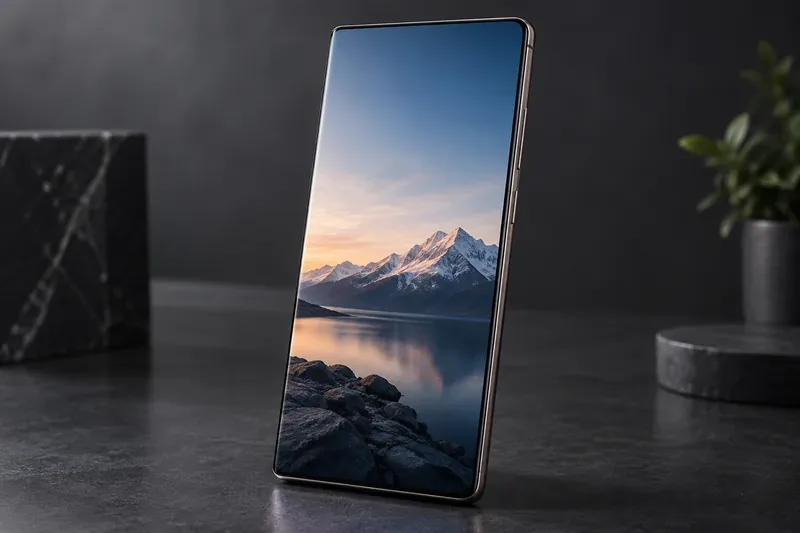
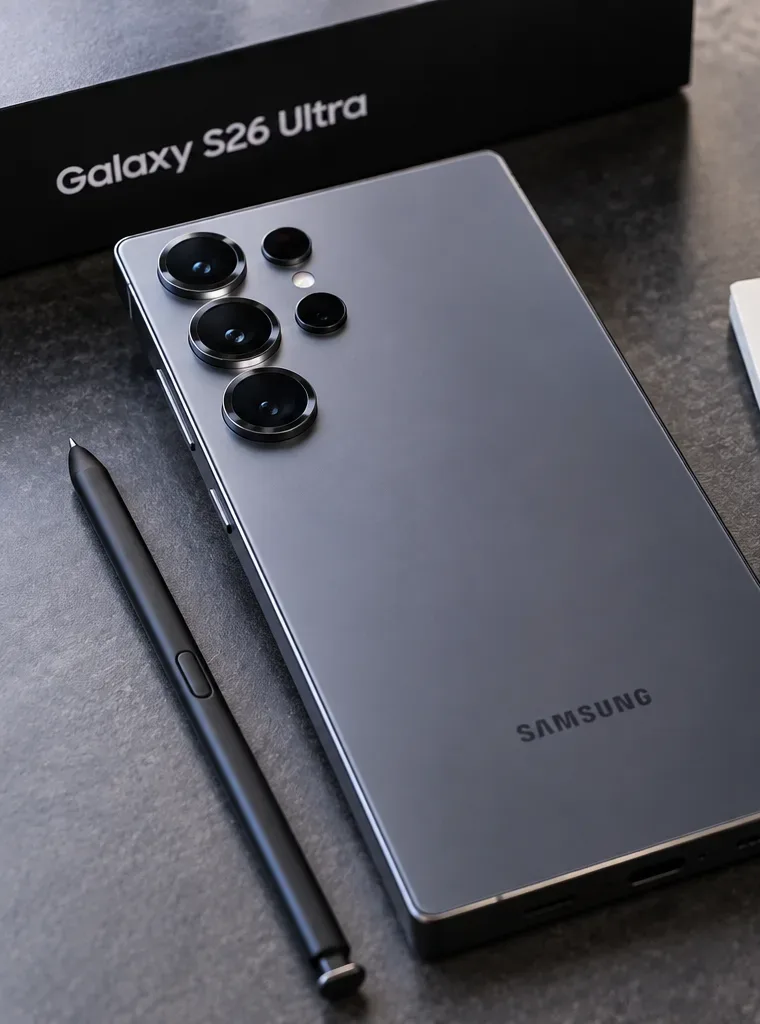
If you are new to under-display camera rumors, the easiest mistake is to treat a clean, hole-free phone render as proof that the next Galaxy Ultra will ship that way. As of September 14, 2026, Samsung has not announced the Galaxy S27 Ultra or confirmed an under-display front camera for it. What is confirmed is that Samsung already knows how to commercialize this technology: it has used an under-display camera on multiple Galaxy Z Fold models, while the current Galaxy S26 Ultra still lists a conventional 12-megapixel autofocus front camera.
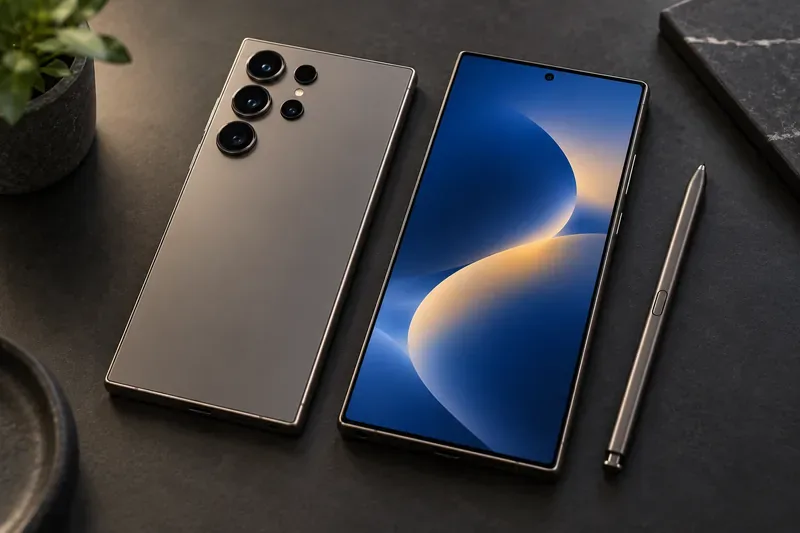
A concept visualization of how an under-display selfie camera could enable an uninterrupted front display. It does not depict a confirmed Galaxy S27 Ultra design.
Start here: what does “under-display camera” actually mean?
An under-display camera, often shortened to UDC, places the front-facing camera beneath the active display instead of cutting a visible hole through the screen. Samsung Display also uses the term under-panel camera, or UPC, for the same basic idea. The pixels above the camera continue to show an image when the camera is not being used, creating a more continuous full-screen look.
The engineering challenge is that a camera needs light, while a display panel contains layers and pixels that can block or scatter that light. Samsung Display explains that UPC technology requires higher panel transmittance and careful control of optical interference so the display and camera can occupy the same area. You can read Samsung Display’s own explanation in its UPC display technology guide.
What has Samsung already shipped?
This is not purely experimental technology. Samsung introduced an under-display camera to the Galaxy Z Fold3’s main folding screen, and the company continued using it on later Fold models. Samsung’s support documentation states that the Galaxy Z Fold3, Z Fold4, Z Fold5, and Z Fold6 include an under-display camera on the large inner screen. The Fold6, for example, uses a 4-megapixel under-display camera, according to Samsung’s official product information and Galaxy Z Fold camera support page.
Samsung Display has also described how its polarizer-free Eco² OLED technology can increase light transmission and support under-panel camera designs. In its original technology announcement, Samsung said removing the traditional polarizer increased the amount of light reaching the camera area and helped make the camera hole less visually disruptive. See the Samsung Display Eco² OLED and UPC announcement for the underlying display approach.
So why is the Galaxy S27 Ultra question still open?
The Galaxy S line creates a tougher quality target than Samsung’s Fold implementation. On a Fold, the under-display camera on the inner screen is only one of several cameras, and users can rely on other cameras when they want higher image quality. A Galaxy S Ultra normally depends on a single front camera for selfies, video calls, social apps, face framing, and front-facing video. Any drop in clarity, low-light performance, autofocus, skin detail, or video quality would be much more noticeable.
The current Galaxy S26 Ultra helps show the benchmark Samsung would need to meet or beat. Samsung’s official specifications list a 12-megapixel front camera with an f/2.2 aperture and autofocus. That matters because moving the sensor under pixels is not merely a cosmetic redesign; Samsung would need to preserve the practical strengths of the existing camera while also hiding it. You can verify the current model’s camera specifications on Samsung’s Galaxy S26 Ultra specifications page.
Status check: what is confirmed and what is not?
Claim
Status as of September 14, 2026
What it means
Samsung has commercial under-display camera technology
Confirmed
Galaxy Z Fold models have already shipped with it.
Samsung Display has developed panels designed to improve camera-area light transmission
Confirmed
The display technology required for future UDC products exists and continues to evolve.
Galaxy S26 Ultra uses a 12MP autofocus front camera
Confirmed
This is the quality baseline a future hidden camera would need to compete with.
Galaxy S27 Ultra will use an under-display selfie camera
Not confirmed
Do not treat renders, concept images, or unsourced spec sheets as official.
Galaxy S27 Ultra UDC resolution, aperture, autofocus, or video quality
Unknown
No official specification should be assumed yet.
What should a newcomer prepare before following future leaks?
You do not need specialist display knowledge, but it helps to track a few terms. Transmittance is the amount of light that can pass through the display area above the camera. Higher transmittance generally gives the sensor more usable light. Pixel density describes how tightly screen pixels are packed; reducing pixel coverage above the camera can improve light intake but may make that patch of screen look different. Computational photography means software processing that corrects problems such as haze, softness, flare, color shifts, or lost detail after the sensor captures an image.
With those basics, you can evaluate new reports more effectively instead of focusing only on the phrase “hidden camera.”
How to evaluate a Galaxy S27 Ultra UDC claim step by step
1. Check whether the source is Samsung or merely discussing Samsung
Official product pages, Samsung Newsroom announcements, support documents, and Samsung Display technical material can confirm a feature. Community posts, concept renders, retail placeholder pages, and social-media claims cannot. A realistic render can be useful for visualizing a possibility, but it is not product evidence.
2. Look for front-camera specifications, not just a hole-free screen
If Samsung eventually announces the S27 Ultra, inspect the front-camera resolution, aperture, autofocus support, video modes, and any specific imaging features. A hidden sensor is only an upgrade if the camera experience remains competitive.
3. Watch for display language around the camera area
Samsung may describe improved light transmission, a new OLED stack, different pixel arrangement, or reduced visibility of the camera zone. Those details would matter more than a generic “full-screen” marketing phrase because they address the actual physical problem of shooting through a display.
4. Separate screen appearance from camera quality
UDC technology has two jobs: hide the camera from view when you are using the screen, and still allow the camera to capture a clean image. A solution can succeed at one and compromise the other. When reviews eventually appear, look at both the visibility of the camera patch on bright backgrounds and the quality of selfies and video in indoor or low-light conditions.
5. Wait for real-device testing before making a buying decision
Even official specifications do not reveal every optical tradeoff. If a hidden camera is important to you, wait for sample images and video from production hardware. Pay particular attention to skin texture, backlit scenes, indoor video calls, lens flare, autofocus behavior, and whether the display area above the camera becomes visible at certain brightness levels.
What would Samsung need to improve for an Ultra-class UDC?
For a Galaxy S Ultra, the biggest hurdle is likely not simply hiding the camera. Samsung would need a system that balances display uniformity with enough incoming light for a premium front camera. The most meaningful advances would include better light transmission through the OLED stack, less diffraction and haze, a camera-area pixel pattern that is harder to notice, and image processing tuned specifically for light passing through display layers.
Autofocus is another key point. The S26 Ultra officially supports autofocus on its front camera. A future under-display solution would be more convincing if it preserved that capability rather than trading it away for a cleaner screen.
Common mistakes to avoid
Do not treat a concept image as a leak. A phone with no visible camera hole can illustrate the idea without representing actual Samsung hardware.
Do not assume Fold technology transfers directly to the S Ultra. The use case and camera-quality expectations are different.
Do not judge a camera only by megapixels. Light transmission, lens design, sensor size, autofocus, processing, and video performance all matter.
Do not confuse “Samsung Display can make it” with “Samsung Electronics will ship it.” A component technology can exist for years before it is adopted in a specific phone.
Do not buy or delay a purchase based only on an unconfirmed feature. Wait for the official specification sheet if UDC is a must-have feature for you.
What should you watch next?
The most useful signal will be an official Samsung announcement or specification page naming the Galaxy S27 Ultra and detailing its front camera. Before that happens, credible evidence would need to show more than a clean front render. Look for consistent reports about the camera module, display stack, autofocus capability, and front-video specifications, then see whether those details match Samsung’s eventual documentation.
Samsung’s history makes an S-series under-display camera technically plausible: the company has already commercialized UDC hardware and Samsung Display has continued developing the display technologies that support it. But technical capability is not the same as product confirmation.
Bottom line: is it finally happening?
Not confirmed yet. As of September 14, 2026, the safest conclusion is that the Galaxy S27 Ultra under-display camera remains a possibility, not an established specification. Samsung has the relevant technology, but the current S26 Ultra still uses a conventional 12MP autofocus front camera, and Samsung has not announced an S27 Ultra UDC.
If Samsung does make the jump, the feature will be worth caring about only if it delivers both parts of the promise: a genuinely uninterrupted display and front-camera quality that does not feel like a step backward. Until Samsung publishes the device specifications, that is the standard to keep in mind.