Home
» Android
»
What Samsung Needs to Fix in the Galaxy S27 Ultra: Lessons From the S26 Ultra
What Samsung Needs to Fix in the Galaxy S27 Ultra: Lessons From the S26 Ultra
The most important fix for the Galaxy S27 Ultra is not a flashy new headline feature. Samsung needs to make the Ultra feel meaningfully better in the everyday areas where the Galaxy S26 Ultra still asks buyers to accept compromises: battery endurance, S Pen capability, camera consistency, display trade-offs, memory tiers, and magnetic-accessory integration.
That distinction matters because the Galaxy S26 Ultra is not a bad phone. Samsung's own specifications describe a 6.9-inch Dynamic AMOLED 2X display with a 1–120Hz adaptive refresh rate, a 5,000mAh battery, up to 60W wired charging, a 200MP main camera, and a Snapdragon 8 Elite Gen 5 for Galaxy processor. The issue is that an “Ultra” device should reduce compromises rather than simply add another marquee feature each year.
As of September 14, 2026, Samsung has not published official Galaxy S27 Ultra specifications. Everything below is therefore a product-improvement wishlist grounded in documented Galaxy S26 Ultra behavior and specifications, not a claim about what Samsung will actually ship.
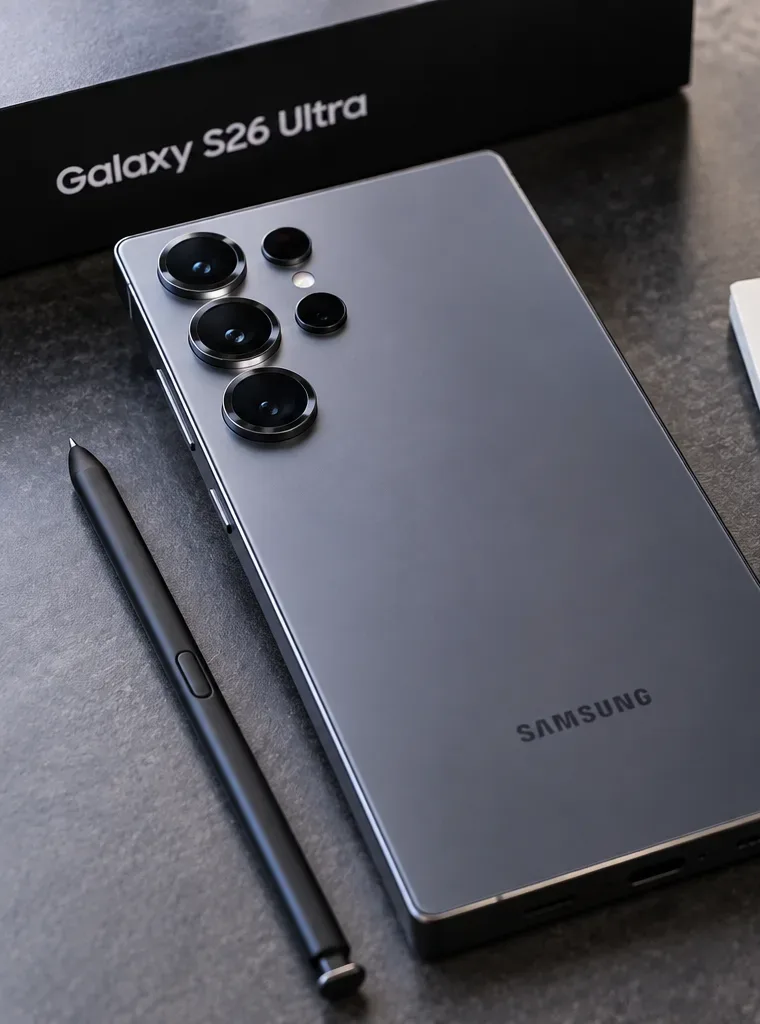
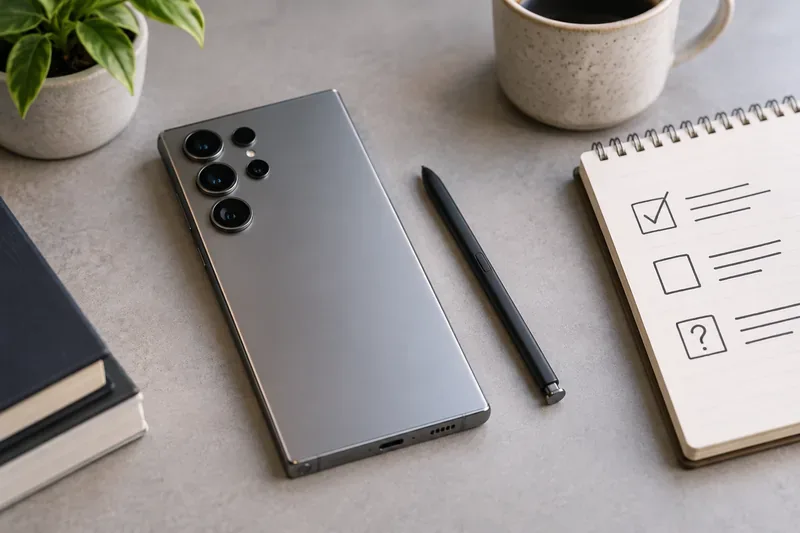
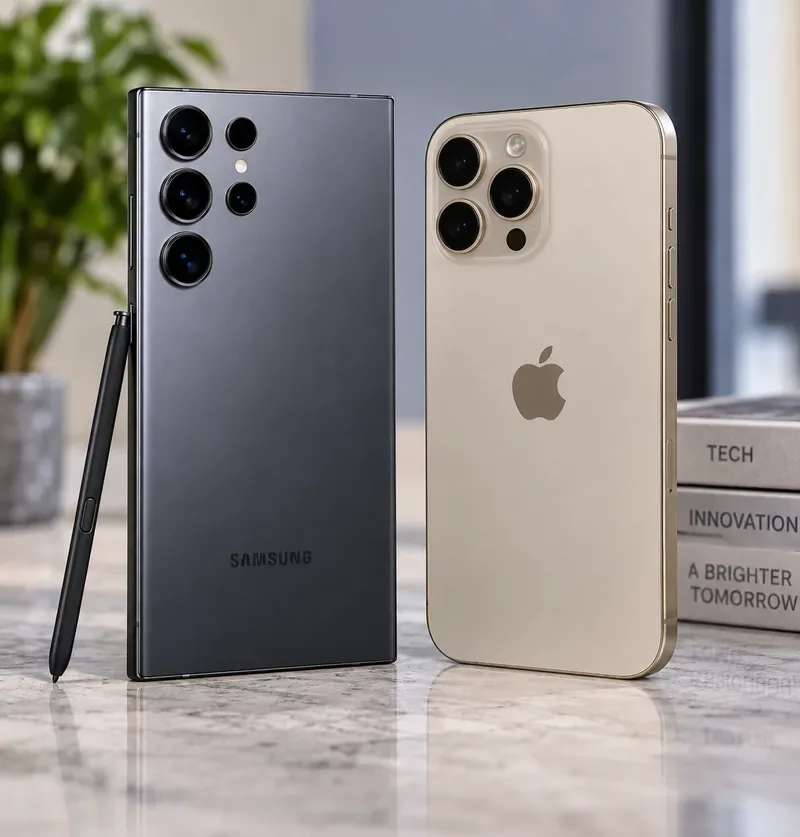
A Galaxy Ultra-style phone and S Pen on a desk represent the S26-era hardware trade-offs that Samsung could address in its next Ultra flagship.
The short answer: six fixes should come before spec-sheet theater
Priority
Documented S26 Ultra trade-off
What the S27 Ultra should improve
Who benefits most
1
5,000mAh battery and the same claimed 31 hours of video playback as the S25 Ultra
Longer real-world endurance, whether through a larger battery, better efficiency, or both
Built-in S Pen has no Bluetooth Low Energy or Air Actions
Restore optional remote controls without hurting pen reliability
Remote-camera users, presenters, S Pen power users
3
10MP 3x telephoto sits beside a 50MP 5x telephoto
Stronger 3x hardware and more consistent output across focal lengths
Portrait, indoor, pet, and event photographers
4
Privacy Display can look darker outdoors and maximum protection may slightly blur or alter colors
Preserve privacy with less brightness and color penalty
Commuters, business users, frequent travelers
5
12GB RAM on 256GB/512GB; 16GB tied to 1TB in Samsung's launch specifications
Offer 16GB RAM without forcing buyers into 1TB storage
Heavy multitaskers, local-AI users, long-term owners
6
Samsung's magnetic cases enable alignment, while Samsung warns magnets can interfere with several phone functions
Make the magnetic ecosystem simpler and better isolated from interference
Qi2 charger, wallet, grip, and car-mount users
1. Break the battery-life plateau
This is the clearest place where the S27 Ultra should deliver a practical improvement. Samsung lists the Galaxy S26 Ultra with a 5,000mAh typical battery and up to 31 hours of video playback. Samsung also lists the Galaxy S25 Ultra at 5,000mAh and up to 31 hours of video playback. In other words, Samsung's own published endurance headline did not move from one Ultra generation to the next.
The S26 Ultra did improve charging: Samsung says it supports Super Fast Charging 3.0 at up to 60W, reaching up to 75% in around 30 minutes under its stated test conditions. That helps when an outlet is nearby, but faster refills are not the same thing as longer unplugged endurance. See Samsung's official Galaxy S26 series launch specifications and the Galaxy S25 Ultra product page for the published battery figures.
What should change: Samsung does not necessarily need to chase a particular milliamp-hour number. The target should be a clearly longer day under demanding mixed use. A denser battery, more efficient display driving, modem tuning, processor efficiency, or some combination could all accomplish that.
When this matters: If your phone already ends the day at 40%, a battery increase may not change your life. It matters far more if you shoot long videos, navigate for hours, tether a laptop, play games, use high brightness outdoors, or travel without reliable charging.
2. Make the built-in S Pen feel “Ultra” again
The Galaxy S26 Ultra's S Pen remains useful for handwriting, drawing, Air Command, translation, and screen interactions, but Samsung explicitly says the built-in pen does not use Bluetooth and does not support Air Actions. There is no pairing or charging because the pen does not rely on Bluetooth. Samsung documents the limitation on its Galaxy S26 Ultra S Pen support page.
For users who only write notes or sketch, this is arguably a sensible trade: fewer electronics in the pen means nothing to pair or recharge. But anyone who previously used the S Pen as a remote camera shutter or for gesture-based controls loses a category of functionality.
What should change: The S27 Ultra should restore remote capability in a way that does not make the pen fragile or annoying to maintain. Samsung could make Bluetooth remote functions optional, keep core writing fully passive, and let users ignore the extra layer if they do not need it.
When this matters: A remote shutter is useful for tripod shots, group photos, long-exposure setups, and hands-free framing. If your S Pen never leaves the screen surface, this fix should rank below battery and camera improvements.
3. Give the 3x camera the same attention as the rest of the array
Samsung's S26 Ultra launch specifications list a 200MP wide camera, 50MP ultrawide, 50MP 5x telephoto, and 10MP 3x telephoto. That 10MP 3x module is the obvious weak link on paper in an otherwise high-resolution rear-camera system. The point is not that megapixels alone determine image quality—they do not—but that the hardware hierarchy is visibly uneven.
The 3x range is especially useful for portraits, pets, indoor events, food, and subjects that are too far away for the main camera but too close for a 5x lens. A stronger sensor in that position could improve detail, cropping flexibility, and consistency when the phone switches cameras. Samsung's published camera configuration is listed in the official S26 series specifications.
What should change: Samsung should prioritize a better 3x sensor and consistent color, exposure, noise, and motion handling across all rear cameras. The goal should be that changing zoom level feels like changing focal length on one camera system, not jumping between visibly different cameras.
When this matters: If you shoot mostly at 1x or 5x in good light, the current 3x hardware may be a minor concern. If you photograph people indoors or use 3x frequently, it is one of the most meaningful places Samsung could spend its hardware budget.
4. Keep Privacy Display, but reduce its visual compromises
Privacy Display is one of the S26 Ultra's most distinctive additions. Samsung says the hardware-integrated feature narrows viewing angles so content becomes difficult to read from the side. It can protect the full screen, specific apps, notifications, or credential-entry screens.
Samsung also documents the trade-offs. Its support page says Maximum privacy protection may slightly blur the screen or alter colors, and Privacy Display may appear darker in bright outdoor environments. Samsung even suggests turning the feature off outdoors if the user prefers better visibility. Those caveats are described on Samsung's Privacy Display support page.
What should change: The S27 Ultra should preserve more brightness, color fidelity, and fine-text clarity while privacy protection is active. More granular automatic behavior could also help—for example, stronger privacy only for notification pop-ups and credential fields, with lighter filtering for ordinary apps.
When this matters: Commuters, banking users, frequent flyers, and people who work in shared spaces may value Privacy Display more than almost any raw display specification. Someone who mostly uses a phone at home may rarely enable it.
5. Stop tying the best memory configuration to 1TB storage
Samsung's launch specifications list 12GB RAM with 256GB or 512GB storage and 16GB RAM with 1TB storage, with availability varying by market. That segmentation can force buyers who want more memory to pay for far more storage than they actually need.
For everyday messaging, browsing, photography, and streaming, 12GB is already substantial. The case for 16GB is stronger for people who keep many apps alive, use desktop-style multitasking, work with large creative files, or expect more on-device AI processing over a multi-year ownership cycle.
What should change: Samsung should offer at least one 16GB configuration below 1TB—ideally 512GB/16GB in more markets. That would make the memory choice about workload rather than storage upselling.
6. Make magnetic accessories simpler without creating S Pen problems
Samsung now sells magnet cases and a 25W magnetic wireless charger for the S26 generation. Its accessory documentation says built-in case magnets help align the Galaxy S26 Ultra for fast wireless charging and magnetic accessories. However, Samsung also warns that magnetic accessories may interfere with the S Pen, camera autofocus, compass, wireless charging, and NFC in some circumstances. See Samsung's Galaxy S26 accessories guide.
This is an engineering problem worth solving rather than a reason to abandon magnets. Magnetic alignment is useful for charging pads, battery packs, wallets, grips, and vehicle mounts, but Ultra buyers should not have to wonder whether an accessory will disrupt a signature feature such as the S Pen.
What should change: The S27 Ultra should improve magnetic shielding, placement, accessory certification, and software warnings so compatible products work predictably. If Samsung can integrate magnetic alignment directly into the phone without compromising pen accuracy or other sensors, that would make the ecosystem much cleaner; if not, its official cases should make compatibility unmistakable.
What Samsung should not prioritize ahead of these fixes
A 144Hz display is lower priority than better endurance
The S26 Ultra already uses an adaptive 1–120Hz Dynamic AMOLED 2X display with a claimed 2,600-nit peak brightness in Samsung's launch specification table. A higher maximum refresh rate could appeal to competitive mobile gamers when games actually render above 120 frames per second, but for most users the difference between 120Hz and 144Hz is less important than longer battery life, camera consistency, or better privacy-mode visibility.
If Samsung can deliver 144Hz with no meaningful power, heat, or brightness penalty, it could be a welcome bonus. It should not consume the engineering budget that could fix more noticeable daily limitations.
More AI features are not automatically a hardware upgrade
The S26 Ultra already emphasizes Galaxy AI heavily. For the S27 Ultra, new software features will matter most when they save time, run reliably, protect privacy, and continue to work well after the launch period. Adding more AI labels without improving the physical phone would not address the compromises above.
Who should actually wait for the S27 Ultra?
Wait if battery endurance is your main complaint. The S26 Ultra charges faster, but Samsung's published 5,000mAh capacity and 31-hour video figure do not improve on the S25 Ultra headline numbers.
Wait if you miss S Pen remote controls. There is no official promise they will return, but that is a clear S26 Ultra limitation worth watching.
Wait if 3x photography matters to you. A stronger mid-telephoto camera would address the most obvious hardware imbalance in the current rear-camera stack.
Do not wait solely for rumored specifications. Samsung has not officially announced S27 Ultra hardware as of September 14, 2026.
Consider the S26 Ultra now if its documented trade-offs do not affect you. It already offers 60W wired charging, a 1–120Hz display, a 200MP main camera, 5x optical telephoto, Privacy Display, and an integrated S Pen.
Bottom line
The Galaxy S27 Ultra does not need to reinvent Samsung's flagship formula. It needs to close the gaps that make the S26 Ultra feel less uncompromising than its name suggests. The best next-generation upgrade would combine clearly longer endurance, a more capable S Pen, a stronger 3x camera, a better-behaved Privacy Display, more flexible RAM tiers, and a magnetic-accessory system designed around the S Pen rather than in tension with it.
Those improvements would be more valuable than adding a single attention-grabbing specification. For an Ultra phone, the real benchmark should be simple: fewer reasons for a buyer to say, “This is excellent, except for…”