Home
» How To
»
How to Clean a BRITA Water Filter System Without Washing the Cartridge
How to Clean a BRITA Water Filter System Without Washing the Cartridge
If your BRITA pitcher smells stale, has visible film around the reservoir, filters more slowly than expected, or has reached its replacement reminder, “clean the filter” can mean two different jobs. The plastic pitcher, lid, and reservoir are washable. The filter cartridge is a replaceable filtration component and should not be scrubbed with dish soap or put in the dishwasher.
For pitcher and dispenser systems, BRITA's current U.S. guidance says to remove the filter, hand-wash the system periodically with mild dish soap, rinse well, avoid abrasive cleaners, and keep the system out of the dishwasher. A new Original/Standard filter and a new Stream filter require a 15-second cold-water rinse before use, while an Elite filter does not require pre-rinsing. That difference matters: the right way to “clean a BRITA water filter” is usually to clean the housing and prepare or replace the cartridge according to its exact type.
Are you cleaning the pitcher, or trying to clean the filter cartridge?
Clean the pitcher system; replace the filter cartridge when it reaches the end of its certified life. BRITA tells pitcher owners to remove and set aside the filter before routine washing. Its bottle-filter user guide is even more explicit: wash the bottle components, but do not wash the filter itself.
A brief rinse of a new filter is not the same as washing a used cartridge. Original/Standard and Stream filters are flushed under cold water for 15 seconds as part of setup. Elite filters skip that step. Soap, abrasive cleaners, hot water, or dishwasher cycles are not a BRITA-approved method for rejuvenating an old pitcher cartridge.
BRITA filter type
New-filter preparation
Typical replacement interval
Original/Standard, white
Rinse with cold water for 15 seconds
40 gallons, about 2 months
Elite, blue
No pre-rinse required
120 gallons, about 6 months
Stream, gray
Flush with cold water for 15 seconds
40 gallons, about 2 months
Those time estimates are averages. BRITA says users with hard water may need to replace filters more often. Follow the electronic or sticker indicator when your model has one.
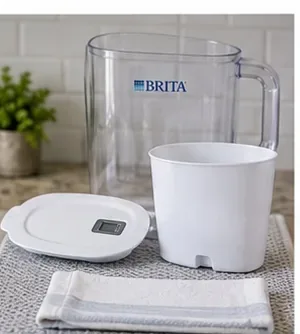
Take the system apart before washing. BRITA instructs users to remove and set aside the filter, then clean the pitcher or dispenser components separately.
What should you use to clean a BRITA pitcher or dispenser?
Use mild dish soap, clean water, and a soft sponge or cloth. BRITA specifically says not to use abrasive cleaners on its pitcher and dispenser systems and not to put those systems in the dishwasher.
This is one place where “stronger” is not better. Abrasive powder, scouring pads, and harsh cleaning chemicals can scratch clear plastic or leave residue in a container used for drinking water. Routine cleaning should be simple enough that every soap trace can be rinsed away.
How to clean a BRITA pitcher system step by step
1. Empty the pitcher and remove the cartridge
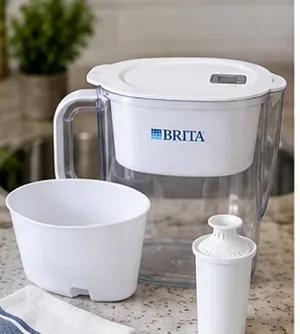
Pour out the remaining filtered water. Remove the lid and reservoir, then take out the cartridge with clean hands. Set the filter on a clean surface while you wash the plastic components.
If the filter has already reached its replacement indicator or the recommended gallon limit, do not save it for reinstallation. Plan to install a new cartridge after cleaning.
2. Hand-wash the pitcher body
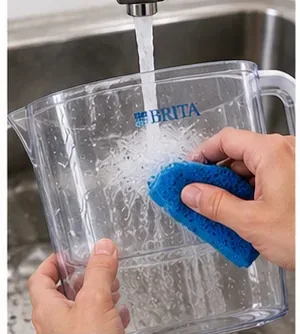
Use mild dish soap and a soft sponge or cloth. Wash the inside walls, pour spout, handle area, and bottom where water droplets can sit. Do not use an abrasive pad to chase cloudy mineral spots; scratching the surface creates more places for residue to collect.
Hand-wash the pitcher body with mild dish soap and a soft, non-abrasive sponge. BRITA says not to use abrasive cleaners or put pitcher systems in the dishwasher.
3. Clean the reservoir and lid
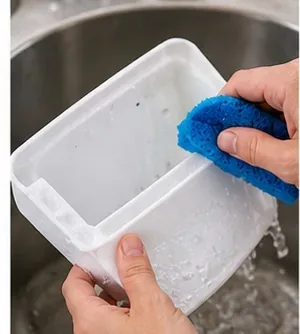
Wash the removable reservoir and lid with the same mild-soap method. Pay attention to corners, seams, the filter opening, and any refill flap that traps droplets. On some Stream models, BRITA's user guide also recommends removing and wiping the silicone lid seals during routine washing to avoid moisture buildup in the seal area, then reinstalling them securely.
Clean the reservoir and lid carefully, paying attention to corners, seams, and the area around the filter opening without using abrasive scrubbers.
Do not submerge electronic indicator components unless the user guide for your exact model says they can be submerged. Pitcher designs vary, so use the model-specific manual when the lid contains electronics that cannot be removed.
4. Rinse every washed part thoroughly
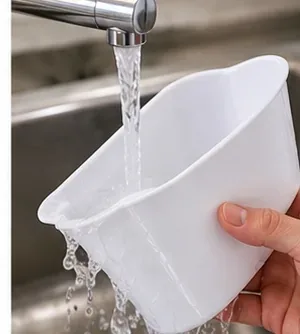
Rinse the pitcher, reservoir, and lid with clean water until no foam, slick feel, or soap smell remains. BRITA's instructions consistently pair mild detergent with a thorough rinse.
Rinse every washed component well so no soap residue remains before filtered drinking water touches the system again.
Do not refill the system with juice, alcohol, or other liquids. BRITA says its filters are intended for potable drinking water, not non-potable water or other beverages.
5. Let the parts drain and dry if the system will sit unused
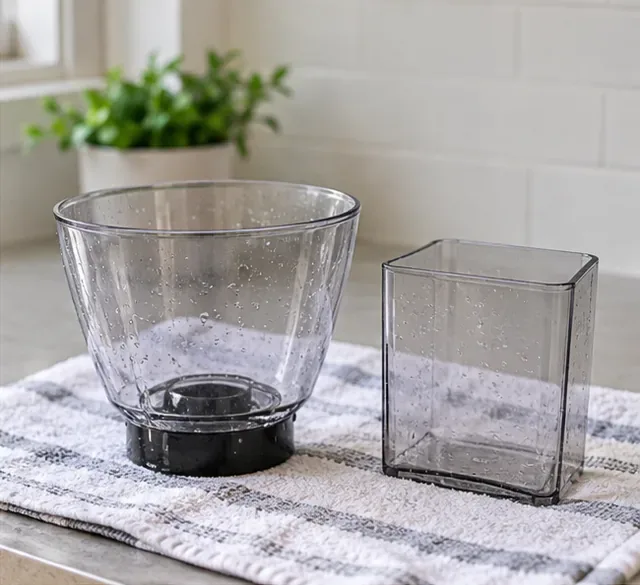
Place the components on a clean towel or drying rack. If you are immediately reassembling the pitcher, the important manufacturer requirement is that the soap has been rinsed away. If the pitcher will be stored, allowing parts to dry completely before storage reduces trapped moisture.
Let the cleaned parts drain and dry on a clean surface before reassembly. BRITA's key requirement is thorough rinsing; full drying is also useful when the system will be stored.
Can you rinse and keep the same filter after cleaning the pitcher?
Yes, if the filter is still within its service life and has simply been removed while you wash the pitcher. Set it aside on a clean surface, then reinstall it after the pitcher components have been rinsed.
But do not confuse that with “cleaning” an exhausted filter. When an Original/Standard, Elite, or Stream filter reaches its replacement point, BRITA's direction is to replace it and reset the indicator. There is no official dish-soap cleaning procedure that restores the cartridge's certified contaminant-reduction life.
If a cartridge itself has become contaminated with something other than potable tap water, trying to wash the media is not a documented recovery method. Replacing the cartridge is the conservative choice, and recurring contamination should prompt a review of how the pitcher is stored and cleaned.
Which new filter preparation applies to your cartridge?
Original/Standard filter
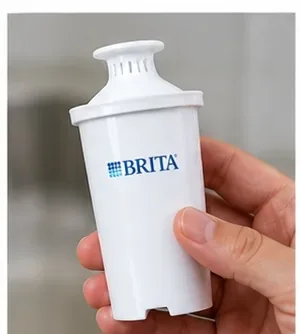
Wash your hands, remove the new white cartridge from its package, and rinse it under cold water for 15 seconds. Insert it into the reservoir by aligning the groove on the filter with the ridge or notch in the reservoir and press firmly for a tight seal.
Elite filter
The blue Elite cartridge does not require the 15-second pre-rinse. Insert it into the compatible pitcher or dispenser reservoir and press firmly to seat it. BRITA says Elite filters fit all BRITA pitchers and dispensers, but not Stream systems.
Stream filter
A gray Stream filter is only for a Stream pitcher or dispenser. Flush it with cold water for 15 seconds, insert it into the filter cage with the blue ring facing up, press until it clicks, and reinstall the cage on the lid.
Do not try to restore an exhausted pitcher filter with dish soap. Replace it on the schedule for its filter type, and prepare a new cartridge according to BRITA's instructions.
Do you need to discard the first filtered water?
For Original/Standard and Elite pitcher filters, BRITA's current U.S. instructions say to fill the reservoir with cold tap water and discard the first three pitchers of filtered water, or use that water on plants. BRITA notes that carbon dust in the first few fillings can be normal.
A dispenser has its own startup volume: BRITA tells users to discard the first dispenser of filtered water or use it for plants. Stream systems use a different filter-as-you-pour design, so follow the Stream setup instructions rather than borrowing the three-pitcher rule from an Original/Elite system.
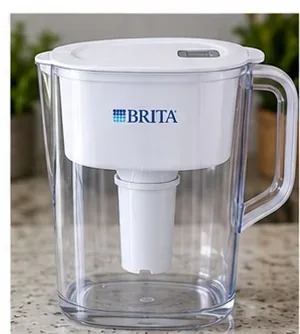
Seat the correct filter firmly in the reservoir, aligning the cartridge groove with the reservoir ridge or notch on compatible Original and Elite pitcher systems.
What are the black specks in a BRITA pitcher?
Small black particles can be carbon. BRITA says carbon particles can appear in pitchers and dispensers with some older filters and describes them as normal. Proper new-filter flushing and startup steps help remove loose carbon before regular use.
Black flecks are different from a slimy film, fuzzy growth, or an off-smelling pitcher. If the system itself looks dirty, discard the water and wash the pitcher components. If contamination appears to involve the cartridge, do not scrub the filter media with soap; replacing the cartridge is the safer response.
How often should you clean the pitcher?
BRITA says to hand-wash pitcher and dispenser systems periodically; its current U.S. support does not set one universal weekly cleaning schedule for every model and household. A practical trigger is visible film, residue, trapped moisture around lid seals, or stale odor. More frequent cleaning can make sense when the pitcher is handled constantly or stored outside the refrigerator.
Filter replacement is more specific than pitcher cleaning:
Original/Standard: every 40 gallons, about 2 months.
Elite: every 120 gallons, about 6 months.
Stream: every 40 gallons, about 2 months.
If your water is hard or filtration slows before the nominal interval, BRITA says the cartridge may need replacement earlier.
How do you reset the filter indicator?
Reset the indicator every time you replace the cartridge. The exact button timing depends on filter and pitcher design. On many current pitcher indicators, BRITA says to hold the STATUS button about 2 seconds for an Original/Standard filter and about 6 seconds for an Elite filter. Stream indicators use their own procedure and can require an 8-second hold.
Use your model's indicator instructions rather than guessing. An incorrectly selected mode can track a 40-gallon Original filter as if it were a 120-gallon Elite filter, or vice versa.
After the required new-filter preparation and first-water discard steps, check that water filters normally and reset the filter-life indicator for the cartridge you installed.
What if you mean a BRITA water bottle instead of a pitcher?
The cleaning rules differ by bottle material. BRITA says its stainless-steel Premium Filtering Water Bottle should be hand-washed after removing the filter. The hard-sided plastic Premium Filtering Water Bottle can have its plastic components washed on the dishwasher's top rack, but the filter must be removed first.
For a new hard-sided bottle filter, BRITA says to rinse it under a strong stream of water for 15 seconds, including all sides and the inside, then insert it into the straw housing. Bottle filters are typically replaced every 40 gallons or about 2 months.
What if you have a BRITA faucet filter?
A faucet-mounted BRITA filter uses a different maintenance routine. A new cartridge is flushed for 5 minutes to activate the media and remove carbon dust. Brita says the 100-gallon filter life starts after that flushing step. Typical replacement is about 100 gallons or 4 months.
If the faucet system has not been used for several days, BRITA says to reactivate the existing filter by running water through it for 30 seconds. That is a specific faucet-system instruction and should not be confused with cleaning a pitcher cartridge.
How can you tell the cleaning job is finished?
Check the whole system before drinking from it:
The pitcher, lid, and reservoir have no visible film or soap residue.
The correct cartridge is seated firmly with no obvious gap around the seal.
A new Original/Standard or Stream filter received its required 15-second cold-water flush; a new Elite filter was not unnecessarily pre-rinsed.
The required startup water was discarded for your system type.
The filter-life indicator has been reset to the correct cartridge mode.
Water passes through normally and tastes and smells neutral.
If filtration remains unusually slow after a fresh correctly installed cartridge, recheck the cartridge fit and model compatibility. Do not use a Brita filter to make microbiologically unsafe or unknown-quality water safe; BRITA states that its filters are not intended to purify such water without adequate disinfection.
The key distinction is simple: wash the reusable BRITA system, not the used filter media. Mild soap and thorough rinsing keep the pitcher or dispenser clean; correct flushing, cartridge replacement, and indicator setup keep the filtration system operating according to the manufacturer's instructions.