Home
» How To
»
How to Remove Nail Glue from Clothes Without Ruining the Fabric
How to Remove Nail Glue from Clothes Without Ruining the Fabric
You finish applying press-on nails, look down, and find a hard, shiny drop of nail glue on your shirt or jeans. The biggest mistake is usually reacting too fast: rubbing wet glue can push it deeper into the fibers, while using a strong solvent without checking the fabric can trade a glue spot for a faded or damaged patch.
The safest approach is to work from least aggressive to most aggressive. Let the glue harden, remove what you can mechanically, try water and detergent, and use acetone only if the stain remains and the garment passes a hidden spot test. Then wash according to the care label and keep the item out of the dryer until you are sure the glue is gone.
This method is especially relevant because many common nail glues are cyanoacrylate adhesives. For example, KISS lists ethyl cyanoacrylate as the first ingredient in its PowerFlex Nail Glue. That is the same adhesive family commonly associated with instant or super glues, so manufacturer guidance for cyanoacrylate stains is useful when dealing with nail glue on clothing.
Before You Start: Check the Fabric and Care Label
First, read the garment's care label. The U.S. Federal Trade Commission requires covered clothing to carry regular care instructions, and those instructions are the best starting point for deciding whether the item should be washed, hand washed, or professionally dry cleaned. See the FTC's Care Labeling Rule guidance.
If the garment is labeled dry-clean-only, is made from a very delicate material, has unstable dye, or includes special finishes, beads, bonded trim, or other sensitive components, taking it to a professional cleaner is the lower-risk choice. Tell the cleaner that the spot is nail glue or cyanoacrylate if you know the product used.
Situation
Best first move
Small dried spot on washable cotton or denim
Scrape gently, then use water and detergent.
Residue remains on a sturdy, colorfast garment
Spot-test acetone, then dab sparingly if the test is safe.
Dry-clean-only or delicate garment
Stop before solvent treatment and use a professional cleaner.
Fresh wet glue
Do not smear it. Let it cure before trying to lift the hardened deposit.
Large spill, damaged fibers, or obvious color change
Stop home treatment rather than escalating with more solvent or scrubbing.
What You Need
A spoon, dull butter knife, or another blunt edge
Liquid laundry detergent
Cool to warm water, as allowed by the care label
White cotton pads, cotton swabs, or a clean white cloth
Acetone or an acetone-based nail polish remover, only if needed and after testing
A soft toothbrush or soft laundry brush for sturdy washable fabric
A clean towel
Avoid razor blades or sharp knives, which can cut fibers while you are trying to lift the glue. Also avoid pouring solvent directly onto the garment. A controlled dab gives you much more control over both the glue and the fabric.
How to Remove Nail Glue from Clothes in 4 Steps
1. Let the Nail Glue Dry, Then Lift Off the Hardened Excess
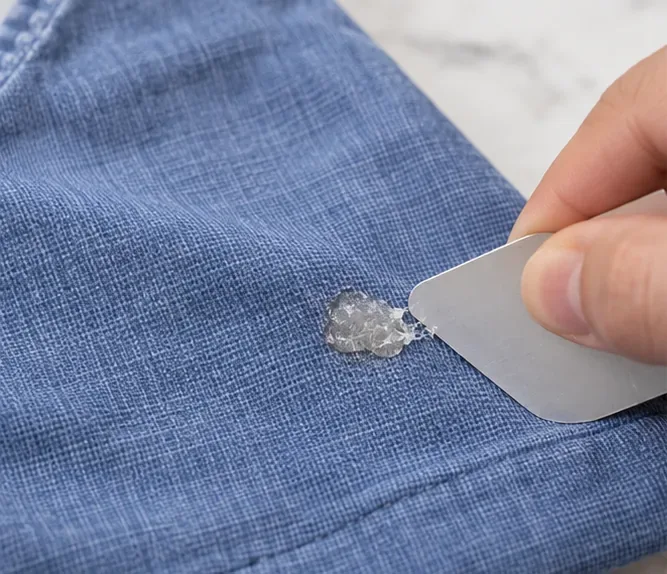
If the glue is still wet, resist the urge to rub it. Smearing can spread the adhesive across more fibers. Let the deposit cure, then lay the garment on a flat surface and use the edge of a spoon or another blunt tool to lift away the thickest dried material.
Work from the outside of the spot toward the center and use light pressure. The goal is to break away glue sitting above the fabric, not to scrape the textile itself. Loctite's manufacturer guidance for super glue on clothing similarly recommends allowing the glue to dry and removing larger hardened pieces before moving on to solvent treatment. See Loctite's clothing removal guide.
Lift hardened nail glue with a blunt edge using light pressure so you remove the raised adhesive without cutting or stretching the fabric.
When to move on: Stop scraping when only a thin film or residue remains. If the fabric begins to fuzz, pull, or distort, mechanical removal has gone far enough.
2. Try Water and Laundry Detergent Before Reaching for Acetone
For a washable garment, start with the gentler option. Loctite's general super-glue guidance says warm soapy water can help with glue on fabric, while its fabric-specific guidance also recommends water and detergent before more aggressive treatment. Use the water temperature permitted by the care label rather than automatically choosing hot water.
Wet the stained area, apply a small amount of liquid laundry detergent, and gently work it into the fibers with your fingers or a soft brush if the fabric is sturdy enough. Let the area sit for several minutes, then rinse and check it. This step may be enough for a small stain after the raised glue has already been scraped away.
If the spot becomes softer but does not disappear, repeat the detergent treatment once before escalating. Repeated gentle treatment is usually preferable to immediately soaking the entire area in solvent.
3. If Residue Remains, Spot-Test Acetone and Dab It Sparingly
Acetone can break down cyanoacrylate residue, but it is not a universal fabric-safe answer. Loctite specifically warns that acetone may discolor some fabrics, and its detailed guidance says to test a tiny hidden area first. That warning is important: color, finishes, prints, and fiber blends can respond differently even when two garments look similar.
Choose an inconspicuous place such as an inside seam or hem. Put a small amount of acetone on a white cotton swab and touch it to the test area. Let it dry and inspect for color transfer, fading, texture change, puckering, or surface damage. If anything changes, do not use acetone on the visible stain.
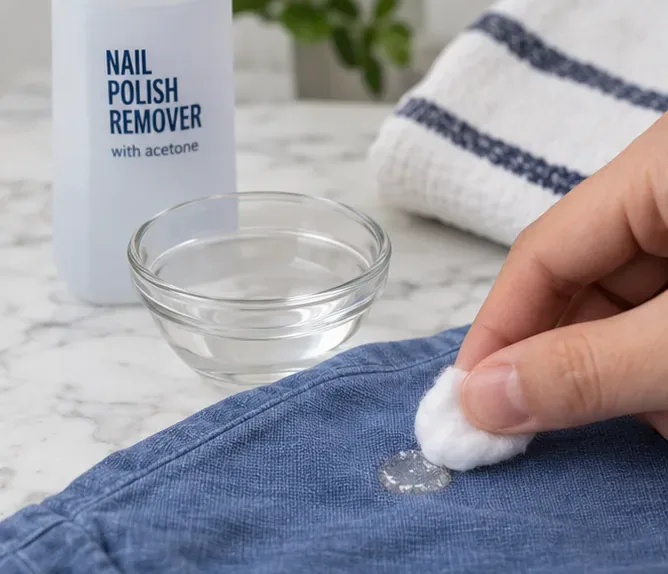
If the test is clean, place a white towel behind the stained area and dab the glue with a lightly moistened cotton pad. Do not saturate the whole garment. Blot as the residue softens, switching to a clean part of the pad so you do not redeposit adhesive.
Use acetone only after a hidden spot test shows no color or texture change, then dab the residue rather than pouring solvent directly onto the fabric.
Use acetone with ventilation and away from flames, sparks, hot surfaces, or other ignition sources. The CDC's NIOSH Pocket Guide classifies acetone as a flammable liquid; see the NIOSH acetone entry.
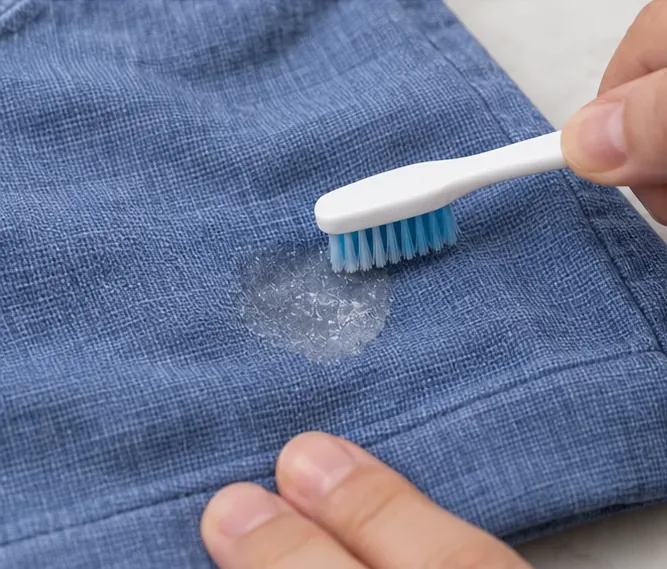
If the glue has softened enough to break apart, a soft toothbrush can help move loosened residue from the weave on durable fabric. Brush gently and only over the treated spot. Aggressive scrubbing can roughen fibers or spread a softened film.
On sturdy washable fabric, lightly brush softened residue after treatment; stop if the weave begins to fuzz, stretch, or lose color.
4. Rinse, Pretreat, Wash, and Inspect Before Using the Dryer
Once the hard deposit is gone, rinse the treated area thoroughly. Apply a small amount of laundry detergent or your normal compatible stain pretreater, then wash the garment exactly as its care label directs. Do not raise the wash temperature beyond what the label permits in an attempt to force the stain out.
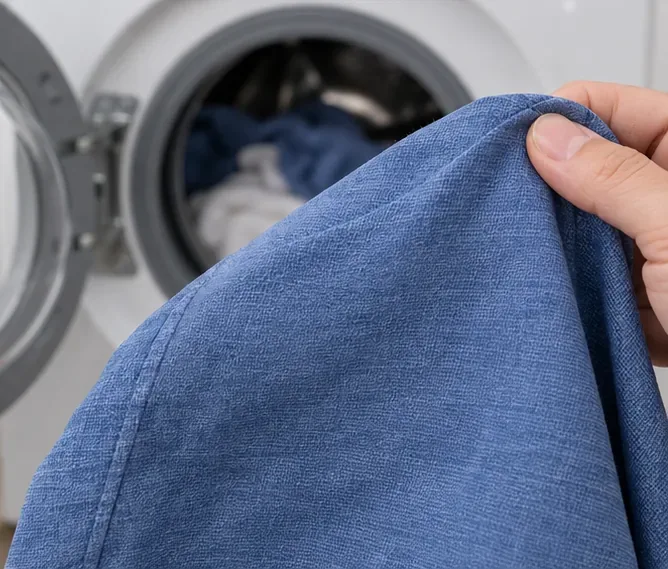
After washing, inspect the area while the garment is still air-dried or damp enough to examine closely. Loctite advises making sure the glue is fully removed before high-heat drying. That is a useful stopping rule: if you can still see a glossy patch, feel a stiff spot, or detect hardened residue between the fibers, repeat the appropriate earlier step rather than putting the item in a hot dryer.
After washing, inspect the treated fabric in good light before machine drying; a clean area should look and feel like the surrounding material.
What If Acetone Is Not Safe for the Garment?
Do not assume that a stronger household chemical is the next step. If the hidden test changes the fabric, return to water, detergent, gentle mechanical removal, and patience. If a visible hard patch remains after those methods, a professional cleaner is the safer escalation for a valuable or delicate garment.
Loctite's broader removal guidance even notes that acetone is not recommended for every fabric because discoloration is possible. That is why this guide treats acetone as a conditional third step rather than the first thing to pour onto the stain. You can review the manufacturer's simpler fabric recommendation at Loctite's super-glue removal page.
Mistakes That Make Nail-Glue Stains Harder to Fix
Rubbing fresh glue: this can spread the adhesive into a wider patch.
Using a sharp blade: the stain may disappear only because damaged fibers were cut away.
Skipping the acetone spot test: a glue stain is often easier to live with than permanent dye loss.
Soaking delicate fabric in solvent: a small controlled dab is very different from saturating the material.
Ignoring the care label: the garment's normal cleaning limits still apply during stain treatment.
Putting the item in the dryer too soon: inspect first and repeat treatment if solid adhesive remains.
How to Check Whether the Nail Glue Is Really Gone
Do a simple final check in bright light after the fabric has dried. A successful result should meet all of these signs:
No raised, clear, white, or shiny glue is visible.
The treated area bends as freely as the surrounding fabric rather than feeling crunchy or stiff.
No tacky residue transfers to your fingers.
The color matches the surrounding fabric with no obvious solvent ring or faded patch.
The weave, nap, print, and surface finish still look intact.
If the only problem left is a small stiff area, repeat detergent treatment or, on a fabric that already passed the solvent test, another very controlled acetone dab. If the area is fading, fraying, thinning, or changing texture, stop. More treatment is unlikely to improve the garment without increasing the damage risk.
The Short Version
For most washable, sturdy clothes, the practical order is: let nail glue dry, scrape off the raised deposit, use water and detergent, spot-test acetone only for stubborn residue, wash according to the care label, and inspect before drying. The method is not identical for every fabric, so the care label and a hidden solvent test are more important than any one-size-fits-all stain-removal trick.