Home
» How To
»
How to Clean a Burnt Iron Without Damaging the Soleplate
How to Clean a Burnt Iron Without Damaging the Soleplate
A “burnt iron” usually means the soleplate—the flat heated surface that touches fabric—has picked up scorched fibers, melted synthetic material, starch, print residue, or other deposits. The safest beginner approach is not to start with vinegar, baking soda, salt, steel wool, or a knife. Start by unplugging the iron, letting it cool, and checking the manufacturer's cleaning instructions for your exact model.
That caution is important because soleplates are not all the same. Some are stainless steel; others have ceramic, nonstick, Durillium, catalytic, or other coatings. Philips currently tells owners of its supported steam/dry iron to use a damp cloth and specifically avoid scouring pads, vinegar, and other chemicals. Tefal gives different instructions depending on the soleplate type, and Rowenta sells a dedicated cleaner for stubborn buildup while also warning against sharp or abrasive tools. The method below starts with the advice these manufacturers have in common, then shows how to escalate only when your model allows it.
Before you start: what do you need?
A soft microfiber or cotton cloth
A soft non-abrasive sponge
Clean water
Cotton swabs or a very soft brush for residue around steam holes
Optional: a soleplate cleaner or cleaning stick that your iron manufacturer approves for your exact soleplate
An old clean cotton cloth or towel for the final test
You do not need a metal scraper, razor blade, wire brush, steel wool, or harsh household chemical. Hard contact can scratch a soleplate and damage a coating that is meant to glide smoothly over fabric.
Step 1: Unplug the iron and let it cool before touching the soleplate
Turn the iron off, unplug it, place it upright on its heel rest, and wait until it is cool enough to handle safely. Rowenta's current care guidance tells users to unplug the iron and allow the soleplate to cool completely before routine cleaning. Philips gives the same starting instruction in its soleplate-cleaning support article.
Once cool, look closely at the mark. Burnt fabric often appears as a rough dark patch or shiny melted film. Mineral scale is usually chalkier and is a different maintenance problem. If the coating itself is chipped, peeling, deeply scratched, or blistered, cleaning will not repair it; stop and consult the manufacturer or a repair center.
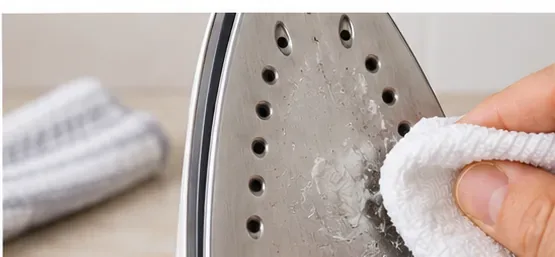
Inspect the cooled, unplugged soleplate first. A dark rough patch may be burnt fabric or starch residue; a damaged or peeling coating needs service rather than harder scrubbing.
Step 2: Start with a damp soft cloth or non-abrasive sponge
For a beginner, this is the most important cleaning step because it is the least aggressive and is widely supported by manufacturers. Dampen a soft cloth with clean water and wring it out so it is not dripping. Wipe the cooled soleplate with firm but gentle pressure.
Philips tells users to wipe flakes and deposits from the soleplate with a damp cloth and to avoid washing the appliance under the tap. Tefal similarly recommends a damp cloth or non-abrasive sponge on a cooled stainless soleplate. Rowenta's Care & Use guidance also starts with a damp cloth or sponge after the soleplate has cooled.
If the residue begins to soften and transfer to the cloth, rotate to a clean section and continue. Do not scrub faster just because the mark is stubborn; abrasion can remove coating as well as residue.
Step 3: Escalate only to a cleaner your model permits
If a damp cloth does not remove the burnt deposit, check the user manual or the manufacturer's support page for your model before adding a cleaner. This is where internet advice often becomes too broad.
For example, Rowenta's March 2026 cleaning guide discusses gentle baking-soda paste and diluted vinegar for some residue, and Rowenta sells a Soleplate Cleaning Kit designed to remove buildup from clothing, starch, and melted synthetic fibers. However, Philips explicitly says not to use vinegar or other chemicals on the supported model in its soleplate article. Tefal says its Durillium soleplates may use a specific cleaning stick when needed, while its Autoclean soleplate can be damaged by iron cleaner.
The practical rule is simple: do not treat baking soda, vinegar, or commercial cleaner as universal. Use a model-approved product only when the manual or manufacturer says it is compatible with that soleplate.
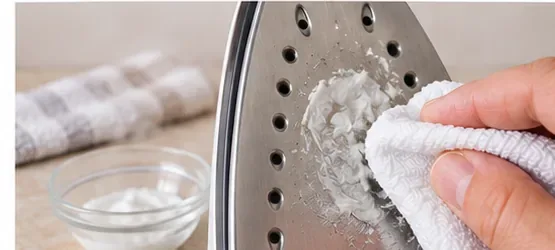
If plain damp wiping is not enough, use only a cleaner that the manufacturer approves for your soleplate. Apply a small amount with a soft cloth rather than flooding the iron.
If your model permits a cleaner, apply the minimum amount called for in its instructions. Keep liquids out of seams, electrical openings, controls, and the water tank unless the product documentation specifically tells you otherwise.
Step 4: Wipe away all residue and clean around steam holes gently
After any approved treatment, wipe the soleplate with a separate clean damp cloth until no cleaning product or loosened residue remains. Then use a cotton swab or soft brush around the steam holes if debris is visible.
Rowenta's current cleaning guide recommends cotton swabs or a soft brush for steam-hole buildup and warns against sharp objects. That distinction matters: a needle, knife tip, or metal pick can scratch the hole edges, damage a coating, or push debris farther inside.
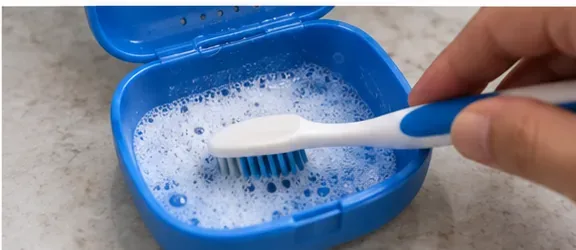
Remove loosened buildup and any cleaner with a clean damp cloth. Around steam vents, use soft tools only; do not insert knives, needles, or other sharp metal objects.
Do not hold the complete iron under a running faucet to rinse it. Philips and Rowenta both warn against washing the appliance under the tap. The soleplate can be wiped; the electrical appliance should not be treated like a washable kitchen utensil.
Step 5: Dry the soleplate, then test the iron on scrap fabric
Use a dry cloth to remove moisture from the soleplate. Let the iron sit until the exterior is fully dry. If you used a manufacturer-approved cleaner, follow any waiting, heating, polishing, or final-wipe steps supplied with that product.
Before ironing a good shirt or dress, test the iron on an old clean cotton cloth. Heat the iron according to its normal instructions and move it over the test cloth. Check for drag, brown transfer, melted residue, cleaner residue, or particles coming from the steam holes.
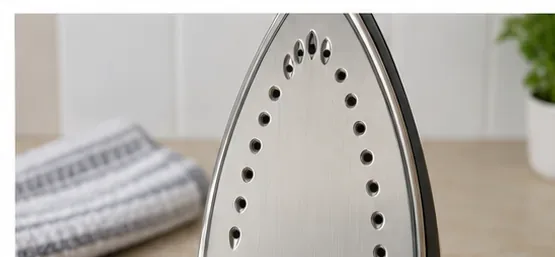
A clean soleplate should look smooth and free of loose residue. Test it on an old clean cloth before returning to normal ironing.
If the test cloth stays clean and the soleplate glides normally, the iron is ready to use. If dark residue reappears, unplug and cool the iron again before repeating only the cleaning method your model permits.
Quick reference: which method should a beginner choose?
Situation
Best first choice
Avoid
Light scorch or fabric residue on an unknown soleplate
Cool iron + damp soft cloth
Vinegar, baking soda, abrasives, metal scrapers until compatibility is verified
Stubborn residue on a Rowenta model compatible with its cleaning kit
Rowenta-approved soleplate cleaner, following kit directions
Sharp tools and abrasive metallic pads
Tefal Durillium soleplate with stubborn dirt
Damp non-metallic pad; Tefal cleaning stick if the model documentation allows it
Unapproved chemicals or abrasives
Tefal Autoclean soleplate
Soft damp cloth as directed
Iron cleaner that can damage the Autoclean coating
Philips model covered by its September 2024 soleplate guidance
Damp cloth on a cooled, unplugged iron
Scouring pad, vinegar, other chemicals, washing under the tap
Chipped, peeling, blistered, or deeply scratched soleplate coating
Manufacturer/service-center evaluation
Trying to polish the damage away
Common mistakes to avoid
Using vinegar because “it works on mineral scale”
Scale and burnt soleplate residue are not the same problem. Vinegar may be appropriate in some manufacturer-specific maintenance procedures, but Philips specifically prohibits vinegar on the soleplate covered by its current support article, and Rowenta warns against putting descaling substances such as vinegar into some steam-station systems. Never move a descaling remedy from one part of an appliance to another without checking the manual.
Scraping melted fabric with a knife
A metal edge may remove the deposit quickly, but it can also score stainless steel or destroy a nonstick or catalytic coating. Philips says to avoid hard contact with metal objects; Rowenta says never use sharp or abrasive cleaning accessories on the soleplate.
Assuming every “non-abrasive” household paste is safe
A coating can be chemically sensitive even when a product does not feel gritty. Tefal's own support pages warn that an iron cleaner can damage an Autoclean coating even though a cleaning stick is suitable for certain Durillium soleplates. Compatibility matters more than the label “gentle.”
Cleaning a hot iron with an unknown chemical
Some manufacturers describe cleaning certain soleplates while warm, but that instruction is model-specific. A beginner should default to unplugging and cooling the iron unless the exact manual explicitly directs warm-surface cleaning with an approved method. This avoids burns and reduces the chance of volatilizing an unsuitable cleaner.
Confusing a dirty soleplate with internal limescale
Limescale is mineral buildup from water inside the steam system. It can reduce steam or produce flakes and brown marks, but wiping the soleplate alone may not solve an internal scale problem. Use your iron's anti-calc, calc-clean, collector, or self-clean procedure exactly as the manual specifies.
Rowenta, for example, warns that steam-station descaling methods vary by model and that some systems should not receive descaling chemicals at all. Tefal also gives model-specific anti-calc instructions. If the iron spits brown water or chalky particles rather than merely dragging on fabric, consult the descaling section of the manual instead of treating the soleplate repeatedly.
Why did the soleplate burn in the first place?
Burnt buildup often comes from a temperature that was too high for a synthetic fabric, ironing over rubberized prints or transfers, contact with starch, or chemical residue left in new or insufficiently rinsed clothing. Rowenta's support guidance notes that starch and synthetic fibers can stick to the soleplate and advises matching the thermostat setting to the fabric.
To prevent another buildup:
Follow the garment's care label and the iron's temperature guide.
Use lower temperatures for synthetics and heat-sensitive finishes.
Iron printed or rubberized areas from the reverse side when the garment instructions permit it.
If using starch, follow the starch and iron manufacturers' directions; Rowenta recommends avoiding direct soleplate contact with sprayed starch.
Wipe the cooled soleplate regularly before residue becomes a thick burnt layer.
Keep the soleplate away from zippers, metal buttons, and rough surfaces that can scratch it.
When should you stop cleaning and replace or service the iron?
Stop home cleaning if the soleplate coating is lifting, the iron leaks into electrical areas, the power cord is damaged, the appliance has been dropped, or the burnt area turns out to be melted or deformed soleplate material rather than removable residue. Tefal and Rowenta safety guidance both advise service-center evaluation when the appliance itself may be damaged.
A beginner does not need to “win” against every mark. If gentle, manufacturer-approved cleaning removes the transfer risk and restores smooth glide, the iron is clean enough. If the remaining defect is structural, stronger scrubbing only increases the chance of permanent damage.
Bottom line
The safest way to clean a burnt iron is to begin with the cooled, unplugged soleplate and a damp soft cloth. If residue remains, identify the exact soleplate type and use only the cleaner or cleaning stick the manufacturer approves for that model. Wipe away all residue, clean steam holes with soft tools, let the appliance dry, and test it on an old cloth before returning to normal ironing.