Home
» How To
»
How to Clean a Coffee Maker Without Vinegar: Safer Options by Machine Type
How to Clean a Coffee Maker Without Vinegar: Safer Options by Machine Type
If you want to clean a coffee maker without vinegar, the first question is not “What household ingredient should replace it?” It is “Am I removing coffee residue, or am I removing mineral scale?” Those are different jobs. Warm soapy water can remove oils from a carafe and brew basket, but it will not necessarily dissolve the limescale inside a heating path. A true descaler can address mineral buildup, but the right chemistry and concentration depend on the machine.
That distinction is especially important because manufacturers do not agree on one universal cleaning formula. Moccamaster recommends specific commercial descalers and says it does not recommend vinegar. Nespresso tells owners to use its descaling product and warns that vinegar can damage its machines. Keurig sells and recommends a dedicated descaling solution. Some Breville espresso machines use Breville descaling powder in a programmed descale cycle. Ninja manuals allow a coffee-maker descaling solution as an alternative to vinegar. These official instructions were reviewed on September 12, 2026.
Best vinegar-free options, compared
Option
Best for
Main advantage
Main tradeoff
Manufacturer-approved descaling liquid or powder
Internal mineral scale
Best compatibility when the product is explicitly approved for your model
Costs more than a household ingredient and must be dosed exactly
Pre-formulated citric-acid-based coffee descaler
Brewers whose manufacturer approves that product
Low vinegar odor and effective mineral removal when correctly formulated
Do not assume raw citric acid powder at a homemade concentration is equivalent
Lactic-acid-based manufacturer descaler
Machines designed around that chemistry, including Nespresso kits
Machine-specific instructions and dosing
Can irritate skin and seriously damage eyes; label precautions matter
Warm water plus mild dish soap
Carafes, lids, baskets, and other washable removable parts
Simple, inexpensive, and effective on coffee oils
Not a substitute for descaling internal water passages
Baking soda
Some removable reservoirs or stained carafes when the manufacturer permits it
Useful for odor and surface residue in limited applications
Not a universal descaler; putting it through an unapproved machine can create residue or clogging concerns
Plain water
Rinsing after cleaning or descaling
No added cleaner residue
Does not remove established mineral scale by itself
If you want one default recommendation, use the descaler named in your machine's manual. That is less “DIY,” but it minimizes compatibility guesswork. If your goal is only to remove stale coffee oils from washable parts, skip descaler entirely and use normal dishwashing methods allowed by the manufacturer.
Why citric acid can be a good option—but not as a blind DIY recipe
Citric acid is often mentioned as the obvious vinegar replacement, and there is good reason: some commercial coffee-machine descalers use it. Moccamaster says the BioCaf and Dezcal products it recommends are citric-acid-based; it also explains that Dezcal combines citric and sulfamic acids. However, Moccamaster explicitly warns against putting pure citric or sulfamic acid into the brewer because the concentration matters. A mixture that is too strong may be harmful, while one that is too weak may not descale effectively.
That makes a pre-formulated, machine-approved product a better choice than copying a random grams-per-liter formula from the internet. The fact that two products share an ingredient does not mean they share the same concentration, buffering, contact time, or compatibility with seals and metals.
How to clean a drip coffee maker without vinegar
The sequence below fits a conventional drip brewer when its manual allows a liquid or powder coffee-machine descaler. If you own a pod machine, superautomatic machine, or espresso machine with a dedicated descale program, use that model-specific program instead of forcing this generic sequence onto it.
1. Unplug, cool, and separate the removable parts
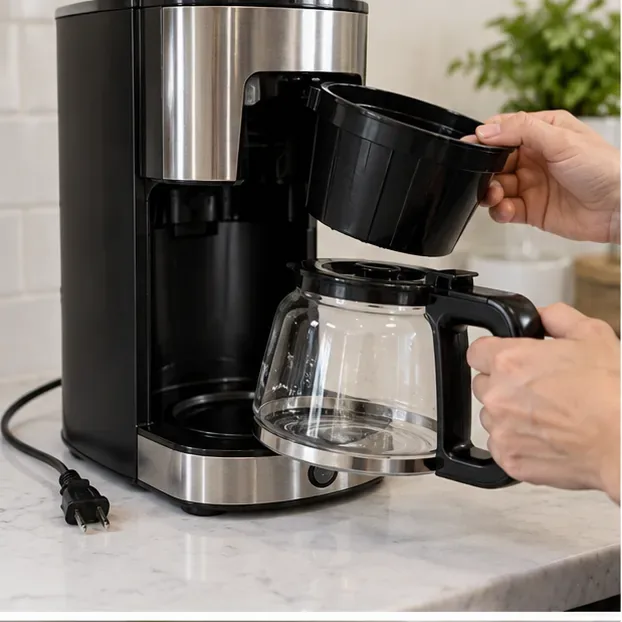
Turn the coffee maker off, unplug it, and let hot surfaces cool. Discard grounds and any paper filter. Remove the carafe, lid, brew basket, reusable filter, and removable reservoir only if your manual says those parts are removable.
Unplug the brewer, let it cool, and remove only the parts your manual identifies as washable or removable.
Do not immerse the coffee maker body, power cord, or plug. Also check whether your brewer contains a charcoal or water filter that must be removed before descaling. Some machines require that step so the filter does not absorb descaling chemicals.
2. Wash the parts that collect coffee oils
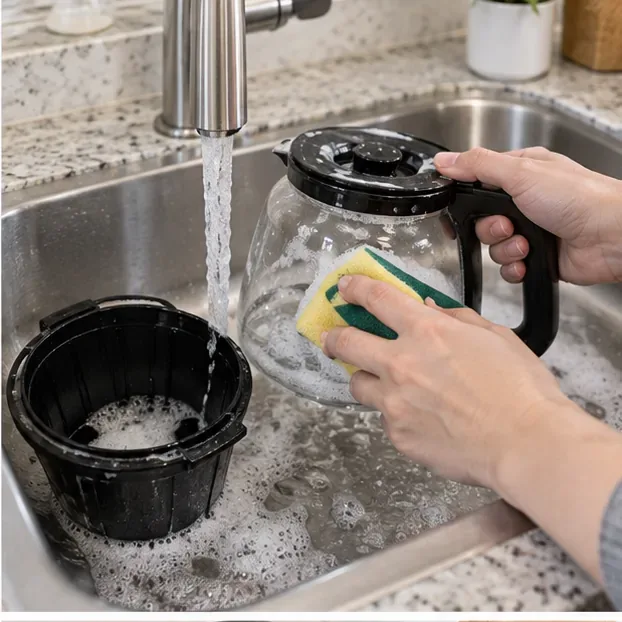
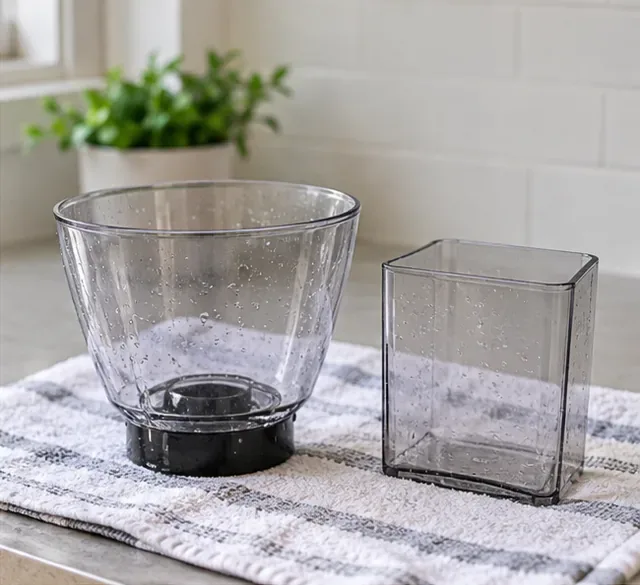
Wash the carafe, brew basket, and other approved removable parts with warm water and mild dish soap. Coffee oils are organic residue, so physical washing is often more useful here than running an acid through the machine. Moccamaster, for example, instructs owners to hand-wash the carafe and brew basket with mild dishwashing detergent and rinse thoroughly. Mr. Coffee likewise instructs users of some drip models to wash the brew basket, filter, carafe, and lid with hot water and mild liquid soap after the brewer has cooled.
Warm water and mild dish soap are appropriate for many removable carafes and brew baskets; dishwasher safety is model-specific.
Dishwasher safety varies. Do not assume a glass carafe, thermal carafe, reservoir, or brew basket is dishwasher-safe just because a similar-looking part from another model is.
3. Choose the vinegar-free descaler that matches the machine
For internal scale, read the care section of your model manual. The safest hierarchy is: first choice, the manufacturer's own descaler; second choice, a third-party product the manufacturer explicitly names or allows; third choice, another coffee-machine descaler only if the manual permits generic products.
For mineral scale, choose a descaler explicitly approved for your machine rather than assuming every household acid is compatible.
Moccamaster recommends products such as Urnex BioCaf Descaler and Dezcal. Keurig recommends its descaling solution on a recurring schedule for its brewers. Nespresso is more restrictive: its U.S. VertuoLine descaling guide says to use a Nespresso Descaling Kit and warns that alternatives such as vinegar or store-bought descalers may damage the machine. This is why “citric acid works for coffee makers” is too broad to be a safe rule.
4. Mix or dilute exactly as directed
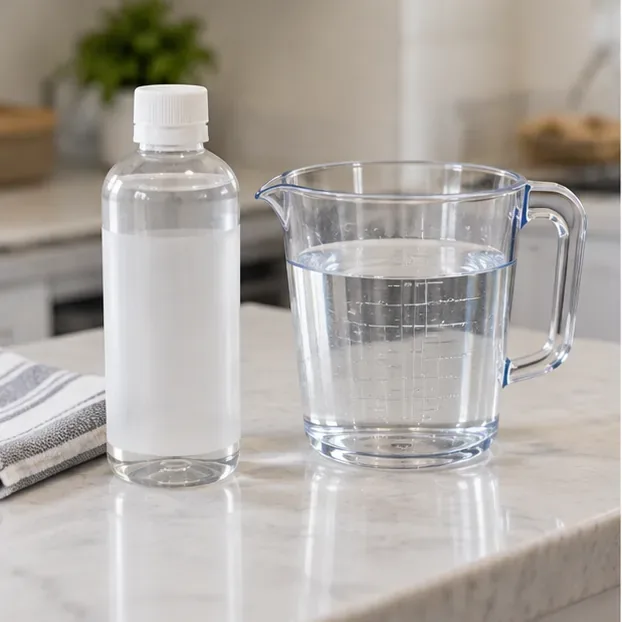
Follow the descaler package and model manual for the amount of product and water. Do not make the solution extra strong in hopes of shortening the job. Moccamaster's current descaling guide, for example, instructs users to dissolve its recommended powder in a separate container before adding it to the reservoir, rather than putting dry powder directly into the brewer.
Mix and dose the descaler exactly as its label and your coffee maker manual specify; stronger is not automatically better.
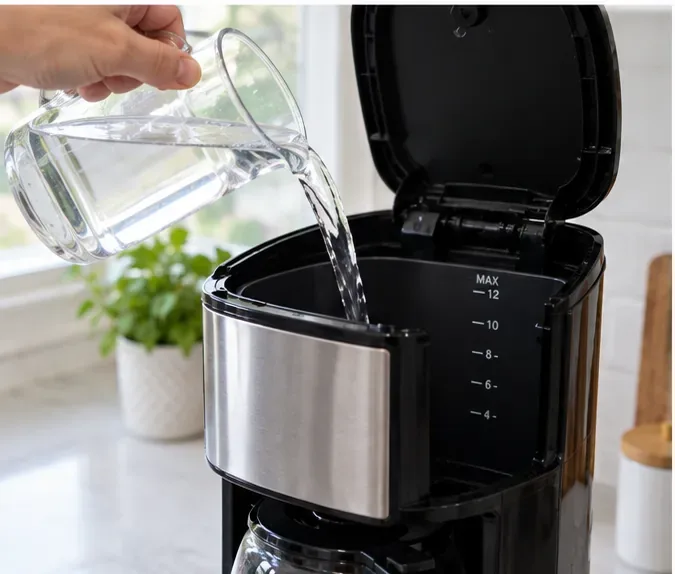
If the machine has a water filter that must be removed, do that before filling the reservoir. Place the empty carafe or specified collection container in position.
5. Run the Clean, Descale, or documented brew-cycle procedure
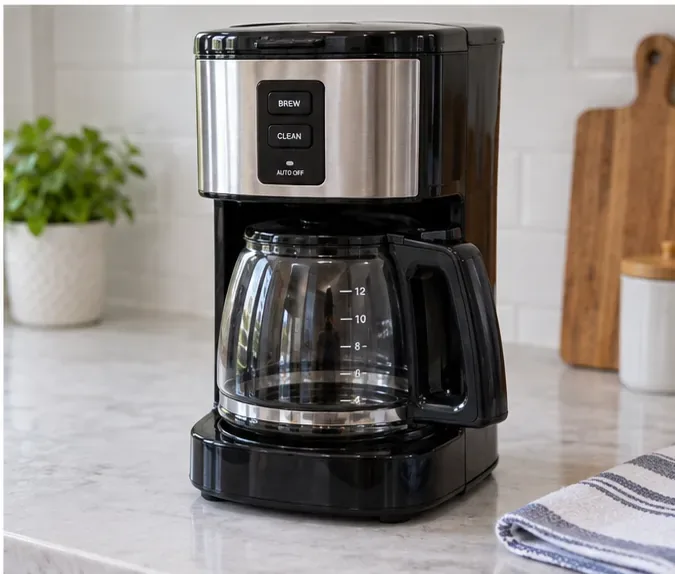
If the brewer has a Clean or Descale mode, use it. These programs may control flow and pauses differently from a normal brew. Ninja's DualBrew manual, for instance, says its Clean cycle distributes cleaning solution in stages with extended pauses. Breville espresso machines may have multi-stage descale programs for coffee, hot-water, and steam circuits.
Use the machine's Clean or Descale program when it has one; otherwise follow the model's documented brewing-cycle procedure.
Avoid inventing a universal “brew half, wait 30 minutes, finish” rule. That pause method appears in some appliance instructions, but it is not appropriate for every coffee maker. The correct contact time is the one specified for your machine and descaler.
6. Discard the used solution
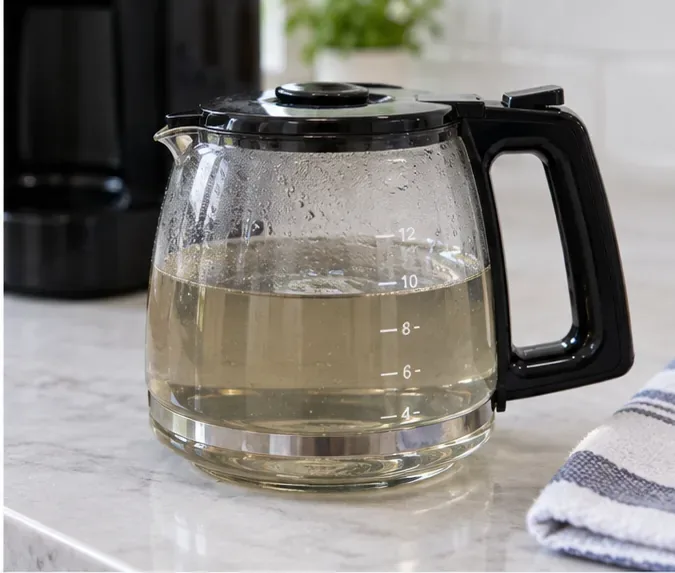
When the prescribed descaling cycle is complete, discard the liquid collected in the carafe or waste container. It may look cloudy or slightly tinted. Do not treat appearance as proof that all scale is gone, and do not reuse the spent descaler for another cycle unless the manufacturer explicitly says to do so.
Discard the used descaling liquid after the prescribed cycle and avoid reusing a spent solution.
Rinse the carafe or collection container before the fresh-water flush. If descaler spills on a counter or appliance surface, wipe it up promptly and follow the product's safety label.
7. Flush the machine thoroughly with fresh water
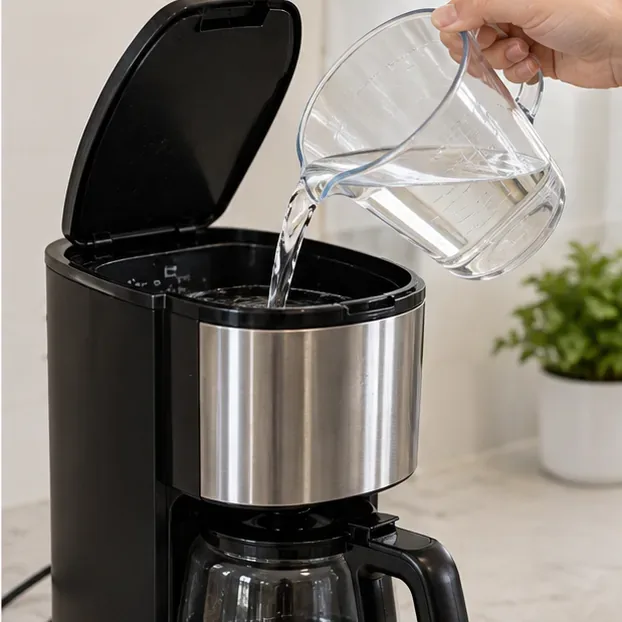
Fill the reservoir with fresh water and run the number of rinse cycles required by the instructions. There is no universal number. Moccamaster's current step-by-step descaling article calls for three clean-water cycles after its recommended descaling procedure. Older Keurig descaling instructions also specify repeated fresh-water rinses for certain brewers. Other machines have a programmed rinse phase.
Flush with fresh water for the number of rinse cycles required by the manufacturer, and continue if any cleaner taste or odor remains.
If you can still smell or taste cleaner after the required rinse, run additional fresh-water cycles before brewing coffee. A final rinse is not optional: removing residual descaler is part of the cleaning process.
8. Reassemble and test the result
Replace the brew basket, reusable filter, water filter, reservoir, lids, and other parts in their correct positions. Run a water-only cycle if the manual calls for one, then check the flow. You are looking for normal water delivery, no leaks, no chemical odor, and no visible residue in the carafe.
Reassemble the brewer, run a final water-only check if the manual calls for it, and verify normal flow before making coffee.
After the rinse water is clear and neutral-smelling, brew coffee normally. If the machine still runs unusually slowly, produces much cooler coffee than before, makes abnormal noises, or displays a descale warning that will not reset, follow the model-specific troubleshooting procedure rather than repeating stronger homemade cleaner.
What about baking soda?
Baking soda is useful, but its role is narrower than many “vinegar alternative” lists suggest. Cuisinart currently publishes a baking-soda cleaning method and says it recommends that method only when the water reservoir is removable. The same Cuisinart guidance also uses baking soda for deeper carafe stains. That is different from saying baking soda is the best mineral descaler for every coffee machine.
Use baking soda where the manufacturer explicitly permits it—for a washable reservoir, carafe, or surface—not automatically through pumps, valves, boilers, or narrow internal tubing. For established calcium or limestone scale, a purpose-formulated descaler is the more defensible choice when your manual allows it.
Recommendations by machine type
Standard drip coffee maker
Clean removable parts with warm soapy water. For internal mineral buildup, use the descaler named or permitted by the manual. If the brand approves a pre-formulated citric-acid descaler, that is a practical low-odor alternative to vinegar.
Keurig brewer
Use the Keurig descaling procedure for your exact model. Keurig says descaling removes calcium deposits and recommends its descaling solution for brewer maintenance. Different Keurig models use different volumes and sequences, so do not copy steps from another brewer solely because both use K-Cup pods.
Nespresso machine
Use the Nespresso descaling kit and the machine-specific descale mode. Nespresso's official guidance warns against vinegar and, for some U.S. guides, against generic store-bought descalers. This is a case where “manufacturer-approved only” is the sensible recommendation.
Breville espresso machine
Use the cleaning and descale functions described for the exact model. Some Breville manuals specify descaling powder and a programmed sequence that treats coffee, steam, and hot-water paths separately. Cleaning tablets, descaling powder, and water filters are not interchangeable maintenance products.
Moccamaster brewer
Moccamaster recommends specific Urnex or Durgol products, depending on region and guidance, and says vinegar is not recommended. Its U.S. support specifically discusses approved citric-acid-based descalers, making this one of the clearer examples where a formulated citric-acid product is a manufacturer-backed vinegar-free option.
How to know the cleaning worked
The brew cycle finishes in its normal time range for that machine.
Water flow is steady rather than sputtering or slowing because of obvious scale.
The clean or descale indicator clears according to the manual.
The final rinse water has no cleaner odor or taste.
The carafe and basket are free of oily film and visible residue.
No leaks appear after reassembly.
If these checks fail, changing to a stronger homemade acid is not the next logical step. Confirm that the correct descale cycle was completed, check the manual for a repeat procedure, and contact manufacturer support when flow remains restricted or the machine reports a fault.
The practical takeaway is simple: if vinegar is off the table, do not replace it with the first acidic or alkaline ingredient in the pantry. Match the cleaner to the job, then match the descaler to the machine. For removable coffee-stained parts, mild soap is usually enough when the manual allows it. For mineral scale inside the brewer, a properly formulated, manufacturer-approved descaler is usually the safer and more predictable vinegar-free route.