A dry erase board eraser that starts leaving gray streaks instead of a clean surface is usually telling you one thing: it has picked up enough marker dust and residue that it can no longer lift more ink effectively. The right fix depends on the eraser material. A removable microfiber pad can often be washed and dried; a replaceable felt pad or tissue may be designed to be flipped or replaced instead; and a fixed foam or magnetic body should not automatically be soaked.
The most useful rule is simple: identify the erasing surface before adding water. Quartet specifically advises washing the microfiber cloth of an eraser with water when residue builds up, then letting it dry before reuse. The same manufacturer sells felt erasers with replaceable pads, indicating that replacement—not repeated washing—is the intended maintenance path for some felt designs. Legamaster likewise sells replacement tissues and pads for several erasers and says those tissues should be replaced regularly for clean performance. See Quartet's board maintenance guidance, Quartet's replaceable felt eraser information, and Legamaster's replacement eraser tissue guidance.
Quick Reference: What Should You Do With Your Eraser?
| Eraser type | First action | When to wash | When to replace |
|---|
| Removable microfiber cloth or pad | Brush or tap off loose marker dust | Wash with water when residue causes streaking; follow the product's care instructions for any detergent or machine washing | If the fibers are matted, torn, or still smear after cleaning and drying |
| Replaceable felt pad | Flip the pad if the design allows it | Only if the manufacturer says the pad is washable | When both surfaces are saturated or performance does not recover |
| Replaceable eraser tissue | Install a fresh tissue | Usually not necessary | Regularly, as specified by the eraser maker |
| Fixed foam/felt eraser with no care instructions | Dry-clean by tapping or brushing first | Only after confirming the body and pad can get wet | If the surface is worn, shedding, permanently stained, or still transfers ink |
This distinction matters because “dry erase eraser” describes several different constructions. A cleaning method that is appropriate for a removable microfiber cloth is not automatically appropriate for a glued felt pad, a magnetic body, or an eraser that uses disposable tissues.
Four-Step Cleaning Method for a Washable Microfiber Eraser
1. Inspect the eraser and remove loose residue

Caption: A dry erase eraser with visible marker buildup should be checked for a removable or washable pad before water is used.
Start with the eraser dry. Tap it gently over a trash can or outdoors, or brush the surface with a clean, soft brush to release loose marker dust. This simple step reduces the amount of pigment that turns into a slurry when water is added.
Next, look at how the pad is attached. If the microfiber surface peels away, slides out, or is clearly designed as a washable cloth, remove it from the plastic or magnetic body. If the pad is permanently bonded and the manufacturer does not say the entire eraser is washable, do not assume it can be submerged.
Practical check: If your eraser has a rigid plastic shell, embedded magnet, adhesive-backed felt, or replaceable paper/tissue layer, clean or replace only the erasing surface according to its design rather than soaking the whole object.
2. Rinse the washable pad with water

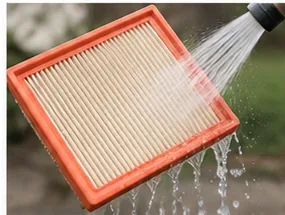
Caption: Running water can remove trapped marker residue from a washable microfiber erasing surface.
For a washable microfiber pad, water is the best place to start. Quartet's maintenance guidance specifically says to wash the microfiber cloth of the eraser with water to eliminate residue and let it dry before further use. That is a more defensible default than reaching immediately for alcohol, bleach, or a strong household cleaner.
Rinse the pad until the runoff becomes noticeably clearer. Work the water through the fibers with light finger pressure rather than twisting or aggressively scrubbing. The objective is to release dry erase pigment without damaging the pile or separating the pad from its backing.
If plain water does not remove a greasy or unusually heavy deposit, check the manufacturer's care instructions before adding soap. A tiny amount of mild detergent may be appropriate for some washable textiles, but it is not a universal rule for every eraser. For example, Legamaster states that its separate microfiber cleaning cloth can be machine-washed, but that specification should not be generalized to every felt or foam eraser. The manufacturer document is available in Legamaster's whiteboard cleaning instructions.
3. Rinse away loosened ink and avoid chemical residue

Caption: A final thorough rinse helps remove loosened marker pigment before the eraser is dried.
Continue rinsing until obvious ink residue is no longer washing out. If you used an approved mild soap, remove it completely. Residual cleaner inside the pad can make the eraser feel slick and may transfer material back onto the board.
A common mistake is to spray the eraser with whiteboard cleaner or rubbing alcohol just because those products may be suitable for certain board surfaces. Board-cleaner compatibility does not automatically mean eraser-pad compatibility. Keep chemicals off the eraser unless the eraser manufacturer specifically permits them.
Also avoid wringing a microfiber pad hard. Instead, press it gently between clean towels or squeeze it lightly if the construction allows. Excessive twisting can stretch the fabric, deform foam underneath it, or loosen an adhesive layer.
4. Air-dry completely before putting it back into service

Caption: Let the cleaned eraser dry fully on a towel before using it on a dry erase board again.
Set the eraser or removable pad on a clean towel in a ventilated area and let it dry completely. Quartet's care guidance says the microfiber cloth should be allowed to dry before reuse; its printable maintenance sheet advises leaving it to dry overnight. Avoid high heat unless your specific product allows it, especially with foam, adhesive-backed pads, or molded plastic parts.
Do not judge the cleaning result while the pad is still wet. A damp eraser may smear marker ink even when the fibers are actually clean. Test it only after it is dry.
How Do You Know the Eraser Is Clean Enough?
Use a small test area on the board. Draw several fresh dry erase lines, wait briefly for the ink to dry, then erase them with normal pressure. A cleaned eraser should remove the writing without laying down a broad gray film. A faint trace on an old board does not always mean the eraser is dirty; the board itself may have ghosting or residue.
- Good result: the eraser removes fresh marker cleanly and no longer deposits visible dust or smears.
- Needs another rinse: the pad still releases dark pigment when dampened or leaves obvious residue after fully drying.
- Replace the pad: the surface is flattened, torn, shedding, permanently saturated, or cleaning no longer restores performance.
- Clean the board too: the eraser performs well on one area but the board still shows widespread ghosting or a slick film.
When Is Replacement Better Than Washing?
Replacement is the correct maintenance method for many dry erase erasers. Quartet's premium felt eraser uses replaceable felt pads and explicitly recommends replacing the pad to maintain clean erasing over time. Legamaster's TZ-style erasers use replaceable eraser tissues and state that the tissue should be replaced regularly to ensure clean work.
That means a dark felt pad is not automatically a candidate for sink washing. If the product is built around disposable or replaceable layers, changing the layer is usually faster and more consistent than trying to restore a saturated pad.
You should also replace an eraser if the pad is separating from the handle, the foam is crumbling, the microfiber has become smooth and matted, or the eraser continues transferring old colors after a proper wash-and-dry cycle.
What About a Microfiber Cloth Instead of a Traditional Eraser?
A microfiber cloth can be easier to maintain because many products are explicitly washable. 3M, for example, describes its Post-it Dry Erase Cleaning Cloth as washable and designed to lift and trap dry erase marker dust without sprays or chemicals. See the 3M Post-it Dry Erase Cleaning Cloth product information.
For classrooms, offices, or home boards that are used heavily, keeping a washable microfiber cloth available can also help prevent the main eraser from becoming overloaded. This is especially useful when a board is covered with dense writing every day.
Quick Cleaning Checklist
- Identify whether the erasing surface is microfiber, felt, foam, or replaceable tissue.
- Remove loose marker dust before adding water.
- Wash only surfaces the manufacturer identifies as washable.
- Start with water; use detergent or machine washing only when the product's care guidance allows it.
- Do not soak a magnetic or rigid eraser body unless the manufacturer says it is safe.
- Rinse thoroughly and avoid leaving cleaner residue in the pad.
- Air-dry fully before testing.
- Replace saturated felt pads, tissues, or worn erasers when cleaning no longer restores performance.
How Often Should You Clean a Dry Erase Board Eraser?
There is no single interval that fits every classroom, office, or home board. The practical trigger is performance: clean the eraser when it starts leaving marker dust, gray streaks, or transferred color behind. A heavily used board may reach that point quickly, while a lightly used board may go much longer.
Quartet recommends monitoring erasers for residue because continued use can cause them to spread ink dust across the surface. That is a better rule than cleaning on an arbitrary calendar. When you notice smearing, address the eraser before repeatedly scrubbing the board with more pressure.
Bottom Line
The safest way to clean a dry erase board eraser is to match the method to its construction. Wash a removable microfiber surface with water and dry it completely when the manufacturer allows it. Flip or replace felt pads when the design provides replacement surfaces. Replace disposable eraser tissues regularly. If the eraser's body is magnetic, glued, or otherwise not clearly washable, avoid soaking it without product-specific guidance.
A clean eraser should remove fresh dry erase ink instead of redistributing old pigment. If washing and drying do not restore that behavior, replacing the pad or eraser is usually the more reliable next step.