Home
» How To
»
How to Clean a Hairbrush After Lice: CDC-Based Steps and What to Avoid
How to Clean a Hairbrush After Lice: CDC-Based Steps and What to Avoid
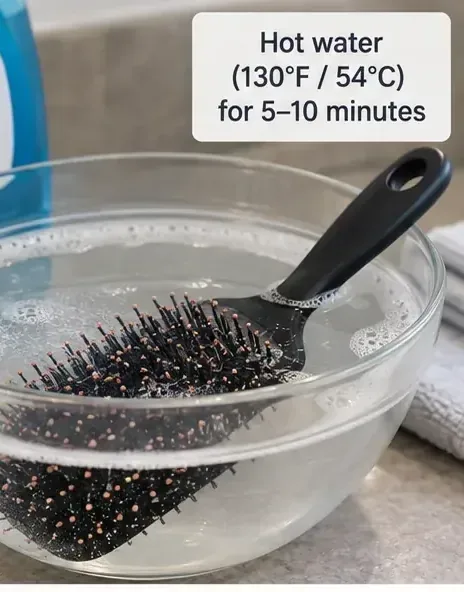
If a hairbrush was used by someone with head lice, the most important confirmed step is simple: if the brush can safely tolerate hot water, soak it in water that is at least 130°F (54°C) for 5 to 10 minutes. That is the current recommendation from the U.S. Centers for Disease Control and Prevention (CDC). You do not need boiling water, pesticide spray, or an elaborate household-disinfection routine.
Cleaning the brush is a supporting step, not a treatment for the person who has lice. Head lice live and feed on the scalp, and treatment should follow the product or prescription directions recommended for the person affected. The brush matters because sharing an infested comb or brush is a possible, though less common, route of spread.
What is actually confirmed, and what depends on the brush?
Question
Best-supported answer
What to do
How should a comb or brush used by someone with lice be treated?
CDC says soak it in hot water at least 130°F (54°C) for 5–10 minutes.
Use a heat-safe container and, if practical, a thermometer.
Do you need boiling water?
No. CDC specifies 130°F or hotter, not boiling.
Do not expose the brush to more heat than necessary.
Do you need bleach or pesticide?
CDC does not require either for combs or brushes and specifically says fumigant sprays and fogs are unnecessary and can be toxic.
Skip pesticide sprays and foggers.
What if the brush cannot be immersed in 130°F water?
This depends on the manufacturer's construction and care instructions. CDC does not publish a material-by-material brush alternative in the same guidance.
Check the brush maker's care instructions; if hot-water immersion is prohibited, consider replacing or isolating the brush rather than improvising with chemicals.
The CDC also notes that adult head lice generally die within about two days after falling off a person because they cannot feed, while nits usually cannot hatch and typically die within about a week when they are away from the temperature conditions near the scalp. That is one reason extreme whole-house cleaning is not recommended.
Remove trapped hair first so the hot-water treatment can reach the brush base and bristles more evenly.
Step 1: Remove loose hair and visible debris
Pull out hair wrapped around the bristles and trapped at the base of the brush. A comb, your fingers, or a small tool designed for brush cleaning can help. This step is practical preparation rather than the CDC's lice-killing instruction: its purpose is to expose the surfaces that need to contact hot water and to keep the cleaning container from filling with hair.
Useful action: work over a trash can or paper towel, discard the removed hair, and wash your hands afterward.
Step 2: Soak a heat-safe brush at 130°F or hotter for 5–10 minutes
Place the brush or comb in a container of hot water that is at least 130°F (54°C). Keep it submerged for 5 to 10 minutes. The temperature and contact time are the parts of the process specifically stated in current CDC guidance.
You do not need to boil the brush. Boiling water is far hotter than 130°F and can unnecessarily increase the chance of deforming plastic, loosening adhesives, damaging coatings, or changing the shape of a brush. The exact heat tolerance of a particular brush, however, is product-specific.
Useful action: if you are uncertain about the water temperature, check it with a household thermometer instead of guessing. If the brush manufacturer's instructions prohibit hot-water immersion, stop and use the heat-sensitive option described later in this guide.
For a heat-safe brush, CDC guidance is hot water of at least 130°F (54°C) for 5–10 minutes.
Step 3: Rinse away loosened residue if the brush allows it
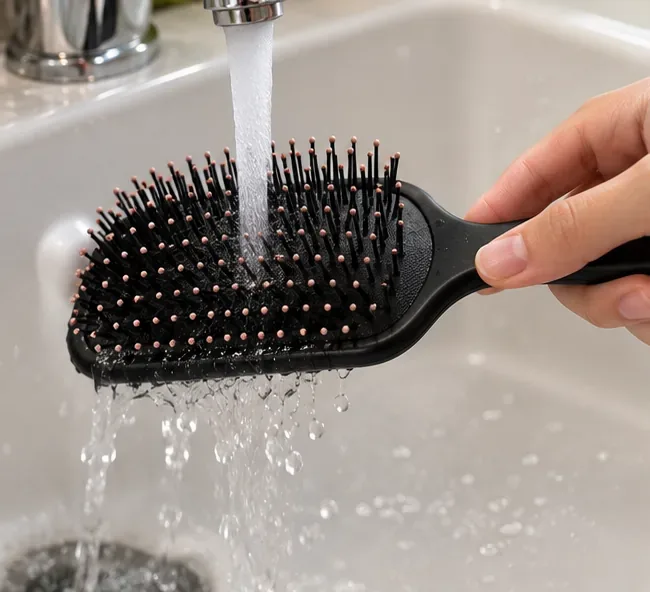
After the hot-water soak, you can rinse the brush to remove loosened hair products, skin oils, or visible debris if its construction tolerates running water. This rinse is ordinary cleaning; it is not a substitute for the CDC hot-water soak.
Soap is not identified by CDC as necessary for disinfesting a brush after head lice. If the brush is visibly dirty and its manufacturer permits washing with mild soap, soap can be used for ordinary grime removal, but do not confuse that cosmetic-cleaning step with the lice-control recommendation.
Useful action: rinse only as much as needed, and do not soak electronic, battery-powered, or manufacturer-designated non-immersible brushes.
Rinsing can remove loosened residue after treatment when the brush is safe to rinse; the CDC-specific lice-control step is the preceding hot-water soak.
Step 4: Let the brush dry completely before reuse
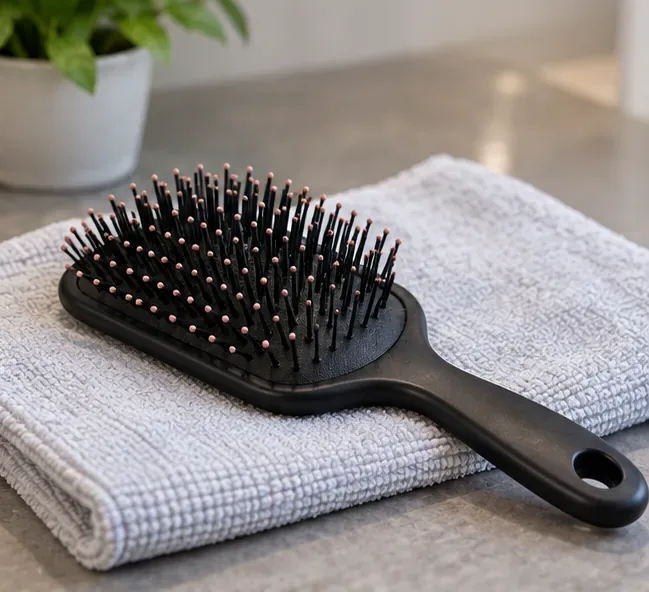
Shake off excess water and place the brush on a clean towel in a well-ventilated place. Let it dry fully before using it again. Drying is primarily about protecting the brush and keeping it clean after treatment; the CDC does not list air-drying as the step that kills lice.
Do not immediately return the brush to a shared drawer where untreated family members' brushes are touching it. Avoid sharing combs, brushes, towels, hats, and similar personal items while an infestation is being managed.
Useful action: keep the cleaned brush separate until it is completely dry and the affected person's treatment plan is being followed correctly.
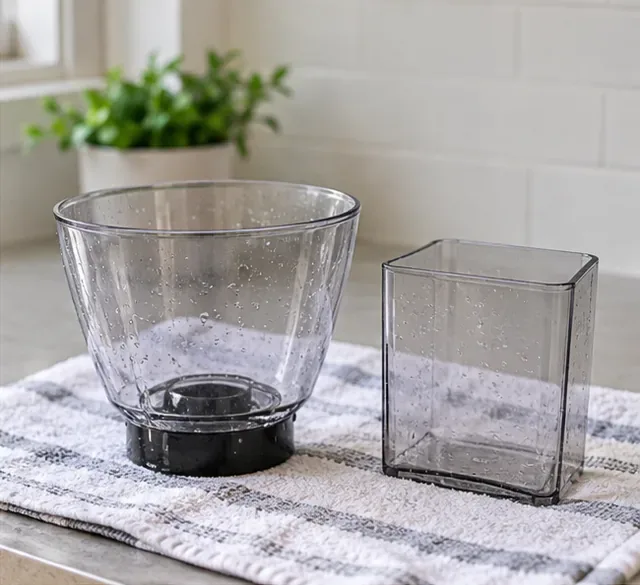
Allow the cleaned brush to dry fully on a clean towel before it goes back into regular use.
What if your hairbrush cannot handle 130°F water?
This is the main situation where a universal answer stops being reliable. A brush may have components that a manufacturer does not want immersed or exposed to high heat. The CDC's brush-specific instruction does not provide separate temperatures for wood, natural bristles, cushioned bases, glued assemblies, or specialty brushes.
The safest next step is therefore to follow the brush manufacturer's care instructions instead of inventing a stronger chemical treatment. For an inexpensive brush, replacement may be the simplest option. For an item that cannot be washed or dry-cleaned, CDC gives a broader recommendation for potentially exposed belongings: seal the item in a plastic bag and store it for two weeks. That broader advice is not written specifically as a substitute for brush soaking, so treat it as a conservative isolation option rather than a brush-specific CDC protocol.
Useful action: if the brush is valuable or has unusual materials, look up its exact care instructions before exposing it to heat. If no safe cleaning method is available, isolate or replace it rather than using bleach, insecticide, or boiling water.
Common misconceptions worth clearing up
“I need to sterilize the brush with bleach.”
That is not part of CDC's recommendation for combs and brushes. The confirmed instruction is hot-water soaking at at least 130°F for 5–10 minutes.
Useful action: use the verified hot-water method when the brush can tolerate it.
“The brush has to be boiled.”
No. The CDC threshold is 130°F, which is well below boiling. Higher heat is not automatically better and may damage the item.
Useful action: use a thermometer if you want confidence in the temperature instead of escalating to boiling water.
“I should spray the brush and room with lice pesticide.”
CDC specifically advises against fumigant sprays and fogs for head lice because they are unnecessary and can be toxic if inhaled or absorbed through the skin. EPA also advises using pesticides only according to the product label and favors non-chemical control methods when they are sufficient.
Useful action: do not spray insecticide on the brush unless a product is specifically labeled and medically recommended for that exact use; routine brush disinfestation does not require it.
“If I clean the brush, the lice problem is solved.”
No. Head lice primarily spread through direct head-to-head contact, and the person with an active infestation still needs appropriate treatment. Cleaning the brush helps reduce the chance of re-exposure from a recently used personal item, but it does not replace treatment.
Useful action: follow the treatment instructions for the affected person and clean recently used combs and brushes as a supporting measure.
How much household cleaning is actually needed?
The CDC says the risk of getting head lice from a louse that has fallen onto a rug, carpet, or furniture is very small. Vacuuming areas where the infested person sat or lay is reasonable, but spending large amounts of time or money on housecleaning is not necessary.
For clothing, towels, and bed linens used during the two days before treatment, CDC recommends machine washing with hot water at 130°F and drying on high heat. Items that cannot be washed or dry-cleaned can be sealed in a plastic bag for two weeks.
Useful action: focus your effort on treating the person, cleaning brushes and combs, and handling recently used washable items rather than trying to disinfect every surface in the home.
When should you clean the brush again?
If the brush is used again by a person who still has active lice before treatment is complete, it can become re-exposed. Treatment schedules vary by medication, and some products require retreatment while others do not. Follow the medicine label or clinician's directions rather than using a fixed calendar for every case.
Useful action: keep the brush assigned to one person during treatment and repeat the CDC hot-water cleaning process if it is used again while lice are still present.
Bottom line
For a heat-safe hairbrush, the evidence-based approach is straightforward: remove trapped hair, soak the brush in water at least 130°F (54°C) for 5–10 minutes, rinse visible residue if appropriate, and let it dry fully. Avoid sharing the brush while treatment is underway. You do not need to boil it, bleach it, or spray it with household insecticide.
If the brush cannot safely tolerate hot-water immersion, the limitation is material-specific rather than a lice-science question. Check the manufacturer's care instructions, and choose replacement or conservative isolation instead of using an unverified chemical workaround.
Sources
CDC: Treatment of Head Lice — includes the 130°F, 5–10 minute recommendation for combs and brushes and the warning against fumigant sprays and fogs.
CDC: About Head Lice — explains how lice spread, how long lice and nits survive away from the scalp, and prevention steps.
U.S. EPA: Pesticide Safety Tips — general pesticide-safety guidance emphasizing label directions and non-chemical control where appropriate.