Home
» How To
»
How to Clean a Patagonia Down Sweater Without Flattening the Down
How to Clean a Patagonia Down Sweater Without Flattening the Down
The short answer: for a current Patagonia Down Sweater, machine wash it in cold water, use a down-specific detergent, skip bleach and fabric softener, then tumble dry on low heat with two clean tennis balls until the down is completely dry and evenly lofted. Patagonia’s current Down Sweater product pages list “machine wash cold,” “tumble dry low,” and “for best results dry with 2 tennis balls.” Its broader down-care guidance also recommends a down-specific cleaner and says a front-loading washer is preferred.
That method is a good fit for a normally dirty Down Sweater jacket, hoody, or vest with intact fabric and stitching. If your jacket is an older or vintage version, or the sewn-in care label says something different, follow the label on your exact garment first. Patagonia’s designs and materials have changed over time, so the label is the most specific instruction for the item in your hands.
A full wash is appropriate when the collar and cuffs feel oily, the jacket has an overall odor, the shell has widespread grime, or the down looks less lofty after normal wear. If there is only one small food mark or a little mud on an otherwise clean jacket, spot-cleaning that area may be enough.
What you see
Best next move
One small surface stain, no odor
Spot-clean first
Dirty cuffs, collar, and general wear
Full wash
Down clumps after getting wet
Dry thoroughly on low heat and break up clumps
Torn shell, open seam, or leaking down
Repair before washing
Care label differs from this guide
Follow the garment label
How to Clean a Patagonia Down Sweater: 8 Steps
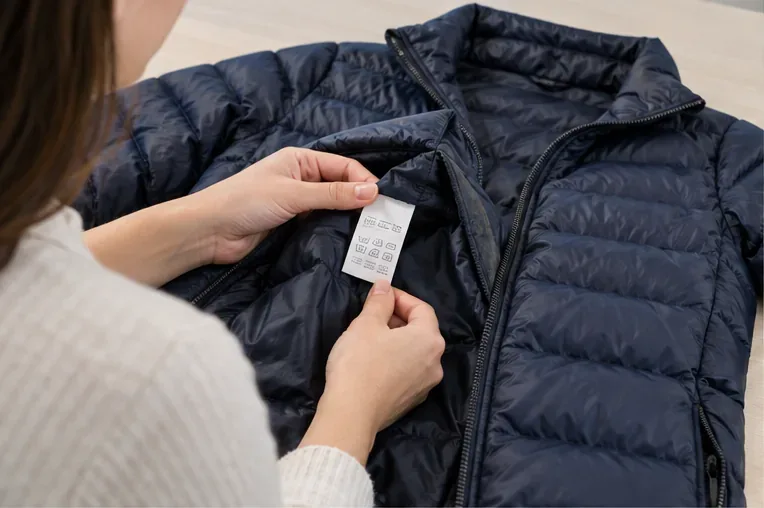
1. Read the care label and inspect the jacket
Start with the sewn-in care label on your exact Down Sweater, especially if it is an older model.
Check the label before adding water. Look over the shell, zipper area, cuffs, pocket openings, and seams for holes or loose stitching. A small tear can grow in a washer, so patching or repairing it first is safer than hoping it survives the cycle.
Also empty every pocket. Remove tissues, lip balm, snacks, or anything else that could dissolve, melt, or stain the fabric. Close the main zipper and pocket zippers so loose zipper hardware is less likely to snag the lightweight shell.
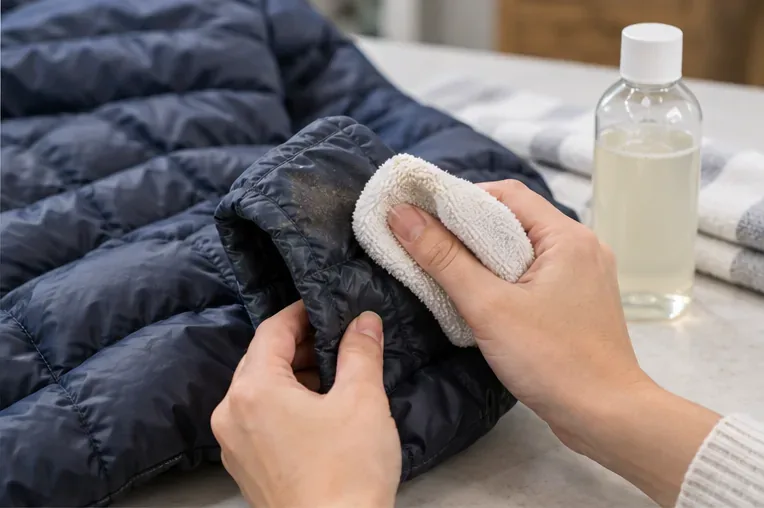
2. Pretreat dirty cuffs and other obvious spots
Gently work on high-contact areas such as cuffs before the main wash rather than scrubbing the thin shell aggressively.
For a visibly dirty cuff or collar, use a small amount of down-specific cleaner and a damp soft cloth. Blot and gently work the soil instead of scrubbing hard. The goal is to loosen grime without abrading the face fabric.
For example, if the jacket is clean except for a dusty sleeve from brushing against a car door, a careful spot clean may solve the problem without a full wash. If the collar and both cuffs are greasy from repeated wear, continue with the complete wash.
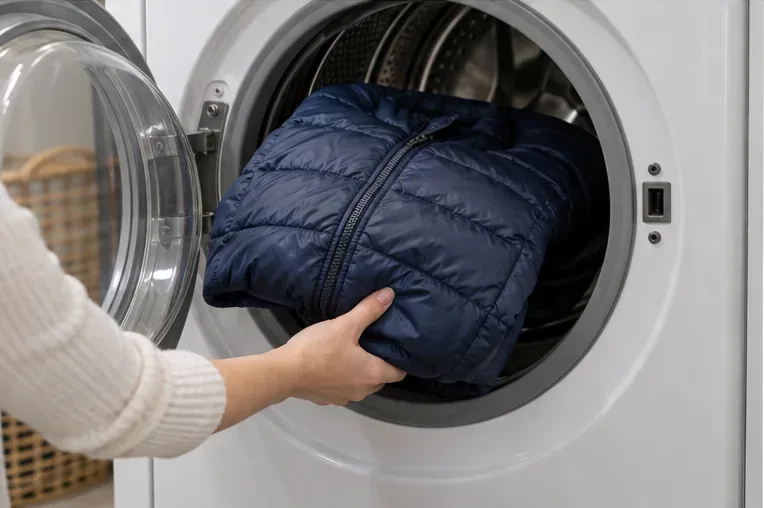
3. Use a front-loading washer when possible
Patagonia’s general down-care guidance prefers a front-loading washer for down garments.
Place the jacket in a front-loading washer, ideally by itself or with plenty of room to move. Patagonia’s current general guidance says a front-loader is preferred, while a top-loader can work on a hand-wash or delicate setting.
If your top-loading machine has a strong center agitator and you are unsure how gently it treats lightweight garments, using a front-loader at home or a reliable laundromat is the more conservative choice. Avoid cramming the jacket into an undersized drum.
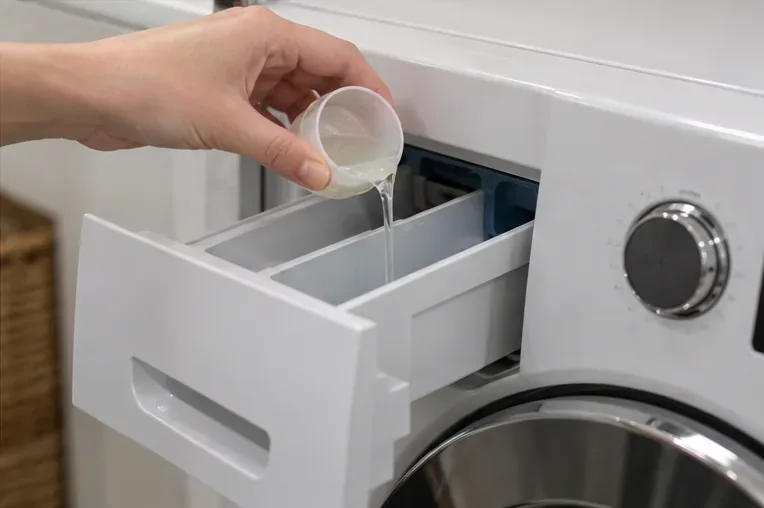
4. Add a down-specific detergent, not fabric softener
Use the amount specified by the down-cleaner manufacturer; more detergent is not better.
Use a cleaner made specifically for down and follow the dosing instructions on its bottle. Patagonia says traditional detergent can remove natural oils from down and negatively affect loft and performance. It also says not to use bleach or fabric softener.
Do not add extra cleaner “for good measure.” Residue is harder to rinse out and can leave the down feeling less springy. If you know your washer tends to leave detergent behind, an extra rinse after the wash can be useful, provided the care label does not prohibit it.
5. Wash in cold water on a gentle setting
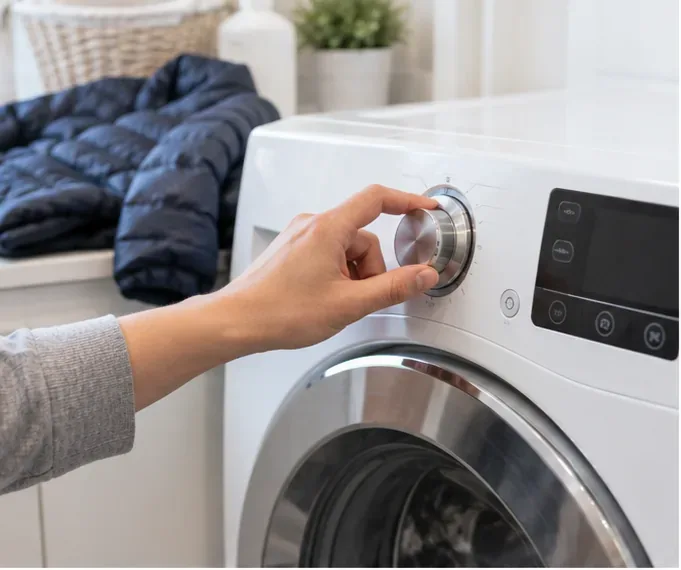
Select a gentle cycle that uses cold water, in line with current Patagonia Down Sweater care instructions.
Current Patagonia Down Sweater care instructions specify machine washing in cold water. Choose a gentle or delicate program that gives the jacket room to rinse thoroughly. Avoid hot water and aggressive heavy-duty cycles unless the sewn-in label on your exact garment specifically says otherwise.
When the cycle finishes, the jacket may look flat, lumpy, and surprisingly thin. That is normal for wet down. The insulation has not necessarily been damaged; it simply needs careful drying to regain loft.
6. Lift the wet jacket carefully
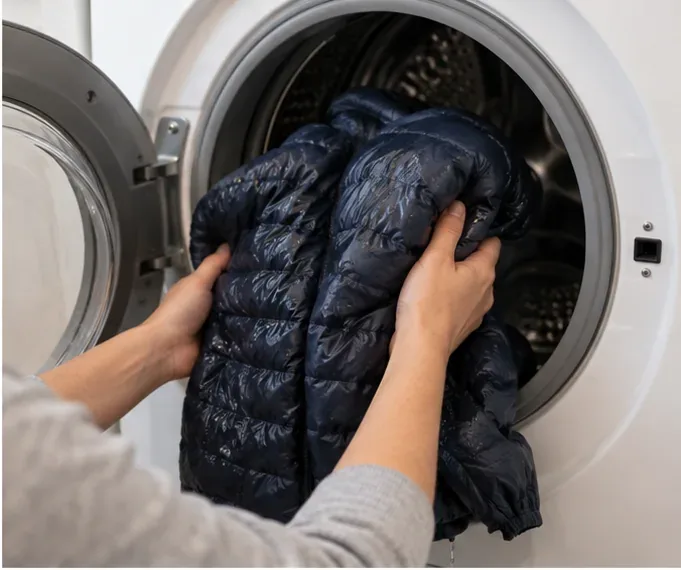
Support the wet jacket as you remove it, because saturated down is heavier than dry down.
Wet down is heavy, so do not yank the jacket by one sleeve or the collar. Support more of the garment as you move it from the washer to the dryer. This reduces concentrated stress on seams and thin shell fabric.
If the jacket comes out very soapy, do not move straight to high heat in an attempt to “fix” the loft. Rinse out excess cleaner first. Clean down should not feel coated or slick with detergent residue.
7. Tumble dry on low heat with two clean tennis balls
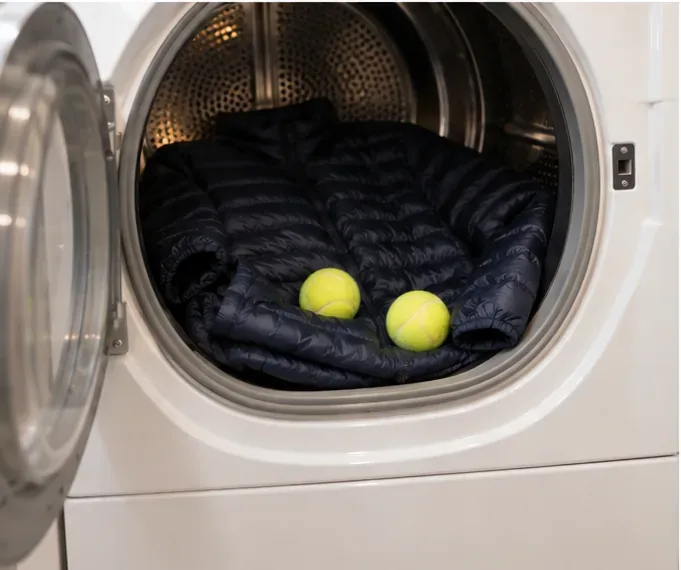
Current Down Sweater instructions say to tumble dry low and recommend two tennis balls for best results.
This is the most important part of the process. Patagonia says to tumble dry the current Down Sweater on low heat and recommends two tennis balls for best results. The balls help separate damp clusters of down as the drum turns.
Drying can take more than one cycle. Stop periodically, feel the baffles, and gently break apart stubborn clumps with your fingers before returning the jacket to low heat. Do not switch to high heat simply to finish faster. Patagonia’s care instructions explicitly call for low heat, and high temperatures can damage lightweight fabrics or finishes.
If you are using a laundromat dryer, be cautious because machine temperatures can vary. A reliably low-heat dryer is more important than finishing quickly.
8. Confirm the down is fully dry and evenly lofted
The finished jacket should feel dry throughout, with soft, evenly filled baffles rather than cool damp clumps.
Do not stop when only the outside fabric feels dry. Press and feel several baffles, especially thicker areas around the torso and shoulders. The down should feel light, springy, and evenly distributed. If you find a cool, dense, or damp clump, keep drying on low and check again later.
A useful finish test is simple: the jacket should have returned to a consistent puffy shape, should not feel unusually heavy, and should not contain cold damp pockets. Storing down before it is fully dry can create odor and mildew problems, so complete drying matters more than speed.
What a Good Result Looks Like
After a successful wash, the shell should be clean without obvious detergent residue, the down should be evenly lofted, and the jacket should feel light rather than damp or heavy. It does not need to look “brand new” to be properly cleaned; cosmetic wear, small color changes from age, and existing abrasions will not disappear in the wash.
If the jacket remains flat after it is genuinely dry, first confirm that no soap residue remains. An additional rinse followed by another low-heat drying cycle may help. If a baffle stays empty because down has migrated through a damaged seam or the garment has a structural problem, washing cannot repair that. At that point, use Patagonia’s repair options or another qualified repair service.
What Not to Do
Do not use bleach. Patagonia’s current care instructions prohibit it.
Do not use fabric softener. Patagonia’s down-care guidance says to avoid it.
Do not iron or steam the current Down Sweater. The current product care instructions say not to do either.
Do not use high heat to save time. Use a reliably low dryer setting.
Do not store the jacket while any down is still damp. Keep drying until all baffles are dry and lofted.
Do not assume every older Patagonia Down Sweater has identical care instructions. The sewn-in label on the garment wins when instructions differ.
Can You Hand-Wash a Patagonia Down Sweater?
For the current Down Sweater, Patagonia’s product page specifically gives machine-wash instructions, so machine washing is the clearest manufacturer-backed method. Patagonia’s general down-care page also centers machine washing and says a front-loader is preferred.
If you do not have a suitable machine, avoid improvising with aggressive soaking, wringing, or twisting. A front-loading washer at a laundromat is often the simpler option. Whatever washing method you use, the drying requirement remains crucial: low heat and thorough drying are what restore the down’s loft after it has been saturated.
How Often Should You Clean It?
There is no single wash interval that fits every owner. Wash based on condition rather than the calendar. A Down Sweater used daily around the neck and cuffs will need cleaning sooner than one worn occasionally over clean midlayers.
Use visible grime, oily contact areas, odor, and reduced loft as practical signals. Spot-cleaning a small mark can postpone a full wash, but leaving a heavily soiled garment dirty indefinitely is not better for the insulation or shell. The objective is not to avoid washing; it is to wash correctly when the garment needs it.
Bottom Line
For most current Patagonia Down Sweaters, the safest manufacturer-aligned routine is straightforward: check the label, treat obvious grime gently, use a down-specific cleaner in cold water, wash gently, then tumble dry on low with two clean tennis balls until every baffle is dry and fluffy. The wash is only half the job; careful low-heat drying is what brings the insulation back to an even loft.
If your jacket is vintage, damaged, or labeled differently, stop and follow the instructions specific to that garment. Cleaning can remove soil and restore normal loft, but it cannot repair torn fabric, failed stitching, or missing insulation.