Home
» How To
»
How to Clean a Range Hood Filter: Get the Grease Out Without Damaging It
How to Clean a Range Hood Filter: Get the Grease Out Without Damaging It
A clean range hood filter should let you see and feel a clear difference: the metal mesh or baffles should no longer feel coated in sticky grease, rinse water should run off without carrying obvious brown residue, and the filter should be completely dry before it goes back into the hood. If the filter is still gummy after a careful wash, smells strongly of old grease, is damaged, or is a non-washable charcoal filter, cleaning has reached its limit.
The first decision matters more than the detergent: identify the filter type. Most washable metal grease filters can be cleaned with warm or hot water and detergent. Many charcoal or carbon filters used in recirculating hoods are designed to be replaced rather than washed, although some model-specific charcoal filters are washable or reactivatable. Your range hood's owner's manual is the final authority for that part.
Is your range hood filter actually washable?
If the filter is a rigid metal mesh or metal baffle filter, it is usually intended to collect grease and is commonly washable. Whirlpool says removable grease filters can be cleaned in a sink with warm water and detergent or, when allowed for the model, in a dishwasher. Bosch similarly instructs owners to soak metal grease filters in hot, soapy water, scrub them, rinse them, and dry them thoroughly.
Charcoal filters are different. Whirlpool's general vent-hood guidance says its non-vented charcoal filter is not washable, while some specific Whirlpool models use charcoal filters that can be washed and heat-reactivated. Bosch also tells owners that active carbon filters on many hoods should be replaced rather than cleaned. The practical rule is simple: never assume a charcoal filter is washable because a metal filter is.
What does “clean enough” mean for a metal grease filter?
The goal is not necessarily a perfectly silver, factory-new appearance. Aluminum filters can discolor with age, water chemistry, or dishwasher detergent, and Broan-NuTone notes that dishwasher discoloration does not necessarily affect filter performance. What matters more is whether the grease film has been removed and the passages through the filter are open.
After cleaning and drying, look for these signs:
The filter no longer feels oily or sticky when handled with clean fingers.
Mesh openings or baffle channels are visibly free of heavy grease deposits.
Fresh water no longer carries obvious greasy residue off the filter.
There is no detergent film left on the surface.
The frame is not bent, separating, corroded through, or otherwise damaged.
If those conditions are met, cosmetic darkening alone is not a reason to keep scrubbing aggressively.
What do you need?
For a typical washable metal grease filter, gather a sink or tub large enough for the filter, warm or hot water, mild dish detergent, a soft cleaning brush or nonabrasive sponge, and clean towels. Avoid steel wool, harsh abrasives, and unnecessarily strong solvents unless your appliance manufacturer explicitly approves them.
How to clean a range hood filter in four stages
1. Turn the hood off, let it cool, and remove the metal filter
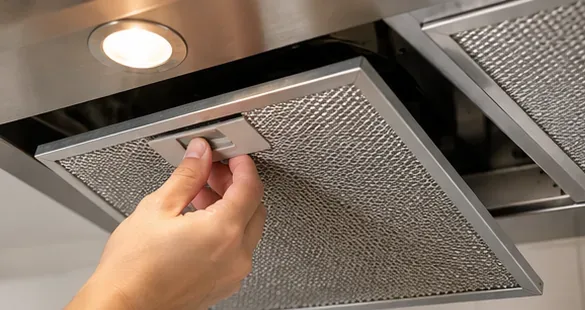
Switch off the fan and lights. If the hood has been running or uses hot lamps, wait until the unit is cool enough to handle safely. Most metal filters release with a spring latch, tab, or retaining mechanism, but designs vary. Support the filter with one hand while releasing it so it does not fall onto the cooktop.
Stage 1: Support the metal grease filter while releasing its latch, and keep the hood switched off while the filter is removed.
If the filter will not release easily, do not pry hard against the hood. Check the owner's manual for the correct removal method. Forcing a latch can bend the filter frame or damage the mounting hardware.
2. Soak the washable metal filter in warm or hot soapy water
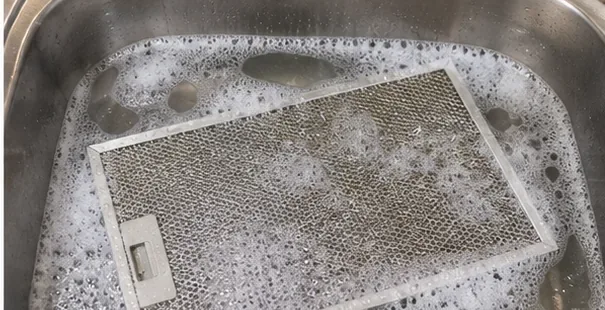
Place the filter in warm or hot water with mild detergent. Broan-NuTone recommends soaking its metal grease filters for 15 to 20 minutes per side for best results. Bosch recommends a 10-minute soak in hot, soapy water. Those times are manufacturer examples rather than a universal rule, so follow your model's instructions when they differ.
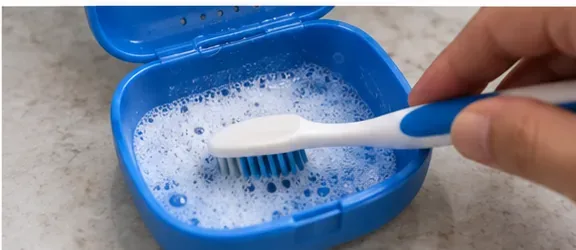
Stage 2: Soak a washable metal grease filter in soapy water long enough to soften the oily film before brushing.
For a filter that is only lightly greasy, a shorter wash may be enough. For a heavily coated filter, the soak should loosen the film so you can remove it without excessive force. If grease remains rock-hard after soaking, change the water and repeat rather than immediately switching to a harsh chemical.
3. Brush gently, then rinse until the water runs clean
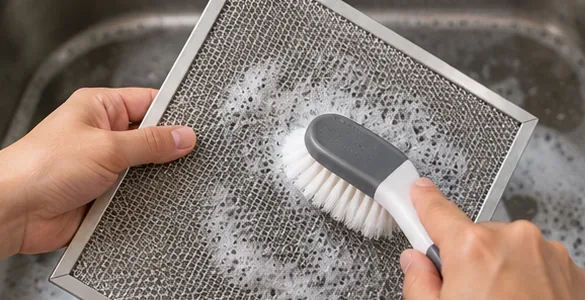
Use a soft brush to work detergent through the mesh or across the baffle channels. Brush both sides, especially around edges and corners where grease can collect. The objective is to lift softened grease out of the airflow passages without crushing or deforming the filter structure.
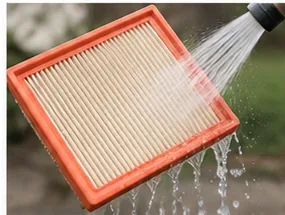
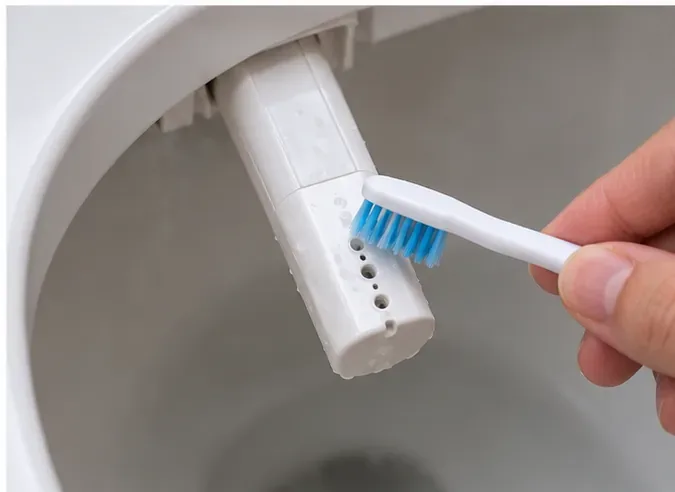
Stage 3: Use a soft brush to loosen grease from the mesh, then rinse thoroughly so dirt and detergent are removed from the filter.
Rinse with clean water after brushing. If the filter still feels slick, determine whether the slickness is grease or leftover detergent. Soap residue can make a filter feel deceptively slippery, so a thorough rinse is part of the quality check.
If visible grease remains, repeat the soak-and-brush cycle once. If repeated gentle cleaning does not clear the passages, the filter may be too heavily loaded or degraded to restore effectively.
4. Dry completely before reinstalling
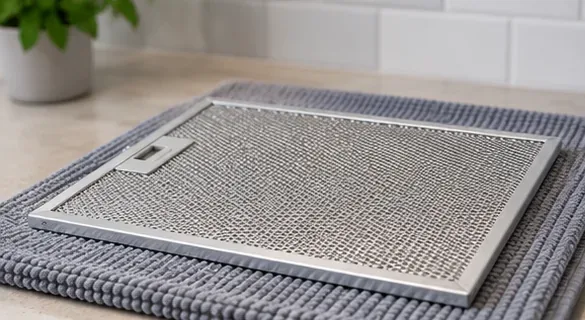
Shake off excess water carefully, blot or wipe the frame, and let the filter dry fully. Bosch explicitly instructs users to dry grease filters thoroughly before reinserting them. Do not reinstall a dripping filter simply because the surface looks clean.
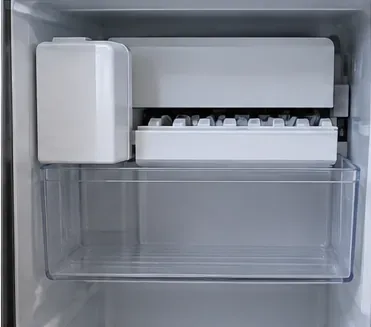
Stage 4: Leave the cleaned filter on a dry towel until the mesh and frame are fully dry before returning it to the hood.
Once dry, reinstall the filter using the same latch or retaining mechanism. Make sure it sits flat and is locked in place before operating the fan.
Can you put a range hood filter in the dishwasher?
Sometimes. Whirlpool permits dishwasher cleaning for many removable metal grease filters, Bosch says metal grease filters can be washed in a dishwasher without other dishes, and Broan-NuTone notes that some filters are dishwasher safe. But all three manufacturers tie the recommendation to the specific filter or owner's manual.
If your manual approves dishwasher cleaning, wash the grease filter by itself or as directed by the manufacturer. Broan-NuTone recommends a non-phosphate detergent for its metal filters and warns that discoloration can occur. A discolored filter is not automatically a damaged filter, but the dishwasher is not the right choice if your manual prohibits it.
When should you change the cleaning method?
What you find
Best next step
Light, fresh grease film on a washable metal filter
Warm/hot water, mild detergent, gentle brushing, thorough rinse and drying.
Heavy grease remains after one soak
Refresh the soapy water and repeat the gentle soak-and-brush cycle.
Soapiness remains after grease is gone
Rinse again with clean water; do not judge the result until detergent residue is gone.
Dark charcoal/carbon insert or recirculating filter
Check the model manual; many are replace-only, while some specialized versions are washable/reactivatable.
Bent, torn, corroded, separating, or permanently blocked metal filter
Replacement is usually more appropriate than increasingly aggressive cleaning.
How often should you clean a range hood filter?
There is no single interval that fits every kitchen. Manufacturer schedules vary by hood design and use, and grease accumulation changes dramatically with cooking style. Frequent frying, high-heat searing, wok cooking, or daily cooking will load a filter faster than occasional boiling or reheating.
A condition-based check is more useful than waiting for a fixed date. Inspect the metal filter periodically. If it feels sticky, looks visibly coated, or the mesh openings are becoming obscured, it is time to clean it. Some hoods also have filter-saturation indicators; follow the owner's manual for resetting those indicators after service.
What about charcoal filters in ductless range hoods?
Ductless or recirculating hoods commonly use a grease filter plus a charcoal or carbon stage to reduce odors before returning air to the room. GE Appliances explains that grease filters can be cleaned with soap and water or in a dishwasher on applicable models, while its charcoal filters cannot be cleaned and should be replaced when odor control declines. See GE Appliances' non-vented hood guidance.
Do not transfer that replacement interval or washability rule to every brand. Some Whirlpool models, for example, use charcoal filters that can be cleaned and thermally reactivated. That is why the filter part number and owner's manual matter more than generic advice.
When is cleaning no longer enough?
A metal filter is a mechanical part, not an unlimited consumable. Consider replacement if its mesh has collapsed, the frame is badly bent, layers are separating, corrosion has opened holes, the latch no longer holds securely, or airflow passages remain blocked after careful cleaning.
Likewise, a replace-only charcoal filter should not be soaked in an attempt to restore it. If odor control has declined and the manual identifies the filter as non-washable, replacement is the correct maintenance step.
Final quality check before turning the hood back on
The filter is fully dry.
The mesh or baffle channels are visibly open rather than grease-packed.
The surface does not feel oily or soapy.
The frame and latch are intact.
The filter is seated securely in the hood.
If the filter meets those checks, cleaning has achieved its purpose. If it remains sticky, blocked, structurally damaged, or is the wrong filter type for washing, further scrubbing is unlikely to improve the result and may cause damage. At that point, consult the model-specific manual and replace the filter if required.