Home
» How To
»
How to Clean Blinds in a Bathtub Without Damaging Them
How to Clean Blinds in a Bathtub Without Damaging Them
Cleaning blinds in a bathtub can work very well—but only for blinds or removable components that the manufacturer says are water-immersible. That distinction matters more than whether the slats simply look like plastic or metal. Some aluminum blinds can be immersed, some vinyl vertical vanes can be soaked, and some lift systems or decorative components must stay out of the water. Real wood, many fabric treatments, and unverified products should not automatically go into a tub.
The safest approach is to identify the material and product first, remove loose dust before adding water, use lukewarm water with a mild detergent only when immersion is approved, clean gently, rinse, and let everything dry completely before reinstalling. If you cannot verify that the blind is safe to immerse, use a non-immersion cleaning method instead.
First, can your blinds actually go in the bathtub?
Verified: Hunter Douglas says bathtub immersion can be used for its Modern Precious Metals aluminum blinds, except the Natural Elements collection. Its instructions call for lukewarm water with mild detergent and about five minutes of gentle washing, while also listing specific headrails and bottom rails that must not be immersed. Action: if you have a known Hunter Douglas model, check the current Hunter Douglas metal-blind cleaning instructions before putting the assembly into water.
Verified: Bali says vinyl vertical vanes may be removed and immersed in water, while fabric vanes should not be immersed. Bali also says never to use water on wood blinds. Action: for Bali products, compare your blind type with the manufacturer’s care and cleaning guidance before choosing a bathtub method.
Context-dependent: “Faux wood” does not automatically mean “safe to soak.” Water resistance of the slats does not prove that the headrail, cords, tapes, adhesives, finishes, or internal mechanisms are designed for immersion. Hunter Douglas recommends dry cleaning methods for its alternative wood blinds rather than bathtub immersion, and Bali does not list faux wood blinds as water-immersible in its care table. Action: treat faux wood as wipe-clean unless your exact product instructions explicitly allow immersion.
Unknown: if the brand, model, or material cannot be identified, there is no reliable universal rule that makes full submersion safe. Action: dust, vacuum with a brush attachment, and spot-clean instead of guessing.
Blind type
Bathtub immersion?
What to do
Manufacturer-approved aluminum blinds
Sometimes
Follow the exact product instructions, especially for headrails, lift systems, and decorative tapes.
Removable vinyl vertical vanes
Often, when the manufacturer allows it
Remove the vanes and immerse only the approved components.
Real wood blinds
No
Keep them out of the tub; dust or use the manufacturer’s recommended wood-care method.
Fabric vanes or fabric shades
Usually no
Vacuum or spot-clean according to the care guide; do not assume fabric is washable.
Faux wood blinds
Depends on the product
Do not soak unless the exact manufacturer instructions explicitly permit it.
Unknown material or model
Not verified
Use a non-immersion method until you can identify the product.
What you need
A clean bathtub
Lukewarm water
A small amount of mild detergent approved for the blind
A vacuum with a soft brush attachment or a clean microfiber cloth
Two or more clean towels
A soft sponge or microfiber cloth for stubborn grime
A handheld showerhead or clean container for rinsing, if your product can be rinsed this way
Avoid strong detergents, chemical solvents, abrasive cleaners, and scrubbing pads unless the manufacturer specifically permits them. Hunter Douglas warns that chemical solvents and scrubbing cleansers can damage its products, while Bali cautions against strong detergents and spot removers. Action: start with the mildest cleaning method that the product guide approves.
How to clean blinds in a bathtub: 8 careful steps
1. Identify the material and read the care instructions
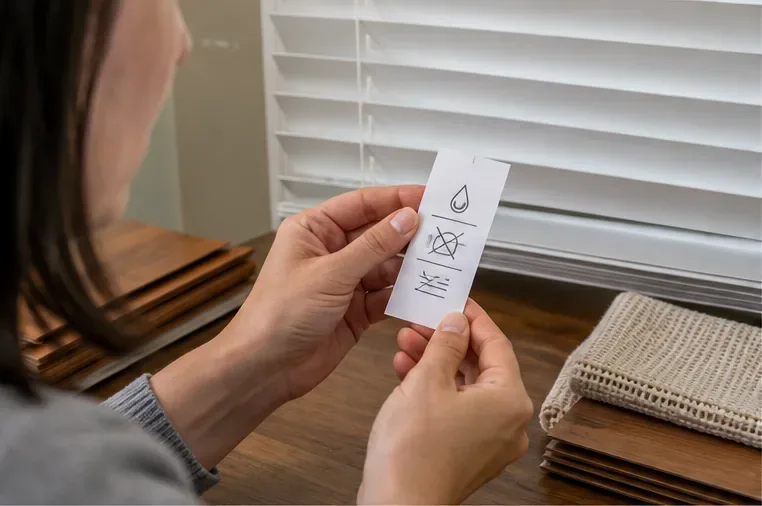
Before removing anything, find the brand label, order information, installation guide, or product name. Pay special attention to whether the instructions permit water immersion and whether the headrail, bottom rail, tapes, cords, or motorized components must stay dry. This is the step that prevents most avoidable damage because “metal,” “vinyl,” and “faux wood” are too broad to guarantee the same care method.
Action: if the instructions do not clearly permit immersion, stop here and use dusting, vacuuming, or spot cleaning instead.
Check the product type and care instructions before deciding whether any part of the blind can be immersed.
2. Remove loose dust before using water
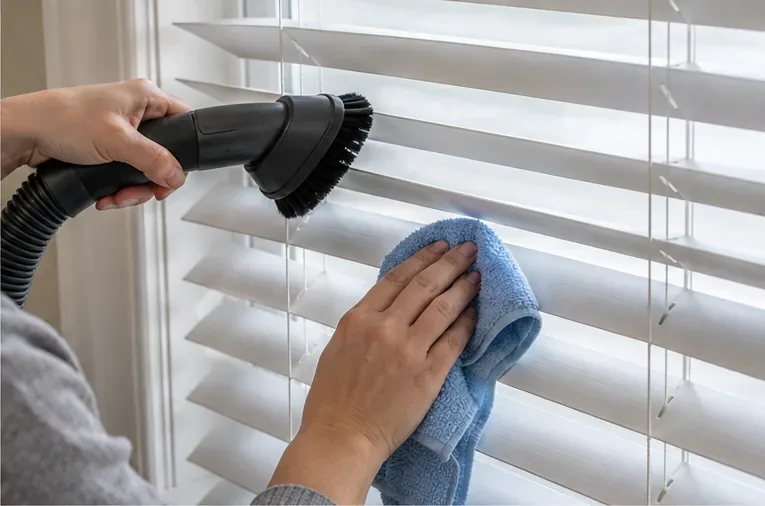
Dust turns into muddy residue once it gets wet, so dry cleaning first makes the bath much more effective. Close the slats in one direction, vacuum gently with a soft brush attachment or wipe with a microfiber cloth, then reverse the slats and repeat. Support thin aluminum slats so they do not bend.
Action: remove as much dry dust as possible before taking the blind down.
Vacuum or wipe both sides of the slats before bathtub cleaning so loose dust does not become wet grime.
3. Remove the blind carefully and protect the tub
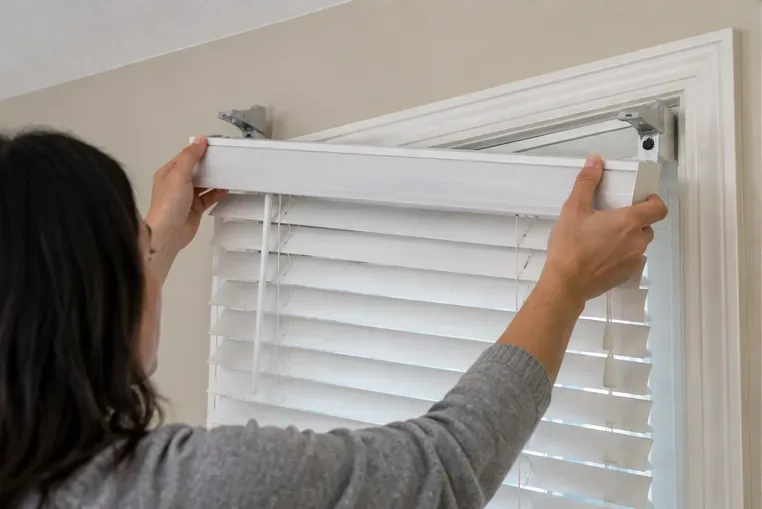
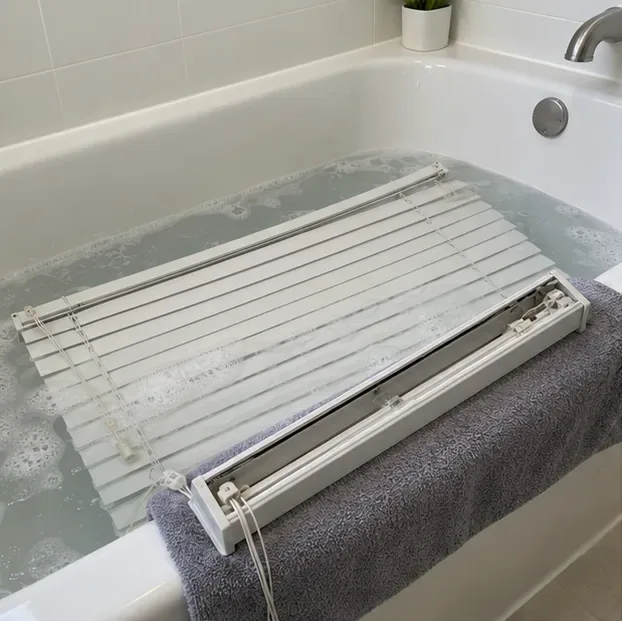
Use the product’s installation instructions in reverse rather than pulling on the headrail or cords. If the blind is wide or heavy, use a second person. Place a folded towel in the tub or over the rim where rigid hardware may rest so metal edges do not scratch the surface.
Action: set the blind down gently and keep any component that the manual says must remain dry outside the water.
Remove the blind according to its mounting system and support the headrail instead of pulling on cords or slats.
4. Fill the tub with lukewarm water and a small amount of mild detergent
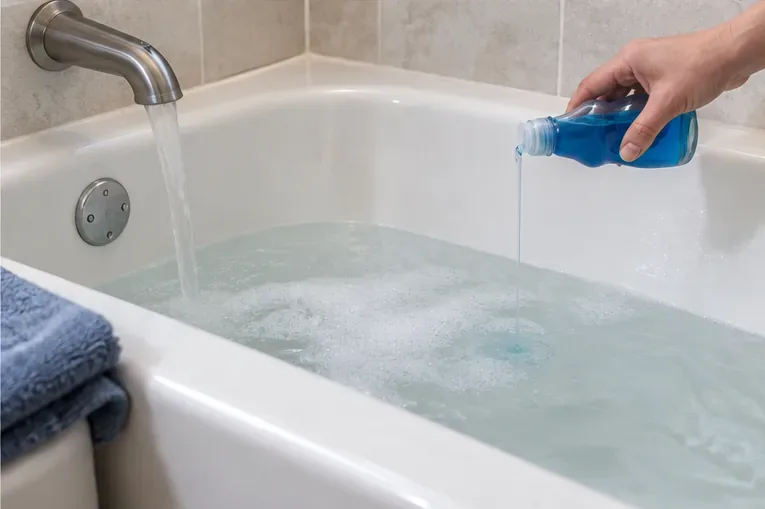
Lukewarm—not very hot—water is the manufacturer-specified choice for certain immersible aluminum blinds. Add only enough mild detergent to create a light cleaning solution. More soap is not automatically better; excess detergent takes longer to rinse and can leave residue.
Action: keep the solution mild, and do not add bleach, solvents, abrasive powders, or other strong cleaners unless your care guide explicitly calls for them.
Prepare a mild lukewarm cleaning bath rather than using hot water or aggressive cleaners.
5. Immerse only the approved parts
Place the water-safe portion of the blind into the tub without kinking cords or forcing slats flat. If the manufacturer allows the full assembly to be immersed, follow that model’s instructions exactly. If the headrail, motor, lift system, decorative tape, or other hardware must stay dry, keep it supported above the water.
A common misconception is that a longer soak always cleans better. The verified Hunter Douglas instruction for certain aluminum blinds specifies about five minutes of gentle washing, not an indefinite soak. That timing is product-specific, not a universal rule. Action: use the duration in your product guide; if no immersion time is provided, do not invent one.
Immerse only the parts approved for water exposure and keep restricted hardware supported out of the bath.
6. Gently loosen stuck-on grime
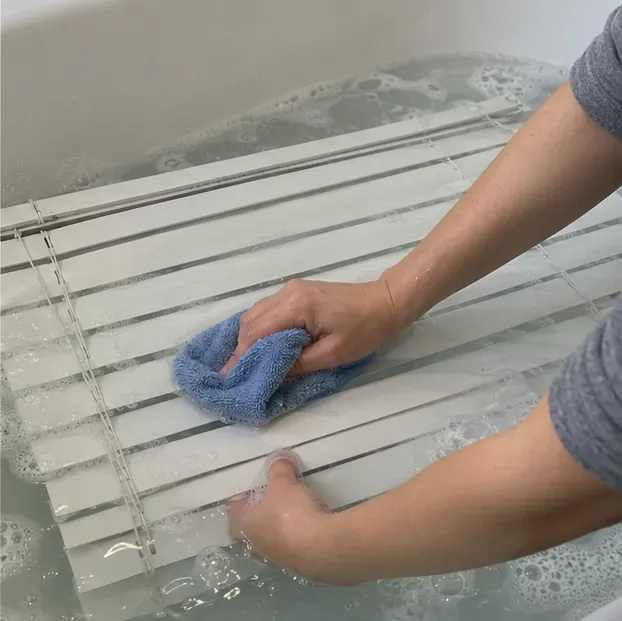
Move the water around the slats with your hands and use a soft microfiber cloth or nonabrasive sponge on greasy fingerprints or stuck-on dirt. Wipe in the direction of the slat and support thin metal with your other hand. Aggressive scrubbing can scratch finishes, crease aluminum, or damage cords and ladders.
Action: if a stain does not release with mild detergent and light pressure, stop and check the manufacturer’s stain-cleaning guidance rather than escalating to a harsher chemical.
Use a soft cloth and light pressure for stuck-on grime; support the slats so they do not bend.
7. Rinse away detergent
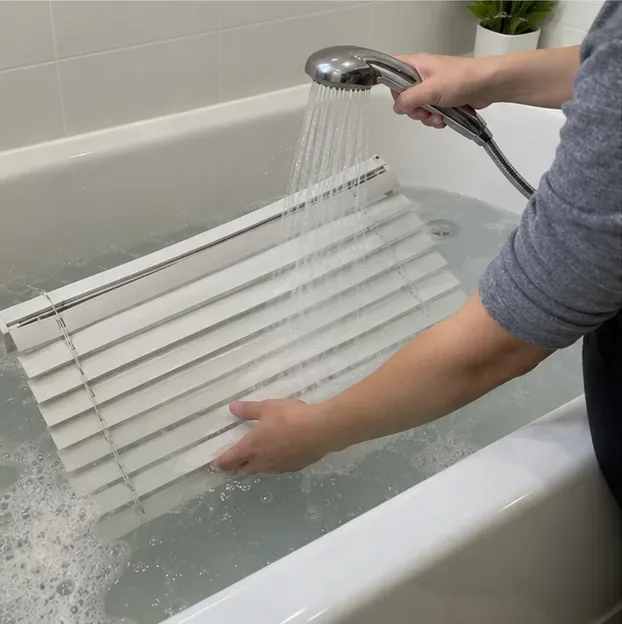
Drain the dirty water, then rinse the approved water-safe parts with clean water. A handheld showerhead can make this easier if the spray is gentle and the product can be rinsed this way. Keep water away from any mechanism the manufacturer excludes from immersion.
Action: continue rinsing until visible suds are gone and the slats no longer feel soapy.
Rinse with clean water until detergent is removed, while keeping non-water-safe hardware out of the spray.
8. Drain, towel-dry, air-dry, and reinstall
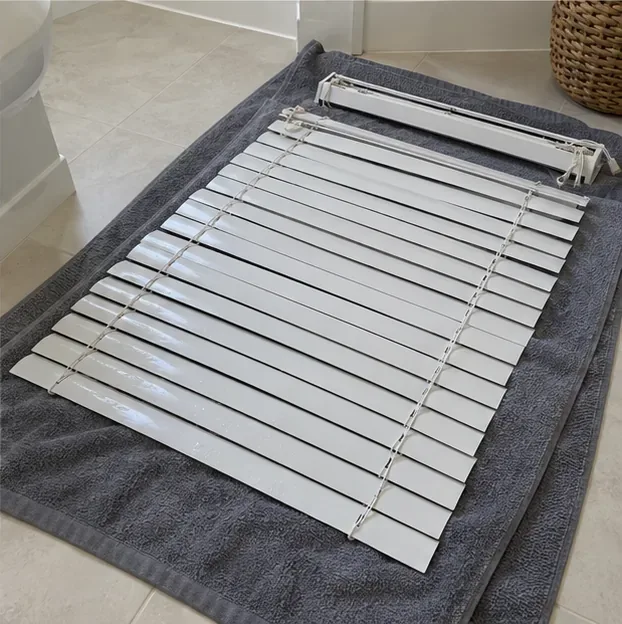
Lift the blind carefully and let excess water drain into the tub. Lay it flat on clean towels or position it as the manufacturer recommends, then blot accessible surfaces. Do not reinstall a wet blind just to get it out of the way; trapped moisture around metal hardware, cords, or the window frame can create problems even when the slats themselves tolerate water.
Action: wait until the approved washed components are fully dry, then reinstall the blind, operate it slowly, and confirm that the slats tilt and lift normally.
Let the washed blind drain and air-dry completely on clean towels before reinstalling it.
Common bathtub-cleaning mistakes
“If it is plastic-looking, it is safe to submerge.”
Not necessarily. Faux wood, vinyl, coated metal, fabric-backed products, and composite materials can look water-resistant while their internal hardware is not. Action: verify the exact product, not just the appearance of the slats.
“Hot water will cut grease faster.”
That is not the manufacturer-backed method cited here. Hunter Douglas specifies lukewarm water for its approved metal-blind immersion method. Action: use lukewarm water unless your own product guide says otherwise.
“More detergent or a stronger cleaner will make the blind cleaner.”
Stronger is not automatically safer or more effective. Manufacturers warn against strong detergents, spot removers, chemical solvents, and scrubbing cleansers on various blind products. Action: use mild detergent and gentle mechanical cleaning first.
“The whole blind should go underwater.”
Some assemblies have specific rails or control systems that must not be immersed. Action: support excluded hardware above the water or clean only removable water-safe components.
How to tell whether the job is finished
A clean blind should have no visible dust film, greasy residue, or soap left on the slats. The surfaces should be fully dry, cords should move freely, and the blind should tilt and lift without sticking. Stop using the blind and recheck the installation if the headrail feels wet inside, a motorized component was splashed, cords are tangled, or the slats no longer track correctly.
If the blind still has stains after a manufacturer-approved mild wash, that does not prove that stronger chemicals are safe. The finish may be stained, oxidized, permanently discolored, or simply incompatible with immersion. Action: consult the manufacturer or a window-treatment cleaning professional before trying a harsher treatment.
Bottom line
The bathtub method is useful for some blinds, but it is not a universal deep-cleaning shortcut. The confirmed rule is narrower: immerse only products and components that the manufacturer says are water-safe, use mild cleaning chemistry, avoid abrasive treatment, and dry everything completely. When the material or model is uncertain, the safest next step is not a longer soak—it is switching to a non-immersion cleaning method until you can verify the care instructions.