Home
» How To
»
How to Get a Lipstick Stain Off Clothes Without Setting It
How to Get a Lipstick Stain Off Clothes Without Setting It
Lipstick is a difficult laundry stain because it can combine oily or waxy ingredients with strong pigments. That does not mean you need an aggressive solvent or a hard scrub. In fact, the most consistent advice from laundry-care sources is the opposite: remove excess product gently, pretreat the stain, wash only within the garment's care instructions, and keep the item out of the dryer until you know the stain is gone.
This guide focuses on washable clothing. If the care label says dry clean only, or if you are dealing with a delicate item whose finish, dye, or fiber content is uncertain, use the fabric-specific guidance below rather than applying the full method automatically.
What should you know before treating lipstick?
The first useful distinction is between what is well established and what depends on the garment. The American Cleaning Institute stain-removal guide recommends pretreating cosmetics and lipstick with a prewash stain remover, liquid laundry detergent, a detergent paste, or bar soap before laundering. Maytag's current lipstick guide likewise starts with the care label, removal of excess lipstick, pretreatment, washing, and air-drying before any repeat attempt.
What is verified: rubbing hard at fresh lipstick can push more color into the fibers, and dryer heat should be avoided while a visible stain remains. What depends on circumstances: the safest pretreatment, water temperature, bleach choice, and whether a solvent such as rubbing alcohol is appropriate. What you may not know: the exact lipstick formula. Long-wear, matte, creamy, and glossy formulas do not all release from fabric at the same rate.
Useful action: read the care label first. If the item is machine-washable, continue with the five-step method below. If it is dry-clean-only, skip to the special-cases section.
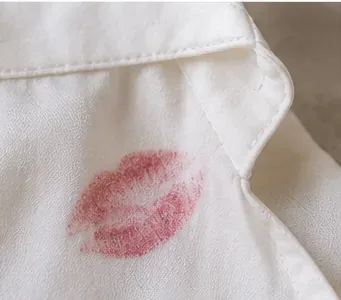
A fresh-looking lipstick mark on white fabric. Before applying a cleaner, check the garment's care label and identify whether the item is washable.
A five-step method for getting lipstick off washable clothes
1. Check the care label and lift off excess lipstick
Use the edge of a spoon, dull knife, or card to lift any thick lipstick sitting on the surface. Work lightly so you do not smear it into a larger area. Maytag and Whirlpool both advise removing excess makeup before pretreatment rather than immediately rubbing the stain.
If the lipstick is already dry, the same rule applies: remove what is sitting on top, but do not scrape so aggressively that you abrade the fabric.
Useful action: stop once the loose material is gone. Put a clean white towel or several layers of plain paper towel beneath the stained area so transferred pigment has somewhere to go.
2. Pretreat the oily, pigmented stain
For most washable everyday fabrics, liquid laundry detergent or a prewash stain remover is the simplest first choice. The American Cleaning Institute specifically lists these options for cosmetics and lipstick.
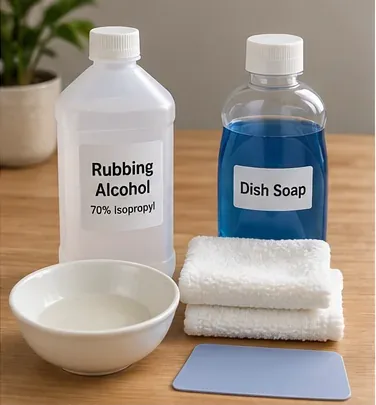
Dishwashing liquid is another option for washable garments when you are targeting the greasy component of lipstick. Maytag's lipstick-stain guidance uses dish soap as a pretreatment and emphasizes rinsing it out thoroughly before a machine wash because dish soap can create excessive suds in a washer.
Useful action: apply a small amount of the chosen pretreatment to the stained area and allow it time to work according to the product directions. If you are unsure about colorfastness, test an inconspicuous area first.
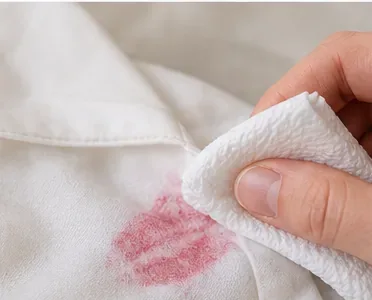
Blotting helps lift loose lipstick without grinding the pigment farther into the weave. Move to a clean area of the cloth as color transfers.
3. Lift residue, then rinse thoroughly
Blot rather than smear. If the fabric can tolerate gentle agitation after pretreatment, a soft-bristle brush can help work loosened residue out of sturdy washable fabric. The goal is not to scrub as hard as possible; it is to help the pretreatment reach the fibers while limiting spread.
ACI's guidance for lipstick on cloth napkins describes placing the stain face-down over an absorbent towel and dabbing so lipstick transfers into the material underneath. That technique is especially useful when you can access both sides of a washable fabric.
Useful action: keep changing to a clean section of the absorbent towel as color transfers. Rinse the pretreatment out completely before the garment goes into the washer, particularly if you used dishwashing liquid.
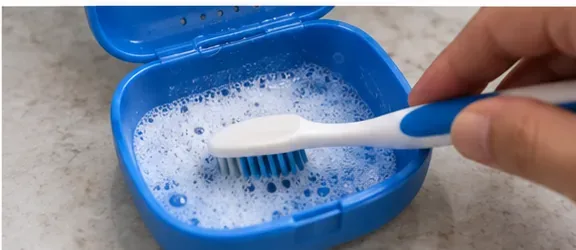
A soft brush can be used lightly on a sturdy washable fabric after pretreatment. Skip brushing on fragile, loosely woven, or easily abraded materials.
4. Wash according to the care label
There is no single correct water temperature for every lipstick stain. The practical rule is to use the warmest temperature allowed by the garment's care label and the detergent or stain-removal product you are using. Whirlpool and Maytag both make the care label the controlling instruction rather than recommending one universal temperature.
If color remains on a bleach-safe white item, an appropriate laundry bleach may be an option. However, bleach choice depends on fiber content, color, and care instructions. The ACI guide notes that chlorine bleach should be used only when safe for the fabric, and oxygen bleach is an alternative in some laundry situations.
Useful action: wash the garment normally after pretreatment, but do not move it straight from the washer to a heated dryer.
5. Air-dry, inspect, and repeat if necessary
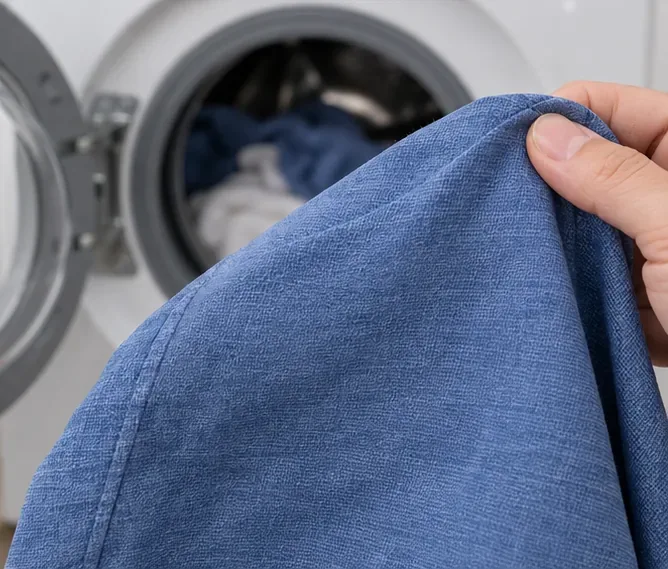
This is the step people are most tempted to skip. A damp garment can make a faint stain hard to see, and dryer heat can make remaining lipstick more difficult to remove. The Whirlpool makeup-stain guide recommends air-drying and repeating treatment if the stain is still visible. ACI gives the same general warning: make sure the stain is gone before using the dryer.
Long-lasting lipstick may simply require another round. That does not automatically mean the method failed; highly pigmented or long-wear formulas can take more than one treatment.
Useful action: let the garment dry naturally, inspect it in good light, and repeat pretreatment and washing if a shadow remains. Use the dryer only after you are satisfied that the stain is gone.
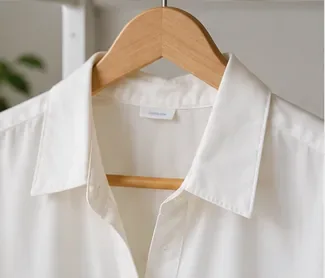
Air-dry the garment before using a dryer. Inspect the fabric in good light and repeat the treatment if any pink or oily residue remains.
Common lipstick-stain myths: what is actually supported?
“Scrubbing harder gets lipstick out faster.”
Not reliably. Official laundry guidance favors lifting excess product, pretreating, blotting, and only gentle brushing when the fabric can tolerate it. Aggressive rubbing can spread the colored, oily residue or damage the surface of the textile.
Useful action: use pressure sparingly. Let detergent or stain remover do more of the chemical work before you add mechanical action.
“Hot water is always best for lipstick.”
No universal rule supports that. Water temperature is constrained by the care label. Some washable garments tolerate warm or hot water; others do not. Treating the stain successfully is not worth shrinking, fading, or otherwise damaging the garment.
Useful action: follow the warmest temperature permitted by the care label rather than choosing the hottest washer setting automatically.
“Once it has been washed, the dryer will finish the job.”
This is the opposite of the safer approach. ACI, Whirlpool, Maytag, and Clorox all caution against drying a garment with visible stain residue. Heat can make an oily pigment stain harder to remove.
Useful action: air-dry first. If the stain remains, retreat it before any heated drying cycle.
“Rubbing alcohol works on every lipstick stain.”
This is conditional. ACI documents rubbing alcohol as an option for lipstick on white cloth napkins, and Maytag discusses isopropyl alcohol as a spot-treatment option in some hand-washing situations. That does not make alcohol universally safe for every dye, finish, or delicate fiber. Maytag also notes the flammability concern around laundry appliances.
Useful action: use detergent or a labeled prewash product as the default. If you consider alcohol, verify the garment's care instructions, test a hidden area, keep it away from heat and flame, rinse thoroughly, and do not put a solvent-wet garment into a washer or dryer.
What changes for delicate or dry-clean-only clothing?
Garment situation
Safer approach
Everyday machine-washable cotton or polyester
Use the five-step method above, following the care label.
Washable wool or silk
Use only products and agitation permitted by the care label; avoid chlorine bleach. When uncertain, use professional care.
Dry-clean-only garment
Lift excess lipstick gently, blot without spreading, and take the item to a professional cleaner promptly. Whirlpool specifically recommends professional cleaning for dry-clean-only lipstick-stained items.
Unknown or vintage fabric
Do not assume a standard stain remover is safe. Test only when appropriate or consult a textile-care professional.
Useful action: if the item's value, construction, dye stability, or fiber content makes you hesitant, stop before adding water or solvent. The uncertainty itself is a good reason to choose professional cleaning.
What if the lipstick stain has already dried?
A dried lipstick stain is usually harder, not automatically permanent. Maytag's current guidance recommends the same basic sequence: check the care label, pretreat, soak or rinse as appropriate, wash, and air-dry to evaluate the result. The main difference is that you should expect to repeat the treatment.
Useful action: do not jump straight to stronger chemistry. Start with the least aggressive care-label-safe method, give the pretreatment time to work, and repeat before escalating.
A practical decision rule
If you remember only one thing, make it this: treat lipstick as both a greasy stain and a colored stain, but let the fabric decide how aggressive you can be. For a washable shirt, that usually means gently removing excess lipstick, pretreating with liquid laundry detergent or an appropriate stain remover, carefully lifting residue, washing according to the care label, and air-drying before checking the result.
For dry-clean-only, delicate, vintage, or uncertain fabrics, the tradeoff changes. A stronger home treatment may remove more lipstick, but it also increases the risk of color loss, rings, texture damage, or finish damage. In those cases, preserving the garment is more important than forcing a one-pass stain removal.