Home
» How To
»
How to Get Fabric Glue Off Clothes Without Damaging the Fabric
How to Get Fabric Glue Off Clothes Without Damaging the Fabric
The first question is not “What solvent should I use?” It is “Is the glue still wet, and what kind of fabric glue is it?” If a water-based fabric glue is still wet, water may be enough. If a solvent-based glue is wet, or a permanent glue has cured, removal can require a solvent—and that raises a second question: whether the garment fiber and dye can tolerate it.
Aleene’s current guidance makes that distinction clearly. Its water-based fabric glues can wash out with a water rinse or one wash cycle while the glue is still wet. Its solvent-based fabric glues may require acetone for wet removal, and the company says to test before use. Once a fabric glue has dried or cured, removal is less predictable; Aleene’s says acetone may remove some dried fabric glues but may not remove all of the adhesive.
What should you check before doing anything?
Check three things: the garment care label, the glue label or product name if you still have it, and whether the glue is wet, tacky, or fully cured. This prevents the most common mistake—using a strong solvent on a fabric that cannot tolerate it.
The Federal Trade Commission’s care-label rule requires textile garments to carry care instructions that tell consumers whether washing or dry cleaning is appropriate and include warnings when a normal care procedure could damage the item. Treat those instructions as your boundary. If the garment says dry clean only, do not turn a glue spot into a home solvent experiment. See the FTC Care Labeling Rule.
Start by checking the garment’s care label and the condition of the glue before choosing water, detergent, or a solvent.
Is the fabric glue still wet?
If it is wet and water-based, act now. Blot or lift off the excess without spreading it, then rinse the area with water and launder only as the garment label permits. Aleene’s says water-based fabric glues such as Fabric Fusion and Permanent Fabric Glue can wash out easily with a water rinse or one wash cycle while still wet. Its heat-activated Insta-Fuse can also wash off with water before it has been heat set.
Do not rub a fresh puddle across a wider area. Use a dry paper towel, clean white cloth, or the edge of a spoon to lift the bulk of the glue first. Aleene’s general adhesive FAQ recommends removing most wet excess before cleaning the remainder with a damp, soapy cloth. See Aleene’s adhesive FAQ and Aleene’s fabric-glue wash-off guidance.
For a thick spot, gently lift excess glue from the surface instead of grinding it deeper into the fibers.
What is the safest first treatment for washable fabric?
For a washable garment with water-based glue, use the least aggressive method first: cool or lukewarm water within the care-label limits, plus a small amount of mild laundry detergent or soap. Work from the back of the stain when practical so loosened adhesive is pushed out of the fabric rather than farther through it.
Blot rather than scrub hard. Delicate knits, brushed fabrics, and loosely woven material can pill or distort long before the glue dissolves. If the adhesive softens, lift away the loosened material and repeat the rinse.
On washable fabric and water-based glue, a gentle damp treatment is the lowest-risk place to start.
Should you put the garment straight into the washer?
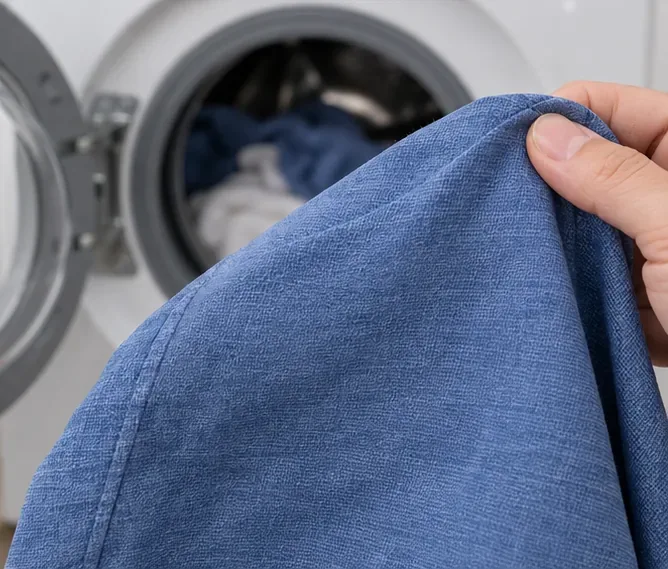
Only after you have removed as much glue as practical and confirmed that machine washing is allowed. Follow the care label for water temperature and cycle. If the glue was still wet and water-based, one wash cycle may finish the job. If the glue has cured, laundering alone may do very little.
Inspect the spot after washing. Do not assume that a cloudy or stiff area will disappear in the dryer. General stain-removal guidance from the American Cleaning Institute recommends inspecting a stain after laundering and repeating treatment if necessary before drying. See the American Cleaning Institute stain-removal guide.
Wash only after spot treatment, using the cycle and water temperature permitted by the garment’s care label.
What if the fabric glue has already dried?
Start mechanically before reaching for solvent. If the glue sits on the surface as a flexible or brittle film, gently peel it with your fingers or scrape it with the dull edge of a spoon, plastic card, or similar nonsharp tool. Aleene’s suggests carefully peeling, rubbing, or scraping dried adhesive from a surface before escalating to a remover.
Avoid razor blades on clothing. They may remove the glue and cut the yarn at the same time. If the adhesive has penetrated between fibers, do not keep scraping after the raised portion is gone.
When does a solvent make sense?
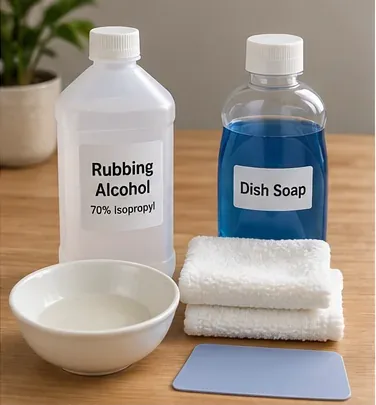
A solvent is a second-line option when the glue itself calls for one or when dried adhesive does not respond to water and gentle mechanical removal. Aleene’s says solvent-based fabric glues can require acetone for wet removal. Its broader FAQ also lists acetone, high-strength rubbing alcohol, or mineral spirits as possible approaches for solvent-based adhesives and notes that acetone may remove some dried fabric glues.
The key word is possible. Solvent compatibility depends on the textile fiber, dye, finish, print, and embellishments. Always test a hidden seam allowance or inside hem first. Use good ventilation, keep solvents away from flames and heat, and follow the solvent label.
Solvent treatment is an escalation step: identify the glue, check the fabric, and test an inconspicuous area before touching the visible stain.
Can you use acetone on any fabric?
No. University of Georgia Extension says acetone can be used on many natural and synthetic fibers but must not be used on acetate. Its stain-removal guidance also warns against acetone on acetate and triacetate fabrics, and some guidance includes modacrylic among the fibers requiring caution. Acetone is also flammable and should be used with good ventilation.
That means a cotton T-shirt and an acetate-lined dress are not the same problem even if the glue spot looks identical. If the fiber content is unknown, the garment is delicate, or the care label restricts solvents, stop before applying acetone. Review the University of Georgia textile-care solvent guidance.
How do you apply a solvent without spreading the glue?
Place the stained area face down on a clean white towel or several layers of plain white paper towel. Lightly dampen a clean white cloth with the tested solvent and blot from the back of the stain. As adhesive transfers, move the garment to a clean section of towel so you are not pressing dissolved glue back into the fabric.
Use small amounts. Saturating a garment can spread adhesive, bleed dye, affect finishes, or carry solvent into bonded seams and printed decorations. If the hidden test shows color transfer, texture change, or a halo, stop.
Blot a tested solvent in controlled amounts rather than soaking the garment; stop immediately if color or texture changes.
What should you do after the glue loosens?
Remove the softened residue, then rinse the treated area if the garment is washable and the solvent instructions allow it. Launder according to the care label. Do not mix household chemicals in an attempt to make a stronger remover.
For example, do not follow an acetone treatment with an improvised cocktail of bleach, ammonia, or other cleaners. One treatment at a time is easier to control and safer for both fabric and user.
After a successful spot treatment, rinse washable fabric thoroughly before laundering according to the care label.
How do you know when to stop?
Stop when one of three things happens: the glue is gone, the fabric begins to change, or the remaining adhesive is clearly bonded too deeply to remove without damaging the textile. A faint stiff spot is frustrating, but repeated solvent applications can turn a small cosmetic problem into permanent color loss or fiber damage.
Aleene’s explicitly notes that acetone may not remove every dried fabric glue. Permanent fabric adhesive is designed to survive laundering after cure, so complete reversal should not be assumed.
Inspect the fabric in good light before drying; a clean surface with normal color and texture is the practical endpoint.
Which method fits your situation?
Situation
Best first move
What to avoid
Wet water-based fabric glue on washable cotton
Lift excess, rinse with water, then launder per care label
Letting the glue cure before treating
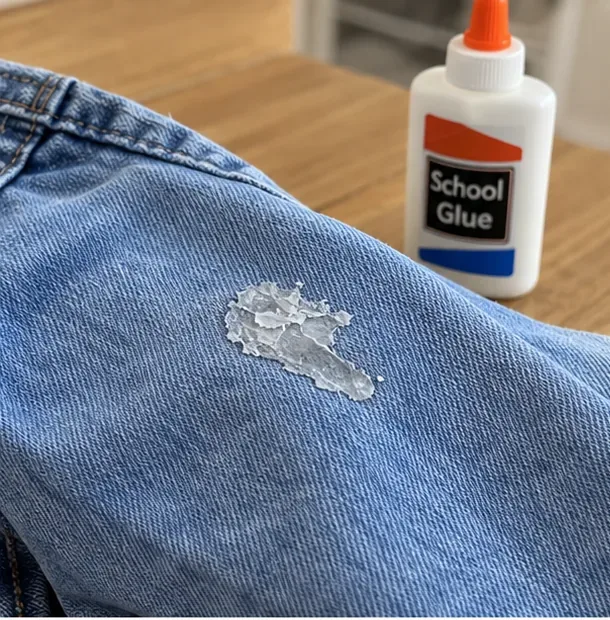
Dried water-based glue on sturdy denim
Peel or dull-scrape first; then try a tested water-based or manufacturer-recommended remover
Sharp blades that can cut fibers
Wet solvent-based fabric glue on colorfast cotton or polyester
Check glue instructions; hidden-test the recommended solvent before blotting
Applying solvent without a fiber/color test
Glue on acetate, triacetate, delicate trim, or unknown fiber
Follow the care label and consider a professional cleaner
Acetone without explicit compatibility
Dry-clean-only garment
Blot or lift loose excess, then take the garment and glue product information to a professional cleaner
Home soaking or laundering against the label
Three examples
Wet water-based glue on a cotton T-shirt
Lift the excess with a paper towel or spoon, rinse the spot promptly, work in a small amount of detergent, and wash according to the shirt label. This is the case where acting quickly gives you the biggest advantage.
Dried permanent fabric glue on polyester jeans
First peel or dull-scrape the raised glue. If residue remains, check the glue manufacturer’s removal guidance and test any recommended solvent on the inside hem. Blot only if the hidden test is clean.
Unknown glue on an acetate blouse
Do not reach for acetone. UGA textile guidance says acetone can destroy acetate fiber. If the blouse is delicate or dry-clean-only, a professional cleaner is the better next step.
Common mistakes that make the job harder
Using acetone before checking fiber content. It can damage acetate and other sensitive materials.
Scrubbing wet glue. That spreads adhesive farther into the weave.
Using a razor or knife on clothing. A clean-looking spot is not a win if the yarn has been cut.
Skipping the hidden test. Solvents can change dye, print, finish, or texture even when the base fiber survives.
Machine-drying before checking the stain. Inspect after washing so you still have the option to repeat treatment.
Assuming permanent fabric glue must be completely removable. Some cured adhesives are specifically designed to survive laundering.
Bottom line
The safest sequence is simple: identify the glue and fabric, remove excess mechanically, use water first when the glue is water-based and still wet, and escalate to a tested solvent only when the adhesive chemistry and garment allow it. If the label says dry clean only, the fiber is acetate or similarly sensitive, the dye changes during testing, or the glue has cured into a permanent bond, stop before aggressive treatment damages the garment.