Home
» How To
»
How to Get Glue Off Clothes Without Damaging the Fabric
How to Get Glue Off Clothes Without Damaging the Fabric
Glue on your clothes? Start gently before you reach for a solvent
A drop of craft glue on jeans, a streak of hot glue on a sweatshirt, or a spot of super glue on a shirt can look like a ruined garment. The difficult part is that “glue” is not one stain. Some adhesives are water-soluble, some harden into a plastic-like film, and cyanoacrylate super glues form a very strong bond that may need a different approach.
The safest strategy is to move from the least aggressive method to the strongest one: identify the adhesive, read the garment care label, harden and lift off what you can, use water and laundry products when appropriate, and reserve solvents for stubborn cases. Heat should come last, not first. The American Cleaning Institute advises repeating stain treatment when needed and not putting a stained garment in the dryer until the stain is gone.
Why glue becomes hard to remove from fabric
Fabric is a network of fibers and small spaces. Liquid adhesive can seep between those fibers before it cures. Once dry, the residue may form a stiff film on the surface or lock around individual fibers. Rubbing a fresh blob can spread it into a larger area, while aggressive scraping can fuzz, stretch, or cut the textile.
Heat can also make the situation harder. Even when a glue stain looks faint after washing, a dryer can make remaining residue more difficult to deal with. That is why the final inspection step matters as much as the cleaning itself.
Before you begin: identify the glue and check the care label
Look at the glue bottle or project materials if you still have them. Then check the clothing care label. The Federal Trade Commission requires covered garments sold in the United States to carry care instructions that tell consumers how the item can be washed or dry-cleaned and warn about procedures that may harm it. If the label says “Dry Clean Only,” or the garment is delicate, structured, embellished, or expensive, professional cleaning is the safer choice before experimenting with solvents.
Glue type
Gentlest first move
When to escalate
Washable school or craft glue
Let thick residue dry, peel or scrape gently, then soak or rinse according to the product and fabric instructions
Use laundry detergent or a prewash stain remover before laundering
Hot glue
Chill or freeze it so the hardened glue is easier to lift
Repeat the cold-and-scrape step rather than forcing the fabric
Super glue / cyanoacrylate
Let it dry, scrape carefully, then soak the spot with water as directed by the adhesive maker
Consider acetone only after a hidden-area test and only if the fabric and product guidance allow it
Unknown adhesive
Use cold water or ice to firm the residue, then scrape with a dull edge
Stop before using a solvent if you cannot identify the glue or fabric compatibility
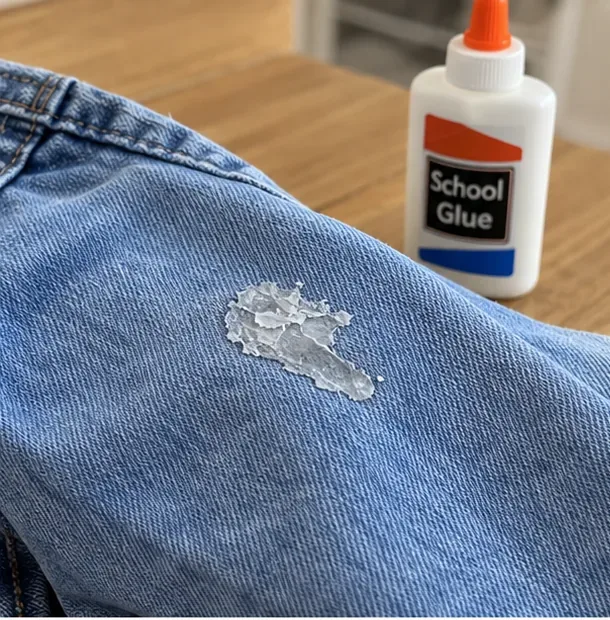
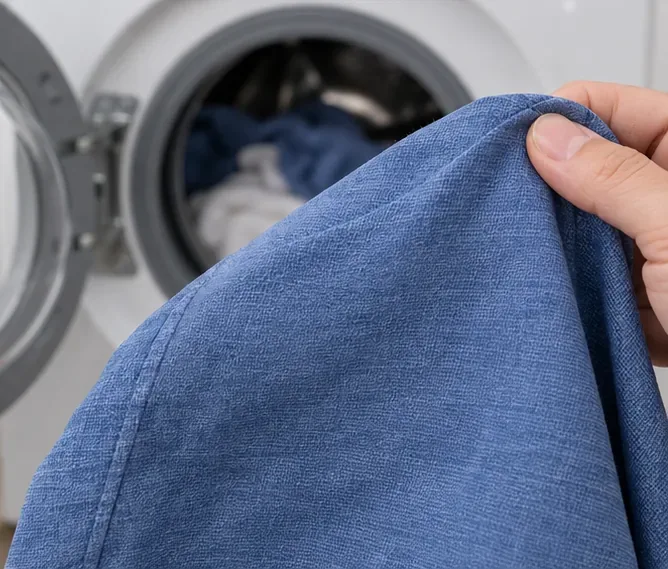
A dried glue deposit on denim. Identifying the adhesive and garment material helps determine how aggressive the next step should be.
Step 1: Harden the residue instead of smearing it
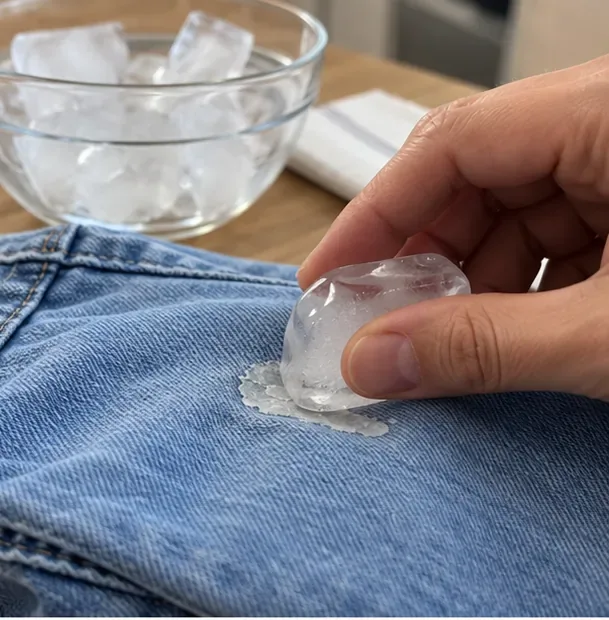
If the glue is still wet and sitting in a thick blob, avoid scrubbing it across the fabric. For many adhesive stains, the American Cleaning Institute recommends applying ice or cold water to harden the surface before scraping. This is especially useful when the glue has formed a raised layer that can be lifted mechanically.
Hot glue deserves its own note. Loctite’s fabric-removal guidance recommends putting a hot-glue-stained garment in the freezer overnight; once the glue is frozen, it may be possible to lift it with a dull-edged tool or a fingernail. Do not pull so hard that the fabric stretches.
Cold can make a raised adhesive deposit firmer and easier to lift without rubbing it deeper into the fibers.
Step 2: Scrape off only what releases easily
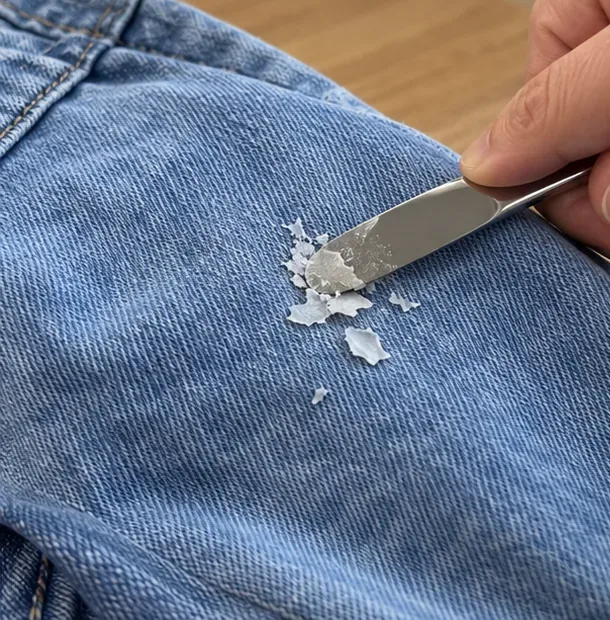
Use the rounded edge of a spoon, a dull table knife, or another blunt edge. Hold the fabric flat and work from the outside of the deposit toward the center. The goal is to lift flakes and ridges, not to shave the textile.
Loctite’s fabric guidance for dried super glue follows the same basic order: allow the adhesive to dry, remove as much as possible with a dull edge, then move on to soaking. If the glue bends the fabric but will not release, stop scraping and go to the next step. Repeated force is more likely to damage the fibers than to solve the stain.
Use a dull edge and light pressure. Stop when the remaining glue no longer lifts easily rather than scraping into the fabric.
Step 3: Soak, rinse, and pretreat with laundry detergent
For washable school or craft glue, water is often the best next tool. Elmer’s, for example, shows dried washable glue being removed from fabric by soaking the material in warm water for 15 to 30 minutes and then peeling the glue away. That does not mean every adhesive should be treated with warm water, so follow the glue maker’s directions when you know the product.
For super glue, Loctite’s detailed fabric guide recommends soaking the dried residue in cold water and blotting with a wet sponge after the loose material has been scraped away. After that, a heavy-duty laundry detergent can be worked into the affected area before washing. The American Cleaning Institute likewise recommends a prewash stain remover or cleaning fluid for adhesive stains, followed by rinsing and laundering.
When applying detergent, use enough to wet the affected fibers but do not grind the area with a stiff brush. Gently work the product through the stain with your fingers or a soft cloth, then rinse. If the glue is visibly breaking up, repeat the same gentle process before moving to anything stronger.
Step 4: Treat super glue with acetone only as a last resort
Acetone can break down cyanoacrylate, but it is not a universal fabric cleaner. Loctite’s guidance is deliberately cautious: one fabric-removal article describes applying a small amount of acetone with a cotton swab to persistent super glue, while another Loctite page says acetone is not recommended on fabric because it may discolor some materials. Loctite also warns that acetone can damage some synthetic fibers.
Because of that risk, use acetone only when all of the following are true: you have strong reason to believe the stain is super glue, the care label does not rule out solvent treatment, the glue manufacturer supports acetone for that situation, and a hidden-area test shows no color loss, texture change, or surface damage.
If you proceed, work in a well-ventilated area and follow the solvent manufacturer’s safety instructions. Dab a very small amount with a cotton swab rather than soaking the garment. Blot away softened adhesive with a clean cloth and repeat slowly. Keep acetone away from heat and flame. If the fabric reacts badly during the spot test, stop and use a professional cleaner instead.
Step 5: Launder according to the label, then air-dry and inspect
Once the glue has been lifted and the remaining stain has been pretreated, wash the garment according to its care label. The American Cleaning Institute recommends using the warmest water that is safe for the fabric when treating tough stains, but the garment label is the controlling instruction for that specific item.
After washing, do not automatically transfer the item to a hot dryer. Let it air-dry or inspect it while still damp. High heat should wait until you are confident the glue is gone.
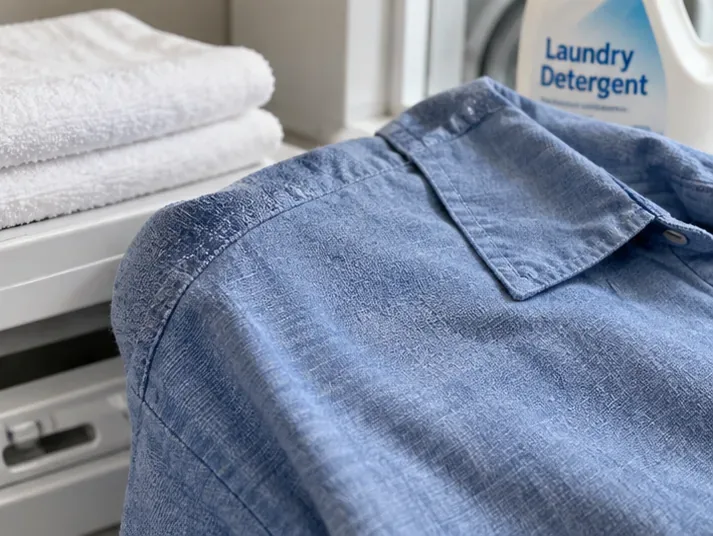
Inspect the treated area in good light before machine drying. A smooth surface with no visible film or stiffness is the goal.
How to check whether the glue is really gone
Do not judge only by color. Some adhesive residue becomes nearly transparent after washing but still leaves the fibers stiff. Use this quick self-check before drying:
Look: Hold the fabric at an angle under good light. There should be no glossy film, pale crust, or dark halo around the treated area.
Feel: Rub the fabric gently between your fingers. It should flex like the surrounding material instead of feeling hard, rubbery, tacky, or crunchy.
Check the reverse: Turn the garment inside out and inspect the back of the stain. Glue can migrate through the weave even when the front looks clean.
Compare texture: If the treated patch feels thinner, fuzzier, faded, or rougher, stop escalating. Additional solvent or scraping may cause more damage than the remaining stain.
If residue remains, repeat the same successful level of treatment once more before moving to a stronger method. A second soak or detergent pretreatment is usually a better next move than immediately adding more solvent.
Common mistakes that make glue stains worse
Scrubbing a wet blob: This can spread adhesive into a larger patch and push it farther between fibers.
Using a sharp blade: A razor or utility knife can cut yarns and leave permanent damage even if the glue comes off.
Assuming acetone is safe for every fabric: Adhesive manufacturers warn that it can discolor fabric or damage some synthetics.
Ignoring the care label: The label exists to identify washing, drying, and dry-cleaning procedures the garment can tolerate.
Using the dryer too soon: Finish the stain-removal process first, inspect the area, and only then dry the garment as the care label permits.
When to stop and use a professional cleaner
Stop home treatment when the garment is labeled dry-clean-only, the material is delicate or heavily embellished, the adhesive is epoxy or another specialty product with no clear removal instructions, the dye begins to transfer during a spot test, or the fabric surface starts to change. A professional cleaner can assess the adhesive and textile without requiring you to guess which solvent is compatible.
Sources and verification notes
This guide was checked against current manufacturer and authority guidance available in September 2026. Because adhesive formulas and garment finishes vary, product-specific instructions and the clothing care label take priority over general stain-removal advice.