Home
» How To
»
How to Get Gum Off Jeans: Methods, Tradeoffs, and an 8-Step Safe Fix
How to Get Gum Off Jeans: Methods, Tradeoffs, and an 8-Step Safe Fix
Chewing gum on jeans is usually easier to remove when you treat it as something stuck to the fabric, not as an ordinary liquid stain. The most conservative starting point is to harden the gum with ice, lift off as much as possible with a dull plastic tool, then deal with the thin residue that remains. That approach is supported by the Clorox gum-removal guidance and is also consistent with the freeze-and-scrape method in Tide's chewing-gum stain guide.
There is no single method that is best for every pair of jeans. Dark indigo denim, raw denim, stretch denim, heavily distressed jeans, and ordinary preshrunk cotton denim do not all tolerate the same amount of heat, rubbing, or chemical treatment. The practical goal is to use the least aggressive option that works, then escalate only if residue remains.
Which gum-removal method makes the most sense?
Method
Best fit
Advantages
Tradeoffs
Ice bag or freezer
Most washable jeans; fresh or thick gum
Low chemical exposure; makes gum brittle enough to lift
Takes patience; gum may need to be chilled more than once
Liquid laundry detergent after scraping
Thin sticky residue left in the weave
Works within a normal laundry process; easy to rinse out
Should still be spot-tested on unusual finishes or unstable dyes
Warm vinegar
Stubborn residue after a colorfastness test
Tide includes it as an alternative gum treatment
Adds heat and acidity, so it is a less conservative choice for dark or raw denim
Commercial adhesive or gum remover
Residue that survives simpler methods
Can be useful when cold plus detergent is not enough
Requires label-following and colorfastness testing; may add another cleanup step
If preserving color and finish is your priority, start with ice and a plastic scraper. If speed matters and your care label allows ordinary laundering, follow with liquid detergent. Save stronger or warmer treatments for residue that does not respond to the basic method.
How to get gum off jeans in 8 steps
1. Read the care label before touching the gum
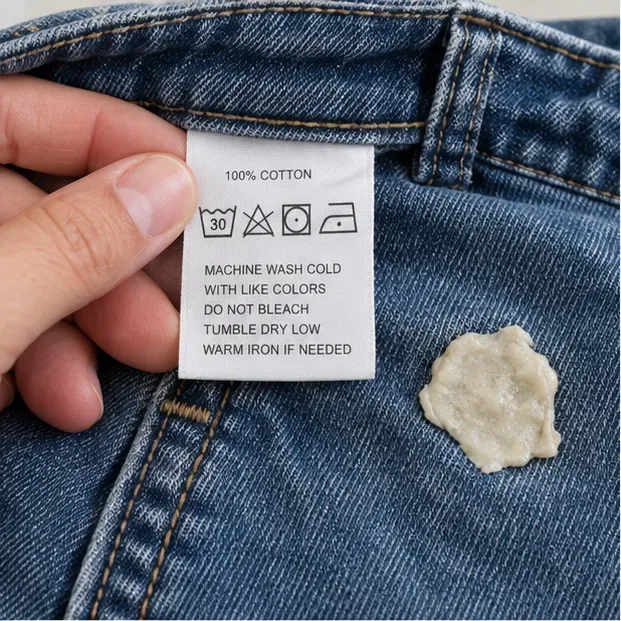
Check whether the jeans are machine washable, cold-wash only, dry-clean only, or made from a special denim construction. The Levi's denim care guidance recommends cold water, a gentle cycle, and a mild detergent for its denim, while raw denim gets even gentler handling. Your actual garment label takes priority over general advice.
Start with the care label. Denim can be cotton, stretch denim, raw denim, or a blend, and the label determines the safest washing and drying limits.
2. Harden the gum with ice
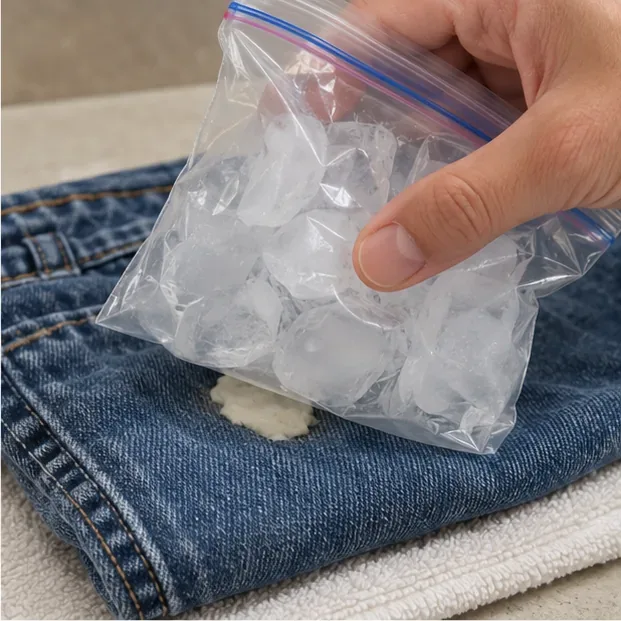
Put ice in a resealable bag and hold it against the gum until the gum becomes firm. The cold treatment is meant to change the gum from soft and stretchy to hard enough to lift. Clorox specifically advises using enough ice to freeze the gum and notes that gum that is only cold, rather than frozen hard, will not scrape away as easily.
You can also place the jeans in a freezer if that is convenient. The freezer chills the whole garment and keeps meltwater out of the fabric, but it takes more space and can be awkward with bulky jeans. An ice bag is more targeted and usually easier for a single spot.
Chill the gum until it is firm rather than merely cool. A bag of ice keeps the treatment local and avoids wetting the entire pair of jeans.
3. Scrape gently with a dull plastic tool
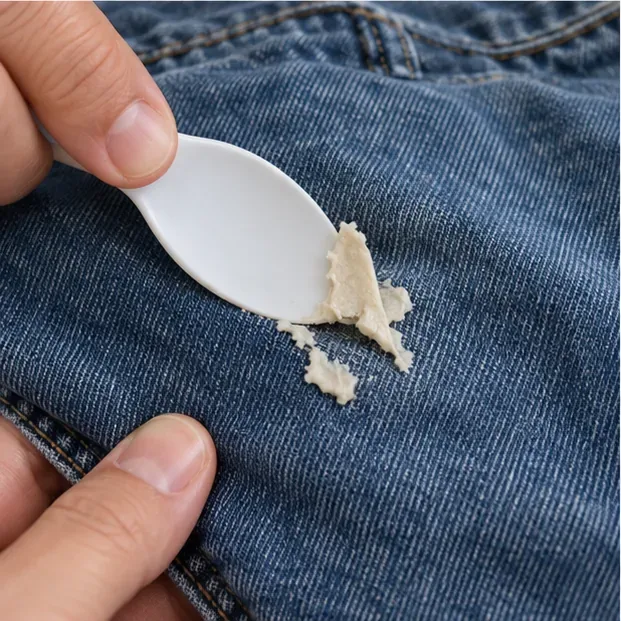
Once the gum is hard, lift from the outside edge toward the center using a plastic spoon, plastic scraper, or another dull edge. Do not yank soft gum straight upward. Tide warns that pulling strongly on bonded gum can damage fabric, and Clorox cautions against scraping so hard that the fabric's appearance is distorted.
If the gum starts stretching or smearing, stop and reapply ice. Re-chilling is usually safer than increasing force.
Use a dull plastic edge to lift hardened gum in small pieces. If it smears instead of breaking away, chill it again before scraping.
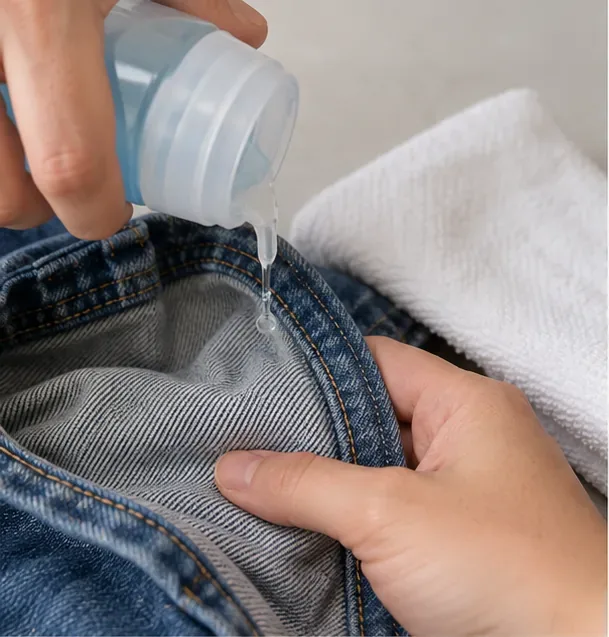
4. Treat the remaining film with liquid detergent
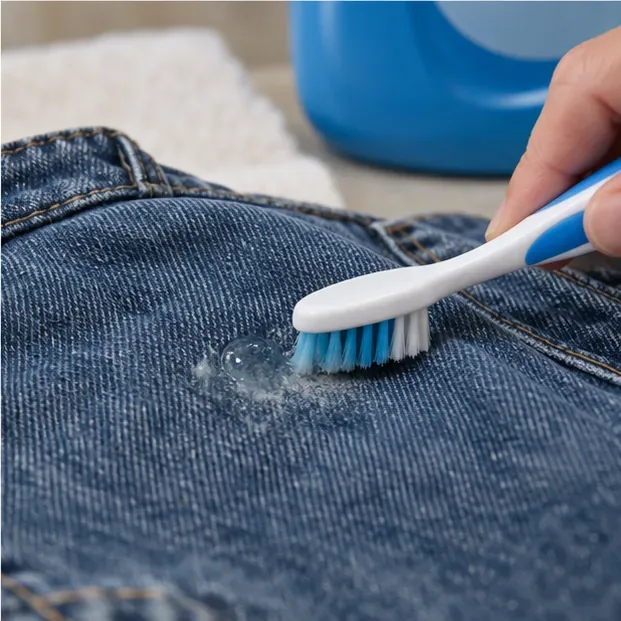
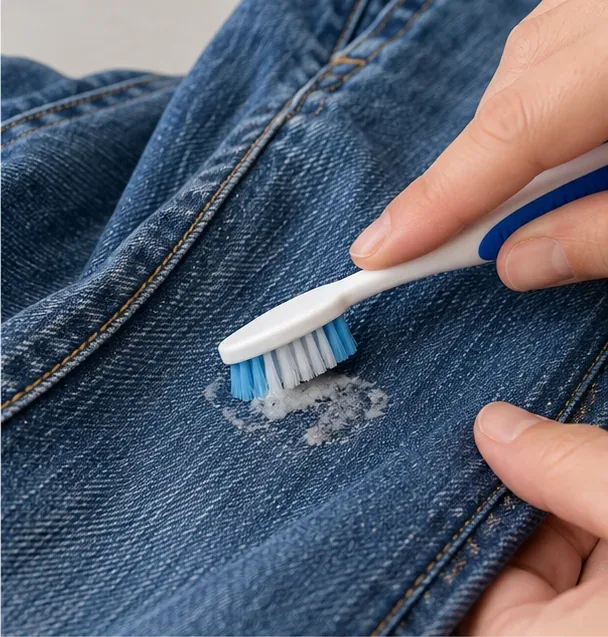
After the thick gum is gone, you may still see a tacky or dull-looking patch. Apply a small amount of liquid laundry detergent to that residue and gently work it with a soft toothbrush or your fingertips. Tide's current guide uses liquid detergent as a pretreatment after the bulk gum has been removed.
Do not saturate a large area unnecessarily. A small, controlled treatment is easier to rinse and makes it easier to see whether the gum residue is actually releasing.
After the bulk gum is gone, a small amount of liquid laundry detergent can help loosen the thin residue left between denim fibers.
5. Spot-test before trying a stronger backup method
If detergent is not enough and you want to try warm vinegar or a commercial gum/adhesive remover, test it on an inside seam first. Tide explicitly recommends a colorfastness test before its vinegar treatment, and Clorox advises testing solvent-type removers on a hidden area before using them on visible fabric.
This step matters more for black jeans, dark indigo, raw denim, coated denim, printed details, and garments with decorative finishes. A method can remove gum successfully yet still be a poor choice if it changes the color or surface.
Spot-test any secondary treatment on an inside seam first. This is especially important for dark, coated, printed, or raw denim.
6. Work only the stubborn residue
If your spot test is clean, apply the chosen treatment to the remaining residue rather than the entire leg. Use a soft brush and light pressure. For warm vinegar, follow the timing and testing instructions in Tide's guide rather than improvising hotter temperatures. For a commercial remover, follow the product label and then launder as directed.
The tradeoff here is simple: stronger treatment may save time on stubborn gum, but it introduces more variables for dye, finish, odor, and rinsing. That is why it belongs after the cold-and-scrape method, not before it.
Work gently and locally. Aggressive scrubbing can roughen the denim surface even after the gum itself has released.
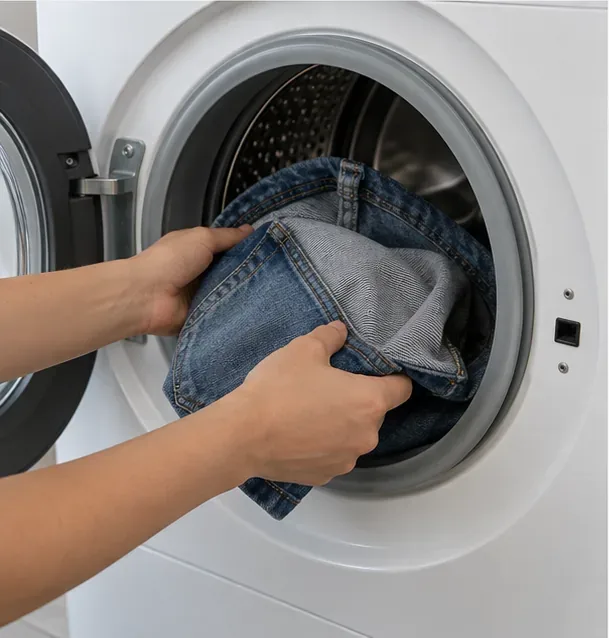
7. Wash the jeans according to the label
Once no solid gum remains, wash the jeans using the garment's care instructions. For conventional denim, washing inside out in cold water with a mild detergent is a color-conscious default supported by Levi's. Some stain-treatment instructions say to use the warmest water permitted by the care label; that does not mean you should override a cold-water denim label. The label is the deciding limit.
If the jeans are dark or new, wash them with similar colors. If they are raw denim, consider hand washing in cold water with a gentle cleanser and avoiding wringing, in line with Levi's raw-denim care recommendations.
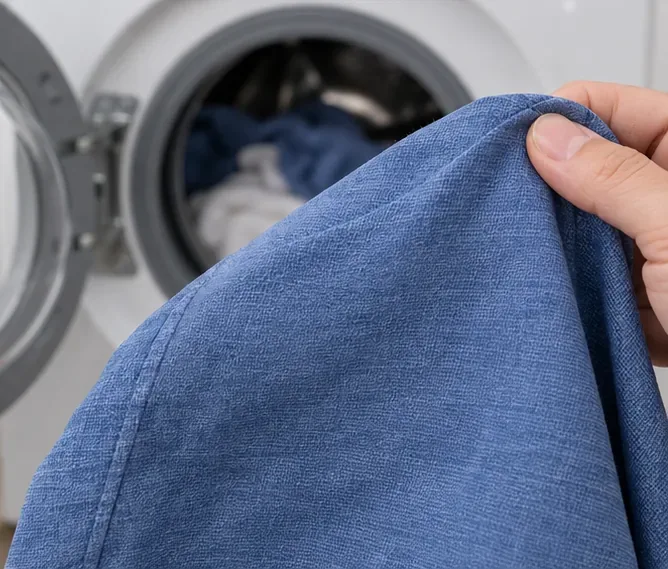
Once the gum is removed, wash according to the garment label. For many denim items, cold water, a gentle cycle, and washing inside out help protect color and fit.
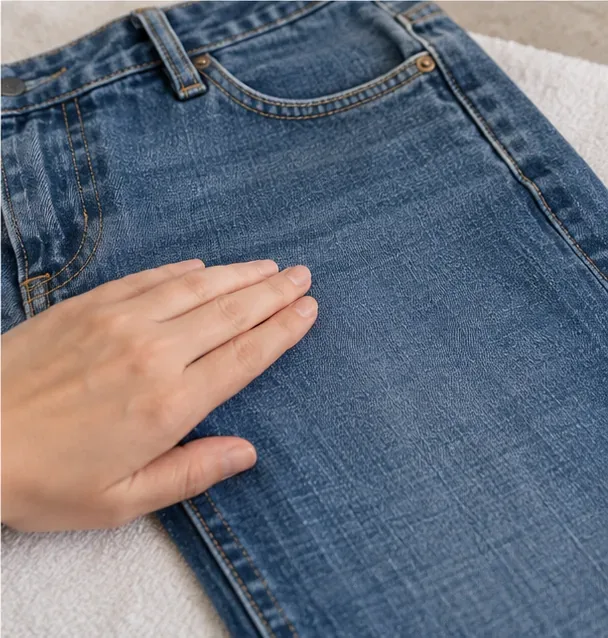
8. Inspect before using heat, then air-dry when practical
Check the treated area while the jeans are still damp. If you can still feel tackiness or see a residue ring, repeat the local treatment rather than sending the jeans straight to the dryer. Tide advises repeating stain removal before machine drying when a stain remains because dryer heat can make residue harder to remove.
When the area is clean, air-drying is the lower-heat option. Levi's recommends air-drying when possible and notes that machine drying can contribute to fading and shrinkage.
Inspect the area before using dryer heat. When the spot is clean, air-drying is a low-heat option that also helps reduce fading and shrinkage.
Ice bag versus freezer: which is better?
An ice bag is better when the gum is in one accessible spot, the jeans are dark, or you want to minimize handling. It keeps the cold local, works without clearing freezer space, and lets you repeat short chilling cycles. The downside is meltwater, so place a towel under the fabric.
A freezer is convenient when the gum patch is broad or wrapped around several fibers and you want the whole area uniformly hardened. The jeans must be dry enough to place safely with food, and the method is less convenient for oversized garments. Neither option has to be permanent; you can begin with ice and switch to the freezer if the gum keeps softening too quickly.
When is vinegar worth trying?
Warm vinegar is a backup option rather than the default for jeans. Tide includes a vinegar method and requires a colorfastness test first. Its advantage is that it can help loosen gum that remains after physical removal. The tradeoff is that the method uses warmth and an acidic liquid, while denim-care guidance commonly favors cold treatment to preserve color and fit.
For ordinary, colorfast, washable denim, that may be an acceptable trade. For raw denim, black jeans, vintage denim, or anything with an uncertain finish, cold treatment plus mild detergent is the more conservative route. If the care label says dry clean only, stop home treatment and use a professional cleaner.
What about commercial gum or adhesive removers?
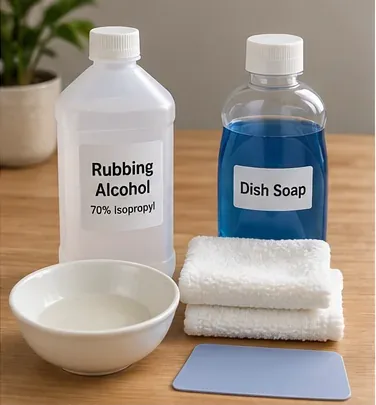
They can be useful when a thin sticky film survives ice, scraping, and detergent. Clorox's guidance mentions solvent-type removers as an option after the ice method and tells users to test for colorfastness first. Their main advantage is targeted dissolving power. Their drawback is that you must follow another product's safety and laundering instructions and confirm that it does not affect the dye or finish.
If you use one, apply the smallest amount needed, work in a ventilated area if the product label calls for it, and wash the garment afterward as directed. Do not mix cleaning products unless their labels specifically say that combination is safe.
Special cases: dark, stretch, raw, and pocket gum
Dark or black jeans
Prioritize cold treatment, minimal rubbing, and mild detergent. Wash with dark colors and air-dry in the shade when practical. These choices reduce unnecessary color stress while you solve the gum problem.
Stretch denim
Stretch jeans often contain elastane or another elastic fiber. The care label matters more than the generic word "denim." Avoid assuming that a heat-heavy method is safe just because it worked on 100% cotton jeans.
Raw denim
Raw denim is intentionally less processed and can change character with washing. Levi's recommends cold hand washing, gentle cleanser, no wringing, and hanging to dry. If gum removal would require aggressive brushing or repeated chemical treatment, professional cleaning may be the better tradeoff.
Gum inside a pocket
Freeze small sections at a time and scrape gradually so you can pull more of the pocket lining outward as the gum releases. Clorox specifically recommends working pocket gum in small frozen portions because access improves as more of the lining becomes free.
Common mistakes to avoid
Pulling soft gum: it can stretch deeper across the weave and increase the area you have to clean.
Using a sharp blade: a dull plastic tool gives you more control and reduces the chance of cutting fibers.
Scrubbing harder when the gum will not move: chill it again instead of increasing force.
Ignoring the care label: a generic stain trick is not more authoritative than the instructions for your actual garment.
Skipping the spot test: especially risky on dark, raw, coated, printed, or vintage denim.
Drying before checking: inspect first and repeat treatment if any tacky residue remains.
How do you know the gum is really gone?
Run clean fingertips over the treated area when the jeans are damp. The fabric should feel like the surrounding denim, not rubbery, waxy, or tacky. Look at the spot from two angles under good light; a glossy patch can reveal residue that is hard to see straight on. If the area passes both the touch and visual checks, dry the jeans according to the label. If not, repeat the mildest treatment that previously helped.
The key decision is not finding the strongest cleaner. It is choosing the method that removes the gum while making the fewest unnecessary changes to the denim. For most jeans, that means cold first, gentle scraping second, detergent third, and stronger treatments only when the residue proves they are needed.
Source pages were checked in September 2026. Product formulas, garment finishes, and care instructions can change, so use the current garment label and the current label on any cleaning product you apply.