Home
» How To
»
How to Wash a Baseball Cap in the Dishwasher—Only When It’s Safe
How to Wash a Baseball Cap in the Dishwasher—Only When It’s Safe
As of September 2026, there still is no universal rule saying that every baseball cap can be washed in a dishwasher. In fact, current manufacturer guidance points in different directions. ’47’s FAQ says the top rack of a dishwasher can be used for its hats under specific conditions, while the company’s 2025 cap-care guide emphasizes checking the label and hand-washing. New Era’s current care guidance says not to machine-wash or fully submerge its caps. Nike’s general cleaning article includes a dishwasher method, but individual Nike products can still be labeled hand-wash only.
That means the best answer to “how to wash a baseball cap in the dishwasher” starts with a decision, not the Start button. If your cap’s manufacturer or care label allows the method, the dishwasher can be a hands-off way to clean a sturdy cap. If the label says hand-wash, spot-clean, or avoid immersion, use that instruction instead.
Can your baseball cap safely go in the dishwasher?
Check the care label and the manufacturer’s product-care instructions first. A dishwasher exposes a cap to flowing water, detergent chemistry, mechanical spray, and potentially high temperatures. Even if the fabric itself tolerates water, the brim, adhesives, inner structure, embroidery, patches, and colorfastness may not.
Official source
What the current guidance says
What it means for you
’47 FAQ
Top-rack dishwasher cleaning is described as an option; a cap form is recommended. The FAQ warns about hot water and says not to use dishwashing detergent.
Dishwasher use can be appropriate for some ’47 hats, but follow the exact instructions for the hat you own.
’47 cap-care guide, January 2025
Check the care label, use cold water and mild color-safe laundry detergent, and hand-wash when a full cleaning is needed.
When official pages differ, the care label for your specific cap should take priority.
New Era
Spot-clean with a damp cloth and mild color-safe detergent; do not machine-wash or fully submerge caps.
Do not use the dishwasher for a New Era cap unless your exact product has different manufacturer instructions.
Product-specific instructions outrank a general how-to article.
Which caps should stay out of the dishwasher?
Skip the dishwasher if the hat has a hand-wash-only or spot-clean-only label, if you cannot identify its materials, or if the manufacturer warns against full submersion. Also avoid the method for caps with leather, suede, silk, fragile patches, delicate glued trims, or other water-sensitive materials. New Era specifically warns that caps containing leather, suede, silk, and other designer fabrics need special care and should not be exposed to water.
Be especially cautious with older or collectible caps. A vintage brim may contain materials that do not tolerate soaking, and repeated water or heat exposure can permanently change the shape. When the cap has sentimental or monetary value, hand-cleaning is the lower-risk choice.
How to wash a baseball cap in the dishwasher, step by step
1. Inspect the cap and gather gentle supplies
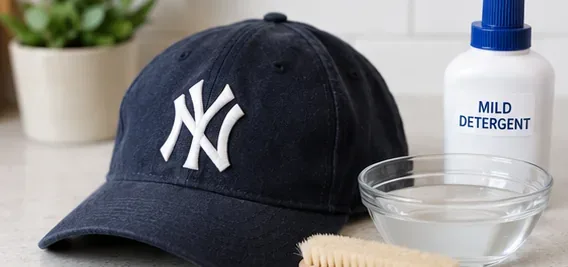
Before cleaning, look for cracked trim, loose embroidery, peeling patches, a damaged sweatband, or a brim that already feels soft or unstable. You may need only a soft brush, a clean cloth, a cap-shaped washing cage if the manufacturer allows one, and whatever cleaning product your cap maker specifically recommends.
Start by inspecting the cap and preparing only the gentle cleaning supplies allowed by its care instructions.
2. Read the care label before you wet anything
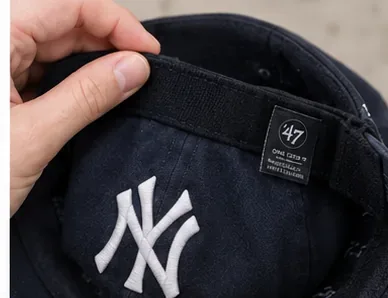
This is the most important step. If the label says “hand wash,” “spot clean,” “do not wash,” or gives another specific method, follow it and stop here. For example, a current Nike Club Unstructured Futura Wash Cap product page lists hand-washing in its product details. A generic dishwasher method should not override that product instruction.
Check the sewn care label and the manufacturer’s care page before deciding whether the dishwasher is appropriate.
3. Brush off loose dirt and treat obvious spots first
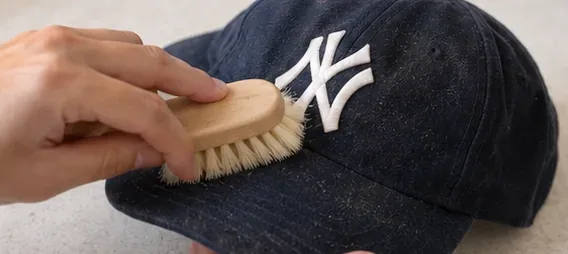
Use a soft-bristle brush or clean cloth to remove dry dust, lint, and surface soil. If the manufacturer permits detergent, test a small amount on an inconspicuous area before treating a visible stain. Avoid bleach or aggressive stain removers unless the care label explicitly allows them. Pre-cleaning a dirty sweatband or spot can reduce the temptation to run the cap through a second dishwasher cycle.
Remove loose soil gently so the dishwasher does not have to do all the cleaning work.
4. Secure the cap on the top rack
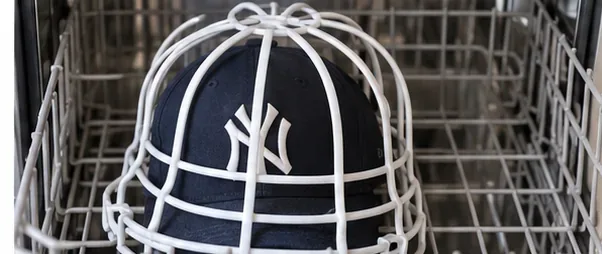
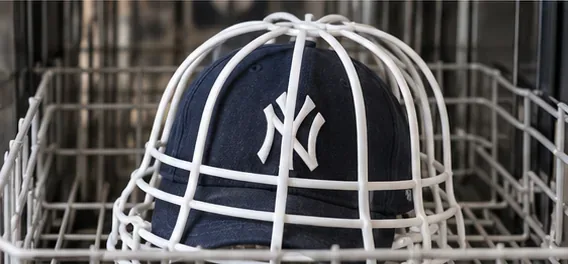
If you use a cap-washing cage or form, confirm that it is dishwasher-safe and close it without crushing the brim or crown. Set the cap on the top rack, where it is generally farther from the hottest components than the lower rack. Do not wash dishes, greasy cookware, or food-soiled items in the same load. Nike’s general cap-washing guidance specifically says not to include dishes with hats.
A cap form can help support the crown and brim, but it does not make an otherwise unsuitable hat dishwasher-safe.
5. Follow the hat maker’s detergent instructions—not a one-size-fits-all recipe
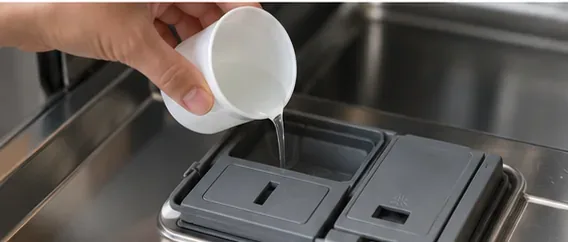
This is where current official advice is notably inconsistent. Nike’s general dishwasher method says to use a dishwasher detergent without bleach or harsh chemicals. ’47’s FAQ says the opposite for its method: be careful not to use dishwashing detergent. Because of that conflict, do not copy a generic detergent amount from another hat brand. Use only the cleaning product and amount permitted by the manufacturer of your cap.
Only add a cleaning product when your cap’s official care instructions allow it; brand guidance differs on dishwasher detergent.
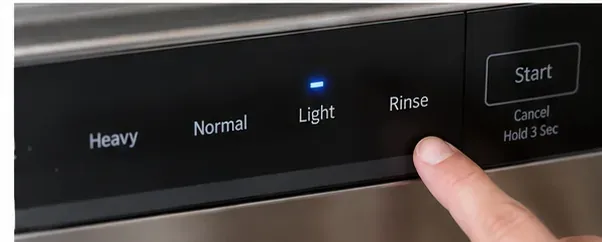
6. Choose the coolest, least aggressive suitable cycle and turn off heated drying
If your dishwasher lets you control temperature or cycle intensity, avoid high-heat options. ’47 warns that hot water can shrink a hat, while Nike’s general dishwasher instructions say to use warm or cool water if temperature can be controlled. Avoid sanitize cycles and heated-dry settings unless the cap maker explicitly permits them. Heat is unnecessary for drying a cap and can increase the chance of shrinkage, warping, or shape loss.
Use the lowest-temperature, least aggressive cycle that matches the manufacturer’s directions, and avoid heated drying.
7. Remove the cap promptly and check the result
Take the cap out when the wash portion is finished rather than leaving it through a heated drying phase. Look for detergent residue, color transfer, softened structure, or a brim that has begun to change shape. If the cap is still stained, do not automatically repeat the dishwasher cycle. A second exposure to water, spray, and heat may create more risk than benefit. Switch to targeted hand-cleaning if the manufacturer permits it.
Remove the cap after washing and inspect the fabric, brim, embroidery, and shape before doing anything else.
8. Reshape and air-dry completely
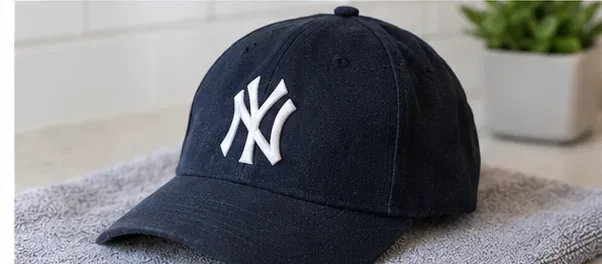
Gently restore the crown and brim to their normal shape while the cap is damp. Set it over a rounded form such as a clean bowl or rolled towel if that helps the crown hold its profile. Let it air-dry in a well-ventilated place away from direct heat. ’47 and New Era both direct users toward air-drying, and ’47’s 2025 care guide warns against dryers, radiators, and direct sunlight.
Reshape the damp cap and let it air-dry naturally rather than using a dishwasher heated-dry cycle or clothes dryer.
What if your cap has sweat stains or odor?
Do not assume a hotter dishwasher cycle is the answer. Sweat marks often respond better to targeted cleaning on the sweatband and stained fabric. If the care label allows water, use the mild detergent and hand-cleaning method recommended by the manufacturer. ’47’s 2025 guide suggests a soft brush or cloth for heavily soiled areas and cold-water hand-washing when a full clean is necessary. New Era recommends spot-cleaning its cotton, polyester, and wool blends with a damp cloth and mild color-safe detergent rather than full immersion.
If odor remains after the cap is fully dry, first make sure the sweatband and inner crown are actually clean and completely dry. Storing a damp cap can create new odor problems. A second dishwasher run should be a last resort, not routine maintenance.
Common dishwasher mistakes that damage baseball caps
Ignoring the care label: A general internet method does not override “hand wash” or “spot clean” instructions.
Using the lower rack: It may expose the cap to more intense heat and spray than necessary.
Choosing sanitize or high-heat settings: Hot water and heated drying can contribute to shrinkage and distortion.
Assuming all detergent is safe: Official brand advice is not consistent, so follow the maker’s instructions for your cap.
Washing with dirty dishes: Food grease and residue do not belong in a hat-cleaning load.
Using a cap cage as a guarantee: A frame can support shape, but it cannot protect water-sensitive materials, dyes, adhesives, or trims.
Putting the cap in a clothes dryer afterward: Air-drying is the safer default when the brand allows washing.
Is the dishwasher actually better than hand-washing?
Not usually. The dishwasher’s main advantage is convenience and shape support when a sturdy cap sits in a proper cage. Hand-washing gives you more control over temperature, detergent concentration, agitation, and which areas get wet. That control is why several current manufacturer sources either prefer hand-washing or avoid machine washing altogether.
If your goal is to protect a favorite cap rather than clean several sturdy caps quickly, hand-washing or spot-cleaning is generally the more conservative option. Use the dishwasher only when the cap’s construction and official care instructions make it a reasonable choice.
Bottom line
You can wash some baseball caps in the dishwasher, but “some” is the important word. As of September 2026, official brand guidance remains mixed: certain ’47 and Nike instructions describe dishwasher methods, while New Era rejects full submersion and many individual caps are explicitly hand-wash only. Check your specific cap first. If dishwasher cleaning is allowed, use the top rack, avoid unnecessary heat, follow the brand’s detergent instructions exactly, remove the cap before heated drying, reshape it while damp, and air-dry it completely.