Home
» How To
»
How to Wash a North Face Puffer Jacket Without Ruining the Loft
How to Wash a North Face Puffer Jacket Without Ruining the Loft
Yes, many The North Face down puffer jackets can be washed at home, but the sewn-in care label on your specific jacket has the final say. For current down styles such as the 1996 Retro Nuptse, The North Face publishes a home-care method that uses a front-loading washer, warm water, a bleach-free liquid detergent made specifically for down, a gentle cycle, low spin, an optional repeat rinse, and low-temperature tumble drying with dryer or tennis balls. The company’s U.S. product-care FAQ is more conservative and recommends professional cleaning by a service that specializes in down. Those two official positions are not as contradictory as they first appear: the safest answer is to follow the care label attached to the exact jacket you own.
This guide is therefore for a North Face down-filled puffer whose label permits machine washing and tumble drying. If your jacket has synthetic insulation, a waterproof laminate, unusual trim, or a label that gives different instructions, use those model-specific directions instead of copying the down procedure below.
First, Know What Kind of Puffer You Have
Before adding detergent or choosing a washer setting, check the insulation. A classic Nuptse can contain down, while other North Face insulated jackets may use synthetic fill or a blend. Down and synthetic insulation do not always have identical care requirements.
You will also see the word loft in down-care advice. Loft is the three-dimensional fluffiness of the insulation. The tiny spaces within lofty down trap warm air. When down gets wet, it collapses into clumps; proper drying is what separates those clumps and restores the jacket’s thickness.
As of September 2026, The North Face’s official U.S. Product Care FAQ says periodic cleaning is important for maintaining down loft and product life, but recommends a professional cleaner that specializes in down. At the same time, current product pages such as the 1996 Retro Nuptse Jacket care instructions provide a detailed home-washing process. If the label in your jacket differs from either webpage, follow the label.
What You Need
Your jacket’s sewn-in care label
A front-loading washing machine, if the label permits machine washing
Liquid detergent specifically formulated for down and containing no bleach
A tumble dryer large enough for the jacket to move freely, if the label permits tumble drying
Clean dryer balls or clean tennis balls
Enough time to dry the insulation completely
Do not add fabric softener or bleach. Do not assume that a strong everyday detergent is “better” because the jacket is dirty. Current North Face down instructions call for detergent made specifically for down, and the goal is to clean without leaving residues that interfere with the insulation or shell.
How to Wash a North Face Down Puffer Jacket
1. Read the care label before doing anything else
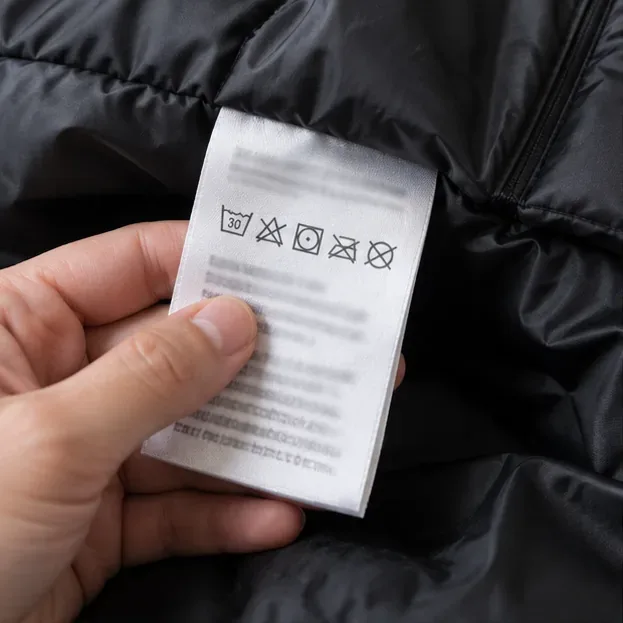
Find the label sewn inside the jacket and check the wash symbol, temperature, drying symbol, and insulation information. The label may be along an interior side seam or another inside seam depending on the model. If it says professional cleaning only, stop and use a cleaner that specifically handles down products.
For example, if you own a current 1996 Retro Nuptse and the label matches The North Face’s published instructions, the front-loader method below is a good fit. If your jacket is a different puffer with different symbols, this article is background information, not permission to ignore those symbols.
Step 1: Check the jacket’s own care label first; its instructions override any general washing advice.
2. Empty the pockets and secure the fasteners
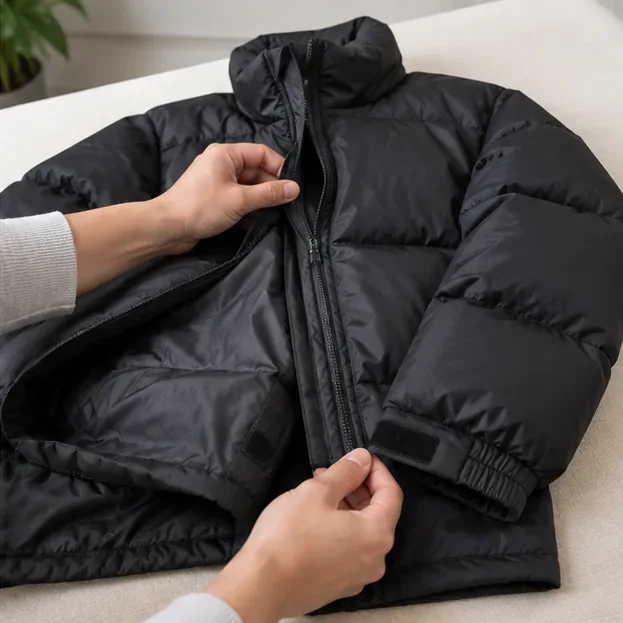
Remove keys, tissues, lip balm, and anything else from every pocket. Close zippers and hook-and-loop fasteners so exposed hardware has less opportunity to snag the lightweight shell. Current North Face down-care pages also tell users to turn certain products inside out before cleaning, so do that when your model’s care instructions call for it.
Do not aggressively scrub the thin face fabric. If there is loose dirt on the surface, remove it gently before the wash rather than grinding it into the material.
Step 2: Empty the pockets, close zippers and hook-and-loop fasteners, and prepare the jacket as its care label directs.
3. Use the right detergent
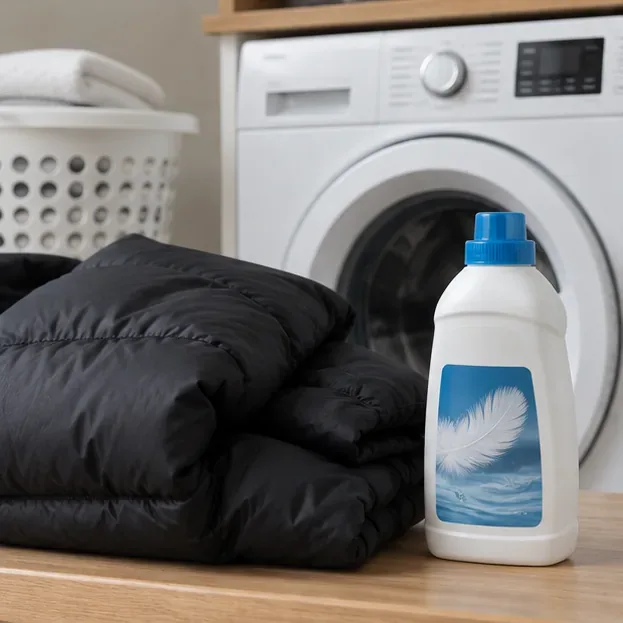
Choose a liquid detergent designed specifically for down and make sure it contains no bleach. Use the amount directed by the detergent manufacturer for the washer and load size; adding extra soap can make rinsing harder.
This is one place where generic laundry advice can cause trouble. A puffer is not a cotton sweatshirt. You are cleaning both a lightweight shell and an insulating fill that must recover its loft after the wash.
Step 3: For down models whose label permits home washing, use a bleach-free liquid detergent made specifically for down.
4. Wash it by itself in a front-loading machine
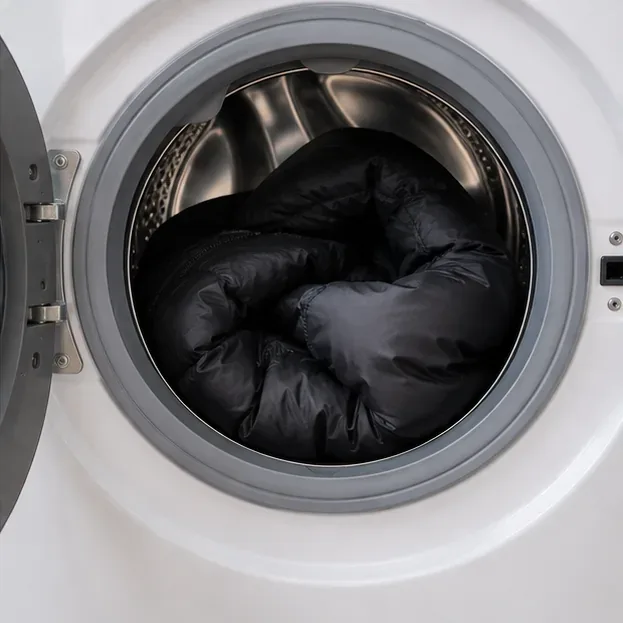
For current North Face down products that carry the company’s published “wash with special care” instructions, use only a front-loading machine, wash in warm water with the down-specific liquid detergent, and select a gentle cycle with low spin. Wash and dry the jacket individually so it has enough room to move.
If your washer is too small for the jacket to move freely, do not force it in. The North Face recommends professional cleaning when a down product will not fit properly in the available washer or dryer.
Step 4: Current North Face down-care guidance for models such as the Nuptse specifies a front-loading washer, warm water, a gentle cycle, and low spin.
5. Rinse thoroughly, then support the wet jacket
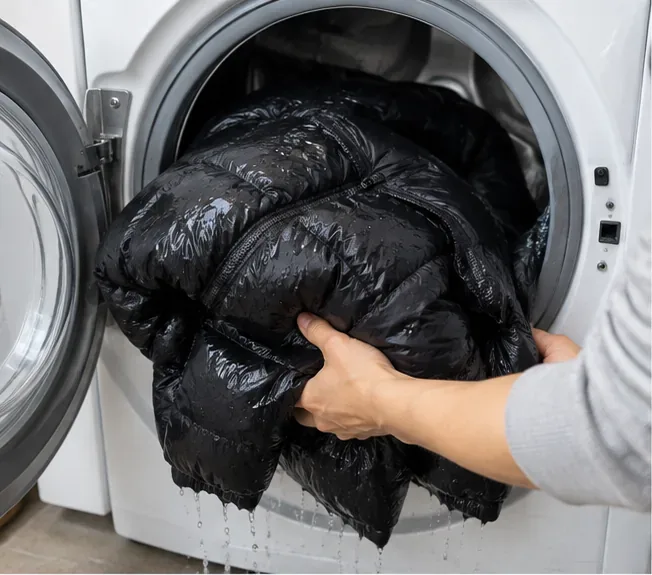
North Face says you may repeat the rinse cycle to make sure soap residue is removed. An additional spin cycle can also help remove excess water. When the wash is finished, remember that saturated down is heavy. The company specifically advises against simply lifting the wet product out of the washer; instead, support it and scoop it from underneath.
Do not wring, twist, or yank the jacket by the collar or shoulders. The goal is to move a heavy, waterlogged garment without putting unnecessary stress on seams and internal baffles. A baffle is one of the stitched compartments that keeps the insulation distributed across the jacket.
Step 5: Support the soaked jacket from underneath when removing it; North Face advises scooping a wet down product rather than lifting it by one point.
6. Tumble dry on low with dryer or tennis balls
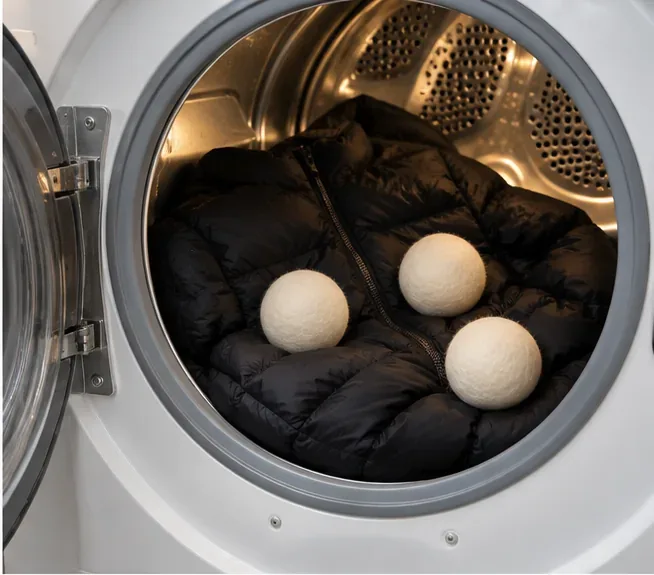
If the jacket’s care label permits tumble drying, place it in the dryer by itself and use a low-temperature setting. Current North Face down-care instructions recommend adding clean dryer balls or tennis balls to help keep the down from clumping.
Expect drying to take a long time. Do not respond by increasing the heat beyond the care label’s limit. Low heat and patience are safer than trying to rush a delicate shell and insulation with a hot cycle.
Step 6: When the care label permits tumble drying, use a low setting and clean dryer or tennis balls to help prevent the down from clumping.
7. Check the down between drying cycles
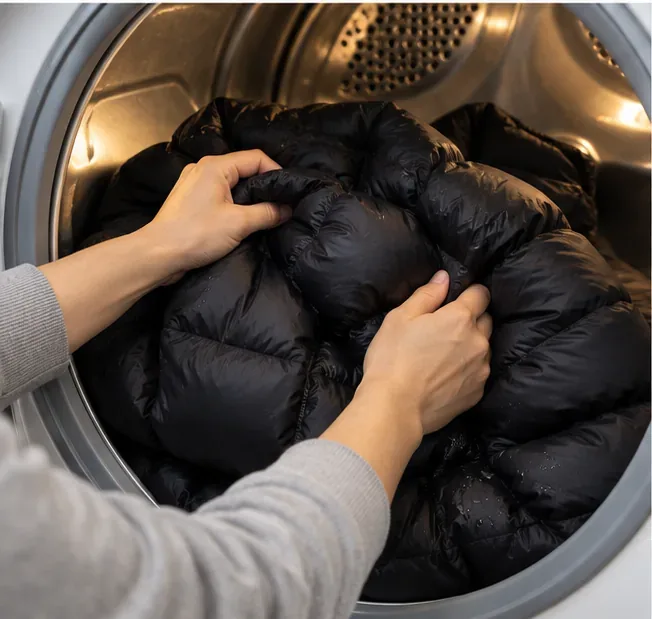
Dryer balls help separate clumps, but you should still inspect the jacket as drying progresses. If a baffle contains a firm lump of damp down, gently tease and massage that clump apart with your fingers, then return the jacket to the dryer on the permitted low setting.
A useful comparison is a pillow after washing: the outside fabric can feel nearly dry while the filling in the center is still damp. With a puffer, feeling only the shell is not enough. Check several thick baffles, especially around the torso, collar, and hood if your jacket has one.
Step 7: Check the jacket between low-heat drying cycles and gently loosen any remaining down clumps before continuing.
8. Stop only when the jacket is completely dry and evenly lofted
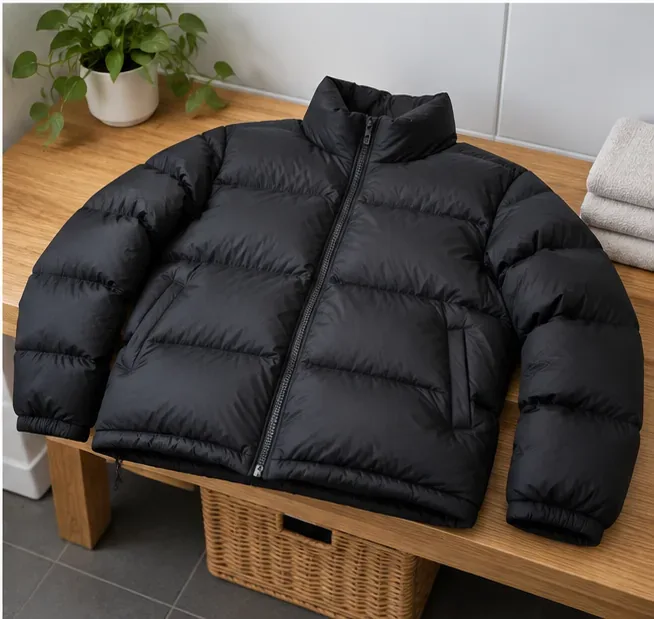
When finished, the jacket should feel light and evenly puffy rather than dense in isolated sections. No baffle should feel cool, heavy, or damp. There should be no obvious soap residue, and the down should not remain packed into hard clusters.
If you are uncertain whether the center of the insulation is dry, continue drying according to the care label rather than storing the jacket damp. Complete drying is particularly important before the jacket goes into a closet or storage bin.
Step 8: Finish only when the insulation is completely dry and the baffles have regained an even, fluffy loft.
What If Your North Face Puffer Is Synthetic?
Do not use the words “puffer jacket” as proof that the garment contains down. North Face makes insulated outerwear with different fills, including synthetic insulation. If the label lists polyester insulation or another synthetic fill rather than down, follow that jacket’s own wash and dry symbols.
The down-specific instructions above—especially the requirement for down detergent and the detailed down-loft routine—should not automatically be imposed on every synthetic puffer. The North Face’s general product-care guidance repeatedly points customers back to the garment label for model-specific cleaning instructions.
Common Mistakes to Avoid
Skipping the care label. Similar-looking puffers may use different insulation, shell materials, coatings, or trims.
Using a top-loading agitator washer for a down model covered by the current special-care instructions. Those instructions specify a front-loading machine.
Using bleach or fabric softener. They are not part of the current down-care method and can be inappropriate for technical outerwear.
Using too much detergent. More soap creates more residue to rinse from both the shell and insulation.
Pulling a soaked jacket out by one point. Support the weight from underneath instead.
Using high dryer heat to save time. Current North Face down-care pages specify low heat.
Stopping because the shell feels dry. Thick down clumps can retain moisture after the outer fabric feels dry.
Storing the jacket while damp. Finish the drying process first.
Do You Need to Restore the Water-Repellent Finish?
Some North Face outerwear uses a DWR, or durable water-repellent finish, which helps water bead on the face fabric rather than immediately soaking in. Cleaning and DWR maintenance are related but not identical jobs. If your jacket normally beads water and that performance has noticeably declined, consult the model’s care label and The North Face’s product-care guidance before adding a wash-in or spray-on treatment.
Do not automatically apply a DWR product after every wash. First clean the jacket correctly and evaluate the actual fabric behavior.
How to Check Your Results
Check
What you want to see or feel
Loft
Baffles are evenly puffy rather than flat in isolated areas.
Moisture
No cold, heavy, damp-feeling clumps remain inside the insulation.
Residue
The shell does not feel soapy or unusually slick from detergent.
Shape
The jacket hangs or lies naturally without large compressed sections.
Hardware
Zippers, snaps, and hook-and-loop closures still operate normally.
If all five checks look good, the wash is finished. If the jacket is clean but still lumpy, focus on low-heat drying and gentle redistribution rather than washing it again immediately. If you see damaged seams, severe down leakage, or a care-label problem you cannot interpret confidently, stop home treatment and contact The North Face or a professional down-care service.
The Short Version
For a machine-washable North Face down puffer, the safest sequence is: read the label, secure the jacket, use down-specific liquid detergent, wash it alone in a front-loader on the label-approved gentle setting, rinse thoroughly, support it while wet, then tumble dry on low with clean dryer or tennis balls until the insulation is completely dry and evenly lofted. That process fits the current North Face guidance for several down styles, but your own jacket’s care label remains the final instruction.