Home
» How To
»
How to Wash Mesh Sneakers Without Damaging the Upper
How to Wash Mesh Sneakers Without Damaging the Upper
Mesh sneakers are easy to make look worse while trying to clean them: aggressive scrubbing can snag the upper, hot water can affect dyes or adhesives, and machine washing is not universally approved. The safest default is a controlled hand wash with a soft brush, mild soap, cool or lukewarm water, and plenty of air-drying time.
That recommendation is consistent with current manufacturer guidance, but there is an important exception. Nike's mesh and Flyknit cleaning guide, last updated October 4, 2023, recommends hand washing and says not to use a washing machine. ASICS likewise warns that a washer or dryer can interfere with shoe construction in its running shoe cleaning guidance. By contrast, adidas says some specific models, such as 4DFWD, can be machine-washed on a cold delicate cycle in a laundry bag. Because construction varies, check the care instructions for your exact pair before treating “mesh” as if it were one material.
Quick Reference: The Safest Default for Mesh Sneakers
Question
Practical answer
Best general method
Hand wash with mild soap and cool or lukewarm water.
Brush type
Use a soft-bristle shoe brush or a clean soft toothbrush on the mesh upper.
Water temperature
Use cool or lukewarm water unless the manufacturer specifies otherwise. Avoid hot water.
Machine washer
Only if the care instructions for that specific shoe allow it.
Dryer or hair dryer
Avoid high heat. Air dry instead.
Bleach or strong chemicals
Avoid by default; they can discolor or damage textile uppers and other components.
What You Need Before You Start
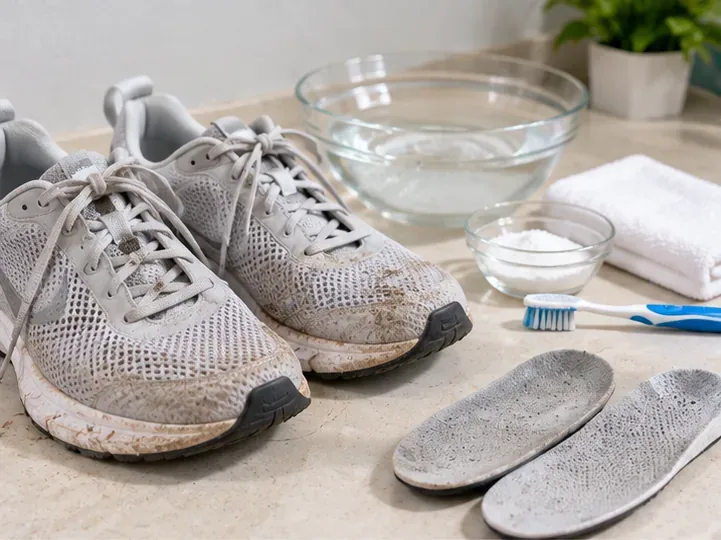
A soft-bristle shoe brush or clean toothbrush
A firmer brush for rubber outsoles, if needed
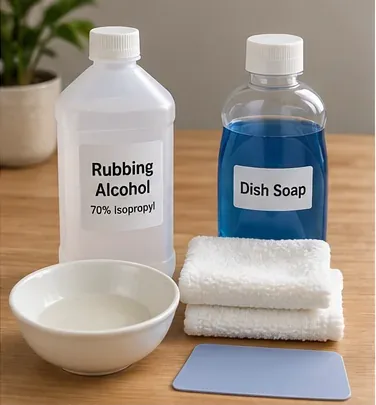
Mild liquid laundry detergent, mild dish soap, or a cleaner approved for the shoe
A bowl of cool or lukewarm water
Two clean microfiber cloths or soft towels
Paper towels, clean cloths, or a shoe tree to help maintain shape while drying
Before adding water, check the shoe for suede, leather, glued decorative pieces, waterproof membranes, reflective coatings, printed graphics, or other materials that may have separate care requirements. If the upper is only partly mesh, clean the non-mesh areas according to their own material instructions rather than treating the entire shoe the same way.
A Four-Step Method for Washing Mesh Sneakers by Hand
Step 1: Prep the Shoes and Remove Loose Dirt
Take out the laces and removable insoles. This opens the tongue and eyelet area, helps the interior dry more evenly, and lets you clean the removable parts separately. If the shoes are muddy, let thick mud dry first; brushing dry soil away is usually easier than spreading wet mud deeper into the mesh.
Tap the soles together outdoors or over a trash can, then brush loose dirt from the upper with light strokes. Use a firmer brush or a blunt pick only on the outsole grooves, not on delicate mesh. The goal at this stage is to remove particles that would otherwise turn into dirty slurry once water is added.
Prepare the shoes before washing: remove removable parts, gather mild cleaning supplies, and brush away loose dirt while the upper is still dry.
Step 2: Wash the Mesh Gently, Then Clean the Sole Separately
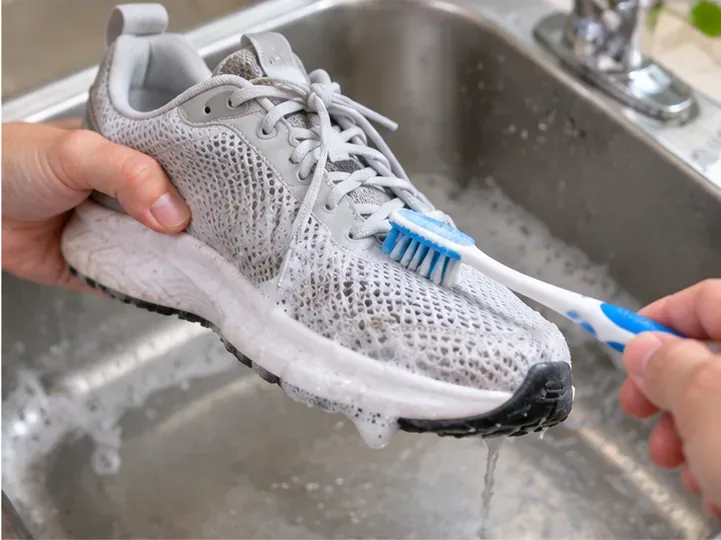
Mix a small amount of mild soap or detergent into cool or lukewarm water. You do not need a highly concentrated solution; extra detergent can be harder to remove from porous fabric. Dip the soft brush into the solution, shake off excess water, and work on a small section of the mesh at a time.
Brush lightly in the direction of the knit or mesh pattern when that direction is visible. Nike specifically advises gentle brushing for knit and mesh uppers and warns against harsh scrubbing that can snag yarn. For oily or dark marks, repeat several light passes rather than pressing harder.
Use a separate, firmer brush on the rubber midsole and outsole. Keeping a dirty outsole brush away from the upper reduces the chance of transferring dark grime back onto clean mesh.
Use a soft brush and mild soapy water on the mesh upper. Light, repeated passes are safer than aggressive scrubbing.
Step 3: Remove Soap and Clean Laces and Insoles Separately
After the upper is clean, remove the soap with a clean damp microfiber cloth or a gentle rinse if the shoe's construction allows it. Avoid leaving visible suds in the mesh. Do not wring, twist, or sharply bend the shoe to force water out; that can stress the upper and bonded components.
Hand wash laces in the same mild solution, then rinse and lay them flat to dry. Removable insoles should be treated more cautiously because some use foam, fabric laminates, or adhesives that do not tolerate soaking well. A practical default is to wipe or gently scrub them with mild soap and a damp cloth, then remove residual soap and let them air dry completely. If the insole maker or shoe manufacturer gives different instructions, follow those instead.
Step 4: Air Dry Completely Before Reassembly
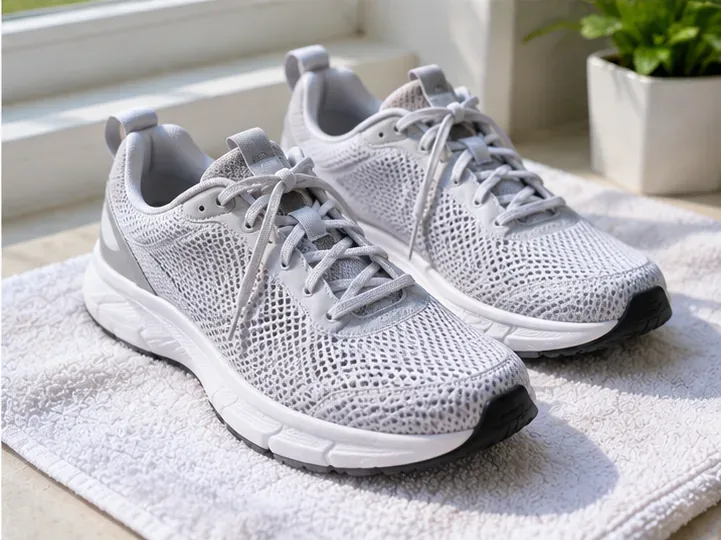
Blot surface moisture with a towel. Reshape the toe box and stuff the shoes loosely with clean absorbent paper or cloth, replacing it if it becomes saturated. Set the shoes in a well-ventilated place at room temperature and allow the inside as well as the upper to become fully dry before reinstalling the insoles and laces.
Avoid clothes dryers, heaters, radiators, and hair dryers. Both Nike and ASICS caution against dryer heat, and ASICS notes that high heat can damage adhesives or make shoes lose shape. If you want faster drying, airflow from a room fan is a gentler option than heat.
Air dry cleaned mesh sneakers at room temperature until the upper and interior are fully dry before reinstalling the insoles and laces.
Can You Wash Mesh Sneakers in a Washing Machine?
Sometimes, but not as a blanket rule. The word “mesh” describes the upper fabric, not the entire shoe construction. Midsoles, adhesives, heel counters, overlays, coatings, and decorative components may all react differently to agitation and soaking.
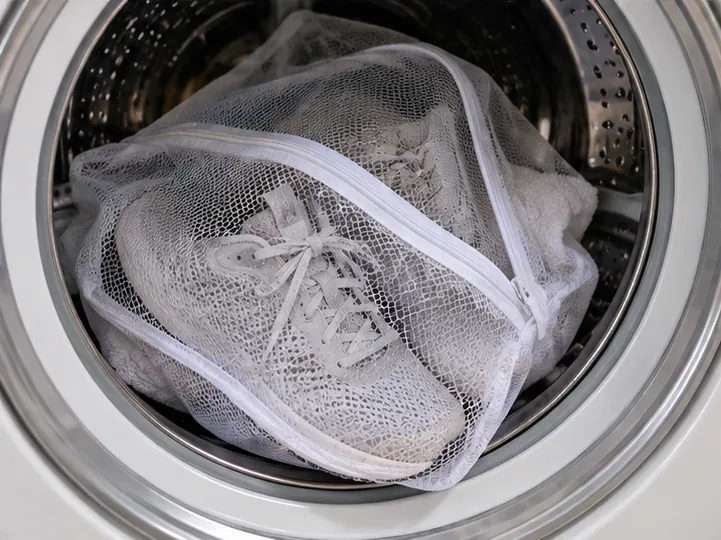
Nike says not to machine-wash its shoes and recommends hand washing mesh and Flyknit footwear. ASICS similarly advises against putting its running shoes in the washer or dryer because doing so can interfere with construction. On the other hand, adidas' official 4DFWD care guide specifically allows that model to be washed in separate mesh bags on a cold, delicate cycle after removing the laces and insoles. adidas also says to air dry and never use the dryer for that model.
So the useful rule is simple: machine wash only when the manufacturer of your exact shoe explicitly permits it. If permission is unclear, hand washing is the lower-risk choice.
A mesh laundry bag can reduce movement during machine washing, but use this method only when the manufacturer specifically approves machine washing for your shoe model.
How to Handle Common Mesh-Sneaker Problems
Dried Mud
Let heavy mud dry, brush off as much as possible, then use the normal mild-soap hand-wash method. Starting with a soaked muddy shoe can spread soil across a larger area.
White Mesh That Still Looks Gray
Repeat gentle cleaning before reaching for stronger chemicals. Some discoloration may be embedded wear, dye transfer, yellowing, or permanent staining rather than removable dirt. Test any stain treatment on an inconspicuous spot and check the maker's material guidance first.
Persistent Odor
Clean and dry removable insoles separately and make sure the shoe is fully dry before storage. Odor that returns quickly may be coming from saturated or worn insoles rather than the mesh upper. Replacing removable insoles can be more effective than repeatedly soaking the whole shoe.
Waterproof Mesh or Membrane-Lined Shoes
Do not assume ordinary sneaker care applies. Waterproof running and hiking shoes may use membranes or surface treatments that have their own cleaning and reproofing instructions. ASICS, for example, advises refreshing waterproofing after cleaning waterproof running shoes. Use the product-specific care information whenever available.
What Not to Do
Do not use a clothes dryer or direct high heat to speed drying.
Do not scrub mesh with a stiff outsole brush.
Do not use hot water as a default cleaning method.
Do not assume bleach is safe just because the shoe is white.
Do not reinstall damp insoles or store shoes while the interior is still wet.
Do not machine-wash a pair merely because another mesh sneaker is machine-safe.
Final Check Before You Wear Them
Your sneakers are ready when the mesh feels clean without a slippery or soapy residue, the sole no longer releases dirt when wiped with a damp white cloth, the interior feels dry rather than cool and clammy, and the laces and insoles are fully dry. Check that the upper has kept its shape and that no glued edges or overlays have lifted.
If the shoes still have localized dirt, repeat a light hand-cleaning pass only on that area instead of washing the entire pair again. If cleaning causes color transfer, material fraying, separation, or distortion, stop and consult the shoe maker's care guidance. Mesh sneakers can usually be refreshed safely, but preserving their construction matters more than forcing them to look brand new.