Home
» How To
»
How to Wash Stuffed Animals in the Washing Machine Without Ruining Them
How to Wash Stuffed Animals in the Washing Machine Without Ruining Them
The safest general method is simple: machine-wash a stuffed animal only when its care label or manufacturer says it is washable, protect it in a mesh laundry bag or tied pillowcase, use a gentle cycle with cold or label-approved water and a mild detergent, then air-dry it unless the label specifically permits tumble drying. The biggest mistake is treating every plush toy as if the same routine applies.
That distinction matters because current manufacturer guidance is not universal. Build-A-Bear allows many non-electronic furry friends to be washed in a pillowcase on a gentle cold cycle, while Ty says many of its plush lines are intended for surface cleaning. Steiff says many of its washable plush toys can use a gentle 30°C cycle, but collector pieces made with materials such as mohair or alpaca may not be machine washable. In other words, the care tag is not a formality; it is the decision point.
Choose the cleaning method before you choose a washer setting
Method
Best for
Main advantage
Main tradeoff
Machine wash
Modern plush toys explicitly labeled machine washable
Thorough and convenient
Agitation and saturation can stress seams, trim, stuffing, glue, or internal parts
Hand wash
Washable toys that feel too delicate for the machine
You control pressure and movement
Still fully wets the stuffing and can take a long time to dry
Spot or surface clean
Electronic, collectible, fragile, surface-clean-only, or uncertain toys
Lowest risk to construction and stuffing
Does not clean the entire toy as deeply
If the care information is missing and the stuffed animal is sentimental, old, unusually constructed, or hard to replace, the conservative choice is spot cleaning or hand washing rather than experimenting with a full machine cycle.
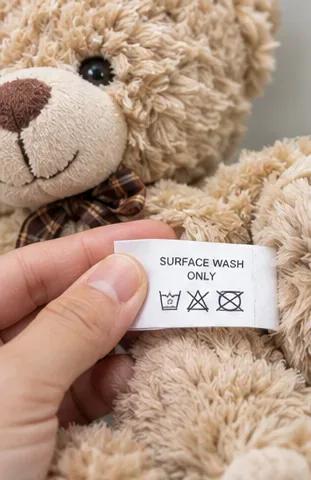
Step 1: Read the care label and treat “surface clean only” as a stop sign
A “surface wash only” label means the toy should not go into the washing machine, even if a generic plush-cleaning guide says machine washing is usually safe.
Start by looking for washing symbols or written instructions. A tag that says “surface clean only,” “hand wash,” or “do not wash” overrides any general advice. This is especially important because different products from the same broad category can use different fillings, fibers, adhesives, eyes, trims, and internal components.
Whirlpool’s current stuffed-animal guidance also recommends checking the care tag before deciding between machine washing, hand washing, or spot treatment. Steiff similarly directs owners to the product-specific care information before washing. Action: if the tag does not clearly permit machine washing, choose the gentler method.
Step 2: Inspect the toy and remove anything that should not be washed
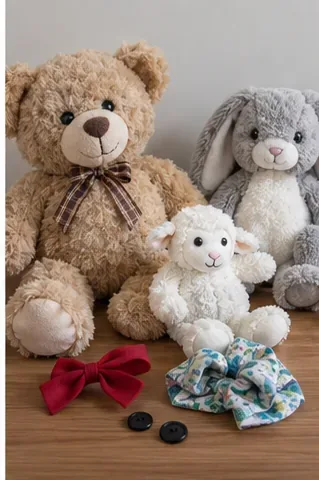
Remove detachable clothing and accessories before washing, and inspect seams and attached features for anything that could come loose.
Take off removable clothing, bows, collars, or accessories that can be washed separately. Look closely at seams, eyes, noses, decorative pieces, and any repaired areas. If a seam is already opening, fix it before washing so the cycle does not turn a small split into a stuffing leak.
Battery packs, sound modules, lights, motors, or other electronics change the answer completely. Build-A-Bear explicitly says a furry friend with a sound unit or battery operation should not be submerged or put in the washing machine unless the sound component is removed appropriately. Whirlpool likewise advises spot cleaning toys with built-in battery packs or mechanical parts. Action: if electronics are fixed inside the toy, do not machine wash it.
Step 3: Test color if needed, then protect the stuffed animal
If you are uncertain about dye stability, Whirlpool recommends testing a little diluted detergent on a hidden area and checking whether color transfers. This is particularly useful for dark, intensely colored, or older fabrics.
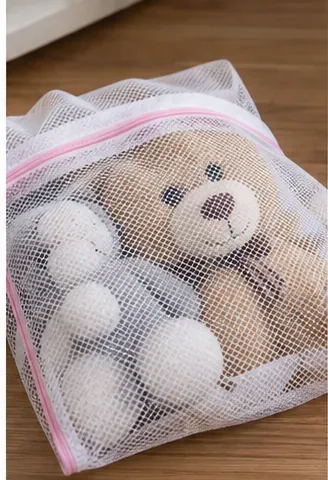
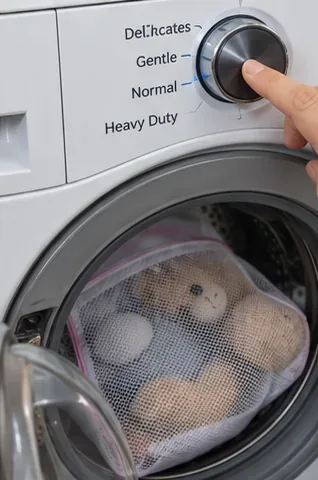
A mesh laundry bag reduces direct rubbing and snagging during a gentle wash cycle.
Place a machine-washable stuffed animal in a mesh laundry bag, a zippered pillowcase, or a standard pillowcase tied securely shut. Both Whirlpool and Steiff recommend this kind of protective enclosure. It does not make an unsuitable toy washable, but it can reduce abrasion and help contain small parts if something loosens.
For a very delicate washable toy, wash it by itself rather than with jeans, towels with zippers, or other heavy items. Steiff specifically recommends washing its washable plush separately. Action: use the bag as protection, not as permission to ignore the care label.
Step 4: Use a modest amount of mild detergent
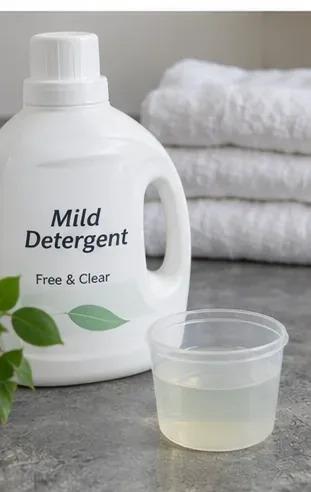
A mild detergent is a practical default when the toy’s care instructions allow machine washing.
A mild liquid detergent is usually the safest all-purpose choice for machine-washable plush. Whirlpool notes that regular detergent may be acceptable and suggests a mild detergent when available; Build-A-Bear calls for mild soap; Steiff recommends mild detergent for its machine-washable items.
More detergent is not automatically better. Excess detergent can be harder to rinse from thick stuffing and plush fibers. If the toy belongs to someone with sensitive skin, an unscented detergent can be a practical preference, but the care label still controls whether the toy should be immersed at all.
Do not add chlorine bleach merely because the toy looks dingy. Some manufacturers expressly prohibit bleaching, and bleach can fade color or weaken fibers. Action: follow the detergent amount for a small delicate load and avoid extra additives unless the product instructions allow them.
Step 5: Choose cold water and the gentlest suitable cycle
For washable plush, a cold gentle or delicate cycle reduces agitation compared with a normal or heavy-duty wash.
For many washable stuffed animals, a gentle, delicate, or hand-wash-style machine cycle is the best balance between cleaning and mechanical stress. Whirlpool recommends cold water with Delicate, Hand Wash, or Gentle settings. Build-A-Bear also specifies a gentle cold cycle for eligible furry friends. Steiff’s general guidance for many washable items uses a gentle program at a maximum of 30°C.
If your toy’s label gives a different temperature, follow the label. “Hotter cleans better” is not a useful rule here because higher heat can increase the risk of color loss, distortion, adhesive damage, or changes to some decorative parts. Action: select the lowest-stress cycle that still matches the manufacturer’s instructions.
Step 6: Decide between air drying and the dryer based on the label
A dryer is an option only when the care label explicitly allows tumble drying; otherwise, air drying is the safer default.
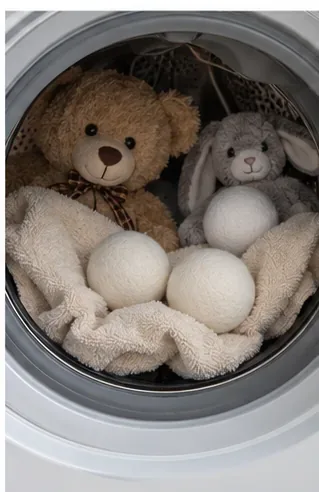
Drying is where convenience and risk diverge most sharply. A dryer can be faster and can help fluff some dryer-safe plush, but heat and tumbling can damage glue, plastic pieces, fur texture, and certain fillings. Whirlpool says tumble drying is generally not recommended for most stuffed animals, though a label-approved toy may use a short, gentle, low-temperature cycle. Steiff’s general care guidance says to air-dry its cuddly toys rather than use a tumble dryer unless the individual care symbol says otherwise.
If the toy is dryer-safe, use the exact temperature and cycle on the care tag. If it is not clearly dryer-safe, skip the dryer. Action: never use high heat as a shortcut.
Step 7: Reshape and air-dry completely
Reshape the washed toy and let air circulate around it until the stuffing and seams are completely dry.
After the washer finishes, remove the toy promptly. Support it with both hands if it feels heavy with water. Do not twist or wring it. Press it gently in a clean towel to remove surface moisture, then reshape the body, ears, paws, and face.
Lay the stuffed animal flat on a dry towel or place it on a drying rack in a well-ventilated room. Rotate it periodically so damp areas are not trapped against a surface. Thick toys can feel dry outside while the center remains damp, so give them enough time. A fan can improve room-air circulation without exposing the toy to direct heat.
Whirlpool recommends air drying to reduce the risk of melting glue or plastic components, and Steiff recommends room-temperature rack or line drying for its plush. Action: do not return the toy to a bed or storage bin until it is dry all the way through.
Step 8: Fluff the stuffing and restore the surface
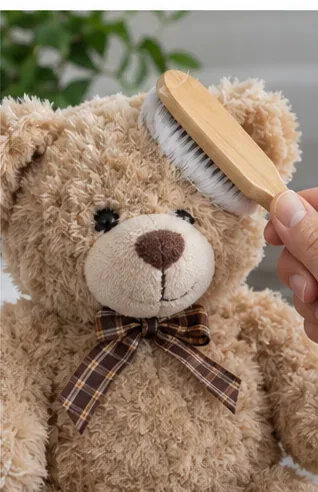
Once the stuffed animal is completely dry, a soft brush can lift flattened fibers and restore a more even plush texture.
When the toy is fully dry, knead the stuffing gently through the fabric to redistribute any small clumps. For furry surfaces, use a clean soft-bristle brush and work lightly in the direction of the pile. Do not brush hard over embroidered features, fragile seams, or glued decorations.
Air drying may leave long plush fibers flatter than a tumble dryer would, but the tradeoff is lower heat risk. Light brushing and shaking can restore much of the loft without exposing the toy to extra heat. Action: wait until the toy is completely dry before brushing or storing it.
Which stuffed animals should stay out of the washing machine?
Surface-clean-only toys: Ty says its Beanie Babies, Beanie Boos, Beanie Bellies, and Squishy Beanies typically recommend surface cleaning rather than a washer.
Electronic or sound toys: batteries, speakers, lights, and mechanical parts should not be submerged unless the manufacturer provides a safe removal procedure.
Collector or vintage plush: older fabric, aged seams, special stuffing, and sentimental value make a gentler method more sensible. Steiff specifically notes that collector pieces made with mohair or alpaca may not be machine washable.
Toys with weak seams or fragile decoration: repair them first or choose surface cleaning.
Anything with unclear care instructions: if replacement would be difficult, use the lowest-risk cleaning method rather than assuming the washer is safe.
Three common situations and the better choice
A modern polyester teddy marked “machine wash cold”
This is the clearest washer candidate. Protect it in a mesh bag, use the gentle cycle, mild detergent, and air-dry unless its tag also allows the dryer.
A Build-A-Bear with a sound module inside
Do not put it straight into the washer. Build-A-Bear says sound-containing or battery-operated furry friends should not be submerged or machine washed; its stores can remove certain sound units before washing. If the sound remains installed, surface cleaning is the better choice.
A Ty Beanie or collectible plush with no machine-wash symbol
Do not assume that a generic “stuffed animals can go in the washer” rule applies. Ty’s current preservation guidance, published August 7, 2026, says its plush lines typically recommend surface cleaning. For a collectible, preserving materials and shape matters more than getting the deepest possible wash.
Quick decision checklist
The care label explicitly permits machine washing.
There are no fixed batteries, sounds, lights, or mechanical parts.
Seams and attached features are secure.
The toy is protected in a mesh bag or closed pillowcase.
The cycle and water temperature match the care instructions.
You are using a mild amount of detergent rather than overloading the wash.
You have a safe drying plan before you start.
If every item is true, machine washing is usually a reasonable choice. If one of the first three fails, hand washing or spot cleaning is usually the safer route.