Home
» How To
»
How to Wash Suede Safely Without Ruining the Nap
How to Wash Suede Safely Without Ruining the Nap
Suede usually should not be “washed” the way cotton, canvas, or synthetic fabric is washed. For most suede shoes and accessories, the safer approach is dry cleaning at home: let moisture dry, brush off loose soil, erase surface marks, spot-treat only what remains, air-dry, and then restore the nap. Machine washing, soaking, or scrubbing the entire surface with soap and water can leave water marks, alter the color, flatten the nap, or damage construction.
This guide focuses on ordinary suede footwear and small accessories whose care labels do not require professional cleaning. Suede jackets, expensive handbags, vintage pieces, lined items, and anything marked “professional suede clean only” deserve a more conservative approach.
Can You Wash Suede With Water?
Usually, no. The first question is not “Which detergent should I use?” but “Does this item allow wet cleaning at all?” Nike’s official suede-shoe guide says it does not recommend machine washing or hand washing suede shoes in soap and water. UGG likewise warns that machine washing can irreparably damage many of its delicate suede, sheepskin, and leather products. Check your own item’s care label first because finishes, dyes, linings, adhesives, and water-resistant treatments vary.
Illustrative example: imagine a pair of tan suede ankle boots worn on a damp Saturday. By Sunday, the mud has dried, one toe has a dark scuff, and a small splash mark remains near the side. This is only a hypothetical example, not a test result or customer experience. We will use it throughout the guide to show how to choose the least aggressive method that can solve each problem.
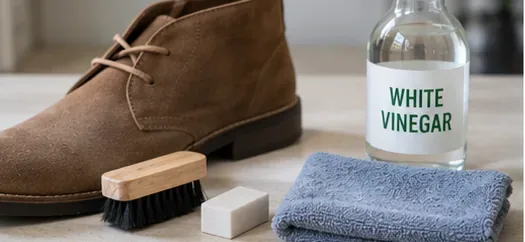
Gather a suede brush, a clean suede eraser, a soft cloth, and only the stain treatment permitted by the item’s care instructions.
What Do You Need to Clean Suede Safely?
Item
Best use
Important caution
Suede or nubuck brush
Loose dry dirt and restoring the nap
Use gentle pressure; routine brushing should follow the natural nap.
Suede eraser
Scuffs and dry surface marks
Use a clean eraser and stop if the color or texture changes.
Soft white or colorfast cloth
Blotting and precise spot treatment
Do not saturate the suede.
Suede cleaner
Stubborn stains when approved for the item
Follow the product label and test a hidden area first.
White vinegar
A last-resort spot treatment for some suede
Clarks notes it can affect color, so use very little and test first.
Paper or a shoe tree
Helping footwear hold its shape while drying
Avoid printed paper if ink transfer is a concern.
How Do You Clean Suede Step by Step?
1. Check the label and test before you touch the stain
Identify the material and read the care instructions. Genuine suede, microfiber “faux suede,” nubuck, and brushed textiles can look similar but may have different cleaning rules. If the manufacturer provides a care page for your exact item, follow that over a general guide.
Test any brush, eraser, cleaner, vinegar, or protector on an inconspicuous spot first. This matters especially with pale, saturated, or unevenly dyed suede. In the hypothetical boot example, test beneath the tongue or near an inside edge before treating the visible toe.
2. Is the suede still wet? Let it dry first
Do not immediately brush wet mud into the fibers. Nike recommends allowing mud or moisture to dry before brushing. If footwear is damp, use a shoe tree or loosely stuff it with absorbent paper so it keeps its shape, then let it dry naturally. Do not put suede in a clothes dryer. Wilsons Leather likewise recommends room-temperature drying for wet leather and suede.
3. Brush away loose, dry dirt
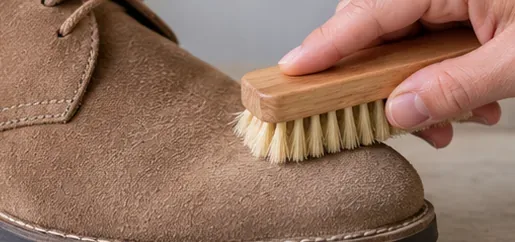
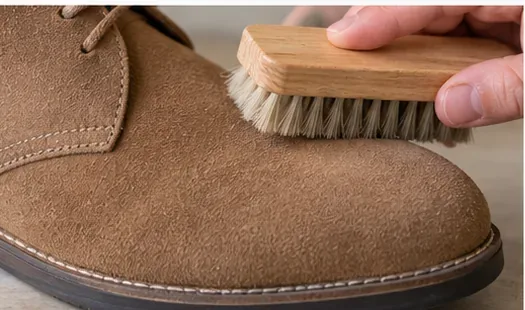
Brush dry surface dirt gently, following the natural direction of the suede nap for routine cleaning.
Once the suede is dry, use a suede brush to lift off dust and dried soil. For normal cleaning, brush gently in the natural direction of the nap. Clarks specifically advises brushing stains with the natural nap rather than repeatedly scrubbing back and forth.
For the hypothetical boots, this step should remove the dried mud before you do anything to the dark scuff. If the surface already looks clean after brushing, stop there; unnecessary wet treatment adds risk without benefit.
4. Use a suede eraser for scuffs and dry marks
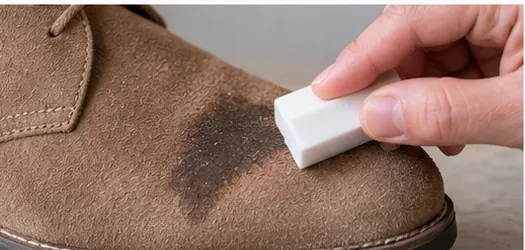
Use a clean suede eraser on localized scuffs before reaching for any liquid treatment.
Work a clean suede eraser over the scuff with controlled pressure. Nike recommends an eraser for marks that remain after brushing and cautions against rubbing so hard that the material is damaged. Treat only the marked area, then brush away eraser crumbs.
In our example, the dark toe scuff may disappear at this point. If it does, there is no reason to put vinegar or another liquid on that area.
5. What if a stubborn stain remains?
For a stubborn mark, use only a small amount of an appropriate spot treatment; white vinegar is one option cited by several footwear care guides.
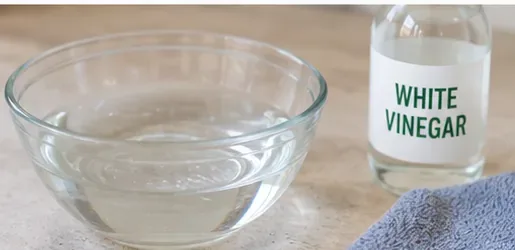
Move to a liquid only after the dry methods fail. A purpose-made suede cleaner is the most straightforward choice when the item’s maker approves it. Nike also lists a small amount of white vinegar or rubbing alcohol for stubborn stains. Clarks suggests white vinegar only as a last resort and warns that it can affect the color.
Do not make the entire shoe wet just to blend a small stain. Pour a little treatment into a dish or onto a cloth rather than directly onto the suede. The goal is controlled spot treatment, not soaking.
6. Lightly treat the spot, then stop
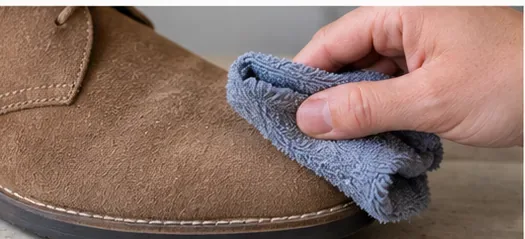
Lightly dampen the cloth rather than soaking the suede, and work only on the affected area.
Dampen a corner of a clean cloth with the approved cleaner or a very small amount of white vinegar. Work on the stain with light, controlled motions. Nike specifically says not to drench the shoe. Give the treatment time to work, and avoid continually adding more liquid because the area looks temporarily darker while damp.
For our hypothetical splash mark, treat only the visible edge of the stain. If the cloth begins picking up a noticeable amount of dye or the suede texture starts changing, stop and let the item dry. A color shift is a reason to move to professional care rather than escalating at home.
7. Air-dry completely without heat
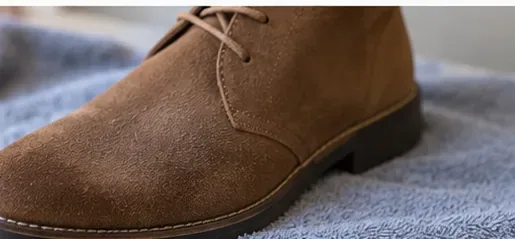
Let treated suede dry naturally at room temperature, away from direct heat and strong sunlight.
Set the item in a cool, ventilated place and let it dry naturally. Keep it away from radiators, hair dryers on hot settings, clothes dryers, and prolonged direct sun. UGG’s care guidance for its suede products calls for natural drying in a cool, ventilated area and avoiding direct heat and sunlight.
Do not judge the final color while the suede is still damp. A treated patch can appear darker until it is fully dry.
8. Restore the nap and inspect the result
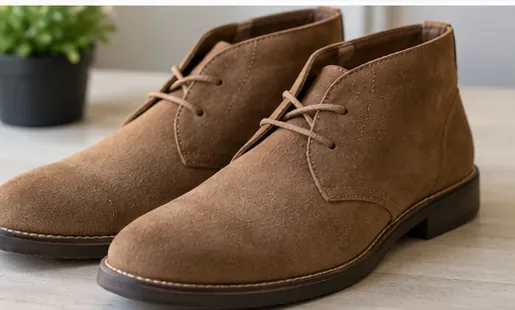
When the suede is fully dry, brush gently to restore the soft, even nap.
When the suede is completely dry, brush it gently to lift and even the nap. This final brushing can make a cleaned patch blend more naturally with the surrounding surface. UGG and Clarks both recommend brushing dry suede as part of routine care.
Inspect the finished suede in even light; if the color and texture look uniform, the item is ready to use again.
Return to the hypothetical boots: the goal is not to make worn suede look factory-new. A successful cleaning means loose dirt is gone, the scuff is reduced without bald or shiny patches, the stain is less noticeable, and the texture feels reasonably even. If a dark mark remains but the suede is stable, another gentle treatment after full drying is safer than one aggressive session.
What Should You Do for Different Types of Suede Stains?
Problem
Start with
When to escalate
Dried mud or dust
Let it dry, then use a suede brush
If pigment remains after brushing, try an approved suede cleaner.
Scuff or dry surface mark
Suede eraser
Use a small amount of cleaner only if the dry method fails.
Water mark
Let the item dry fully and brush the nap
If the mark persists, spot-test an approved suede cleaner.
Oil or grease
Absorb rather than scrub
Nike suggests cornflour for several hours; for valuable pieces, use a specialist.
Unknown dark stain
Dry brush and eraser first
Stop if color lifts, the stain spreads, or the surface becomes shiny.
Large stain on a suede jacket or bag
Check the care label
Use a professional leather/suede cleaner for serious stains.
Can You Put Suede in the Washing Machine?
Do not assume that you can. Nike explicitly advises against machine washing suede shoes, and UGG says machine washing can cause serious damage to its delicate footwear materials. Some synthetic suede-like textiles may have washable care labels, but that is a different situation: follow the label for the exact item, not the appearance of the fabric.
If the item is a structured shoe, lined boot, jacket, or bag, machine washing also exposes adhesives, interlinings, hardware, and shaped components to water and agitation. Even when the suede itself survives, the finished product may not.
Can You Use Soap on Suede?
For ordinary genuine suede, soap and water should not be the default. Nike warns that soap and water can make suede cleaning problems worse, while Clarks cautions against getting detergent used for soles onto suede uppers. A suede-specific cleaner, used as directed, is a better option when dry cleaning methods are not enough.
What About Suede Jackets, Handbags, and Expensive Items?
Use a lower-risk threshold. Wilsons Leather advises using leather-cleaning products for leather or suede, blotting liquid stains, and taking serious stains to a professional leather cleaner. That advice is especially relevant for garments because color matching, lining, seams, and large continuous panels make uneven cleaning more visible.
If a jacket says “professional suede cleaning only,” do not substitute ordinary dry cleaning or a home vinegar treatment. A specialist leather cleaner uses processes intended for leather and suede. The same conservative rule makes sense for heirloom items, luxury bags, strongly dyed suede, and pieces with mixed materials.
How Do You Keep Suede Cleaner Afterward?
Brush off dry surface dirt before it builds up.
Address spills quickly by blotting; do not rub liquid deeper into the nap.
Store suede in a cool, dry, ventilated place away from prolonged direct sunlight or heat.
If using a suede protector, test it on a hidden area first because sprays can slightly darken the material.
Do not assume “water-resistant” or “waterproof” applies to every suede item; treatments are product-specific.
Clarks recommends testing protector sprays on an inconspicuous area, and UGG distinguishes between styles with post-applied water-repellent treatment and genuinely waterproof products. Protection can reduce future maintenance, but it does not turn ordinary suede into a washable material.
The Short Answer
If you are wondering how to wash suede, think clean with the least moisture necessary, not “wash.” Let wet dirt dry, brush gently, erase scuffs, spot-treat only stubborn marks, air-dry at room temperature, and restore the nap. Always defer to the care label, and hand serious stains on garments or valuable pieces to a leather/suede specialist.