Home
» How To
»
Practical Guide to Cleaning Humidifiers with Citric Acid: Compatibility, Concentration, Soaking, and Rinsing by Type
Practical Guide to Cleaning Humidifiers with Citric Acid: Compatibility, Concentration, Soaking, and Rinsing by Type
When you notice white scale or calcium deposits on your humidifier, citric acid is a strong option. However, humidifiers vary significantly in structure, including evaporative, steam, ultrasonic, and hybrid types, so you cannot use the same citric acid solution on the same parts for every model. The most important step is not just checking if your model allows citric acid, but verifying in the user manual which specific parts of your model can be cleaned, at what concentration, and for how long.
This page organizes practical guidelines for using citric acid to clean humidifiers, including decision criteria, precautions by type, preparation, soaking, rinsing, and drying, based on manufacturer official information available as of September 2026. The numerical values for each manufacturer are "examples for that manufacturer and specific parts" and are not standard values applicable to all humidifiers.
Conclusion First: 3 Checks Before Using Citric Acid
Check the model and parts: Verify if citric acid use is permitted in the user manual or via official support.
Check the dirt: Citric acid is primarily recommended for white scale and mineral-based hardened deposits. Odors and sliminess may require different cleaning methods.
Check concentration and time: Do not assume "stronger is better." Excessive concentration or prolonged soaking can lead to part degradation, so prioritize manufacturer specifications.
Quick Reference by Purpose: When to Use and When Not to Use Citric Acid
Situation
Basic Judgment
Verification Points
White scale, calcium-like clumps
Citric acid is often recommended
Check the manual for target parts, concentration, temperature, and soaking time
Scale on humidifier filters
Soak cleaning on compatible models
Do not scrub vigorously; rinse thoroughly
Dirt in tanks and trays
Citric acid cleaning may be possible on compatible models
Do not submerge parts integrated with the main unit's electrical components
Ultrasonic transducers
Some models prohibit direct contact with citric acid
Iris Ohyama recommends cleaning with a soft brush or cotton swab
Steam type containers
Some models have a dedicated citric acid cleaning mode
Use the specified amount, water level, and cleaning mode according to the model
Goal is mold removal or disinfection
Do not assume citric acid is a universal solution
Prioritize cleaning agents or replacement judgments specified by the manufacturer
Differences in "Concentration and Time" According to Manufacturer Official Information
The fact that values differ by manufacturer and part is itself a reason not to use self-determined concentrations. Representative examples are listed below.
Manufacturer / Example Part
Example Official Guidance
Important Caution
Panasonic Humidifier Filters, etc.
5–10g citric acid per 1L water, approx. 40°C or below. Soak for approx. 30 minutes depending on the part, rinse 2–3 times, and finally wash thoroughly
Excessive concentration may cause filter degradation or discoloration
Sharp Humidifier Filters
Approx. 6g per 1L of water or lukewarm water at approx. 40°C or below. If white clumps are hard to remove, soak for approx. 2 hours
Rinse thoroughly to ensure no citric acid residue remains
Zojirushi Steam Type
Official FAQ suggests dissolving 30g citric acid in lukewarm water, filling the container to the full mark, and running the citric acid cleaning mode. Example time: approx. 1 hour 30 minutes
Follow the company's specified procedure and cleaning mode
Iris Ohyama
Heated, evaporative, and evaporative hybrid types can be cleaned with citric acid at the concentration listed in the manual
For ultrasonic and ultrasonic hybrid types, do not let citric acid touch the ultrasonic transducer
Verified which parts allow citric acid use in the user manual
Checked the specified concentration, water temperature, and soaking time
Stopped operation and unplugged the power cord
Discarded any remaining water
Moved chlorine-based bleaches and chlorine-based cleaners away from the area
Prepared a soft sponge, brush, cotton swabs, and a clean cloth
Confirmed that metal scrubbers and abrasive cleansers will not be used
8 Steps to Clean Your Humidifier with Citric Acid
The following is a basic flow assuming removable tanks, trays, filters, etc., where citric acid use is permitted in the user manual. Since actual disassembly methods and target parts vary by model, prioritize the instructions in the manual if they differ.
1. Confirm Necessary Tools and Specified Amounts
Prepare citric acid, measuring tools, a soft sponge or brush, and a clean cloth. If using commercially available citric acid, check the manufacturer's guidance regarding the presence of additives and usability. Panasonic recommends using products containing only citric acid.
Citric acid and measuring tools prepared. Do not judge concentration yourself; verify the amount listed in the model's user manual.
2. Stop Operation, Unplug the Power Cord, and Discard Water
To avoid electrical current during cleaning, always stop operation and unplug the cord. Sharp also advises stopping operation and unplugging the power cord before maintenance. Remove removable parts such as the tank and tray according to the manual and discard any remaining water.
Turn off the humidifier and unplug the cord before cleaning. If water remains, drain it using the specified method.
3. Prepare Citric Acid Solution at the Specified Concentration
This is the point where self-determined methods are most likely to occur. Panasonic's example is 5–10g per 1L, and Sharp's example for humidifier filters is approx. 6g per 1L, but these are not universal values for all models. If a specified temperature is given, adhere to it and do not arbitrarily use hot water.
Prepare only the necessary amount of cleaning solution to achieve the concentration specified in the manual. Making it stronger is not better.
4. Soak and Gently Wash Only Citric Acid-Compatible Parts
When soaking filters or trays, do not exceed the specified time. Once the scale has softened, gently remove it with a soft sponge or brush. Rubbing filters vigorously or scraping with a hard brush can cause deformation or surface damage.
After soaking, wash lightly with a soft sponge, etc. Avoid metal scrubbers and strong abrasives.
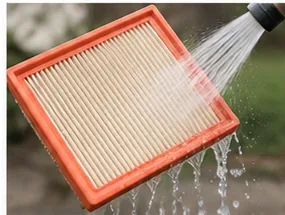
5. Rinse Thoroughly with Running Water
Insufficient rinsing is a very critical failure point. Panasonic advises rinsing 2–3 times with fresh water and then washing thoroughly at the end, and Sharp also requires thorough rinsing to ensure no citric acid residue remains. If an odor persists, do not assume "a little is okay"; rinse again with water.
Rinse thoroughly with clean water to ensure no citric acid components remain. Follow manufacturer-specified rinse counts if provided.
6. Dry the Washed Parts
For models intended for immediate reuse, some instructions advise returning filters without drying them. On the other hand, it is crucial not to leave moisture before long-term storage. Therefore, rather than a uniform rule of "always dry completely," judge based on whether it is for reuse or storage, the material of the parts, and manufacturer specifications.
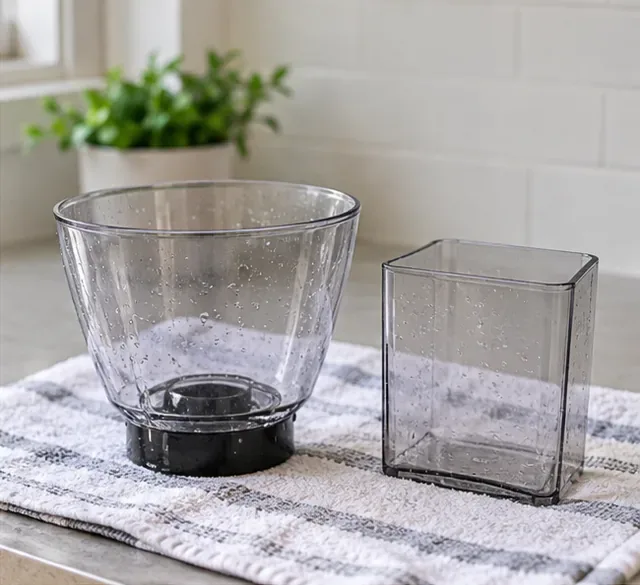
Washed parts placed in a clean location. Especially before storage, ensure no moisture remains.
7. Check Small Parts, Installation Direction, and Damage
If you removed floats, caps, gaskets, filter frames, etc., check for missing or deformed parts. Some parts should not be forcibly removed. For example, Panasonic advises not to remove certain styrofoam floats. Also check the manual for instructions regarding replacement timing and part condition.
Before reassembly, check part orientation, the condition of gaskets and floats, and any remaining dirt.
8. Reassemble Correctly and Resume Use with Fresh Water
Return each part to its original position and check the installation status before refilling. Some models require resetting the maintenance light, so check the model-specific manual. If water leaks, unusual noises, or reduced humidification capacity persist, do not repeatedly attempt additional cleaning; consider filter replacement or consulting manufacturer support.
The state after reassembly following cleaning. Ensure parts are correctly installed before adding fresh water.
Points Requiring Special Attention by Type
Evaporative and Evaporative Hybrid Types
Minerals tend to adhere to humidifier filters and trays, and some models have manufacturer guidance for soaking with citric acid. However, since filter materials and disinfection unit structures differ, it is not always safe to submerge entire parts. Panasonic has examples of models where only part of the ion disinfection unit is soaked.
Ultrasonic and Ultrasonic Hybrid Types
"Being able to use citric acid on tank scale" and "being allowed to apply citric acid to the transducer" are different things. Iris Ohyama advises that for ultrasonic and ultrasonic hybrid types, citric acid touching the ultrasonic transducer may cause damage, so the transducer should be cleaned with a soft brush or cotton swab.
Steam Type
Due to the structure that heats the container, minerals in the water tend to harden on some models. For products with a dedicated "citric acid cleaning mode," using that mode is the basic approach. Zojirushi's FAQ outlines a procedure for target steam humidifiers using 30g of citric acid, filling with water to the full mark, and running the cleaning mode. Do not apply this amount to other manufacturers or model numbers.
Things to Absolutely Avoid
Do not mix chlorine-based bleaches or chlorine-based cleaners with citric acid.
Do not submerge power components, internal precision parts, or cord connection points in water or citric acid solution.
Do not use citric acid on filters or transducers prohibited by the manual.
Do not make solutions stronger than the specified concentration.
Do not soak significantly longer than the specified time.
Do not arbitrarily use metal scrubbers, abrasive cleansers, or strong solvents.
Citric acid is an acidic substance. According to materials from the Ministry of Health, Labour and Welfare's labor bureaus, mixing acidic cleaners with chlorine-based cleaners generates harmful chlorine gas, and citric acid and vinegar may also react with chlorine-based cleaners. Therefore, it is important to rinse thoroughly if used consecutively in sinks, etc. For details, check the Nara Labor Bureau "Do Not Mix" material.
How Often Should You Clean?
Frequency also varies by model. Panasonic's humidifiers include examples of washing the tank daily and maintaining the tray approx. once a month. Sharp has examples of models requiring humidifier filter maintenance approx. once every two weeks. This does not mean "use citric acid daily." The basic approach is to focus on water washing for daily care and perform citric acid cleaning only when conditions arise, such as when white clumps are hard to remove, as recommended by the manufacturer.
There is no universal answer for all models. Panasonic's example is 5–10g per 1L, some Sharp humidifier filters use approx. 6g per 1L, and some Zojirushi steam types have a dedicated procedure using 30g. Prioritize the manual for your specific model number.
Can I make the solution stronger if white scale doesn't come off in one go?
Not recommended. Panasonic explicitly states that excessive concentration may cause filter degradation or discoloration. First, adhere to the specified concentration, time, and rinsing method. If there is no improvement, check the manual for whether re-cleaning is possible or if part replacement is required.
Should I use citric acid for odors too?
Manufacturers may recommend different cleaning agents for scale versus odors. Sharp has examples of models recommending citric acid for white clumps and baking soda, etc., for other dirt or odors. Rather than repeatedly using only citric acid without distinguishing the cause, it is more reliable to check the "dirt/odor" section for your specific model.
What if humidification capacity doesn't return after cleaning?
Other factors such as filter degradation, deformation, improper installation, or replacement timing may be involved. Sharp has models that recommend replacement if odors or humidification capacity do not improve after maintenance, if discoloration or dirt is severe, or if the filter is damaged. It is important not to try to solve the problem solely with additional acid cleaning.
Final Practical Check
Did you verify the "parts" where citric acid can be used?
Did you adhere to the model-specified concentration, water temperature, and time?
Did you avoid letting citric acid solution touch ultrasonic transducers or electrical components?
Did you avoid simultaneous or consecutive use with chlorine-based products?
Was there any insufficient rinsing?
Did you correctly return small parts, gaskets, and floats?
Are you prepared to switch to filter replacement or manufacturer consultation if issues persist?
The key to effectively using citric acid for humidifier cleaning is not making a strong cleaning solution, but matching the "type, parts, concentration, and time" to each specific model. Combining daily water washing with appropriate citric acid cleaning only when necessary makes it easier to tackle scale while minimizing the risk of damaging parts.