Home
» How To
»
What Happens If You Don't Clean Your Air Conditioner Filter? Clarifying Common Misconceptions and Verifiable Impacts
What Happens If You Don't Clean Your Air Conditioner Filter? Clarifying Common Misconceptions and Verifiable Impacts
If you haven't cleaned your air conditioner filter in a while, you might be wondering: "Will using it like this cause immediate breakdowns?" "Do electricity bills really skyrocket?" or "Do I not need to do anything if I have a self-cleaning function?" To get straight to the point, it is confirmed by manufacturer and public agency information that clogged filters obstruct airflow, affecting heating and cooling capacity and power consumption. On the other hand, universal conclusions such as "it will break down after X days without cleaning" or "mold will definitely cause health issues" cannot be confirmed.
Therefore, this article distinguishes between "what can be confirmed," "what varies by usage environment," and "what cannot be stated universally at this time," based on information from public agencies and manufacturers available as of September 2026. Actionable steps are provided following the explanations.
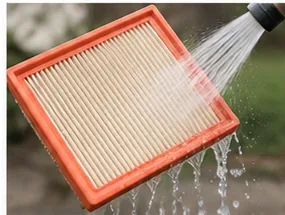
Example comparing a filter with accumulated dust and its condition after cleaning. Actual dirt levels and cleaning frequency vary depending on operating hours, installation location, pets, cooking fumes, etc.
First, the Conclusion: "Reduced Efficiency" is the Most Certain Impact of Not Cleaning; Breakdowns and Health Effects Depend on Conditions
The filter is a component that captures dust and other particles when drawing in indoor air. When clogged with dust, intake resistance increases, making it difficult to secure the necessary airflow. Daikin explains that dirty filters prevent sufficient indoor air intake, leading to reduced capacity. The Agency for Natural Resources and Energy also compares a 2.2kW air conditioner with a clogged filter to one that has been cleaned, showing energy-saving examples from cleaning once or twice a month.
What You Can Do Now: Do not assume "it's still cooling, so it's fine." Open the front panel and visually inspect the filter surface. If the mesh is hard to see, it is covered in gray, or you feel the suction is weak, it is a high priority to clean it according to the instruction manual.
Misconception 1: "If it cools down to the set temperature, it's fine even if the filter is dirty"
What Can Be Confirmed
Clogged filters impede airflow and affect heating and cooling efficiency. According to Daikin's official information, dust accumulation on filters makes it difficult for air to pass through, which can make the air conditioner less effective. Panasonic also explains that dirty filters lead to reduced capacity and increased power consumption.
What Varies by Situation
The magnitude of the impact you feel varies depending on room size, outdoor temperature, insulation performance, set temperature, unit capacity, and operating hours. You might not notice inconvenience immediately with light dirt, but that does not prove there is "no impact."
Action: Compare the strength of the airflow and the time it takes to reach the set temperature before and after cleaning, keeping the same settings. If there is a clear improvement after cleaning, clogging was likely a contributing factor.
Misconception 2: "If you don't clean it, electricity bills will definitely rise by 25%"
What Can Be Confirmed
"25%" is not a fixed value applicable to all households. Daikin presents an in-house verification example where, under conditions compliant with JRA4046-2004, annual power consumption was compared between cleaning for one year and not cleaning, showing electricity costs were approximately 25% higher. On the other hand, the Agency for Natural Resources and Energy publishes a calculation under different conditions, estimating that cleaning a 2.2kW air conditioner with a clogged filter saves 31.95kWh annually, or about 990 yen.
What Varies by Situation
The actual amount varies significantly depending on electricity unit prices, usage hours, amount of dirt, room heat load, and model. Therefore, it cannot be said that "cleaning will definitely save you ○ yen." However, there is no rational benefit to leaving clogs untreated and reducing efficiency.
Action: If you want to know the savings, compare power consumption on days with similar weather conditions before and after cleaning using a smart meter or your utility company's usage screen. It is important not to directly apply manufacturer estimates to your own home's costs.
Misconception 3: "If you don't clean it, the air conditioner will break down immediately"
What Can Be Confirmed
It can be confirmed that filter dirt can become a long-term burden factor. Panasonic advises that filter dirt leads to reduced capacity, increased power consumption, and shortened unit lifespan. Daikin also states that leaving dust untreated can allow dirt to enter the inside of the filter, potentially leading to heat exchanger dirt, odors, and clogged drain pipes.
What Cannot Be Stated Universally Yet
However, periods such as "it will break down if not cleaned for 3 months" or "repairs will definitely be needed if left for a year" cannot be determined universally from official information. Breakdowns occur due to numerous factors, including installation conditions, aging of parts, refrigerant systems, electronic components, and the outdoor unit's environment.
Action: First, clean the filter. If it still doesn't cool or heat, makes strange noises, leaks water, or displays error codes, do not assume it is "due to dirt." Use the manufacturer's diagnostic guide or repair service.
Misconception 4: "If it has a self-cleaning function, the filter never needs cleaning"
What Can Be Confirmed
This is a misconception. Even in their 2026 model guides, Mitsubishi Electric explains the function that automatically removes dust from filters but explicitly states, "Please clean the air filter regularly, as the degree of dirt varies by usage environment." Panasonic also explains that even with a self-cleaning function, oil stains, tobacco tar, pet hair, and odors from long-term use may not be completely removed by the automatic function alone, requiring washing with water in some cases.
What Varies by Situation
The method of the self-cleaning function differs by model. There are types that brush dust into a dust box, types that expel it outdoors, etc., and the frequency of dust box cleaning is not the same.
Action: Do not judge solely by the label "self-cleaning." Check the instruction manual by model number and confirm the maintenance methods for the filter, dust box, and other dust-collecting parts.
Misconception 5: "If you wash the filter, all mold and odor problems are solved"
What Can Be Confirmed
Dirt on the filter can cause unpleasant odors. Additionally, Daikin explains that the combination of dust and condensation can sometimes cause mold growth. Therefore, filter cleaning is fundamental to maintaining cleanliness.
What Cannot Be Determined by the Filter Alone
However, inside the air conditioner, there are places other than the filter where dirt accumulates, such as the heat exchanger, blower fan, drain pan, and air passages. It may not be possible to identify the source of lingering odors just by looking from the outside. Also, finding mold does not allow you to judge the extent of health impacts in that household based solely on the filter's appearance.
Action: If odors persist even after properly cleaning and drying the filter, check the instruction manual for an internal clean function. If internal disassembly cleaning seems necessary, do not force your hands or detergent deep inside; consider consulting the manufacturer or a professional service.
Misconception 6: "If the filter is washable, all filters can be washed the same way"
What Can Be Confirmed
For general air filters, some manufacturers recommend removing dust with a vacuum cleaner and washing with neutral detergent if heavily soiled. However, air conditioners may have additional filters for air purification or deodorization installed separately from the standard air filter. Mitsubishi Electric's optional parts guide explicitly states that electrostatic micro-filters "cannot be washed with water."
Action: Instead of washing all removed parts with water, first check the part names and the instruction manual. Even for washable filters, prioritize the model's instructions regarding drying methods and detergent compatibility.
"Once Every Two Weeks" Is Not an Absolute Rule for Cleaning Frequency
Daikin and Panasonic recommend cleaning filters once every two weeks during the usage season as a guideline. On the other hand, the Agency for Natural Resources and Energy's energy-saving information suggests cleaning once or twice a month. This difference is not a contradiction but stems from different purposes and premises. Furthermore, the presence of a self-cleaning function and manufacturer specifications must also be considered.
Usage Situation
Cleaning Approach
Check Points
Long daily use in summer/winter
Check at shorter intervals
Use around two weeks as a guideline and check actual dirt levels
Short usage hours
Prioritize dirt level over fixed days
Start with inspections once or twice a month
Near kitchen/smoking environment
Watch for dirt other than dust
Oil stains and tar may not be removed by auto-cleaning
Pets present
Frequently check for hair accumulation
Check both the filter and the dust box
With self-cleaning function
Do not assume no maintenance is needed
Check maintenance cycles in the model-specific manual
Action: Instead of writing a uniform frequency on your calendar, observe the actual dirt accumulation for the first 1-2 months and determine a check interval that suits your home to avoid waste.
Clean It Yourself or Hire a Professional?
Removing dust from the filter and maintaining parts that the manufacturer states are washable are within the range of what you can easily do yourself. The advantages are lower costs and the ability to perform it frequently. On the other hand, if there is heavy dirt on the internal heat exchanger or blower fan, disassembling it yourself risks damage, electric shock, or water leakage.
Professional services can handle the interior, but they are costly, and the scope of work varies by provider. Therefore, a division of labor where "regular filter cleaning is done by yourself, and heavy internal dirt or abnormalities are left to experts" is realistic.
Action: Before hiring a professional, confirm how far they will disassemble and clean, how they will protect electrical components, and if they perform operational checks after the work. If the manufacturer offers cleaning services, their contact point can also be a comparison option.
5 Items to Confirm "If It Really Improved" After Cleaning
Is the filter mesh visible, and are there no remaining layers of dust?
If washed, was it completely dried before reinstalling?
Is the intake or airflow weaker than before?
Is the heating/cooling startup extremely slow with the same settings?
Are there any remaining strange noises, water leaks, strong odors, or error displays?
If symptoms do not change after cleaning the filter, the cause may lie elsewhere. Only then is it efficient to suspect other factors such as obstacles around the outdoor unit, internal dirt, sensors, or refrigerant systems.
Scope of Information Confirmable via Official Sources
The main primary and official information sources used for verification in this article are as follows.
Summary: There Are Risks to Neglect, But Don't Assume "This Will Definitely Happen"
If you do not clean your air conditioner filter, the most likely first occurrence is poor airflow, reduced heating and cooling capacity, and increased power usage. Public agencies and multiple manufacturers agree on this point. On the other hand, definitive statements such as "it will break down in X months," "electricity bills will definitely rise by 25%," or "if there is mold, health damage will definitely occur" ignore the differences in conditions between households.
The most practical approach is to perform regular checks based on the instruction manual and clean according to the filter's condition. Do not completely neglect it even if you have a self-cleaning function, and if issues with efficiency, odors, or water leaks persist after cleaning, do not limit the cause to the filter alone. That is the shortcut to avoiding both wasted power consumption and unnecessary repairs.