Home
» iOS
»
iPhone 18 vs. iPhone 17: Is the Upgrade Actually Worth Your Money?
iPhone 18 vs. iPhone 17: Is the Upgrade Actually Worth Your Money?
Updated September 14, 2026: If you are searching for an “iPhone 18 vs. iPhone 17” comparison, the first thing to know is that Apple has not announced a standard iPhone 18. Apple’s current lineup lists iPhone 18 Pro and iPhone 18 Pro Max, along with iPhone Duo, iPhone Air, iPhone 17, iPhone 17e, and iPhone 16. You can confirm the current lineup on Apple’s official iPhone comparison page. That makes a literal iPhone 18-versus-iPhone 17 spec comparison impossible today without inventing details.
The useful question is therefore slightly different: if you own an iPhone 17, is it worth spending more for Apple’s officially announced 2026 upgrade, the iPhone 18 Pro? For most iPhone 17 owners, the answer is no. The iPhone 17 already has a 6.3-inch OLED display with ProMotion, an Always-On display, Wi-Fi 7, Bluetooth 6, Apple Intelligence, a capable 48MP Dual Fusion camera system, and up to 30 hours of video playback. The iPhone 18 Pro becomes compelling when you specifically need its Pro camera system, stronger sustained performance, longer battery life, faster USB data transfer, or storage above 512GB.
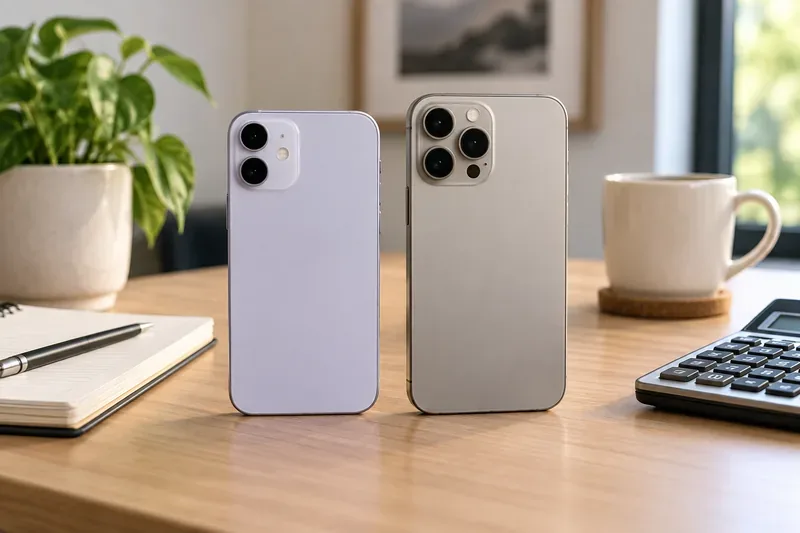
A buyer compares the practical cost of keeping a capable dual-camera phone versus moving to a more expensive three-camera Pro-class model.
Start here: there is no standard iPhone 18 to buy right now
Apple announced iPhone 18 Pro and iPhone 18 Pro Max on September 9, 2026. Preorders began September 12, with availability starting September 18. Apple’s announcement does not include a standard iPhone 18. See the official iPhone 18 Pro announcement for the confirmed models and dates.
This distinction matters because “iPhone 18” rumors, mockups, leaked specifications, and retailer placeholder pages should not be treated as confirmed product information. If you specifically want a non-Pro iPhone 18, the most financially sensible move is to wait for an official Apple announcement rather than buying based on an assumed feature list.
What you need to know before comparing the money
Apple’s current U.S. lineup page lists iPhone 17 from $899 and iPhone 18 Pro from $1,199, a $300 difference before tax, trade-in credit, accessories, or carrier promotions. Apple’s checkout price can vary depending on whether you activate with a supported carrier at purchase, so compare the final checkout totals rather than only headline prices.
The two phones also belong to different product tiers. iPhone 17 is Apple’s mainstream model, while iPhone 18 Pro is a higher-end Pro model. That means the extra money is buying Pro features, not simply one more number in the model name.
What matters
iPhone 17
iPhone 18 Pro
Status on September 14, 2026
Current model
Announced; availability begins September 18
Apple-listed starting price in the U.S.
From $899
From $1,199
Display
6.3-inch OLED, ProMotion up to 120Hz, Always-On
6.3-inch OLED, ProMotion up to 120Hz, Always-On
Chip
A19
A20 Pro
Rear cameras
48MP Dual Fusion: Main + Ultra Wide
48MP Pro Fusion: Main with variable aperture + Ultra Wide + Telephoto
Understand the terms that actually affect daily use
ProMotion
ProMotion is Apple’s adaptive refresh-rate technology. On these phones, the display can refresh up to 120 times per second, which can make scrolling and supported animation look smoother. Because iPhone 17 already has ProMotion, upgrading to iPhone 18 Pro does not buy you the dramatic display-smoothness jump that older base-model owners might notice.
Variable aperture
Aperture is the opening in a camera lens that controls how much light reaches the sensor. The iPhone 18 Pro’s Main camera has a variable aperture, meaning the opening can change between multiple settings. That gives photographers more control over light and depth of field. If you mostly shoot quick family photos, documents, food, and social posts, this is useful but not automatically worth hundreds of dollars. If camera control is a core part of your work or hobby, it matters much more.
USB 3 versus USB 2
Both phones use a USB-C connector, but the data standards are very different. Apple lists the iPhone 17 at USB 2 speeds up to 480Mb/s, while iPhone 18 Pro supports USB 3 up to 10Gb/s. This does not mean everyday charging is suddenly 20 times faster. It matters most when moving large files over a compatible wired connection, especially high-resolution video and other large media libraries.
Prepare before you spend: check these four things on your iPhone 17
1. Identify the problem you are trying to solve
Write down the one or two things that frustrate you today. Is it battery life, camera zoom, storage, wired transfer speed, gaming performance, or simply wanting something new? If you cannot name a recurring problem, the upgrade is less likely to deliver good value.
2. Check your battery condition
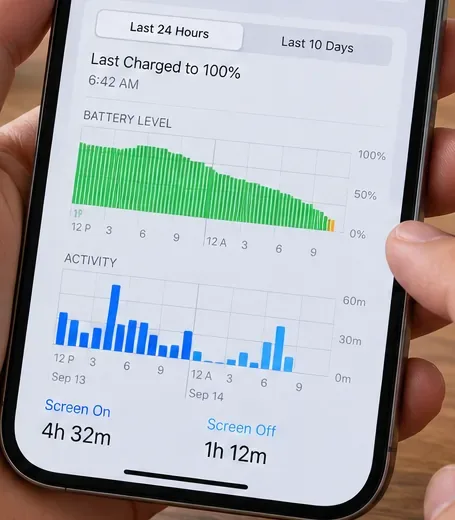
If battery life is your main complaint, inspect Battery Health in Settings before replacing the entire phone. Battery capacity naturally declines over time. Apple says battery service may be appropriate when a battery is significantly degraded, and AppleCare battery replacement terms use an 80% capacity threshold in eligible cases. Review Apple’s official iPhone service and repair information before assuming you need a new phone.
3. Check how much storage you really use
Open Settings > General > iPhone Storage. If your 256GB or 512GB iPhone 17 still has comfortable free space, paying for a 1TB or 2TB Pro model may solve a problem you do not have. If you regularly manage hundreds of gigabytes of local video, the iPhone 18 Pro’s larger storage options are a genuine advantage.
4. Get the real upgrade price
Do not compare MSRP alone. Check the final device price, tax, trade-in value, carrier conditions, financing cost, and any accessories you would replace. Use Apple’s official Trade In page for a current estimate, then compare it with your carrier’s terms. A large promotional credit can change the decision, but only if the service plan and commitment make sense for you.
How to decide whether the upgrade is worth it
Keep your iPhone 17 if you are a typical everyday user
For messaging, browsing, social media, navigation, streaming, casual gaming, family photos, and most everyday video, iPhone 17 remains unusually well equipped. Its A19 chip, 120Hz ProMotion display, 48MP Main and Ultra Wide cameras, Wi-Fi 7, Bluetooth 6, MagSafe up to 25W, and Apple Intelligence support cover the needs that drive most phone upgrades.
The weight difference is also meaningful. Apple lists iPhone 17 at 177 grams and iPhone 18 Pro at 211 grams. That 34-gram increase may sound small on paper, but it is noticeable in a device you hold for hours. If you value a lighter phone, the older mainstream model has a practical advantage.
Choose iPhone 18 Pro if photography or video is a priority
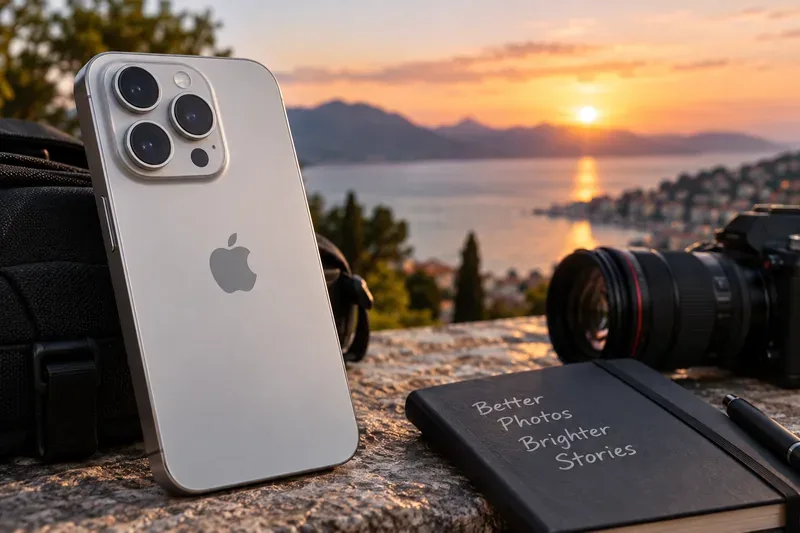
This is the clearest upgrade case. iPhone 18 Pro adds a third 48MP rear camera, variable aperture on the Main camera, longer telephoto reach, Pro camera controls, and professional video options. Apple lists 4x and 8x optical zoom options in addition to 0.5x, 1x, and 2x. For travel, sports, stage performances, portraits, product shooting, or creator work, that flexibility can justify the premium far more than the chip generation alone.
Choose iPhone 18 Pro if battery life is mission-critical
Apple rates iPhone 17 for up to 30 hours of video playback and iPhone 18 Pro for up to 36 hours under its test conditions. Real-world battery life varies with brightness, signal strength, camera use, gaming, background activity, and battery age, so do not interpret the six-hour rating difference as a guaranteed six extra hours in your day. Still, frequent travelers and heavy users have a real reason to prefer the Pro model.
Choose iPhone 18 Pro if you move huge files by cable
If you record large video files and regularly offload them to a Mac, PC, or external storage device, USB 3 is one of the most practical upgrades. For someone who mostly uses iCloud, AirDrop, streaming, and wireless backups, it may barely affect daily life.
Wait if what you really want is a standard iPhone 18
This is the easiest decision. There is no official standard iPhone 18 specification, price, launch date, or camera list to compare as of September 14, 2026. Waiting costs nothing except time and prevents you from paying Pro pricing for features you may not need.
Mistakes to avoid when upgrading
Do not compare rumor specs with official iPhone 17 specs. Until Apple announces a standard iPhone 18, any detailed base-model comparison is speculative.
Do not assume a newer chip means a visibly faster phone in every task. The benefit depends on your apps, gaming, editing workload, and how long you keep the device.
Do not ignore weight. The iPhone 18 Pro is substantially heavier than the iPhone 17.
Do not treat camera megapixels as the whole camera story. Lens options, aperture, stabilization, processing, and video features can matter more than the number printed next to “MP.”
Do not trade in your old phone before confirming your backup and account access. Apple recommends making a backup and having your Apple Account password ready before migration.
Do not buy a carrier deal without reading the commitment. Promotional credits can be spread across many months and may depend on a specific plan.
If you upgrade, prepare the transfer before the new phone arrives
Make a fresh backup, confirm you know your Apple Account password, and check your eSIM or carrier transfer requirements. Apple’s current guidance supports Quick Start for device-to-device migration and also documents wired transfer between recent USB-C iPhones. See Apple’s Quick Start instructions before erasing or trading in the old phone.
Also verify any apps that use separate authentication, such as banking apps, password managers, work security tools, or authenticator apps. A phone transfer can copy a great deal of data, but some services intentionally require you to sign in or re-enroll the new device.
Final verdict: is the upgrade worth your money?
If you already own an iPhone 17, keep it unless you can name a Pro feature you will use regularly. The iPhone 17 already shares several important modern features with the iPhone 18 Pro, including a 6.3-inch ProMotion display, Always-On display, Wi-Fi 7, Bluetooth 6, a 256GB starting storage tier, and current Apple Intelligence support. Spending at least several hundred dollars more makes the most sense for camera versatility, heavy video work, longer battery endurance, faster wired transfers, more storage, or higher sustained performance.
If you are specifically waiting for “iPhone 18,” wait for Apple. As of September 14, 2026, there is no standard iPhone 18 in Apple’s announced lineup. That is not a minor footnote; it is the central fact that should shape your purchase decision. Buy based on confirmed products and the problems you need to solve, not on an assumed annual upgrade.